The Complete Guide to the D6090 Dental Code: Implant Repair Explained
If you are reading this, you probably have a dental implant, and something feels… off. Maybe a screw has come loose, a part of the implant has broken, or your dentist just mentioned a code on a treatment plan that looks like a foreign language: D6090.
Don’t worry. You are in the right place. This guide is designed to walk you through everything you need to know about the D6090 dental code. We will break down what it means, why you might need it, how much it costs, and why your insurance might look at it differently than a standard filling or crown.
Let’s demystify this code together.
What Exactly is the D6090 Dental Code?
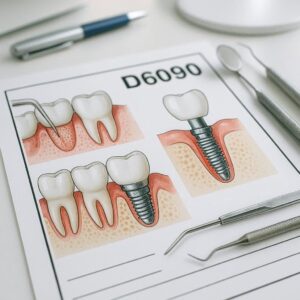
In the simplest terms, the D6090 dental code is the specific procedure code used by dentists and insurance companies to describe the repair of an implant-supported prosthesis.
Let’s dissect that.
-
Implant-supported prosthesis: This is the artificial tooth (or teeth) that is attached to your dental implant. It could be a single crown, a bridge, or even a denture that snaps onto implants.
-
Repair: This is the key word. The code is used when the prosthesis itself is broken, chipped, loose, or worn out, and a dental professional needs to fix it—while it is still in the mouth.
Think of it this way: Your dental implant is like the foundation of a house. The D6090 code is for fixing the house itself (repairing a leaky roof, fixing a cracked window), not for fixing the foundation.
D6090 vs. Other Implant Codes: A Quick Comparison
It is very easy to confuse this code with others. To make it crystal clear, here is a simple table that shows how D6090 fits into the bigger picture of implant dentistry.
| Code | Procedure | Description | Analogy |
|---|---|---|---|
| D6010 | Surgical Placement | The surgery to place the implant (the titanium post) into the jawbone. | Pouring the concrete foundation. |
| D6056 | Prefabricated Abutment | The connecting piece that sits on top of the implant post. | The metal framing that sits on the foundation. |
| D6057 | Custom Abutment | A custom-made abutment. | A custom-designed metal frame for a unique house. |
| D6058 | Implant Crown | The first time a crown is placed on an implant. | Building the house for the first time. |
| D6090 | Repair Implant Prosthesis | Fixing the existing crown/bridge/denture in the mouth. | Repairing the house’s roof or walls after you’ve lived in it. |
As you can see, D6090 is unique. It is not about placing something new; it is about restoring something that already exists.
Why Would You Need a D6090 Procedure? Common Scenarios
Life happens. And even the best dental work can face issues over time. The D6090 dental code covers a variety of common problems. Here are the most frequent reasons a dentist might use this code for you:
1. Chipping or Fracture of the Prosthetic Tooth
Just like natural teeth, the porcelain or composite material used to make your implant crown can chip. This is especially common in the back teeth (molars), which handle a lot of chewing force. If you have a small chip that is causing a rough edge or doesn’t look right, a repair using D6090 might be the solution.
2. A Loose Prosthesis
Over time, the cement or the screw that holds your crown onto the abutment can loosen. You might feel a slight wobble when you bite down or notice that the crown isn’t seated perfectly flush with your gum. This is a classic indication for a repair. The dentist can often remove the crown, clean the area, and re-cement or tighten the screw.
3. Wear and Tear
Your dental materials are strong, but they aren’t invincible. Years of grinding, clenching, or simply chewing can wear down the biting surface of your implant crown. This can make the tooth feel shorter or change your bite alignment. A repair can involve adding material to the crown to restore its proper shape and function.
4. A Screw Hole Opening
Many implant crowns are screw-retained. This means there is a small hole on the chewing surface where the screw goes in, which is then sealed with a bit of filling material. If that filling material falls out, it leaves a small crater. This can trap food and look unsightly. A dentist would use the D6090 code to clean out the old material and place a new, durable seal.
A Note from Your Dentist: “If your implant crown feels loose or looks damaged, do not wait. A small problem can often be fixed easily with a D6090 repair. If you ignore it, the loose crown can put stress on the underlying implant post or the abutment screw, potentially leading to a much more complex and expensive problem down the road.”
The D6090 Procedure: What Happens During the Appointment?
If your dentist has recommended a D6090 procedure, knowing what to expect can ease any anxiety. The process is usually straightforward and often completed in a single visit.
Here is a step-by-step breakdown of a typical D6090 repair appointment:
-
Evaluation and Diagnosis: The dentist will first examine the problematic implant. They will check the crown for mobility, inspect for chips, and look at the surrounding gums for signs of infection or irritation. They may take an X-ray to ensure the underlying implant post is healthy and that there are no issues with the bone.
-
Removal of the Prosthesis (If Necessary): To fix a loose crown or a chip on the underside, the dentist will need to remove the prosthetic. For a cemented crown, they will use special tools to gently work it loose. For a screw-retained crown, they will access the screw hole, remove the temporary filling, and unscrew the crown.
-
Cleaning and Preparation: Once the prosthesis is out, the dentist will thoroughly clean it. Any old, failing cement will be removed. The inside of the crown will be scrubbed to ensure a fresh surface for the new bonding agent.
-
The Repair: This is where the magic happens.
-
For a chip: The dentist will apply a bonding agent and layer a tooth-colored composite resin onto the chipped area. They will sculpt it to match the natural shape of the tooth.
-
For a loose crown: The dentist will apply new dental cement to the inside of the crown and carefully seat it back onto the abutment.
-
For a screw hole: The dentist will place a small piece of cotton or Teflon tape over the screw (to keep it accessible in the future) and then fill the top with composite resin.
-
-
Finishing and Polishing: After the repair material is set (often hardened with a special light), the dentist will shape and polish it. They will check your bite to make sure the repaired crown doesn’t hit too hard, which could cause another fracture. Finally, they will polish the entire area to a smooth, natural shine.
-
Final Check: The dentist will ensure you are comfortable with the feel of the repaired tooth and that your bite is correct.
Most patients report that the procedure is no different than getting a simple filling—it’s comfortable and relatively quick.
How Much Does D6090 Cost? Understanding the Investment
One of the first questions people ask is, “How much is this going to cost me?” The price for a D6090 procedure can vary, but having a general idea helps you prepare.
The cost depends on several factors:
-
Your geographic location: Dental fees are generally higher in major metropolitan areas.
-
The complexity of the repair: A simple recementation is less expensive than a complex repair of a large chip.
-
The dentist’s expertise: A specialist (like a prosthodontist) may charge more than a general dentist.
Estimated Cost Range
For the D6090 dental code, you can typically expect to pay anywhere from $150 to $400.
To give you a better idea, here is a breakdown of what different scenarios might look like:
| Scenario | Typical Complexity | Estimated Cost Range |
|---|---|---|
| Recementation (Loose Crown) | Simple, quick procedure. | $150 – $250 |
| Repairing a Small Chip | Moderate, requires artistic skill. | $200 – $300 |
| Repairing a Screw Hole Filling | Simple, very quick. | $100 – $200 |
| Complex Repair of a Fracture | Complex, may be time-consuming. | $300 – $450+ |
Remember: These are estimates. Always ask your dentist for a detailed treatment plan with the exact cost before the procedure begins.
Dental Insurance and the D6090 Code
This is often the trickiest part. Dental insurance plans are typically designed for “natural” teeth. Implants, and especially repairs to implants, can fall into a gray area. Here is what you need to know about how insurance usually handles the D6090 code.
Frequency Limitations
Most insurance plans consider a repair to be a “minor” restorative procedure. They will often cover it, but there are limits. A common rule is that a crown cannot be repaired more than once in a 12-month period on the same tooth. The insurance company might say, “If it breaks again, it needs to be replaced entirely (which would be a different, and more expensive, code).”
Annual Maximums and Deductibles
The D6090 procedure will typically count towards your annual maximum (the total amount your insurance will pay in a year). You will also likely be responsible for your plan’s deductible. For example, if you have a $50 deductible and your insurance covers 80% of the repair afterward, your out-of-pocket cost will be manageable.
The “Alternate Benefit” Clause
This is a crucial point. Some older or more basic insurance plans have an “alternate benefit” clause. This means they will only pay for the least expensive way to treat the problem. Since an implant crown is a premium service, the insurance company might say, “We will only pay what we would have paid for a repair on a regular crown.” This can sometimes lead to lower coverage than you might expect.
Important Insurance Note: Before your procedure, call your insurance company or ask your dental office to file a “predetermination of benefits.” This is a request to the insurance company to calculate exactly how much they will pay for the D6090 code. It is not a guarantee of payment, but it gives you a very accurate estimate and prevents surprise bills.
Sample Insurance Scenario
Let’s say the D6090 procedure costs $250.
-
Your Deductible: $50 (you pay this first)
-
Remaining Amount: $200
-
Insurance Coverage: 80% for minor restorative care.
-
Insurance Pays: $160 (80% of $200)
-
Your Responsibility: $50 (deductible) + $40 (your 20%) = $90 out-of-pocket.
The Repair (D6090) vs. Replacement: Which is Right for You?
Sometimes, a repair isn’t possible. The dentist will have to decide between using the D6090 code to fix the existing crown or recommending a completely new prosthesis (which would involve a code like D6060 for an abutment and D6058 for a new crown).
Here’s how they make that decision:
When a Repair (D6090) is the Best Choice:
-
The damage is minor (a small chip or a loose fit).
-
The underlying structure (abutment and implant) is healthy.
-
The crown is in good condition otherwise.
-
It is a cost-effective way to extend the life of the restoration.
When a Replacement is Necessary:
-
The crown has a large, catastrophic fracture that runs through the entire tooth.
-
The abutment screw is broken and cannot be retrieved.
-
The crown is simply too worn down after many years of service.
-
The color or shape of the crown is no longer acceptable to the patient, and it cannot be corrected by adding material.
Think of it like a car tire. If you get a nail in it, you can repair the tire (D6090). But if the sidewall blows out, you need a brand new tire (Replacement).
6 Practical Tips to Extend the Life of Your Implant Prosthesis
Nobody wants to go back to the dentist for repairs if they can avoid it. While some issues are inevitable, you can significantly reduce the risk of needing a D6090 procedure by taking good care of your implant.
Here are six friendly tips to keep your implant crown happy and healthy:
-
Practice Meticulous Oral Hygiene: Just because it’s not a natural tooth doesn’t mean you can ignore it. Plaque and bacteria still build up on implant crowns, which can lead to gum inflammation (peri-implant mucositis) and even bone loss. Brush twice a day and floss daily, paying special attention to the area around the implant.
-
Use the Right Tools: Consider using a soft-bristled toothbrush and a water flosser. Water flossers are excellent for cleaning around implants because they can flush out food particles without damaging the gum tissue.
-
Be Mindful of What You Chew: Your implant crown is strong, but it’s not indestructible. Avoid chewing on hard, non-food items like ice, pens, or fingernails. Be careful with hard foods like nuts and hard candies.
-
Address Teeth Grinding (Bruxism): If you grind or clench your teeth at night, tell your dentist. The forces from grinding can be incredibly destructive to implant crowns. Your dentist can make you a custom night guard to protect your investment.
-
Don’t Skip Your Regular Checkups: This is the most important tip! During your regular cleanings, your dentist will check the stability of your implant crown. They can spot early signs of loosening or wear that you might miss. Catching a problem early often means a simple, inexpensive D6090 repair rather than a full replacement.
-
Quit Smoking: Smoking significantly impairs blood flow to the gums and increases the risk of implant complications and failures. If you smoke, quitting is one of the best things you can do for the long-term health of your implants.
Frequently Asked Questions (FAQ)
We’ve covered a lot of ground. Here are answers to some of the most common questions people have about the D6090 dental code.
Q: Is D6090 considered a major or minor procedure by insurance?
A: It is almost always classified as a minor restorative procedure. This usually means it has a higher coverage percentage (like 80%) compared to major procedures like crowns or bridges.
Q: Can the D6090 code be used for a denture that is on implants?
A: Yes. If you have an overdenture (a removable denture that snaps onto implants) and a part of the denture itself breaks or a clip needs repair, the D6090 code would be used to fix that denture while it’s in your mouth.
Q: My implant crown is loose, but the dentist wants to use D6090. Will they have to take the whole thing out?
A: Possibly, but it’s usually a gentle process. To properly clean and re-cement the crown, it needs to be removed. Dentists have special tools to do this without damaging the crown or the underlying abutment. It is a standard part of the procedure.
Q: How long does a D6090 repair last?
A: With good care, a repair can last for many years. A properly recemented crown can last just as long as it did originally. A composite resin repair on a chip is durable but may need occasional polishing or minor touch-ups over time, just like a white filling on a natural tooth.
Q: Does insurance cover D6090 if the implant was placed less than a year ago?
A: Coverage depends on your specific plan’s rules, not on how old the implant is. However, if the crown failed due to a defect in materials or workmanship, the dentist’s office might cover the repair under their office warranty, rather than filing an insurance claim. It’s always worth asking your dentist about their policy.
Conclusion
Navigating dental codes can feel overwhelming, but understanding the D6090 dental code empowers you to make informed decisions about your oral health. It is the specific, reliable code used for repairing an existing implant crown, bridge, or denture—fixing chips, re-cementing loose teeth, or patching up wear and tear.
Remember, this procedure is a common, minimally invasive way to extend the life of your valuable dental work. While costs can range from $150 to $400, your dental insurance will often cover a significant portion. The most important takeaway is this: regular dental checkups are your best defense. They allow your dentist to catch small problems early, often turning a potential dental emergency into a simple, routine repair. Take care of your implants, and they will take care of you for decades to come.
Additional Resource:
For an official look at dental codes, you can visit the American Dental Association’s (ADA) Dental Procedure Codes page for the most current information. Your dentist’s office is also always your best resource for personalized advice.