Understanding the D6103 Dental Code: Your Guide to Socket Preservation
If you’ve recently been told you need a tooth extracted, you might have noticed a strange line item on your treatment plan: D6103. It often appears right next to the extraction code, and it usually comes with an additional cost. This can be confusing. Is it necessary? What exactly are you paying for?
You are not alone in asking these questions. The world of dental coding can feel like a secret language spoken only by insurance coordinators and billing specialists. However, understanding these codes—especially one as important as D6103—can help you make informed decisions about your long-term oral health.
This guide will break down everything you need to know about the D6103 dental code. We will explain what it means, the procedure it covers, why your dentist might recommend it, and how it impacts your dental insurance coverage. By the end, you will have a clear understanding of this common procedure and why it is often a critical investment in preserving your smile.
What is the D6103 Dental Code?
In the world of dentistry, the Current Dental Terminology (CDT) code set is the standard language used to describe dental procedures. Every treatment, from a simple oral exam to a complex surgical extraction, has a unique code. Insurance companies use these codes to process claims and determine coverage.
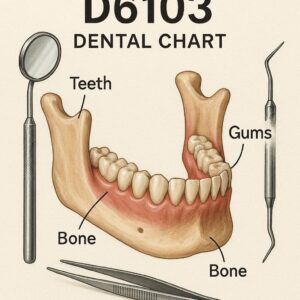
D6103 is the specific CDT code for a procedure officially titled: “Bone Graft at Time of Implant Placement.”
While the official name specifies “implant placement,” in modern clinical practice, this code is most frequently used for a specific type of procedure known as socket preservation (or socket grafting). This is done immediately after a tooth is extracted, preparing the site for a future dental implant.
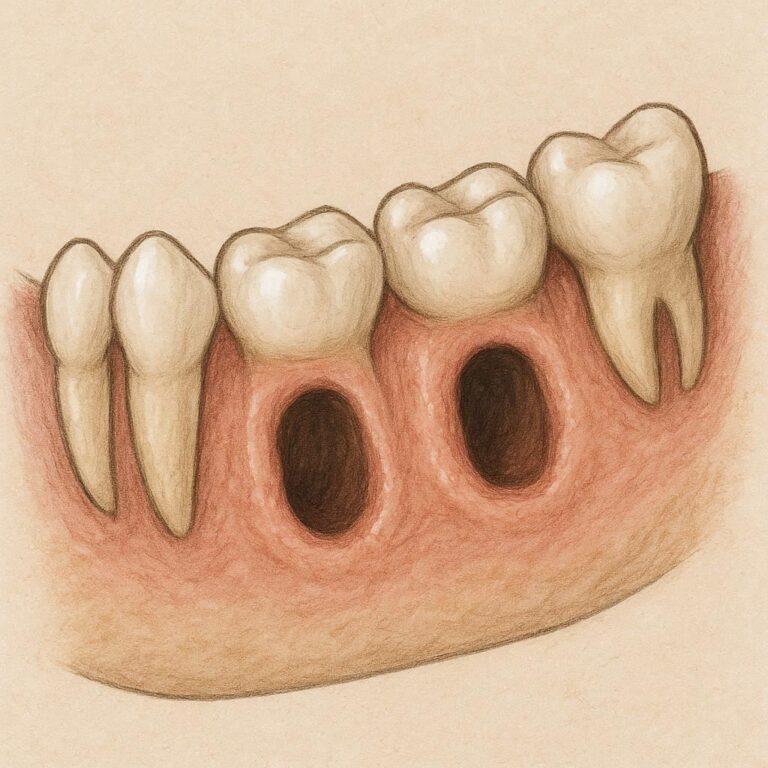
Think of it this way: when a tooth is removed, it leaves a hole in your jawbone (the socket). The D6103 procedure involves filling that fresh socket with grafting material to preserve the bone volume and shape.
Why “At Time of Implant Placement” Can Be Misleading
The official wording of the code can cause some confusion. While it can be used when placing an implant and adding bone graft at the same appointment, it is far more common to use this code for a procedure that happens months before the implant is placed.
Here is the distinction:
-
Immediate Placement: In some cases, a dentist can place a dental implant right into the fresh socket after an extraction. If they also place bone graft material around that new implant to fill gaps, they would bill D6103.
-
Delayed Placement (Socket Preservation): This is the most common scenario. The tooth is extracted, and the socket is filled with bone graft material. The site is then sealed and left to heal for several months. Only after the bone has fully healed and regenerated will the implant be placed. This two-step process is what most patients experience, and it is the primary focus of this article.
So, when you see D6103 on your treatment plan following an extraction, your dentist is almost certainly recommending socket preservation to protect your jawbone for a future implant.
The Procedure: What Happens During a D6103?
Understanding what physically happens during the procedure can alleviate anxiety and help you appreciate the value of the service. The D6103 procedure is a surgical, yet routine, addition to a tooth extraction.
Here is a step-by-step breakdown of what typically occurs:
-
Tooth Extraction: The process begins with the careful removal of the problematic tooth. The dentist or oral surgeon uses specialized instruments to gently loosen and extract the tooth, taking care to preserve the surrounding bone walls of the socket as much as possible.
-
Socket Evaluation and Debridement: Once the tooth is out, the provider examines the empty socket. They will thoroughly clean the area, removing any infection, granulation tissue (soft tissue that forms during healing), or debris. A clean site is essential for successful grafting.
-
Preparation of the Graft Material: The dentist will then prepare the chosen bone grafting material. This material acts as a scaffold, encouraging your body’s own bone cells to grow into the space.
-
Placement of the Bone Graft: The grafting material is carefully packed into the socket. The goal is to fill the space completely while maintaining the natural contours of the ridge where the tooth used to be. This prevents the surrounding gum and bone from collapsing inward.
-
Application of a Barrier (Membrane): Often, but not always, a protective barrier is placed over the graft material. This is a thin membrane that covers the opening of the socket.
-
Purpose: It acts as a barrier, keeping fast-growing gum tissue cells from invading the socket space. You want slow-growing bone cells to repopulate the area, not gum tissue. The membrane ensures that only bone-forming cells enter the graft site.
-
Types: Some membranes are resorbable and dissolve on their own over a few weeks. Others are non-resorbable and require a second, minor procedure to remove them. Your dentist will choose the type best suited for your situation. Note: If a membrane is used, it may be billed with a separate code, such as D4266 or D4267.
-
-
Closure and Suturing: Finally, the dentist will suture (stitch) the gum tissue closed over the site. This protects the graft, stabilizes the membrane (if used), and promotes undisturbed healing.
Types of Bone Graft Material
Not all bone graft materials are the same. Your dentist will choose the best option based on the size of the socket, your overall health, and your budget. The material used is a key factor in the overall cost.
| Graft Material Type | Source | Pros | Cons |
|---|---|---|---|
| Autograft | Bone harvested from another site in your own body (e.g., from the chin, ramus, or hip). | Considered the “gold standard” as it is living bone with natural growth factors. No risk of disease transmission or rejection. | Requires a second surgical site, which can increase pain and recovery time. Limited supply. |
| Allograft | Cadaver bone that has been processed and sterilized. | No second surgical site. Excellent safety record. Available in unlimited quantities. Very common and predictable. | No living cells, so it acts mainly as a scaffold (osteoconductive). |
| Xenograft | Bone derived from another species, most commonly a cow (bovine). | Structure is very similar to human bone, providing an excellent scaffold. Good volume stability. | Resorbs (is replaced by your own bone) very slowly. No living cells. |
| Alloplast | Synthetic materials, such as hydroxyapatite, calcium phosphate, or bioactive glass. | No risk of disease transmission. Unlimited supply. Consistent quality. | It is purely synthetic and works only as a scaffold. |
Important Note: Your dentist will discuss the type of material they recommend and why. Do not hesitate to ask questions about the source and safety of the material—it is a perfectly reasonable and common question.
Why is D6103 (Socket Preservation) So Important?
You might be wondering, “Why can’t I just have the tooth pulled and worry about the implant later?” This is a fair question. The answer lies in understanding what happens to your jawbone after a tooth is lost.
When a tooth is removed, the bundle of nerves and blood vessels that supplied it is also gone. The body interprets this as a signal that the bone surrounding that tooth is no longer needed. As a result, a natural process called resorption begins. The body starts to break down and absorb the jawbone in that area.
The Consequences of Not Grafting
Skipping the D6103 procedure and simply extracting the tooth can lead to several challenges down the road:
-
Bone Loss: Within the first year after an extraction, a significant amount of bone width and height can be lost. Studies show that about 40-60% of bone volume can disappear within the first three years.
-
Collapsed Ridge: The gum tissue will also shrink and collapse into the void left by the missing tooth and bone. This creates a noticeable defect in your jawline, which can affect your smile and facial aesthetics.
-
Implant Complications: A dental implant needs a certain amount of healthy, strong bone to be successfully placed. If too much bone is lost, there may not be enough to secure the implant. This could necessitate a much more complex and expensive bone grafting surgery later, just to rebuild the bone before an implant can even be considered.
-
Compromised Adjacent Teeth: The teeth next to the gap may start to drift or tilt into the empty space, leading to bite problems and making them harder to clean, which increases the risk of decay and gum disease.
The Benefits of Socket Preservation
Choosing the D6103 procedure is an investment in preventing the problems listed above. The benefits are clear:
-
Preserves Bone Volume: The primary goal is to maintain the height and width of the jawbone, creating an ideal foundation for a future dental implant.
-
Simplifies Future Implant Placement: With the bone structure preserved, your dentist or surgeon can often place an implant using a simpler, less invasive technique.
-
Improves Aesthetic Results: By maintaining the bone and gum contours, the final implant crown will look more natural and seamlessly blend in with your surrounding teeth. The gumline will appear healthy and even.
-
Saves Time and Money in the Long Run: While it adds an upfront cost, socket preservation can prevent the need for a major ridge augmentation or sinus lift later, which are significantly more expensive and require longer healing times.
-
Supports Adjacent Teeth: It helps maintain the stability of the dental arch, preventing the neighboring teeth from shifting out of position.
D6103 and Dental Insurance
Navigating insurance coverage for D6103 can be the most complex part of the process. Policies vary widely, so it is crucial to understand your specific plan.
Is it Covered?
The answer is: It depends on your plan. Historically, many dental insurance plans considered bone grafting to be a “major” or “surgical” procedure, often with limited coverage. However, as the success of dental implants has become the standard of care, more insurance companies are recognizing the medical necessity of socket preservation.
-
Medical Necessity: Insurance is more likely to provide coverage if the graft is deemed “medically necessary.” For example, if the tooth is being extracted due to trauma or severe infection that has already compromised the bone, the graft may be seen as a necessary part of the extraction and reconstruction process.
-
Plan Limitations: Some plans may cover a percentage (often 50%) of the cost after you meet your annual deductible. Others may have a fixed annual maximum benefit that includes all procedures, from cleanings to crowns to grafts. Once that maximum is reached, you pay 100% of the costs for the remainder of the year.
-
Exclusion: Some basic plans may explicitly exclude coverage for any bone grafting procedures.
How to Check Your Coverage
Here is a proactive checklist to help you understand your benefits:
-
Call Your Insurance Company: The phone number is on the back of your insurance card. Be prepared to give them the specific code: D6103.
-
Ask Specific Questions:
-
“Is D6103 a covered benefit under my plan?”
-
“If so, what is my coverage percentage for this code?” (e.g., 50%).
-
“Do I have an annual deductible that applies to this procedure?”
-
“Is there a waiting period before this benefit kicks in?”
-
“Is there a clause regarding grafting for missing teeth? (Some plans only cover grafts for teeth that are being replaced with an implant).”
-
-
Talk to Your Dentist’s Office: Your dental office has a team dedicated to insurance coordination. They can often contact your insurance company on your behalf to get a “pre-determination of benefits” or “pre-authorization.” This provides a written estimate of what your insurance will pay and what your out-of-pocket cost will be before you commit to the procedure. This is the best way to avoid surprises.
A Note from Your Friendly Writer: Never rely solely on a phone call with a customer service representative. Always ask your dentist’s office to get a written pre-determination. This document is a legally binding estimate and provides the most accurate financial picture.
D6103 vs. Other Common Grafting Codes
Socket preservation is just one type of bone grafting. It is helpful to distinguish D6103 from other related codes you might encounter on a treatment plan.
| Code | Procedure Name | Description | When is it used? |
|---|---|---|---|
| D6103 | Bone Graft at Time of Implant Placement | Placing bone graft into a fresh extraction socket. | Immediately after a tooth is pulled to preserve bone for a future implant. |
| D4263 | Bone Replacement Graft for Ridge Preservation | A more extensive graft to rebuild a deficient ridge. | Used months or years after an extraction when the bone has already collapsed and needs to be rebuilt before an implant can be placed. |
| D7951 | Sinus Lift – Lateral Approach | Grafting bone into the floor of the maxillary sinus to increase bone height. | Required for upper jaw implants when the sinus cavity is too close to where the implant needs to go. |
| D7953 | Bone Graft for Ridge Cleft / Defect | Grafting a specific defect, often caused by a congenital condition (like a cleft palate) or trauma. | Used to repair a specific, often larger, structural defect in the jaw. |
Key Takeaway: D6103 is preventative—it prevents bone loss. D4263 and D7951 are reconstructive—they repair bone that has already been lost. Prevention is almost always less invasive and less expensive.
The Cost of D6103: What to Expect
The cost of a socket preservation procedure is not a fixed number. It varies based on several factors. However, we can provide a realistic range so you know what to expect.
Factors Influencing Price
-
Geographic Location: Dental fees are generally higher in major metropolitan areas with a higher cost of living than in rural areas.
-
Provider Type: A specialist, such as an oral surgeon or periodontist, will typically charge more than a general dentist for the same procedure due to their advanced training and the complexity of cases they typically handle.
-
Complexity of the Extraction: If the tooth is severely broken down or impacted, the extraction itself is more difficult. The grafting procedure can also be more complex if the socket walls are damaged.
-
Type and Amount of Graft Material: As you saw in the table above, different materials have different costs. Allograft is generally the most common and cost-effective, while autograft is more expensive due to the second surgery. The size of the socket also dictates how much material is needed.
-
Use of a Membrane: If a barrier membrane is required (codes D4266 or D4267), this adds to the total cost of the procedure.
Estimated Price Range
While these are estimates and can vary, you can generally expect the out-of-pocket cost for the D6103 procedure to fall within the following range:
-
General Dentist: $500 – $1,200
-
Specialist (Oral Surgeon/Periodontist): $800 – $1,800+
Remember, this is the fee for the grafting procedure alone and does not include the cost of the extraction (e.g., D7140 or D7210) or the future implant and crown. Your dentist’s office will provide you with a comprehensive treatment plan that itemizes all the costs.
What to Expect During Healing: A Patient’s Guide
The success of the D6103 procedure depends not only on the skill of your dentist but also on how well you care for the site during the healing process.
The First 24-48 Hours
-
Bleeding: Some oozing is normal. Bite gently on the gauze pad placed by your dentist, changing it as instructed. A moist black tea bag can also be used, as the tannic acid helps with clotting.
-
Swelling: Apply an ice pack to the outside of your face in 20-minute intervals (20 on, 20 off) to minimize swelling.
-
Rest: Take it easy. Avoid strenuous physical activity for at least 24 hours.
-
Diet: Stick to soft foods and liquids. Avoid hot foods and drinks for the first day, as heat can dissolve the blood clot. Do not use a straw, as the suction can dislodge the clot and graft material.
-
Oral Hygiene: Do not brush, rinse, or spit aggressively near the surgical site. You can gently brush other teeth. Your dentist may prescribe a special mouthrinse (like chlorhexidine) to use starting the day after surgery.
The First Two Weeks
-
Pain Management: Any discomfort can usually be managed with over-the-counter ibuprofen (Advil) or acetaminophen (Tylenol) or with prescribed pain medication. Take as directed.
-
Diet: Continue to eat a soft food diet. Think mashed potatoes, yogurt, smoothies (no straw!), soup, and scrambled eggs. Avoid crunchy, chewy, or sticky foods that could disturb the site.
-
Oral Hygiene: After the first 24 hours, you can begin very gently rinsing your mouth with a warm saltwater solution (1/2 teaspoon of salt in a cup of warm water) several times a day, especially after meals. This helps keep the area clean. Continue to be gentle when brushing near the site.
-
Stitches: If you have non-resorbable stitches, you will have a follow-up appointment to have them removed, usually after 7-14 days.
Long-Term Healing
-
Maturation: The grafted site needs time to mature. The bone graft material acts as a scaffold, and your body’s own bone cells will slowly grow into it. This process is called graft incorporation.
-
Healing Timeline: Complete healing can take 4 to 6 months or even longer. This is the waiting period before you can begin the implant placement phase. Your dentist will take periodic X-rays to monitor the healing and determine when the bone is dense and strong enough to support an implant.
Signs of Complications (When to Call Your Dentist)
While complications are rare, contact your dentist immediately if you experience:
-
Severe pain that is not controlled by medication.
-
Excessive bleeding that won’t stop with pressure.
-
Visible signs of infection, such as increasing swelling, redness, pus, or fever.
-
The graft material or membrane becoming dislodged or falling out.
Frequently Asked Questions (FAQ)
Here are answers to some of the most common questions patients have about the D6103 procedure.
Q: Is the D6103 procedure painful?
A: The procedure itself is performed under local anesthesia, so you will not feel any pain during the extraction and grafting. After the anesthesia wears off, you can expect some discomfort, soreness, and swelling, similar to a routine tooth extraction. This is usually well-managed with over-the-counter or prescribed pain relievers.
Q: How long does the D6103 procedure take?
A: The grafting part of the procedure typically adds only 15-30 minutes to the overall extraction appointment. The most time-consuming part is the careful extraction of the tooth itself.
Q: What is the success rate of socket preservation?
A: Socket preservation has a very high success rate, often cited as over 95% in healthy patients. Success depends on factors like the reason for the extraction, the patient’s overall health (e.g., uncontrolled diabetes or smoking can impair healing), and adherence to post-operative instructions.
Q: Can I smoke after a D6103 procedure?
A: No. Smoking is extremely detrimental to healing. It restricts blood flow to the surgical site, which starves the graft of the oxygen and nutrients it needs to integrate. Smoking significantly increases the risk of graft failure and infection. You should not smoke for at least several weeks, and ideally longer, during the healing phase. Be honest with your dentist about your smoking habits so they can give you the best advice.
Q: What happens if I don’t get the D6103 and then decide against an implant?
A: If you are absolutely certain you never want an implant, a bridge, or a partial denture, then a socket preservation may not be necessary. However, many people choose to keep their options open. It is much better to have the bone preserved now than to need a complex, expensive bone graft years later if you change your mind. The bone loss is permanent and progressive.
Q: Does insurance cover D6103 if the tooth was pulled due to an accident?
A: Possibly. Trauma cases can sometimes have better coverage, especially if your medical insurance (as opposed to dental insurance) might also play a role. It is always worth asking both your dental and medical insurers, providing them with the full details of the accident.
Additional Resource
For further information on dental implants and the procedures that support them, the American Academy of Periodontology (AAP) is an excellent resource. They provide patient-focused guides on gum disease, bone grafting, and dental implants.
Conclusion
Understanding the D6103 dental code empowers you to take control of your oral health. This procedure, often called socket preservation, is a proactive step to protect your jawbone immediately after a tooth extraction. By preserving bone volume, it paves the way for a simpler, more predictable, and aesthetically pleasing dental implant in the future. While it involves an additional cost and a longer healing timeline before the final restoration, it is a valuable investment that can prevent more complex and expensive procedures down the road.