Decoding Dental Code D2799: The Definitive Patient Guide to Crowns
If you have recently been told by your dentist that you need a crown, you might have noticed a string of strange numbers and letters on your treatment plan. Among them, “D2799” can look like just another piece of administrative clutter. But understanding this specific code—officially known as the prosthodontic code for a crown—can actually empower you to make better decisions about your dental health and your wallet.
In the world of dentistry, codes are the language of insurance companies and dental offices. They ensure that everyone is on the same page regarding what procedure was performed and why. However, for the patient, this language often feels like a barrier rather than a bridge.
This guide is designed to pull back the curtain on one specific code: Dental Code D2799. We will explore what it means, when it is used, how much it might cost, and why it might be the right solution for your dental needs. Whether you are facing a root canal, have a cracked tooth, or are simply trying to understand your insurance Explanation of Benefits (EOB), consider this your friendly, comprehensive roadmap.
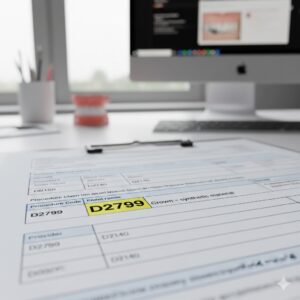
What Exactly is Dental Code D2799?
Let’s start with the basics. In the Current Dental Terminology (CDT), every procedure a dentist performs is assigned a specific alphanumeric code. These codes are maintained by the American Dental Association (ADA) and are updated regularly to reflect new technologies and techniques.
D2799 is defined as a “Provisional Crown.” It falls under the broader category of “Prosthodontics, fixed prosthodontics,” which is the dental specialty regarding the replacement of missing teeth with fixed (non-removable) appliances.
To put it simply: D2799 is a temporary crown.
However, it is crucial to understand that not all temporary crowns are created equal, and the context of this code is more specific than just a “temp” you wear for two weeks while your permanent crown is being made.
The Official Definition
According to the CDT manual, D2799 is specifically used for a crown that is:
-
Fabricated by a dentist.
-
Placed to last for a longer duration than a standard interim (temporary) crown. We are talking weeks to several months.
-
Used as a diagnostic tool or for treatment planning purposes.
This is where the nuance lies. If you break a tooth and your dentist quickly whips up a plastic cap to protect it for two weeks, that is usually coded as a different type of interim restoration (often D9610 or similar, depending on the complexity). D2799 implies a more robust, longer-lasting solution that serves a purpose beyond just short-term protection.
Why Would You Need a D2799 Provisional Crown?
Understanding why a dentist recommends this specific code helps you understand the “big picture” of your dental treatment. It is rarely a standalone procedure; it is almost always a step in a larger journey toward optimal oral health. Here are the most common scenarios where you will encounter D2799.
1. The “Wait and See” Approach
Sometimes, the health of a tooth is uncertain. Perhaps you have a tooth with a large filling that is showing signs of stress, or you have just undergone a deep root canal treatment. The dentist might be unsure if the tooth structure is strong enough to support a permanent, expensive crown.
-
The Strategy: By placing a D2799 provisional crown, the dentist can monitor the tooth for a set period. Does it remain pain-free? Is the gum tissue healthy? If the tooth responds well, they can later replace it with a permanent crown (coded as D2740 for porcelain fused to metal, D2750 for porcelain/ceramic, etc.). If problems arise, removing a provisional crown is far less costly and invasive than removing a permanent one.
2. Extensive Treatment Planning
For complex cases involving multiple teeth or a full-mouth rehabilitation, deciding on the final bite, alignment, and aesthetics can be challenging. A provisional crown made under D2799 acts as a “test drive.”
-
The Strategy: The dentist can adjust the shape, size, and color of the provisional crowns over several weeks. This allows the patient to “feel” the new bite and see the aesthetic result before the final, expensive crowns are fabricated in a dental lab. It is a roadmap for the final destination.
3. Prolonged Healing Time
After certain dental surgeries or in patients with specific healing conditions, the gum tissue and bone may need more time to stabilize before a final impression can be taken. A flimsy, standard temporary might break or fail during this extended healing phase. A D2799 provisional crown is made from a stronger material to withstand the forces of chewing for a longer duration without fracturing.
4. Implant Restoration (The “Healing Cap” Phase)
While a crown on an implant has its own set of codes, a provisional crown (D2799) is sometimes placed on a dental implant to condition the gum tissue. This helps create a natural-looking emergence profile—the way the tooth emerges from the gum—which is critical for the final aesthetic result.
D2799 vs. Other Crown Codes: A Comparison
One of the biggest sources of confusion for patients is the difference between a temporary crown and a permanent one, and why the costs vary so wildly. To make this crystal clear, let’s look at a comparison table.
| Dental Code | Description | Material | Longevity | Primary Purpose | Typical Cost Range (Per Tooth) |
|---|---|---|---|---|---|
| D2799 | Provisional Crown | Harder acrylic, bis-acryl composite, or metal. | Weeks to several months. | Diagnostic / Intermediate. To assess tooth health, plan treatment, or allow for extended healing. | $300 – $700 |
| D2740 | Crown – Porcelain/Ceramic | All-porcelain, zirconia, lithium disilicate (e.g., e.max). | 5 – 15+ years. | Permanent Restoration. Aesthetic, metal-free solution for a damaged tooth. | $1,000 – $2,500+ |
| D2750 | Crown – Porcelain fused to High Noble Metal | A core of high-gold-content metal covered with tooth-colored porcelain. | 5 – 15+ years. | Permanent Restoration. Excellent strength and durability with a natural appearance. | $1,000 – $2,200+ |
| D2790 | Crown – Full Cast High Noble Metal | Entirely made of high-gold-content metal. | 10 – 20+ years. | Permanent Restoration. Maximum strength, best for molars where wear is highest. | $900 – $2,000+ |
Important Note: The costs listed above are estimates for the patient portion before insurance. They reflect the complexity, materials, and lab fees involved. The D2799 is significantly less expensive because it is fabricated in the dental office, not in an external lab, and is not intended to be a permanent solution.
The Procedure: What to Expect When Getting a D2799 Crown
If your dentist has recommended a D2799 provisional crown, the process is generally straightforward and less intense than getting a permanent crown. Here is a step-by-step look at what your appointment might entail.
Step 1: Tooth Preparation
Just like with a permanent crown, your tooth needs to be shaped to accommodate the crown. The dentist will use a dental drill to remove a thin layer of enamel from all sides of the tooth. This creates space so the crown can fit over the tooth without making it feel bulky. If the tooth has significant decay or damage, this step also involves removing that compromised structure.
Step 2: Taking an Impression
Once the tooth is properly shaped, the dentist needs a mold (impression) of the prepared tooth and the surrounding teeth. This ensures the provisional crown will fit correctly and make proper contact with your other teeth. Traditionally, this was done with a tray filled with putty-like material, but many offices now use digital scanners (intraoral cameras) to create a 3D digital model.
Step 3: Fabricating the Provisional Crown
This is where D2799 differs from a standard “temp.” Instead of simply filling a pre-formed plastic mold with gooey material and popping it on your tooth, the dentist will create a more durable crown.
-
Direct Method: The dentist may use a high-strength bis-acryl composite material. They fill a matrix (often made from a pre-operative impression) with the material and seat it over your prepared tooth. Once it hardens, they remove it, trim it, and polish it to a smooth finish.
-
Indirect Method: In some cases, the dentist might take an impression and send it to a small in-office lab or use a chairside milling machine to create a more precise and durable acrylic crown.
Step 4: Try-In and Cementation
The new provisional crown is placed on your tooth. The dentist will check the fit, the bite (occlusion), and the contact points with neighboring teeth. You might be asked to bite down on colored paper to see if the crown is too high. If it feels good, it is cemented into place with a temporary or semi-permanent dental cement. This cement is strong enough to hold the crown securely but weak enough to allow the dentist to remove it easily when it is time for the permanent restoration.
The Financial Aspect: Cost and Insurance Coverage for D2799
Money is often the most stressful part of dental treatment. Let’s break down the costs and how insurance typically views this code.
The Cost Range
As mentioned in the table, the out-of-pocket cost for a D2799 provisional crown generally falls between $300 and $700 per tooth. This price can vary based on:
-
Geographic Location: Dental fees in major metropolitan areas are typically higher than in rural areas.
-
Dentist’s Expertise: A specialist (prosthodontist) may charge more than a general dentist.
-
Complexity of the Case: If the provisional crown requires significant adjustments or is part of a complex multi-tooth rehabilitation, the fee may be higher.
How Does Dental Insurance Handle D2799?
This is where things can get tricky. Because a D2799 crown is not a permanent restoration, insurance companies have varying policies regarding it.
-
As Part of a Permanent Crown: If the D2799 is placed with the intention of being replaced by a permanent crown (e.g., D2740) in a few months, most insurance plans will consider the fee for the provisional crown to be included in the overall cost of the permanent crown. You will likely pay for the D2799 out-of-pocket at the time of service, but this amount may count toward your annual deductible or maximum for the final procedure.
-
As a Standalone Procedure: If the provisional crown is being used for long-term monitoring or as a diagnostic tool, and a permanent crown is not immediately planned, some insurance plans may cover a percentage of it as a basic restorative procedure. However, it is far more common for it to be considered a non-covered service or a patient responsibility.
-
Frequency Limitations: Insurance will typically only cover one crown per tooth every 5 to 10 years. Since D2799 is a provisional crown, it usually does not trigger this limitation, but it’s essential to verify with your provider.
Your Action Plan:
-
Call Your Insurance: Before the procedure, ask your insurance company, “How does my plan handle code D2799, a provisional crown?”
-
Ask Your Dentist’s Office: The billing coordinator is an expert in this. They can often give you a fairly accurate estimate of your out-of-pocket cost based on their experience with your specific insurance carrier.
-
Understand the “Why”: Knowing why you need this provisional step helps you understand its value, even if insurance doesn’t cover it.
Caring for Your D2799 Provisional Crown
You’ve just invested in a provisional crown. To ensure it lasts as long as it needs to, proper care is essential. Unlike a permanent crown that is virtually impervious to decay, a provisional crown is more vulnerable.
The “Chewing” Rules
-
Avoid Sticky Foods: Caramel, taffy, gummy candies, and even crusty bread can grab onto the provisional crown and pull it right off.
-
Be Careful with Hard Foods: Nuts, ice, hard candies, and bones can crack or fracture the acrylic material.
-
Chew on the Other Side: For the duration you have the provisional crown, try to consciously chew your food on the opposite side of your mouth.
Oral Hygiene is Non-Negotiable
One of the biggest risks with any crown is decay at the margin—the line where the tooth meets the crown. Because a provisional crown is cemented with temporary cement, the seal is not 100% perfect, making it even more susceptible to leakage and decay.
-
Brush Gently but Thoroughly: Brush the area normally, but be gentle around the gumline where the crown meets your tooth.
-
Floss with Care: Do not simply pop the floss out. Instead, pull the floss through the side. This prevents you from accidentally pulling the crown off with the floss.
What to Do If It Comes Off
If your provisional crown comes off, don’t panic.
-
Keep it Safe: Retrieve the crown.
-
Call Your Dentist: Schedule an appointment to have it re-cemented as soon as possible. Leaving the prepared tooth exposed can lead to sensitivity, shifting of adjacent teeth, and damage to the prepared surface.
-
Temporary Fix (if needed): If you cannot get to the dentist immediately, you can buy temporary dental cement (like Dentemp) at a pharmacy to hold the crown in place for a day or two. Do not use superglue.
The Pros and Cons of a D2799 Approach
Is opting for a provisional crown a good strategy for you? It depends entirely on your unique situation. Let’s weigh the advantages and disadvantages.
The Advantages
-
Informed Decision-Making: It allows you and your dentist to gather data before committing to a major financial investment. You aren’t “stuck” with a permanent crown if the tooth fails.
-
Aesthetic Preview: For front teeth, it gives you a chance to see the shape and size of the new tooth and request changes before the final one is made.
-
Gum Tissue Management: It promotes healthy gum tissue maturation around the new tooth, leading to a better final aesthetic result.
-
Protection: It provides a strong, durable barrier for a vulnerable tooth during an extended period.
The Disadvantages
-
Additional Cost and Time: It adds at least one more dental visit and an additional fee to your treatment timeline. Instead of two appointments (preparation and seat), you are looking at three (preparation with provisional, follow-up, and seat of permanent).
-
Material Limitations: The acrylic material of a D2799 is not as strong or stain-resistant as porcelain or metal. It may wear down or discolor slightly over several months.
-
Risk of Dislodgement: While stronger than a basic temp, it is still more prone to coming loose than a permanently cemented crown.
D2799 and Your Rights as a Patient
In the complex dance of dental insurance and treatment planning, it’s important to remember that you are the ultimate decision-maker. A treatment plan is a proposal, not a command. When D2799 appears on your plan, you have every right to ask questions.
Questions to Ask Your Dentist
Don’t be shy. A good dentist will welcome your engagement in your own healthcare. Here are a few questions you might consider:
-
“I see D2799 on my plan. Can you explain why a provisional crown is the best choice for me right now, rather than a standard temporary or going straight to a permanent one?”
-
“How long do you anticipate I will need to wear this provisional crown?”
-
“What are the chances that we will discover the tooth is not savable during this provisional phase?”
-
“Can you give me a written estimate that separates the cost of the D2799 from the future permanent crown?”
-
“Based on your experience, how does my insurance typically handle this code?”
Conclusion
Dental Code D2799 might look like a small, technical detail on a large treatment plan, but it represents a thoughtful and cautious approach to dental care. It is the code for a provisional crown—a durable, intermediate restoration used not just for protection, but for diagnosis, planning, and ensuring the best possible outcome for your permanent tooth.
Whether it is used to monitor a questionable tooth, design your perfect smile, or allow your mouth time to heal, the D2799 procedure is a tool in your dentist’s kit to provide you with the highest quality, most predictable care. By understanding what this code means, why it is used, and how it impacts your finances, you are no longer just a passive recipient of dental treatment. You are an active, informed partner in your journey toward a healthier, more confident smile.
Frequently Asked Questions (FAQ)
1. Is a D2799 crown the same as a “temporary crown”?
Not exactly. While it is a type of temporary crown, it is designed to be more durable and last longer than the standard “temp” you get for the two weeks it takes to make a permanent crown. It is meant for extended use, often for diagnostic or complex treatment planning purposes.
2. Will my dental insurance pay for code D2799?
Coverage varies widely. Some plans consider it part of the permanent crown procedure and do not provide separate benefits, meaning you pay out-of-pocket. Others may cover it as a basic service if it is a standalone treatment. It is crucial to check with your insurance provider before the procedure.
3. How long can a D2799 provisional crown last?
With excellent care, these crowns can last anywhere from 6 months to over a year. However, they are not designed for permanent use and will eventually need to be replaced with a permanent crown (like D2740 or D2750) or another definitive restoration.
4. Is getting a D2799 crown painful?
The procedure itself is performed under local anesthesia, so you should not feel any pain during the tooth preparation. After the anesthesia wears off, the tooth may be slightly sensitive to temperature or pressure for a few days, which is normal.
5. Can I eat normally with a provisional crown?
You can eat most foods, but you should avoid sticky and very hard foods to prevent dislodging or breaking the crown. It’s best to be mindful and chew on the opposite side of your mouth when possible.
6. What happens if my provisional crown breaks?
Contact your dentist immediately. Depending on the break, they may be able to repair it in the office or may need to fabricate a new one. Do not wait, as the underlying tooth is now vulnerable.
Additional Resource
For the most authoritative and up-to-date information on dental codes and terminology, the definitive source is the American Dental Association (ADA). You can explore their resources on the Current Dental Terminology (CDT) here:
American Dental Association – CDT Code