Dental Code D3330: A Friendly Guide to Understanding Your Root Canal Procedure
Let’s be honest: few things in life cause as much anxiety as hearing those two little words from your dentist: “root canal.” Suddenly, your mind is flooded with questions. Will it hurt? How much will it cost? And what is my insurance actually going to cover?
If you’ve recently received a treatment plan with the code D3330 on it, you might be staring at a piece of paper filled with clinical jargon and numbers. It can feel overwhelming.
But don’t worry, we’re going to walk through this together. Think of this as your friendly, no-nonsense guide to understanding exactly what Dental Code D3330 means. We’ll break down the procedure, the costs, the insurance implications, and everything in between. By the end of this article, you’ll be equipped with the knowledge to talk confidently with your dentist and your insurance company.
What Exactly is Dental Code D3330?
In the world of dentistry, codes are a universal language used by dentists and insurance companies to describe specific procedures. Think of them as the secret handshake of the dental world. The Current Dental Terminology (CDT) code D3330 is a big one.
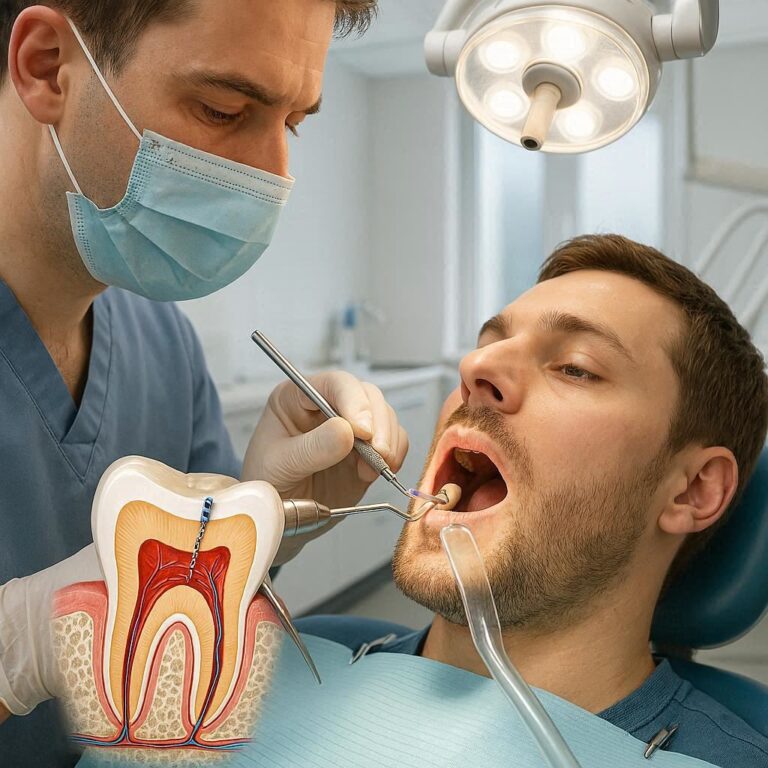
Simply put, Dental Code D3330 is the official code for an Endodontic Therapy, Molar (excluding final restoration) .
Let’s translate that mouthful into plain English.
-
Endodontic Therapy: This is the fancy term for a root canal. “Endo” means inside, and “odont” means tooth. So, it’s treatment inside the tooth.
-
Molar: This specifies that the procedure is being performed on a molar. Molars are your large, flat teeth in the back of your mouth used for chewing. They usually have three or four roots, making them more complex to treat than teeth in the front.
-
Excluding final restoration: This is a crucial part. It means the code covers the root canal procedure itself—cleaning out the infection and sealing the tooth—but it does not include the crown or filling needed to protect the tooth afterward. That final cap is billed separately.
So, when you see D3330 on your treatment plan, you are looking at a specialized root canal procedure on a back tooth.
D3330 vs. Other Root Canal Codes: Why the Difference Matters
You might wonder why there isn’t just one code for all root canals. The reason is complexity. Treating a tiny front tooth with one root is very different from treating a large molar with multiple, curved roots. The American Dental Association (ADA) recognizes this and has specific codes for different tooth types.
Here’s a quick comparison to help you see the difference:
| Procedure Code | Description | Typical Tooth Type | Complexity Level | What it Includes |
|---|---|---|---|---|
| D3310 | Endodontic Therapy, Anterior Tooth | Incisors & Canines (front teeth) | Low | Root canal on a tooth with one root. |
| D3320 | Endodontic Therapy, Bicuspid Tooth | Premolars (between front and back) | Moderate | Root canal on a tooth with one or two roots. |
| D3330 | Endodontic Therapy, Molar Tooth | Molars (back chewing teeth) | High | Root canal on a tooth with three or more roots. |
Important Note for Readers: The code D3330 is specifically for the initial root canal treatment on a molar. If the same tooth needs to be retreated later because the infection returned, a different code (D3346, D3347, or D3348) would be used.
The “Why” Behind the Code: Understanding the Procedure
So, why would you need a D3330 procedure in the first place? It all starts with the inner part of your tooth, called the pulp. The pulp is a soft tissue made up of nerves, blood vessels, and connective tissue. It helped your tooth grow when you were younger, but a fully mature tooth can survive without it.
Problems arise when the pulp becomes inflamed or infected. This can happen for several reasons:
-
Deep Decay: A large, untreated cavity can allow bacteria to penetrate deep into the tooth, reaching the pulp.
-
Crack or Chip: A crack in your tooth can expose the pulp to bacteria in your mouth and irritate it.
-
Repeated Dental Procedures: Having multiple procedures done on the same tooth can stress the pulp over time.
-
Trauma: A blow to the tooth, even if it doesn’t cause a visible crack, can damage the pulp and lead to infection years later.
When the pulp is damaged, it can’t heal on its own. The bacteria multiply inside the tooth, leading to pain, sensitivity, swelling, and potentially an abscess (a pocket of pus at the root tip). If left untreated, it can lead to serious health issues and, ultimately, tooth loss.
This is where the D3330 procedure saves the day. The goal is simple: remove the infected pulp, clean and disinfect the inside of the tooth, and seal it to prevent future infection. This allows you to keep your natural tooth.
Signs You Might Need a D3330 Procedure
How do you know if that dull ache or sharp pain warrants a trip to the dentist for a possible root canal? Here are some common signs that the pulp is in trouble:
-
Persistent Pain: Constant tooth pain that doesn’t go away. It might travel to other areas of your jaw, face, or ear.
-
Sensitivity to Heat and Cold: A sharp, lingering pain when you drink hot coffee or eat ice cream. This is a classic sign of pulp damage.
-
Tenderness when Chewing: Pain or discomfort when you bite down or touch the tooth.
-
Swollen Gums: Swelling, tenderness, or a small, pimple-like bump (a parulis or “gum boil”) on the gums near the sore tooth. This bump might drain pus, causing a bad taste or smell.
-
Discoloration of the Tooth: A tooth that has become dark, gray, or yellowish, indicating that the pulp is likely not healthy.
-
Loose Tooth: An infected tooth can feel loose because the bone supporting it has softened due to the pus from the infection.
If you are experiencing any of these symptoms, it is crucial to see your dentist. Only an X-ray and a clinical exam can confirm whether a D3330 procedure is the right solution.
What to Expect During Your D3330 Procedure: A Step-by-Step Walkthrough
Knowledge is power, and knowing what will happen during your appointment can significantly reduce anxiety. Modern endodontic therapy is remarkably similar to getting a routine filling, thanks to effective anesthetics. Here is a typical step-by-step breakdown of what a D3330 procedure looks like.
Step 1: Diagnosis and Preparation
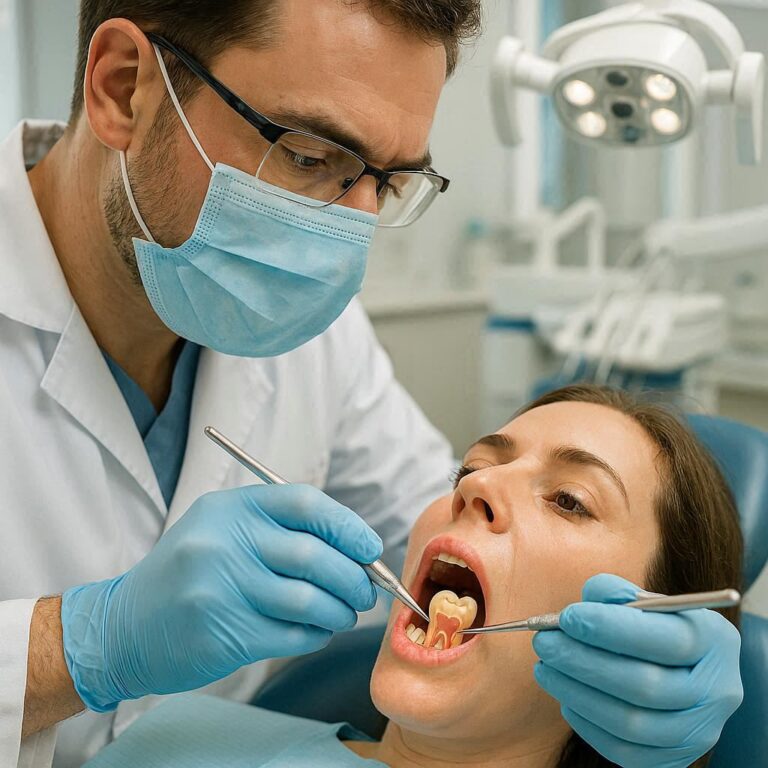
Before the procedure begins, your dentist or endodontist (a root canal specialist) will review your X-rays. This helps them see the shape of your roots and confirm that the infection is in the pulp. They will then numb the area with a local anesthetic. You’ll feel a small pinch from the needle, but after that, the area will be completely numb throughout the procedure. A dental dam—a small rubber sheet—will be placed around the tooth to keep it dry and free from saliva during the treatment.
Step 2: Creating the Access Opening
Once you are numb and comfortable, the dentist will drill a small opening through the biting surface of your molar. This “access opening” allows them to reach the pulp chamber and root canals inside the tooth.
Step 3: Removing the Infected Pulp
Using very small instruments called files, the dentist will gently remove the infected, dead, or diseased pulp tissue from the pulp chamber and each of the root canals. They will carefully clean and shape the canals to prepare them for filling.
Step 4: Cleaning and Disinfecting
Throughout the filing process, an irrigation solution (often sodium hypochlorite, or bleach) is used to flush out debris and disinfect the canals, killing any remaining bacteria. This step is vital for ensuring the infection is completely gone.
Step 5: Sealing the Canals
After the canals are thoroughly cleaned and dried, they are filled with a permanent, biocompatible material called gutta-percha. This rubber-like material is placed into the canals with an adhesive cement to seal them and prevent bacteria from re-entering.
Step 6: Temporary Filling
Finally, the access opening on the top of your tooth is closed with a temporary filling. This protects the tooth while you wait for the final restoration. Your dentist will then remove the dental dam, and the procedure is complete.
After the Procedure: The Road to Recovery
Once the anesthesia wears off, it’s normal to feel some tenderness in the area. Your jaw might also be sore from keeping it open for an extended period. The tooth itself might feel sensitive or have a dull ache for a few days, especially if it was painful or infected before the procedure. This discomfort is usually manageable and can be treated with over-the-counter pain relievers like ibuprofen or acetaminophen.
Here are a few tips for a smooth recovery:
-
Follow your dentist’s instructions: They are your best guide.
-
Take medication as prescribed: If your dentist prescribes antibiotics, finish the entire course, even if you feel better.
-
Avoid chewing on that side: Stick to softer foods for the first few days to give the tooth a rest.
-
Practice good oral hygiene: Continue brushing and flossing, but be gentle around the treated tooth.
-
Attend your follow-up appointment: It is essential to return to have the temporary filling replaced with a permanent crown.
The Cost of D3330: What You Need to Know About Pricing
Let’s talk about money. Dental procedures can be expensive, and D3330 is no exception. Because it is a complex procedure on a molar, it is typically the most expensive type of root canal.
The cost of a D3330 procedure can vary wildly based on several factors:
-
Your Geographic Location: Dental fees are generally higher in major metropolitan areas than in rural towns.
-
The Dentist vs. an Endodontist: A general dentist can perform molar root canals, but they often refer complex cases to an endodontist, a specialist. Seeing a specialist will usually cost more.
-
The Severity of the Problem: A straightforward case is less time-consuming than one with unusual anatomy or a severe infection.
On average, you can expect the cost for the D3330 procedure (the root canal itself) to range from $1,000 to $1,500 or more.
Remember the “Excluding Final Restoration” Part?
This cost is strictly for the endodontic therapy. After the tooth is healed, it will need a crown (often code D2740) to protect it from breaking. Molars endure tremendous force from chewing. Without a crown, a tooth that has had a root canal is very brittle and prone to fracture. The crown is a separate procedure and will add another $1,000 to $2,000 to the total bill, depending on the material used (porcelain, gold, zirconia, etc.).
How Dental Insurance Helps with D3330
Most dental insurance plans consider a root canal a basic or major restorative procedure. The percentage they cover depends on your specific plan.
-
Annual Maximum: This is the total dollar amount your insurance will pay in a calendar year. It is often around $1,500. If your D3330 procedure and crown cost $2,500, and your annual max is $1,500, you will be responsible for the remaining $1,000.
-
Deductible: This is the amount you have to pay out-of-pocket before your insurance starts to pay. You must meet your deductible first.
-
Coverage Percentage: A common coverage structure is 50%/80%. This means the insurance company pays 50% of the cost of a major procedure (like a root canal), and you pay the other 50%. Some plans might pay 80% for a root canal (considering it “basic”) and 50% for the crown (considering it “major”).
Here is a hypothetical example:
Let’s say your D3330 procedure costs $1,200 and your crown costs $1,300, for a total of $2,500.
-
Your annual deductible is $50.
-
Your plan covers root canals at 80% and crowns at 50% .
-
Your annual maximum is $1,500.
The Math:
-
You pay the $50 deductible.
-
Insurance pays 80% of the $1,200 root canal = $960. You pay the remaining 20% = $240.
-
Now, the insurance has paid $960 towards your annual max of $1,500. They have $540 left to pay for the year.
-
The crown costs $1,300. Insurance pays 50% of that, which would be $650. However, they only have $540 left in their annual max. So, they will pay $540.
-
You pay the remaining cost of the crown: $1,300 – $540 = $760.
Your total out-of-pocket cost:
$50 (deductible) + $240 (your share of root canal) + $760 (your share of crown) = $1,050.
Important Note: Always contact your insurance provider before the procedure to get a pre-treatment estimate. This will give you a much clearer picture of your financial responsibility. Your dentist’s office can usually help you with this.
Why Saving the Tooth Matters
When faced with the cost and time commitment of a D3330 procedure, some people wonder if it’s just easier to have the tooth pulled (extracted). Extraction is certainly cheaper upfront. A simple extraction code (D7140) might only cost $150-$300.
However, choosing extraction can lead to much larger expenses and health issues down the road.
-
Neighboring Teeth Shift: When a tooth is missing, the adjacent teeth can drift into the empty space. This can lead to a bad bite, crooked teeth, and areas that are hard to clean.
-
Bone Loss: The jawbone needs the stimulation of a tooth root to stay healthy and strong. When a tooth is removed, the bone in that area can begin to deteriorate or resorb.
-
Difficulty Chewing: Losing a molar significantly reduces your chewing efficiency, which can affect your diet and nutrition.
-
Cost of Replacement: If you decide later that you want to replace the missing tooth, the options are far more expensive than a root canal.
-
Dental Implant (D6010): This is the gold standard for replacement and can cost $3,000 to $6,000 for the surgical placement alone, not including the crown.
-
Bridge (D6240): A bridge uses the teeth on either side of the gap as anchors and can cost $2,000 to $5,000.
-
In the long run, investing in a D3330 procedure to save your natural tooth is often the most conservative, healthiest, and most cost-effective choice. Nothing works quite like your own natural tooth.
Additional Resources
For more information, you can visit the American Association of Endodontists’ website. They have excellent patient resources that explain root canal treatment and saving your natural teeth in greater detail.
Link to the American Association of Endodontists (AAE) Patient Information Page
Frequently Asked Questions (FAQ)
Q: Is a root canal (D3330) painful?
A: With modern anesthetics and techniques, a root canal is no more painful than getting a filling. The procedure itself is done to relieve pain, not cause it. Most patients report that the discomfort they felt before the procedure was far worse than the procedure itself.
Q: How long does a D3330 procedure take?
A: A molar root canal is a complex procedure. It usually takes one to two appointments, each lasting about 90 minutes. Your dentist will discuss the timeline with you based on your specific case.
Q: What is the success rate of a molar root canal?
A: Root canal treatment has a very high success rate, often cited as being over 95%. The key to long-term success is having the tooth properly restored with a crown afterward to protect it from fracture.
Q: Can I go to work or school after the procedure?
A: Many people feel fine enough to return to their normal activities the next day. However, it’s wise to plan for a relaxed day, especially if you were given sedation. Your mouth will be numb for a few hours, and you might be tired.
Q: My dentist referred me to an endodontist. Why can’t they do it?
A: General dentists are trained to perform root canals, and many do them routinely. However, they may refer you to an endodontist for complex cases, such as molars with difficult anatomy, teeth with calcified canals, or if they feel a specialist offers a better chance of long-term success. Endodontists have advanced training and technology specifically for these situations.
Conclusion
Dental Code D3330 represents a vital procedure designed to save a damaged or infected molar. While the code itself may look like cold, clinical billing jargon, it signifies a highly effective treatment that alleviates pain and preserves your natural smile. Understanding that this code covers the complex root canal therapy on a back tooth—and that a crown is a necessary, separate step—empowers you to make informed decisions about your oral health and finances.