
Dental Code D3348: A Complete Guide to Surgical Removal of an Impacted Tooth
If you have recently been told by your dentist or oral surgeon that you need a tooth extracted, you might have noticed a series of strange codes and numbers on your treatment plan. One code that often raises questions is Dental Code D3348.
Looking at a dental billing sheet can sometimes feel like reading a foreign language. You see the procedure described, and then you see a specific code next to it. For many patients, the code D3348 appears when a simple extraction isn’t possible.
This guide is designed to take the mystery out of this specific dental procedure. We will break down exactly what this code means, why it is used, the surgical procedure involved, the costs you might expect, and how to navigate your dental insurance.
Whether you are a patient preparing for surgery or simply someone trying to understand a treatment plan, you are in the right place. Let’s dive in and clarify everything you need to know about Dental Code D3348.
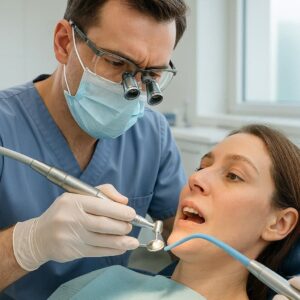
What is Dental Code D3348? Defining the Procedure
In the world of dentistry, standardized codes are used to ensure that dentists, insurance companies, and patients are all on the same page regarding the treatment provided. These are known as CDT codes (Current Dental Terminology). They are maintained by the American Dental Association (ADA) and are updated regularly.
Dental Code D3348 specifically refers to the surgical removal of an impacted tooth. But to fully understand this, we need to break down the key words: “surgical removal” and “impacted.”
Breaking Down the Terminology: Surgical vs. Simple Extraction
The first thing to understand is the difference between a simple extraction and a surgical extraction.
-
Simple Extraction (D7140, D7210): This procedure is performed on a tooth that is visible in the mouth. The dentist uses an instrument called an elevator to loosen the tooth and then forceps to remove it. It is a relatively straightforward procedure usually done under local anesthesia.
-
Surgical Extraction (D3348): This is a more complex procedure. It involves the removal of a tooth that cannot be easily accessed or removed. This often requires making an incision (cut) in the gum tissue, removing bone around the tooth, cutting the tooth into sections, or a combination of these techniques.
Dental Code D3348 falls firmly into the surgical category. It is not a code used for a tooth that is simply loose or easily grabbed with forceps.
What Does “Impacted” Mean?
The second critical part of this code is the word “impacted.” An impacted tooth is a tooth that has failed to erupt, or break through the gum, into its expected position. This happens for a variety of reasons, most commonly due to lack of space, awkward positioning, or obstruction by other teeth.
While we often associate impaction with wisdom teeth (third molars), any tooth in the mouth can become impacted. Canines (eyeteeth) and premolars are also frequent candidates for impaction.
When a tooth is impacted, it remains partially or fully trapped within the jawbone and gum tissue. Because it is not visible or accessible, a surgical approach is required to remove it, hence the need for code D3348.
When is D3348 Used? Common Scenarios
You will most commonly see Dental Code D3348 on a treatment plan for the following scenarios:
-
Impacted Wisdom Teeth: This is the most frequent application. Wisdom teeth often grow at angles (mesially, distally, horizontally) or get stuck beneath the gum line.
-
Impacted Canines: After wisdom teeth, upper canines are the most common teeth to become impacted. They are essential for a functional bite and a beautiful smile, so their removal is often part of orthodontic treatment to make room for them to be guided into place.
-
Residual Roots: Sometimes, after a tooth has broken or a previous extraction has failed, root tips can remain embedded in the bone. Surgically removing these residual roots also falls under this code.
-
Teeth with Severe Curvature: Some teeth have long, curved roots that cannot be removed simply by pulling. The dentist must surgically access the area to remove the tooth safely.
The Surgical Procedure: Step-by-Step
Knowing what to expect on the day of your surgery can significantly reduce anxiety. While every patient and tooth is unique, the general steps for a procedure coded as D3348 are quite standard.
It is important to remember that this is a surgical procedure, and you will be in capable hands, whether with a general dentist or a specialized oral surgeon.
Step 1: Anesthesia and Sedation
Before the surgeon makes any incisions, they will ensure you are completely comfortable. Options for pain management include:
-
Local Anesthesia: This numbs the specific area of the mouth. You are awake, but you will feel pressure and movement, not pain. This is often combined with other forms of sedation.
-
Nitrous Oxide (Laughing Gas): Inhaled through a mask, this helps you relax while remaining conscious and able to respond to the dentist.
-
Oral Sedation: A pill is taken before the procedure to make you drowsy.
-
IV Sedation: Medication is administered through a vein, leading to a state of deep relaxation. You may have little to no memory of the procedure. This is common for complex impacted tooth removals.
-
General Anesthesia: This is typically reserved for hospital settings or complex cases where the patient is completely unconscious.
Step 2: Incision and Access
Once the anesthesia has taken full effect, the surgeon will begin by making a small incision in your gum tissue. This is known as a flap. The purpose of this flap is to peel the gum tissue away from the bone, exposing the underlying area. Because the tooth is impacted, it is hidden beneath this gum and possibly the bone itself.
Step 3: Bone Removal (Osteotomy)
In many cases of impaction, a portion of the jawbone is covering the tooth. To access the tooth, the surgeon must carefully remove a small amount of this bone. This is done with a high-speed handpiece (drill) using sterile water to keep the area cool and prevent heat damage to the surrounding bone. This step is called an osteotomy.
Step 4: Tooth Sectioning
To minimize the amount of bone that needs to be removed and to make the extraction safer, the surgeon will often cut the tooth into smaller pieces. This is called sectioning. For example, a multi-rooted molar might be cut into two or three separate sections. Removing the tooth in pieces is much easier and less traumatic to the jaw than trying to pry the whole thing out in one piece.
Step 5: Luxation and Removal
Once the tooth is exposed and sectioned, the surgeon uses specialized instruments called elevators and luxators to gently loosen the tooth pieces from the periodontal ligament (the tissue that holds the tooth in the socket). Once loosened, the pieces are lifted out with forceps.
Step 6: Debridement and Cleaning
After the entire tooth and all its fragments are removed, the surgeon will thoroughly clean the empty socket (alveolus). They will irrigate it with a sterile saline solution to wash away any debris, bone dust, or bacteria. This is a critical step for preventing post-operative infections, like a dry socket.
Step 7: Closure (Sutures)
Finally, because an incision was made, the gum tissue needs to be placed back into its original position. The surgeon will close the incision with sutures (stitches). Some sutures are dissolvable and will disappear on their own in a few days to a week. Others will need to be removed at a follow-up appointment. The surgeon may also place gauze over the site to help control bleeding as a blood clot begins to form.
D3348 vs. Other Extraction Codes: A Comparative Look
It is easy to get confused by the different codes on a treatment plan. To help you understand why your dentist chose D3348, let’s compare it to other common extraction codes.
| CDT Code | Procedure Description | Typical Use Case | Complexity Level |
|---|---|---|---|
| D3348 | Surgical Removal of an Impacted Tooth | A tooth fully or partially covered by bone/gum, requiring an incision and bone removal. | High |
| D7140 | Simple Extraction | A visible, erupted tooth removed with forceps. No incision or bone removal. | Low |
| D7210 | Surgical Removal of an Erupted Tooth | A visible tooth that requires sectioning or bone removal to extract, but is not impacted. | Medium |
| D7230 | Removal of Impacted Tooth – Soft Tissue | The tooth is covered only by gum tissue, not bone. An incision is made, but no bone is removed. | Medium |
| D7240 | Removal of Impacted Tooth – Partially Bony | The tooth is partially covered by bone. Requires incision and some bone removal. | High |
| D7250 | Removal of Impacted Tooth – Completely Bony | The tooth is fully encased in bone. Requires significant bone removal. This is the most complex. | Very High |
As you can see, Dental Code D3348 is a broader code for impacted teeth. It often overlaps with D7240 and D7250, but it is the standard code used when the primary procedure is the surgical removal of an impacted tooth, regardless of the specific depth of impaction.
Important Note for Readers: Insurance companies may have their own specific guidelines for which code to use. Your dentist’s office will choose the code that most accurately reflects the complexity of your unique case based on the X-rays and clinical exam.
The Cost of Dental Code D3348: What Influences the Price?
The cost of a procedure coded as D3348 can vary widely. It is one of the more expensive extraction codes due to its surgical nature. Unlike a simple cleaning or filling, this is a true surgical procedure that requires significant skill, time, and specialized equipment.
On average, in the United States, the out-of-pocket cost for Dental Code D3348 can range from $300 to $700 per tooth or even higher. However, this is just an average. Several key factors will determine the final price you see on your treatment plan.
Geographic Location
Dental fees are heavily influenced by the cost of living and the local market. An oral surgeon in downtown Manhattan or Los Angeles will charge significantly more than a general dentist in a rural town in the Midwest.
The Provider: General Dentist vs. Oral Surgeon
-
General Dentists: Many general dentists are trained to perform surgical extractions, especially for less complex impactions. Their fees are often lower than those of specialists.
-
Oral and Maxillofacial Surgeons: These are dental specialists with years of additional hospital-based surgical training. They are equipped to handle the most complex impactions, including those near nerves or the sinus cavity. Their fees are higher, reflecting their advanced expertise and the more complex nature of the cases they handle.
Complexity of the Impaction
This is perhaps the biggest factor. Is the tooth simply trapped under the gum, or is it horizontally lying against the roots of another tooth? A simple soft-tissue impaction will be on the lower end of the cost spectrum. A complete bony impaction where the tooth is encased in the jawbone and positioned near a major nerve (like the inferior alveolar nerve in the lower jaw) will be at the higher end.
Additional Fees
The base fee for the D3348 code usually covers the surgical removal itself. However, your final bill may include other items:
-
Consultation and X-rays: The cost of the initial exam and the panoramic X-ray or 3D CBCT scan needed to diagnose the impaction is often separate.
-
Anesthesia and Sedation: Local anesthesia is usually included. However, if you opt for nitrous oxide, oral sedation, or IV sedation, there will be additional fees for these services.
-
Facility Fee: If the procedure is done in a surgical center or hospital, there will be a facility fee.
Navigating Dental Insurance for D3348
Understanding your dental insurance benefits for a surgical extraction can save you from unexpected bills. Here is how to navigate the process.
Medical vs. Dental Insurance
This is a crucial point. While the extraction is a dental procedure, the surgical nature of it can sometimes create a crossover with your medical insurance.
-
Dental Insurance: This is your primary coverage for the procedure itself. Most dental plans cover a percentage of surgical extractions.
-
Medical Insurance: If the impacted tooth is causing a medical problem, such as an infection that has spread, a cyst, or a tumor, your medical insurance might contribute to the cost. If you have a complex medical history that makes the surgery risky, the anesthesia portion might also be billed to medical. Your surgeon’s office will handle this coordination, but it is something to ask about.
Typical Insurance Coverage Breakdown
Most dental insurance plans follow a “100-80-50” structure, but this rarely applies to major surgical procedures.
-
Preventive Care (Cleanings, Exams): Usually covered at 80-100%.
-
Basic Restorative (Fillings, Simple Extractions): Often covered at 70-80%.
-
Major Restorative (Crowns, Bridges, Dentures, Surgical Extractions like D3348): Typically covered at 50%.
This means that after you meet your annual deductible (often $50-$100), your insurance plan will likely pay for 50% of the allowed amount for the D3348 procedure. You are responsible for the remaining 50%, plus any difference between the dentist’s fee and the insurance company’s “allowed amount.”
Understanding Your Annual Maximum
Every dental insurance plan has an annual maximum—the total dollar amount the insurance company will pay for your care in one year. This is typically between $1,000 and $2,000. If you are having multiple impacted teeth removed (like all four wisdom teeth), the total cost of the surgery will likely exceed your annual maximum. You will be responsible for any costs above that cap.
Steps to Take Before Your Surgery
-
Call Your Insurance Company: Don’t rely solely on the dentist’s office estimate. Call the number on the back of your card and ask specific questions:
-
“What is my annual deductible, and has it been met?”
-
“What is my annual maximum?”
-
“What is the coverage percentage for code D3348 (surgical removal of an impacted tooth)?”
-
“Is there a waiting period for this type of surgery?”
-
-
Ask About Pre-Authorization: Your dentist’s office can send a pre-authorization (or pre-determination) to your insurance company. This is not a guarantee of payment, but it provides a written estimate of how much the insurance company will pay based on your specific plan and the proposed treatment.
-
Clarify the Financial Breakdown: Before the day of surgery, ask the dental office for a clear, written estimate of your out-of-pocket costs, including the procedure, anesthesia, and any facility fees.
Preparing for Your D3348 Procedure
Good preparation can lead to a smoother surgery and recovery. Your surgeon will give you specific instructions, but here are some general guidelines.
Before the Appointment
-
Arrange Transportation: If you are receiving any form of sedation beyond local anesthesia, you will not be able to drive yourself home. Arrange for a responsible adult to drive you to and from the appointment and stay with you for the first few hours after.
-
Follow Fasting Instructions: If you are having IV sedation or general anesthesia, you will likely be instructed not to eat or drink anything (including water) for at least 6-8 hours before your procedure. This is vital for your safety.
-
Wear Comfortable Clothing: Wear a short-sleeved or loose-fitting shirt to allow for easy blood pressure monitoring and IV access. Avoid wearing jewelry or contact lenses.
-
Discuss Medications: Have a conversation with your surgeon about all medications and supplements you are taking. They will advise you on whether to take your regular medications on the morning of the surgery.
What to Expect Immediately After
Once the procedure is complete, you will be moved to a recovery area. The staff will monitor your vital signs as you wake up from sedation. You will have gauze pads in your mouth to bite down on, which helps control bleeding by promoting blood clot formation.
You will be given post-operative instructions, both verbally and in writing. This is your roadmap for the next few days. It is crucial to follow these instructions carefully to prevent complications.
Recovery and Aftercare: A Day-by-Day Guide
Recovering from an impacted tooth removal is a process. While everyone heals differently, here is a general timeline of what you can expect.
The First 24 Hours
-
Bleeding: Some oozing is normal for the first 24 hours. Keep pressure on the site by biting gently on the gauze packs, changing them as they become soaked. A moist tea bag can also be used, as the tannic acid helps with clotting.
-
Pain Management: Take any prescribed pain medication as directed, or over-the-counter options like ibuprofen (Advil) or acetaminophen (Tylenol) as recommended by your surgeon. It is best to take the first dose before the local anesthesia wears off.
-
Swelling: Apply an ice pack to the outside of your face for 20 minutes on, then 20 minutes off, for the first 24-48 hours. This is the most effective way to minimize swelling.
-
Rest: Plan to spend the day resting. Keep your head elevated with pillows, even when lying down, to help reduce swelling.
-
Diet: Stick to clear liquids and soft foods. Think water, apple juice, broth, and Jell-O. Do not use a straw. The suction can dislodge the crucial blood clot.
-
Oral Hygiene: Do not brush, rinse, or spit vigorously. You can gently rinse your mouth with a saltwater solution (1/2 tsp salt in 8 oz warm water) starting 24 hours after surgery, being very careful not to swish aggressively. Just let the water fall out of your mouth over the sink.
Days 2-3
-
Pain and Swelling: Swelling will likely peak around day 2 or 3. Continue using ice packs. Pain should begin to subside, and you can start transitioning to over-the-counter pain relievers.
-
Diet: You can slowly introduce more soft foods like yogurt, applesauce, mashed potatoes, smoothies (eat with a spoon, no straw), and lukewarm soup.
-
Activity: You can start to resume light activities, but avoid heavy lifting, bending over, or strenuous exercise.
Days 4-7
-
Healing: Swelling will begin to noticeably decrease. You may start to see the surgical site closing up. Any bruising on your cheek or jaw may start to turn yellow-green as it fades.
-
Diet: You can gradually add more solid foods back into your diet as you feel comfortable. Start with soft, easy-to-chew items like scrambled eggs, pasta, and well-cooked vegetables. Chew on the opposite side of your mouth.
-
Sutures: If you have non-dissolvable sutures, you will likely have a follow-up appointment around this time to have them removed. This is quick and painless.
Week 2 and Beyond
By the end of the second week, most people feel significantly better and can return to a normal diet, though you should still be cautious around the surgical site. It can take several weeks for the gum tissue to fully heal and several months for the bone to completely fill in the socket.
Crucial Warning: What is a Dry Socket?
A dry socket (alveolar osteitis) is the most common complication following a surgical extraction. It occurs when the protective blood clot in the socket is dislodged or dissolves, exposing the underlying bone and nerve endings to air, food, and fluids. This can cause intense, radiating pain that is not controlled by over-the-counter medication, usually a few days after the surgery.If you experience severe pain that worsens instead of improving, contact your surgeon immediately. They can place a medicated dressing in the socket to soothe the pain and promote healing.
Potential Risks and Complications of D3348
While surgical tooth removal is a common and safe procedure, it is important to be aware of potential risks. Your surgeon will discuss these with you before the procedure as part of the informed consent process.
-
Infection: Signs include increasing swelling, redness, fever, and pus discharge. This is treated with antibiotics.
-
Prolonged Bleeding: Some medical conditions and medications can increase the risk of bleeding.
-
Sinus Complications (for upper teeth): The roots of upper molars are very close to the maxillary sinus. Occasionally, the removal can create a small opening (communication) between the mouth and the sinus. This usually heals on its own but may require additional care.
-
Nerve Injury: This is a specific risk for impacted lower wisdom teeth, which lie near the inferior alveolar nerve (which provides feeling to the lip, chin, and gum). Injury to this nerve can cause numbness or tingling (paresthesia) in the lower lip and chin. This is usually temporary but can be permanent in rare cases.
-
Jaw Fracture: In very rare cases, the removal of a deeply impacted tooth can weaken the jawbone, leading to a fracture.
Conclusion
Understanding Dental Code D3348 empowers you to take control of your dental health and finances. It represents a significant surgical procedure—the removal of an impacted tooth—that goes far beyond a simple extraction. From the initial incision to the careful post-operative recovery, it is a process designed to safely remove a problematic tooth while preserving your overall oral health.
We have explored that this code is most commonly associated with impacted wisdom teeth but applies to any tooth trapped beneath the gum and bone. The cost is variable, influenced by location, provider, and the complexity of the impaction. Most importantly, navigating your insurance benefits, understanding your coverage, and knowing what to expect during recovery are key steps to a successful outcome. By being informed, you can approach your procedure with confidence and a clear understanding of the road ahead.
Frequently Asked Questions (FAQ)
1. Is Dental Code D3348 only for wisdom teeth?
No, while it is most commonly used for wisdom teeth (third molars), D3348 is the code for the surgical removal of any impacted tooth. This can include canines, premolars, or even residual tooth roots that are trapped beneath the gum and bone.
2. How is D3348 different from a simple extraction?
A simple extraction (like D7140) is for a tooth you can see in the mouth. The dentist uses simple tools to loosen and pull it. D3348 is a surgical procedure requiring an incision into the gum, and often the removal of bone, to access and remove a tooth that is not fully visible.
3. Will I be asleep for a D3348 procedure?
Not necessarily. You will be completely numb with local anesthesia. Depending on your anxiety level and the complexity of the case, you can also choose from various sedation options, including nitrous oxide (laughing gas), oral sedation, or IV sedation. Your dentist or surgeon will discuss the best option for you.
4. How much does a D3348 procedure cost without insurance?
The out-of-pocket cost can vary widely, typically ranging from $300 to $700 or more per tooth. The final price depends on your geographic location, the dentist’s or surgeon’s fees, and the complexity of the impaction.
5. How long does it take to recover from this surgery?
Most people can return to work or school after 3-5 days. The initial healing of the gum tissue takes about 2 weeks. However, complete healing of the bone socket can take several months.
6. What can I eat after the surgery?
Stick to a soft food diet for the first few days. Good options include yogurt, smoothies (no straw!), mashed potatoes, applesauce, soup, and scrambled eggs. Avoid hot, spicy, or crunchy foods that could irritate the site.
7. What is the biggest risk of this procedure?
For lower jaw procedures, the most significant risk is potential injury to the inferior alveolar nerve, which could cause temporary or, very rarely, permanent numbness in your lip and chin. The most common post-operative complication is a dry socket, which is painful but treatable.
Additional Resource
For the most authoritative and up-to-date information on dental procedure codes, you can refer to the source directly.
Disclaimer: This article is for informational purposes only and does not constitute medical advice. Always consult with a qualified dental professional for diagnosis and treatment options specific to your situation.


