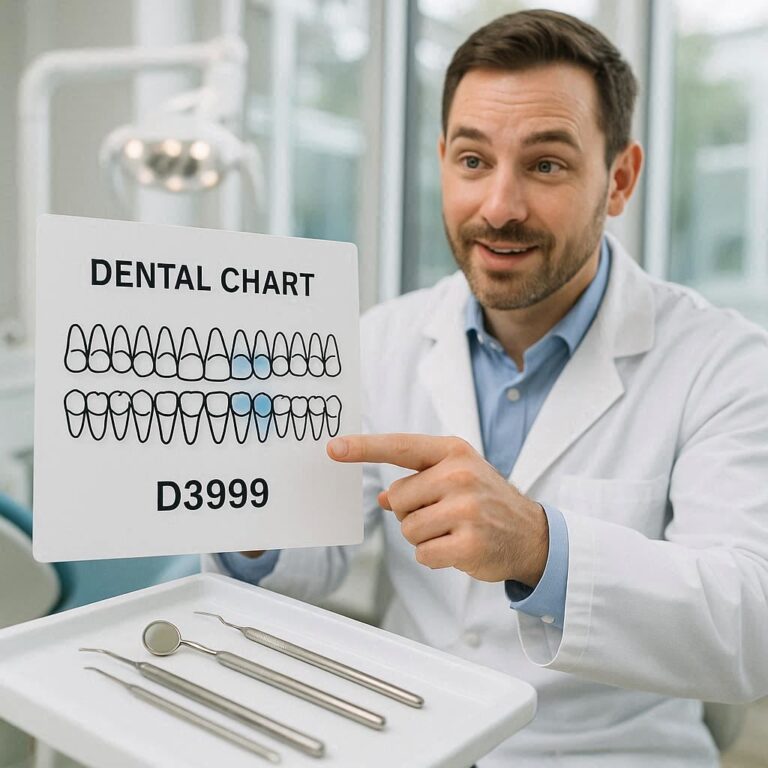
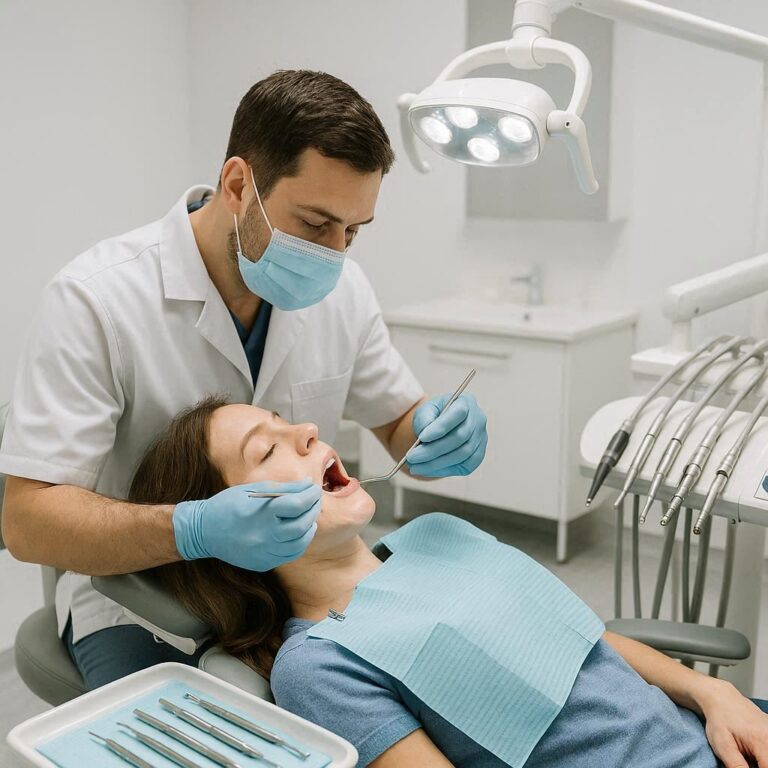
Dental Code D3501: The Complete Guide to Residual Root Removal
Finding a code on your dental treatment plan can sometimes feel like reading a foreign language. If you see “D3501” written on your paperwork, you might be wondering what it means for your mouth—and your wallet.
Don’t worry, we’re here to break it all down for you.
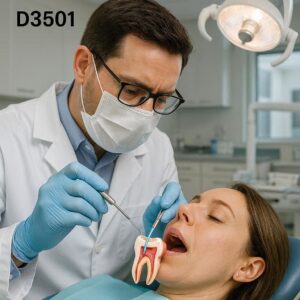
Dental Code D3501 refers to the “removal of a residual root.” In simple terms, it is the specific procedure dentists use to extract a tooth root that has been left behind in your jawbone, usually after a previous extraction where the tooth broke.
This guide will walk you through everything you need to know about this procedure. Whether you are a patient preparing for the treatment or just doing your research, we’ll cover the medical necessity, the surgical process, recovery tips, insurance nuances, and costs.
What is Dental Code D3501? A Simple Breakdown
Let’s start with the basics. The Current Dental Terminology (CDT) code set is maintained by the American Dental Association (ADA). These codes ensure uniformity in dental records and billing across the country.
When a dentist performs a procedure, they assign a specific code to describe the service provided.
The Official Definition
According to the CDT manual, D3501 is defined as: “removal of a residual root (surgical procedure).”
But what does that actually mean?
-
Residual: Left over or remaining.
-
Root: The part of the tooth that is anchored in the jawbone, below the gum line.
So, D3501 is billed when a dentist surgically removes a piece of tooth root that remains in the jaw. It is important to note that this is classified as a surgical procedure because it often requires the dentist to make a small incision in the gum tissue to access the root fragment.
D3501 vs. a Simple Extraction
Many patients confuse this with a standard extraction. The key difference lies in the condition of the tooth.
-
Simple Extraction (Code D7140, D7210): Performed on a tooth that is visible in the mouth. The dentist uses instruments to loosen and remove the whole tooth.
-
Residual Root Removal (D3501): The crown (the part you see) is already gone. The dentist is specifically targeting a piece of root hidden beneath the gum line.
Important Note: D3501 is a surgical procedure. If your dentist mentions this code, expect the process to be slightly more involved than a simple “pull.”
Why Would You Need This Procedure? The “Why” Behind the Code
You might be wondering, “If the tooth is already gone, why does a leftover piece of root matter?”
It’s a fair question. In some cases, a small root fragment can remain in the jaw for years without causing any trouble. However, in many cases, it can lead to complications. Here are the most common reasons a dentist would recommend a D3501 procedure.
1. Infection and Inflammation
This is the most frequent reason for removal. The root tip, or the space around it, can become a breeding ground for bacteria. Even without the crown, the root canal space is open to the oral environment, allowing bacteria to travel down.
-
Symptoms: You might notice a pimple-like bump (fistula) on your gums, tenderness when you press on the area, or a persistent bad taste in your mouth.
-
Risk: If left untreated, this localized infection can develop into a dental abscess or even a cyst, potentially damaging the surrounding bone.
2. Interference with Future Dental Work
Planning for an implant or a denture? A hidden root fragment can be a major obstacle.
-
Dental Implants: An implant needs to be placed into healthy, solid bone. A root fragment takes up space and can prevent the implant from being positioned correctly. It could also lead to infection around the new implant.
-
Dentures: A residual root sitting just under the gum can cause sore spots and pressure points when a denture rests on top of it, making it impossible to wear the denture comfortably.
3. Pain and Discomfort
Sometimes, the root fragment can be forced up by healing bone or irritated by chewing forces. This can result in localized pain or a feeling of pressure in the jaw.
4. Preventing Pathology
In rare cases, retained root tips can interfere with the eruption of other teeth (especially in younger patients) or be associated with the development of benign tumors in the jaw. A panoramic X-ray is the best way to identify these hidden remnants.
The Procedure: Step-by-Step Guide
Knowing what to expect can significantly reduce anxiety about a surgical procedure. While every patient and dentist is different, the process for a D3501 removal generally follows these steps.
Step 1: Diagnosis and Imaging
It all starts with a visual exam and, most importantly, X-rays.
-
Panoramic X-ray (Panorex): This gives a broad view of the entire jaw and can show the location of the root fragment.
-
Periapical X-ray (PA): This is a small, detailed X-ray of the specific area. It helps the dentist see the exact shape, size, and angle of the residual root.
The Consultation: Your dentist will review the images with you, explain the procedure, discuss anesthesia options, and answer any questions. This is the time to discuss any medical conditions or medications you are taking.
Step 2: Anesthesia
You won’t feel pain during the procedure.
-
Local Anesthesia: Most residual root removals are performed under local anesthesia. The dentist will numb the specific area with an injection, similar to what you get for a filling. You will be awake, but the area will be completely numb.
-
Sedation Options: For anxious patients or for particularly complex surgical removals, sedation options like nitrous oxide (“laughing gas”) or oral conscious sedation might be offered. Discuss this with your provider beforehand.
Step 3: The Surgical Access
Since the root is under the gum, the dentist needs to get to it.
-
Incision: The dentist makes a small, precise incision in the gum tissue directly over the area where the root is located.
-
Reflection: They then gently lift a “flap” of gum tissue to expose the underlying bone.
Step 4: Bone Removal (Osteotomy)
Often, a thin layer of bone covers the residual root. The dentist will use a surgical handpiece (a specialized, high-speed drill) to carefully remove a small amount of this bone to create a window to access the root. This sounds more intimidating than it is, and you won’t feel any vibration as pain, just pressure.
Step 5: Removal of the Root
Once the root tip is visible, the dentist uses specialized surgical elevators and forceps to gently loosen and remove it.
-
Sectioning: If the root is large or oddly shaped, the dentist may cut it into smaller pieces to make removal easier and less invasive.
Step 6: Cleaning the Site
The socket (the hole where the root was) is thoroughly cleaned with a sterile saline solution to remove any debris, granulation tissue, or bacteria.
Step 7: Closure (Suturing)
The gum flap is carefully placed back into its original position and secured with sutures (stitches).
-
Suture Types: You may receive dissolvable stitches (which disappear in a few days to a week) or non-dissolvable stitches that will need to be removed at a follow-up appointment.
Step 8: Post-Operative Care
The dentist will place a piece of sterile gauze over the site and ask you to bite down firmly to help control bleeding. You will then be given detailed instructions for the recovery period.
Recovery and Aftercare: What to Expect
Healing from a surgical procedure like D3501 takes a little more care than a simple extraction. Here is a timeline and tips to ensure a smooth recovery.
The First 24 Hours
-
Bleeding: Some oozing is normal. Keep firm pressure on the area with the gauze pad for 30-45 minutes. If bleeding continues, replace the gauze and bite down again. Avoid spitting or using a straw, as the suction can dislodge the blood clot that is forming.
-
Swelling: Apply an ice pack to the outside of your face (20 minutes on, 20 minutes off) for the first 6-8 hours. This helps minimize swelling.
-
Rest: Plan to take it easy for the rest of the day. Avoid strenuous activity.
-
Eating: Stick to soft foods and liquids. Yogurt, smoothies, soup (not too hot), and applesauce are great choices.
Days 2-3
-
Swelling: Swelling often peaks around 48 hours after surgery. This is normal. Continue using ice packs if it feels soothing.
-
Pain Management: Take any pain medication as prescribed by your dentist. Over-the-counter options like ibuprofen (Advil) or acetaminophen (Tylenol) are usually effective. Always follow the dosage instructions.
-
Oral Hygiene: You can gently brush your other teeth, but avoid the surgical site. Your dentist may recommend a warm salt water rinse (1/2 teaspoon of salt in a cup of warm water) starting 24 hours after surgery. Gently swish and let it fall out of your mouth—do not spit.
Gentle Reminder: Do not use a Waterpik or any other irrigation device near the surgical site until your dentist says it’s safe.
Days 4-7
-
Healing: Swelling and discomfort should begin to subside noticeably.
-
Diet: You can gradually start introducing more solid foods, chewing on the opposite side of your mouth.
-
Stitches: If you have dissolvable stitches, they may start to look like they are coming loose or falling out. This is normal. If you have non-dissolvable stitches, you will have a follow-up appointment to have them removed. This is quick and painless.
What to Watch For (When to Call Your Dentist)
Complications are rare, but it is vital to know the signs.
-
Severe Pain: If your pain gets significantly worse after a few days, rather than better.
-
Excessive Bleeding: If bleeding cannot be controlled with pressure.
-
Signs of Infection: Fever, persistent swelling that gets worse, or pus draining from the site.
-
Dry Socket: This occurs when the protective blood clot is lost. It causes a dull, aching pain that can radiate to your ear and usually appears 2-4 days after surgery. If you suspect this, call your dentist immediately.
D3501 and Dental Insurance: Understanding Your Coverage
Let’s talk about the financial side. Dental insurance can be confusing, but understanding how your plan treats a code like D3501 will help you avoid surprises.
Classification: Surgical vs. Basic
Insurance companies categorize procedures into classes (e.g., Preventative, Basic, Major). D3501 is almost universally classified as a surgical procedure, which falls under either the “Basic” or “Major” restorative category, depending on your specific plan.
-
Most PPO Plans: Categorize D3501 as a Basic procedure.
-
Some Indemnity Plans: Might categorize it as Major.
How Benefits Are Calculated
Once you know your plan’s classification, you can estimate your out-of-pocket cost.
-
Deductible: This is the annual amount you must pay out-of-pocket before your insurance begins to pay. You must meet your deductible first.
-
Coverage Percentage:
-
If D3501 is Basic, your plan might cover 70% to 80% of the allowed amount, leaving you responsible for 20% to 30% (plus your deductible).
-
If D3501 is Major, coverage is often lower, around 50%, leaving you responsible for the other half.
-
-
Annual Maximum: This is the total dollar amount your insurance plan will pay in a year. Once you hit this limit, you pay 100% of the costs.
“The Allowed Amount”
It is crucial to understand that insurance doesn’t pay based on what your dentist charges. They pay based on a pre-negotiated “allowed amount” or “contractual allowance.” Your dentist has agreed to accept this amount as full payment for the service.
Here’s a simplified example of how it works:
| Item | Explanation | Amount |
|---|---|---|
| Dentist’s Fee | The cost for the D3501 procedure. | $400 |
| Insurance “Allowed Amount” | The max the insurance will pay for this code in your area. | $300 |
| Insurance Payment (80%) | Your plan pays 80% of the allowed amount. | $240 |
| Your Responsibility | You pay the remaining 20% of the allowed amount ($60) PLUS any unmet deductible. | $60 + Deductible |
| Savings/Write-off | Because your dentist is in-network, they write off the extra $100. You don’t pay it. | $100 |
Tips for Navigating Insurance
-
Call Your Provider: Before the procedure, call the customer service number on the back of your insurance card. Ask: “What is the coverage percentage and classification for procedure code D3501, removal of a residual root?”
-
Ask About Your Deductible: Confirm if you have met your annual deductible. If not, ask how much of it remains.
-
Get a Pre-Treatment Estimate: Your dentist’s office can send a “pre-determination” or “pre-authorization” to your insurance company. This provides a written estimate of what the insurance will pay and what you will owe. This is the best way to avoid financial surprises.
Cost Analysis: What Does D3501 Cost Without Insurance?
If you don’t have dental insurance, the cost of a D3501 procedure can vary. It is essential to get a clear, upfront estimate from your dental office.
The final price depends on several factors:
Factors Influencing the Price
-
Geography: Dental fees are generally higher in major metropolitan areas with a higher cost of living compared to rural areas.
-
Complexity of the Case: A straightforward, easily accessible root fragment in the front of the mouth will cost less than a deeply embedded root tip near a major nerve in the back of the jaw.
-
The Provider: An oral surgeon will typically charge more than a general dentist for the same code because of their advanced specialty training.
-
Additional Procedures: If the dentist needs to perform a bone graft at the same time to preserve the jaw for a future implant, that will be a separate code (e.g., D4263, D7953) with its own associated cost.
General Price Range
While prices are subject to change and vary widely, you can generally expect the fee for D3501 to fall within these ranges:
-
General Dentist: $300 – $600
-
Oral Surgeon: $500 – $800+
Payment Options
Most dental offices are happy to help you manage the cost.
-
In-House Membership Plans: Many dentists offer a discount plan for patients without insurance. For a yearly fee, you get access to reduced rates on procedures.
-
Third-Party Financing: Companies like CareCredit or LendingClub offer healthcare credit cards. They often have promotional periods with no interest if the balance is paid in full within a certain timeframe (e.g., 6 or 12 months).
-
Payment Plans: Many offices will work with you to set up an affordable monthly payment plan directly through their office.
Related Dental Codes: How D3501 Differs
To fully understand D3501, it helps to compare it to other codes you might see on a treatment plan. This table highlights the key differences.
| Code | Description | Key Difference | Typical Scenario |
|---|---|---|---|
| D3501 | Removal of a residual root | The tooth crown is already missing. This is a surgical procedure to retrieve a hidden root. | A tooth broke during a previous extraction, leaving a tip behind. |
| D7140 | Extraction, erupted tooth or exposed root | The tooth is visible in the mouth. It is a non-surgical, simple elevation. | A tooth is loose or fully visible and can be removed with forceps. |
| D7210 | Surgical extraction of erupted tooth | The tooth is visible, but surgical intervention (like cutting gum or bone) is required for removal. | A tooth is badly broken down at the gum line, requiring a surgical approach. |
| D7220 | Removal of impacted tooth – soft tissue | The tooth is covered only by gum tissue, not bone. Usually refers to wisdom teeth. | The crown of a wisdom tooth has erupted through bone but is under the gum. |
| D7230 | Removal of impacted tooth – partially bony | The tooth is partially covered by bone. | A common classification for impacted wisdom teeth. |
| D7240 | Removal of impacted tooth – completely bony | The tooth is completely encased in bone. | The most complex type of wisdom tooth extraction. |
Frequently Asked Questions (FAQ)
To wrap up, here are answers to some of the most common questions patients have about D3501 and residual root removal.
Is the removal of a residual root considered surgery?
Yes. By definition, D3501 is a surgical procedure. Because the root fragment is beneath the gum line, it requires an incision and the reflection of gum tissue to access it.
Will I need to see a specialist (oral surgeon)?
Not necessarily. Many general dentists are fully trained and equipped to perform surgical residual root removal. However, they may refer you to an oral surgeon (or periodontist) if the root is located very close to a vital structure like a nerve or the sinus cavity, or if the case is exceptionally complex.
How long does the procedure take?
The actual procedure time is usually quite short, often 20 to 40 minutes. However, you should plan to be at the dental office for about an hour to an hour and a half to account for anesthesia, preparation, and post-op instructions.
Is the recovery painful?
There will be some discomfort as the local anesthesia wears off. Most patients manage this well with over-the-counter pain relievers. The surgical site will be sore for a few days, but the pain is usually not severe. Following the post-op instructions (ice, rest) is the best way to minimize discomfort.
Can a residual root cause health problems?
Yes. It can serve as a pathway for bacteria to enter the jawbone, leading to a localized chronic infection, cyst formation, or a dental abscess. While not an emergency, it is generally recommended to have problematic residual roots removed proactively.
What happens if I leave the root fragment?
If it is small, deep, and not causing any symptoms, your dentist might recommend monitoring it with regular X-rays. However, if it becomes infected, causes pain, or interferes with other dental treatment, removal becomes necessary.
Conclusion
Dental Code D3501 represents a specific, common surgical procedure aimed at protecting your long-term oral health. Whether it involves removing a source of infection or clearing the way for future restorations like implants, understanding this code helps demystify your treatment. By knowing what to expect during the procedure, how to care for yourself afterward, and how to navigate the insurance and cost aspects, you can approach your appointment with confidence and clarity.
Additional Resource
For the most authoritative and up-to-date information on dental codes and terminology, you can refer to the source.
-
American Dental Association (ADA) – CDT Code Book: Link to ADA Store for CDT