Dental Code D3920: The Complete Guide to Tooth Reattachment Procedures
- On
- InDENTAL CODE
Few things are as startling as the moment you realize a piece of your tooth has broken off. Whether it happened while biting into something hard or as the result of a fall, that small fragment in your hand can feel like a dental disaster. However, modern dentistry offers a remarkable solution that often goes overlooked: reattaching the original piece.
In the world of dental billing and treatment planning, this specific service is identified by a unique alphanumeric sequence. Understanding what this code represents, how the procedure works, and what it means for your wallet can be the difference between saving your natural tooth structure and opting for a more invasive—and often more expensive—replacement.
This guide serves as your definitive resource for Dental Code D3920. We will break down the clinical scenario, the step-by-step process, financial implications, and how it stacks up against alternatives. By the end, you will have a complete understanding of this fascinating and tooth-preserving procedure.
Table of Contents
ToggleWhat is Dental Code D3920?
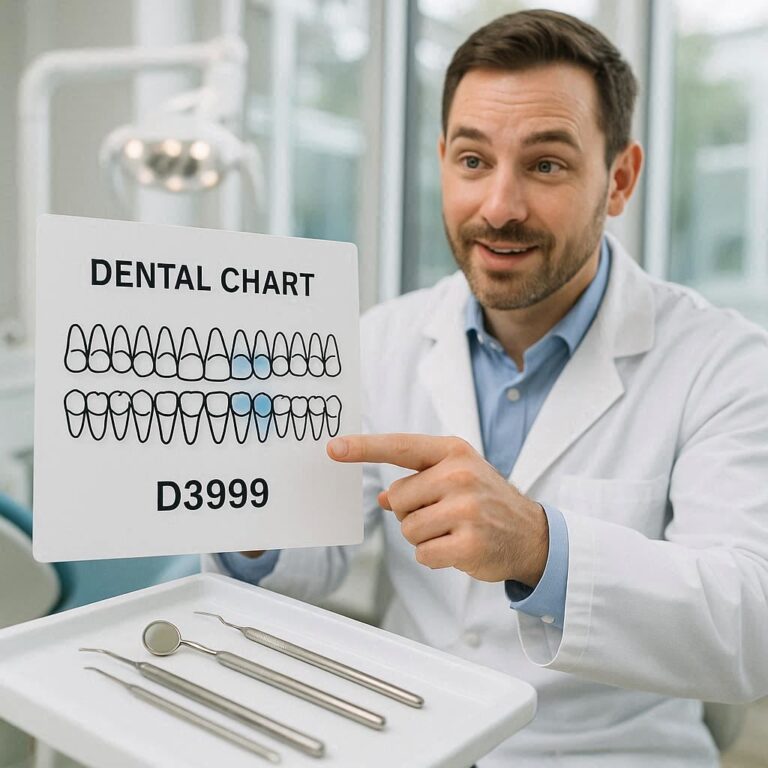
In the standardized language of dentistry, the Current Dental Terminology (CDT) code set is used to document procedures and submit claims to insurance companies. Dental Code D3920 is officially defined as:
“Application of a resin-based composite to reattach a tooth fragment.”
At its core, this code describes the act of taking a natural piece of a tooth that has fractured off and bonding it back into its original position using advanced dental adhesives and composite resins. This is not to be confused with simply filling a chip with white material. It is a precise, delicate procedure that prioritizes the preservation of the original tooth enamel.
Key characteristics of a D3920 procedure:
-
Preservation of Natural Structure: It utilizes the patient’s own tooth fragment, maintaining the original enamel, shape, and translucency.
-
Esthetic Superiority: Because it uses the original enamel, the color match and light reflection are perfect—something no artificial composite can truly replicate.
-
Minimally Invasive: It typically requires minimal to no reduction of the remaining healthy tooth structure.
-
Single-Visit Solution: In most cases, if the fragment is intact and the tooth is not deeply damaged, the entire process can be completed in one dental appointment.
It is crucial to understand that D3920 is distinct from a standard anterior restoration (filling). It is a specific service for a specific clinical situation, and recognizing this distinction is vital for both treatment expectations and insurance processing.
The Clinical Scenario: When is D3920 Used?
Not every broken tooth qualifies for a reattachment procedure. The success of D3920 hinges on specific clinical conditions. Understanding when this code is applicable helps set realistic expectations.
Ideal Candidates for Tooth Fragment Reattachment
The “perfect” scenario for a D3920 procedure involves a recent, clean fracture. Imagine a patient biting into an olive with a hidden pit. The resulting break might yield a single, large piece of enamel that fits back onto the tooth like a puzzle piece.
Ideal conditions include:
-
A Well-Preserved Fragment: The broken piece must be intact, without multiple cracks, and free of debris. It should fit back onto the tooth without significant gaps.
-
Recent Fracture: The sooner the fragment is reattached, the better. A fresh fragment is still hydrated, and the tooth surfaces are clean, which promotes a stronger bond.
-
Minimal Pulpal Involvement: The fracture must not expose the dental pulp (the living tissue and nerve inside the tooth). If the pulp is exposed and bleeding, a simple reattachment is no longer the primary option. In such cases, a pulp cap or root canal therapy may be needed before reattachment is considered.
-
Intact Remaining Tooth: The part of the tooth still in the mouth must be structurally sound and free of large, pre-existing fillings that would compromise the bond.
Contraindications: When Reattachment Isn’t the Answer
While the idea of “gluing” a tooth back together is appealing, it is not always possible. A dentist will typically advise against D3920 in the following situations:
-
The Fragment is Lost or Damaged: If the broken piece cannot be found, or if it has dried out, become brittle, and crumbled, it cannot be used.
-
Subgingival Fracture: If the break extends deep below the gum line, it becomes difficult to keep the area dry during bonding, and the fit of the fragment may be compromised.
-
Extensive Decay: If the fracture occurred because the tooth was already weakened by a cavity, the decay must be removed first, leaving a gap that the original fragment cannot fill.
-
Night Grinding (Bruxism): Patients with severe bruxism place immense force on their teeth. Reattached fragments in these patients have a higher risk of fracturing again.
The Step-by-Step Procedure: From Fragment to Finish
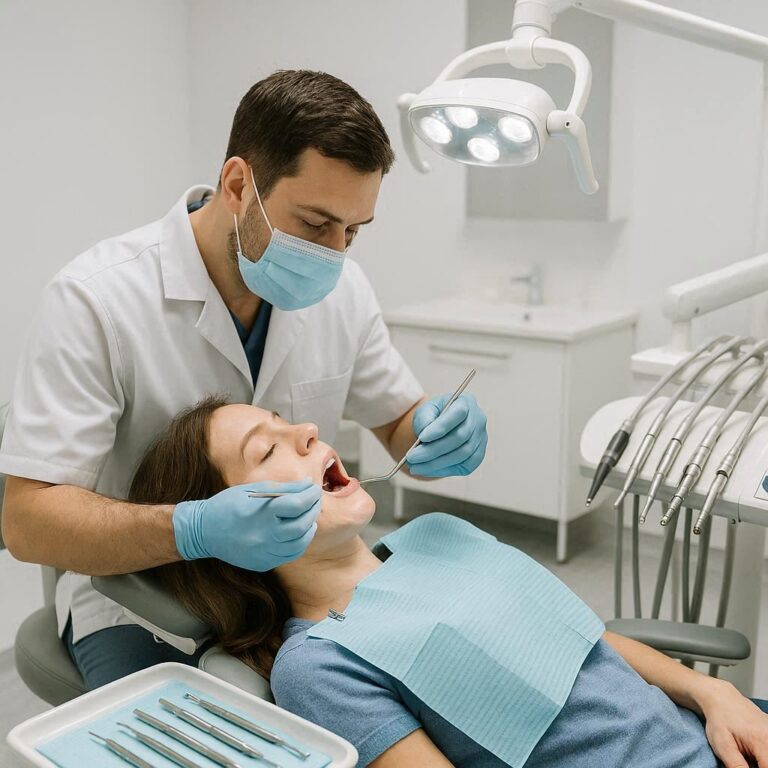
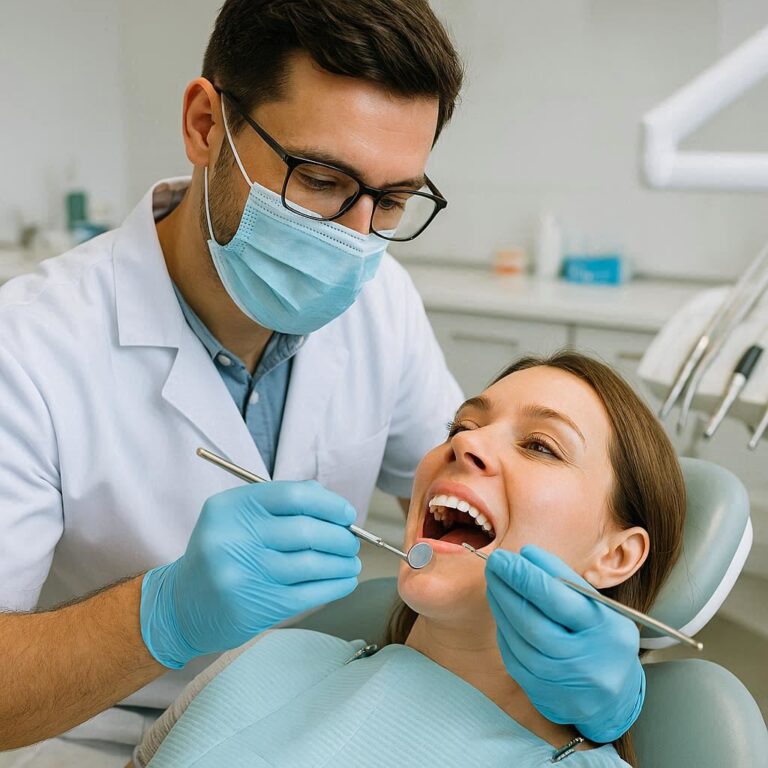
If you are a patient facing this procedure, knowing what to expect can alleviate anxiety. The process is meticulous and requires a steady hand and a keen eye for detail.
Step 1: Fragment Assessment and Storage
The journey begins the moment the fragment is found. If you are reading this before a potential dental emergency, remember this tip: Store the fragment in a hydrating medium. The best options are:
-
Milk: It is isotonic and helps maintain the health of the cells on the root surface (if any) and keeps the enamel hydrated.
-
Saline Solution: Available at most pharmacies.
-
Saliva: The patient can hold the fragment in their cheek if it is safe to do so.
-
Water: If nothing else is available, plain water is better than letting the fragment dry out completely.
At the dental office, the dentist will inspect the fragment under magnification. It is cleaned, and the fractured surface is prepared, often with a mild acid etch, to create a surface that the bonding agent can adhere to.
Step 2: Tooth Preparation and Isolation
While the fragment is being prepared, the dentist also prepares the tooth. The goal is to keep the tooth structure as intact as possible. A rubber dam is often placed around the tooth. This thin sheet of latex or non-latex material isolates the tooth from the rest of the mouth, keeping it perfectly dry. Saliva is the enemy of bonding, and strict isolation is non-negotiable for a strong result.
The fractured surface of the tooth in the mouth is cleaned and etched with a phosphoric acid gel. This creates microscopic pores in the enamel, preparing it for a micromechanical bond.
Step 3: The Bonding Process
This is the heart of the D3920 procedure. A bonding agent (adhesive) is applied to both the prepared tooth surface and the prepared fragment. This liquid is then gently air-thinned and cured with a special blue light.
Next, a thin layer of flowable composite resin—the “glue”—is applied to the tooth. The fragment is carefully seated onto the tooth in its exact original position. Any excess composite that squeezes out is gently removed with an instrument.
Once the fragment is perfectly seated, the dentist uses the curing light to harden the composite. The light initiates a chemical reaction that turns the liquid resin into a solid, creating a bond that is incredibly strong.
Step 4: Finishing and Polishing
Even with a perfect fit, there will be a tiny seam where the fragment meets the tooth. The dentist uses fine diamond burs, discs, and polishing strips to smooth this transition. The goal is to make the fracture line invisible to the eye and smooth to the tongue.
The final step is polishing. This restores the natural luster of the enamel, ensuring the repaired area blends seamlessly with the rest of the tooth.
Important Note for Patients: Immediately after the procedure, the bond is strong, but it continues to strengthen over the next 24 hours. Dentists often advise patients to avoid eating on that tooth for the rest of the day and to stick to softer foods for a short period.
D3920 vs. Other Restorative Codes
One of the biggest sources of confusion in dental coding is differentiating between similar-sounding procedures. It is helpful to compare D3920 to other common restorative codes to understand what sets it apart.
The following table breaks down the key differences:
| Procedure | CDT Code | Description | Key Difference |
|---|---|---|---|
| Tooth Reattachment | D3920 | Bonding the patient’s original tooth fragment back into place. | Uses the patient’s own natural tooth structure. |
| Resin-Based Composite (Filling) – Anterior | D2330 – D2335 | Rebuilding a tooth’s shape and structure using layers of tooth-colored resin. | Builds the tooth up with artificial material, rather than reattaching the natural piece. |
| Porcelain Veneer | D2960 | A thin shell of ceramic custom-made to cover the entire front surface of a tooth. | A completely artificial restoration requiring significant tooth preparation, used for large chips or cosmetic changes. |
| Crown – Porcelain/Ceramic | D2740 | A full-coverage “cap” that encases the entire tooth. | Used when a tooth is severely broken down and cannot be restored with bonding or a fragment. |
As the table illustrates, D3920 occupies a unique niche. It is the only procedure that seeks to conserve and reuse the original enamel. While a composite filling (D2330) is a common alternative for a small chip, it cannot replicate the natural enamel’s wear resistance and optical properties as perfectly as the original fragment can.
The Financial Aspect: Cost and Insurance Coverage
Navigating the financial side of dental treatment can be complex. Because D3920 is a specific and relatively less common procedure, its coverage can vary significantly from one insurance plan to another.
Understanding the Cost
The cost of a D3920 procedure is generally comparable to, or sometimes slightly higher than, a standard composite filling on a front tooth. Several factors influence the final price:
-
Geographic Location: Dental fees vary by region and city.
-
Dentist’s Expertise: A cosmetic or restorative specialist may charge a premium for the delicate skill required.
-
Complexity of the Fracture: A simple, clean break is easier to manage than a jagged, complex one.
While fees vary, you can generally expect the cost to fall within the range of a mid-tier restorative procedure.
Navigating Your Dental Insurance
Dental insurance is designed to cover procedures based on their classification. Most plans categorize treatments into three tiers:
-
Preventive: (Cleanings, exams) – Covered at 80-100%.
-
Basic Restorative: (Fillings, extractions) – Covered at 50-80%.
-
Major Restorative: (Crowns, bridges, dentures) – Covered at 50% or less.
Where does D3920 fit in?
Most dental insurance companies classify D3920 as a “Basic Restorative” procedure. This is good news for the patient. This classification means that after you meet your annual deductible, your plan will typically cover a percentage of the cost, often between 50% and 80%.
However, there are nuances to be aware of:
-
Frequency Limitations: An insurance plan may limit how often a tooth can receive this treatment. For example, they may only cover it once every two or three years per tooth.
-
Medical Necessity vs. Cosmetic: The insurance company must deem the procedure “medically necessary.” Reattaching a fragment to restore function is clearly necessary, but if the break is purely cosmetic and minuscule, some plans might balk. A skilled dental office will always include the necessary x-rays and narratives to prove medical necessity.
-
Alternate Benefits: This is a common insurance clause. If the plan considers a less expensive procedure (like a simple filling) to be “standard,” they may only pay the equivalent of what that filling would cost, even if you and your dentist choose the reattachment. You would then be responsible for the difference in cost.
Always verify your coverage with your insurance provider before treatment. Your dental office’s billing coordinator can help you with this, but it is wise to be an informed consumer.
Advantages of Choosing D3920
Why go through the trouble of saving a tiny piece of tooth? The benefits are substantial and go beyond simple aesthetics.
-
Perfect Esthetics: This is the single greatest advantage. Artificial materials, no matter how advanced, cannot perfectly mimic the natural translucency, color gradient, and surface texture of your real enamel. Reattaching the original fragment guarantees a perfect match.
-
Preservation of Enamel: The procedure requires minimal to no drilling of the remaining healthy tooth. This is in stark contrast to a crown, which requires a significant portion of the natural tooth to be filed away. Maintaining your natural enamel is always the preferred biological choice.
-
Excellent Wear Resistance: Your natural enamel is the hardest tissue in your body. It will wear against opposing teeth in the way it was designed to. Artificial composites can wear down faster or be too abrasive to opposing teeth. The original fragment offers proven, long-term durability.
-
Speed and Convenience: In a single appointment, your tooth can be restored to its pre-accident state. There are no temporaries, no impressions to send to a lab, and no second visit required.
-
Cost-Effectiveness: Compared to the multi-visit, high-cost alternative of a crown, a reattachment is significantly more affordable, especially when factoring in the insurance coverage as a basic procedure.
-
Psychological Comfort: For many patients, especially children, having their “real tooth” put back in place is emotionally comforting. It minimizes the trauma of the dental injury.
Potential Risks and Longevity
While the advantages are compelling, it is only fair to discuss the realistic outcomes and potential drawbacks of a D3920 procedure.
Is It a Permanent Fix?
Honesty is key: a reattached tooth fragment is not necessarily a permanent solution. It is best viewed as a durable, long-term restorative option that can last for many years with proper care. The longevity of the bond depends on several factors:
-
The severity of the original fracture.
-
The patient’s bite and occlusal forces.
-
Oral hygiene habits.
-
Diet and lifestyle.
It is not uncommon for a well-maintained reattachment to last for 5-10 years or even longer. However, because the fracture line is a point of potential weakness, it is an area that should be monitored during routine dental checkups.
Possible Complications
-
Debonding: The most common complication is the fragment debonding (falling off) due to excessive force. If this happens, the dentist can often re-bond it, provided the fragment and tooth are still in good condition.
-
Marginal Staining: Over time, the microscopic gap between the tooth and the fragment may accumulate stain, particularly if oral hygiene is not meticulous.
-
Recurrent Fracture: The reattached fragment can fracture again, especially if the original break was due to a condition like bruxism that hasn’t been addressed.
-
Color Mismatch Over Time: While the bond is perfect at the time of placement, the rest of your teeth may naturally darken or change color with age, while the reattached fragment (being a separate piece of enamel) might not change at the same rate. This can lead to a slight mismatch years down the road.
How to Care for Your Reattached Tooth
The success of your D3920 procedure depends heavily on your habits after you leave the dentist’s chair. Treating the repaired tooth with care will maximize its lifespan.
Immediate Aftercare (First 24-48 Hours)
-
The “Soft Food” Rule: Avoid chewing on the treated tooth. Stick to soft foods like yogurt, soup, scrambled eggs, and smoothies.
-
Be Gentle: Avoid biting into hard items like apples, crusty bread, or corn on the cob with that tooth.
-
Temperature Sensitivity: Some sensitivity to hot and cold is normal initially but should subside quickly.
Long-Term Maintenance
-
Oral Hygiene: Brush and floss normally, but pay gentle attention to the area. Good hygiene prevents decay at the margin, which is a primary cause of failure.
-
Mouthguards are Essential:
-
For Bruxism: If you grind your teeth at night, a custom-fitted night guard from your dentist is non-negotiable. It will absorb the forces that could snap the fragment off.
-
For Sports: If you play contact sports, a custom sports guard is the best way to protect not just the reattached tooth, but all your teeth.
-
-
Avoid Bad Habits: Stop chewing on ice, pens, fingernails, or using your teeth as tools. These habits place unnatural stress on teeth.
-
Regular Dental Visits: Continue with your six-month checkups. Your dentist will check the integrity of the bond and polish the area to prevent stain accumulation.
The Patient’s Role: What to Do in a Dental Emergency
If you fracture a tooth, time and the way you handle the pieces are of the essence. Here is a simple, actionable guide to maximize the chances of a successful D3920 reattachment.
Your Emergency Action Plan:
-
Stay Calm and Assess: Look in the mirror. Is there a lot of bleeding? Is the piece large or small?
-
FIND THE FRAGMENT! This is the most important step. Carefully search for the missing piece.
-
Handle with Care: Once found, hold it by the crown (the chewing edge), not the root (the sharp broken edge). Avoid touching the broken surface.
-
Rinse Gently: If the fragment is dirty, gently rinse it with water for a few seconds. Do not scrub or use soap.
-
Store it Properly: Place the fragment in a small container with milk. If milk is unavailable, use saliva (have the patient spit into the container) or saline. Water is the last resort but is better than letting it dry out.
-
Rinse Your Mouth: Gently rinse your mouth with warm water to clear away debris.
-
Call Your Dentist Immediately: Explain that you have a broken tooth and you have the fragment. Emergency appointments are often available for situations like this.
-
Manage Pain and Swelling: If needed, apply a cold compress to the outside of your mouth or cheek to reduce swelling. Use over-the-counter pain relievers as directed.
Critical Note: Do not wait. After 24 hours, the fragment begins to dehydrate significantly, becoming brittle. The tooth surfaces can also become contaminated. The sooner you get to the dentist, the better the prognosis.
Frequently Asked Questions (FAQ)
Q1: Does it hurt to have a tooth fragment reattached?
A: The procedure itself should not be painful. The dentist will use a local anesthetic to numb the area, especially if the fracture is close to the nerve. You may feel some pressure and vibration during the cleaning and polishing phases, but no sharp pain.
Q2: My tooth broke, but I can’t find the piece. Can you still use D3920?
A: Unfortunately, no. The D3920 code specifically requires the use of the patient’s natural tooth fragment. If the piece is lost, the dentist will need to rebuild the tooth using a composite resin material (a standard filling), which would be billed under a different code like D2330.
Q3: Will the reattached part look different from my other teeth?
A: Initially, it will look exactly like it did before the break, providing a perfect match. Over many years, the rest of your teeth may change color slightly due to aging or staining, and the reattached fragment may not change at the same rate, potentially leading to a very subtle difference.
Q4: Can a reattached tooth fragment fall off again?
A: Yes, it is possible, though the bond is very strong. If you put excessive force on it, such as biting into something extremely hard or if you grind your teeth, it can debond. If this happens, keep the fragment and see your dentist, as it can often be re-bonded.
Q5: Is Dental Code D3920 covered by medical insurance?
A: Almost always, no. Dental procedures related to the teeth themselves are covered under dental insurance plans. Medical insurance typically only covers dental work if it is the result of a severe, traumatic accident that requires hospitalization.
Q6: My child broke a front tooth. Is reattachment a good option for them?
A: Yes, it can be an excellent option for children. It preserves tooth structure and provides a perfect esthetic result, which is crucial for their confidence. However, the dentist must ensure the fracture hasn’t damaged the developing permanent tooth or the nerve of the baby tooth. Because children are active, a mouthguard for sports is highly recommended after the repair.
Conclusion
Dental Code D3920 represents a beautiful intersection of biological preservation and modern adhesive technology. It offers patients a unique opportunity to reverse a dental injury by restoring their tooth with the very substance it was made of. By understanding the procedure, its requirements, and how to care for the result, patients can make informed decisions that prioritize their long-term oral health. While not always a permanent solution, a successful tooth reattachment can provide years of natural function and beauty, proving that sometimes, the best restoration is the original part.
Additional Resource
For the most current and official information on dental procedure codes, the American Dental Association (ADA) is the definitive source. You can explore their resources on the CDT code set here: ADA.org – CDT (Note: This link leads to the ADA’s main page for CDT information, where you can find official details and purchase the full code set).

dentalecostsmile
Newsletter Updates
Enter your email address below and subscribe to our newsletter