Dental Code D4245: A Complete Guide to Gingival Flap Procedures
If you’ve recently been told you need “periodontal surgery,” you might feel a mix of anxiety and confusion. Dental jargon can be intimidating, and when you add procedure codes to the mix, it gets even more complicated. One code you might encounter on your treatment plan is Dental Code D4245.
This article is designed to demystify this specific procedure. Whether you are a patient wanting to understand your upcoming treatment, a student brushing up on periodontal coding, or simply someone trying to decipher a dental estimate, you’ve come to the right place.
We’ll break down what D4245 actually is, why it’s necessary, how it differs from a standard cleaning or a more complex surgery, and what you can expect during recovery. Let’s turn that confusing code into a clear picture of better oral health.
What is Dental Code D4245? Defining the Gingival Flap Procedure
At its core, Dental Code D4245 is the standardized terminology used by dental professionals and insurance companies to describe a specific surgical procedure: the apically positioned flap.
But what does that actually mean? Let’s dissect it.
-
“Gingival” refers to your gums.
-
“Flap” describes the surgical technique where a section of gum tissue is gently lifted and separated from the underlying bone and teeth. Think of it like opening a small trapdoor to access what’s beneath.
-
“Apically positioned” is the key detail. “Apical” means “toward the root tip” or the bottom of the tooth. So, after the procedure is complete, the gum flap is repositioned and sutured (stitched) lower on the tooth root than its original location.
In simple terms, D4245 is a surgical procedure where a dentist or periodontist lifts a section of the gum, performs necessary work on the underlying tooth root and bone, and then reattaches the gum tissue further down on the tooth. This intentionally exposes more of the tooth structure.
The Primary Goal: Access and Preservation
Why would a surgeon want to move the gum down? The main objective of this procedure isn’t just to clean; it’s to gain access to deep areas of the tooth while preserving the healthy gum tissue. It is often performed to:
-
Remove deep decay that extends below the gum line.
-
Perform a root amputation (removing one root of a multi-rooted tooth) or hemisection (splitting a tooth in half to save one part).
-
Reshape the underlying bone.
-
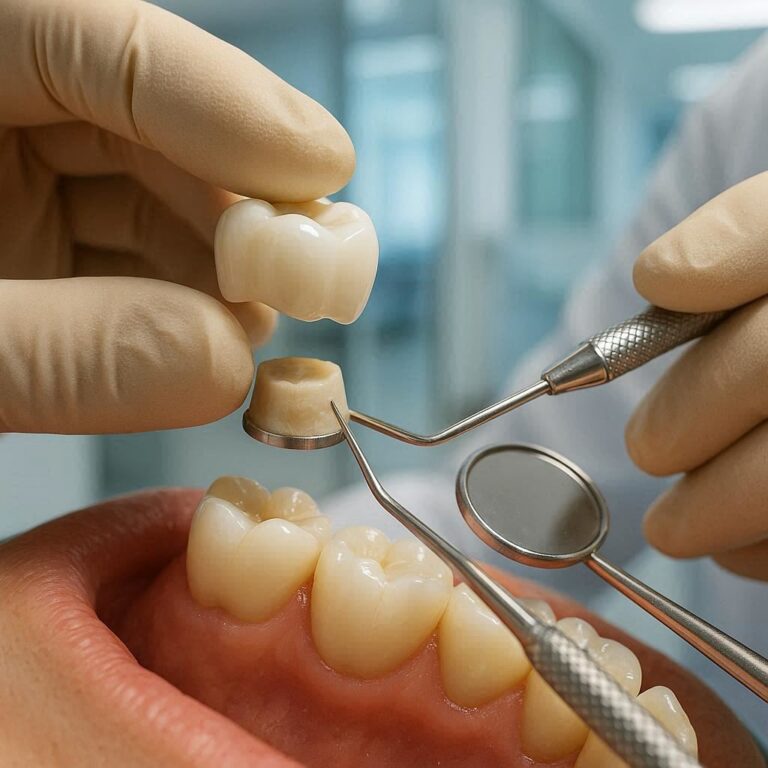
Allow for a proper impression to be made for a crown when the tooth’s margin is deep under the gum.
The Story Behind the Code: Why D4245 is Necessary
To understand why a dentist might recommend D4245, you have to visualize the anatomy of a tooth. A tooth isn’t just the white part you see in the mirror. It extends below the gum line into the jawbone.
Sometimes, problems occur in this hidden landscape. Here are the most common scenarios where D4245 becomes the best course of action.
1. Subgingival Decay (Cavities Below the Gum)
Tooth decay doesn’t always stop at the gum line. It can travel down the root of the tooth, burrowing into areas that are normally protected by gum tissue and bone. For a dentist to fix this decay with a filling or a crown, they must have a clear, dry field to work in. Simply pushing the gum aside isn’t enough for deep cavities. Lifting a flap provides the necessary visibility and access to completely remove the decay and place a restoration with precision.
2. Crown Lengthening (Specifically for Access)
You may have heard of crown lengthening for cosmetic reasons (to fix a “gummy smile”). D4245 is a form of functional crown lengthening. In this case, the goal isn’t to make the tooth look longer for a smile; it’s to expose more of the tooth structure so a crown can be placed. If a tooth is too broken down or decayed, and its edge is too far below the gum, a dentist cannot properly fit a crown. D4245 creates the necessary “ferrule,” or vertical height of tooth structure, that a crown needs to grip onto for long-term stability.
3. Root Resection or Hemisection Procedures
In some complex cases of periodontal disease or tooth fracture, a surgeon may need to remove a specific part of the tooth. For example, if one root of a molar is severely infected but the rest of the tooth is healthy, a root resection might be performed. To do this, the surgeon needs a full view of the tooth’s root structure, which requires lifting a flap (D4245) to access the area where the roots divide.
Important Note: It is crucial to distinguish D4245 from a routine “deep cleaning” (Scaling and Root Planing, or D4341/D4346). A deep cleaning is a non-surgical therapy to clean below the gum line. D4245 is a surgical procedure involving incisions and sutures. They are entirely different in scope and recovery.
D4245 vs. Other Periodontal Codes: A Comparative Look
One of the biggest sources of confusion in dental coding is the difference between various surgical procedures. The codes are specific, and understanding the distinction helps clarify what is being done to your mouth. The two codes most commonly confused with D4245 are D4240 and D4249.
D4245 vs. D4240 (Gingival Flap with Root Planing)
This is perhaps the most common point of confusion. Both codes involve a flap, but the outcome is different.
-
D4240: This is the code for a gingival flap procedure, including root planing. In this surgery, the flap is lifted, the roots are thoroughly cleaned, but the flap is generally returned to its original position or as close to it as possible. The goal is to shrink the pocket depth by cleaning and allowing the tissue to heal tightly around the tooth again.
-
D4245: As we’ve learned, this is the apically positioned flap. The flap is moved down the root. The goal is not primarily pocket reduction, but exposure of the tooth structure for restorative purposes (like fixing decay or placing a crown).
Think of it this way: D4240 is a periodontal surgery aimed at saving the gums and bone. D4245 is a restorative surgery aimed at saving the tooth itself, using the gums as a gateway.
D4245 vs. D4249 (Crown Lengthening – Soft Tissue)
D4249 is specifically for clinical crown lengthening – soft tissue only. It is often the cosmetic procedure mentioned earlier.
-
D4249: This procedure involves removing excess gum tissue (gingivectomy) to expose more of the natural tooth crown. It does not involve moving a flap or cutting bone. It is typically performed on front teeth to improve the aesthetics of a smile.
-
D4245: This is a more involved surgical procedure that often includes the removal of a small amount of bone surrounding the tooth (osseous surgery) to expose the root structure. It is functional, not cosmetic, and is most often performed on back teeth (premolars and molars) where access is critical.
Here is a simple table to illustrate the differences at a glance:
| Dental Code | Procedure Name | Primary Goal | Key Action |
|---|---|---|---|
| D4245 | Apically Positioned Flap | Tooth Access (for filling/crown) | Flap lifted, then repositioned lower on the tooth. |
| D4240 | Gingival Flap w/ Root Planing | Pocket Reduction | Flap lifted for deep cleaning, then returned to original position. |
| D4249 | Crown Lengthening (Soft Tissue) | Aesthetics (Gummy Smile) | Excess gum tissue removed. No flap or bone work. |
The Step-by-Step Procedure: What Happens During D4245 Surgery
Knowing what to expect on the day of surgery can significantly reduce anxiety. While every case is unique, a D4245 procedure generally follows a predictable pattern.
Step 1: Anesthesia and Preparation
The procedure begins with the administration of a local anesthetic to numb the specific area of your mouth. You will be awake but should feel no pain—only pressure and vibration. The surgical site, usually a section of 2-3 teeth, is then isolated and cleaned.
Step 2: Creating the Flap
The surgeon uses a small scalpel to make precise incisions in your gum tissue. These incisions are designed to create the “flap.” There are different types of flaps, but the most common for D4245 involves an incision along the gum line and two small vertical releasing incisions (like a rectangle). This allows the gum tissue to be gently peeled away from the bone and tooth, exposing the tooth root and the underlying bone.
Step 3: Access and Treatment
With the flap reflected, the surgeon has a clear view of the problem. This is the “access” part of the procedure. They can now:
-
Thoroughly remove deep decay from the tooth root.
-
Smooth and shape the root surface.
-
If necessary, use a small bur to gently reshape the surrounding bone (an ostectomy) to expose more of the tooth structure. This is often a key part of the procedure to ensure the final restoration (like a crown) has adequate support.
Step 4: Repositioning the Flap
This is the defining moment of D4245. The surgeon takes the flap of gum tissue and moves it downward (apically) to a new position on the tooth root. The flap is placed at the level of the newly contoured bone.
Step 5: Suturing (Stitches)
Once the flap is in its new, correct position, the surgeon secures it with sutures. These stitches hold the gum tissue firmly in place while it heals. Often, a periodontal dressing (a soft, putty-like material) is placed over the site to protect it during the initial healing phase.
Recovery and Aftercare: Navigating the Healing Process
The success of your D4245 procedure depends as much on your post-operative care as it does on the surgeon’s skill. Healing is a process, and knowing what’s normal can help you manage it effectively.
The First 24-48 Hours
-
Bleeding: Some minor oozing is normal. Bite gently on a gauze pad placed over the area for 30-45 minutes at a time to help control it.
-
Swelling: Apply an ice pack to the outside of your face (20 minutes on, 20 minutes off) during the first 24 hours to minimize swelling.
-
Pain: Your dentist will likely prescribe or recommend pain medication. Take it as directed before the anesthesia wears off to stay ahead of the discomfort.
-
Activity: Rest for the day. Avoid strenuous exercise, as it can increase bleeding.
The First Two Weeks
-
Diet: Stick to a soft food diet. Think yogurt, smoothies, mashed potatoes, soup (not too hot), and scrambled eggs. Avoid anything hard, crunchy, spicy, or chewy that could disturb the surgical site. Absolutely avoid using straws, as the suction can dislodge the blood clot and delay healing.
-
Oral Hygiene: This is critical. You must keep your mouth clean, but you must be gentle.
-
Do not brush or floss the surgical site directly.
-
Rinse your mouth gently with a warm salt water rinse (1/2 tsp salt in a cup of warm water) several times a day, especially after meals. Your dentist may also prescribe a special antibacterial mouthwash (like chlorhexidine).
-
You can carefully brush other areas of your mouth as usual.
-
The Follow-Up Appointment
You will return to the dentist in about 7-14 days for a suture removal appointment. The dentist will check the healing progress and gently remove the stitches. This is a quick and usually painless process.
A Friendly Reminder: Everyone heals differently. Factors like smoking, uncontrolled diabetes, and poor nutrition can significantly slow down healing and increase the risk of complications. Be honest with your surgeon about your health history so they can give you the best possible aftercare advice.
The Financial Aspect: What to Expect with Insurance
Let’s talk about money. Dental procedures can be a significant investment, and understanding how insurance works with a code like D4245 is essential.
Is D4245 Covered by Insurance?
D4245 is generally considered a surgical periodontal procedure. Most dental insurance plans that include major services will provide coverage for it. However, coverage is rarely 100%.
-
Classification: It falls under “Major Restorative” or “Periodontal” services.
-
Coverage Percentage: Plans typically cover 50% of the cost for major services after you have met your annual deductible.
-
Frequency Limitations: Insurance companies have rules about how often a procedure can be performed. Because D4245 is specific to a single area of the mouth (a “quadrant” or a few teeth), it is usually payable once per tooth or per site. Don’t be surprised if your plan requires pre-authorization to confirm the medical necessity of the procedure.
Estimating the Cost (Without Insurance)
If you don’t have insurance, the out-of-pocket cost can vary widely based on your geographic location, the complexity of the case, and the dentist’s experience. In the United States, the fee for D4245 can range from $800 to $1,500 per tooth or per quadrant. This fee typically covers the surgical placement of the flap, but it may not include the cost of the final restoration (like the crown or filling that will be placed later). Always ask for a detailed, written estimate that breaks down all associated costs.
Frequently Asked Questions (FAQ)
Q: Is Dental Code D4245 painful?
A: The procedure itself is performed under local anesthesia, so you should not feel sharp pain. After the anesthesia wears off, you can expect some discomfort, swelling, and tenderness. This is usually well-managed with over-the-counter pain relievers or prescribed medication, as recommended by your dentist.
Q: How long does a D4245 procedure take?
A: The surgery time depends on the number of teeth involved. For a single tooth or a small section, it typically takes between 45 and 90 minutes.
Q: What is the success rate of this procedure?
A: When performed for the right reasons (like gaining access for a crown on a savable tooth) and followed by good home care, the success rate is very high. The long-term success depends on the health of the tooth and the patient’s commitment to oral hygiene.
Q: Can I go back to work the next day?
A: Most patients take the day of the surgery off to rest. Many people feel comfortable returning to work (especially if it’s not physically demanding) the next day, though you may still have some swelling and will be on a soft food diet.
Q: Are there alternatives to an apically positioned flap?
A: In some cases, a less invasive approach might be possible, but it depends on the goal. If the goal is to place a crown margin, there is often no good alternative to exposing the tooth structure. If the goal is to treat infection, the alternative might be extraction of the tooth. Your dentist will only recommend D4245 if they believe it’s the best way to save your tooth for the long term.
Additional Resources
For further reading and to ensure you have access to the most current coding information, the American Dental Association (ADA) is the definitive source. You can learn more about dental procedure codes on their official website:
Visit the American Dental Association’s CDT Code Book page
(Note: This link leads to the primary source for dental coding information.)
Conclusion
Dental Code D4245 represents a specialized and highly effective surgical procedure designed to save teeth that might otherwise be lost. By carefully lifting and repositioning the gum tissue, it grants dentists the access they need to repair deep decay or prepare a tooth for a restorative crown. While it is a more involved process than a simple filling, understanding its purpose—preserving your natural tooth structure—helps put its value into perspective. With proper surgical technique and attentive aftercare, an apically positioned flap can be a pivotal step toward long-term dental health.