Your Complete Guide to Dental Crown Cost in Austin TX for 2026
Navigating the world of dental care can feel overwhelming, especially when you’re facing a significant procedure like getting a crown. If you’re in Austin and looking ahead to 2026, you’re likely wondering about the cost, what factors into the price, and how to make the best decision for your smile and your budget. You’re not just looking for a number; you’re looking for clarity, value, and a trustworthy solution.
This guide is designed to be your comprehensive resource. We’ll walk through every detail you need to understand about dental crown costs in our vibrant city for the year ahead. We’ll break down the numbers, explain the “why” behind them, and provide you with actionable strategies to navigate the process confidently. From the bustling clinics in downtown Austin to the family practices in the suburbs, we’ve got you covered.
Understanding the 2026 Cost Landscape for Dental Crowns in Austin
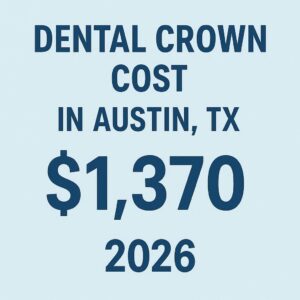
First, let’s address the most pressing question. For 2026, the cost for a single dental crown in Austin, Texas, is expected to range broadly from $1,200 to $2,800 or more. This isn’t a random spread; it’s a reflection of Austin’s dynamic dental market, which includes high-tech practices, experienced specialists, and a focus on cutting-edge materials and techniques.
It’s crucial to understand that a “ballpark figure” is just a starting point. The final cost for your specific situation will be determined by a unique combination of factors that we’ll explore in depth. Think of this range not as a mystery, but as a spectrum of possibilities based on the choices you and your dentist make together.
Dr. Elena Rodriguez, a prosthodontist with a practice in Central Austin, emphasizes this point: “In 2026, the conversation about crowns is less about a standard price and more about personalized treatment. The cost directly correlates with the material’s durability, the lab’s artistry, the technology used for the impression or scan, and the complexity of the individual case. Patients should view this as a long-term investment in both function and aesthetics.”
Why Do Crown Costs Vary So Much in Austin?
Austin’s growth and reputation as a tech hub have influenced its dental industry. You’ll find a wide array of options, from clinics offering streamlined, value-based services to boutique practices specializing in ultra-aesthetic, same-day crowns using the latest CAD/CAM technology. This diversity is a strength, but it requires you to be an informed consumer.
The variation in price isn’t about one practice being “better” than another arbitrarily. It often reflects differences in:
-
Operational Overhead: A state-of-the-art office in the Domain with 3D scanners and in-house milling machines has different costs than a smaller, established practice in South Austin.
-
Expertise and Specialization: A general dentist with decades of experience or a specialist like a prosthodontist may command different fees based on their advanced training.
-
Laboratory Partnerships: Dentists who work with highly skilled, local ceramic artisans for their crowns will have higher lab fees, which are passed on in the overall cost. This often results in a crown that is virtually indistinguishable from a natural tooth.
Breaking Down the Factors That Determine Your Crown’s Price
To move from a general range to a personal estimate, you need to understand the levers that affect the final price. Here are the core components.
1. Crown Material: The Foundation of Cost and Quality
The material of your crown is the single most significant factor in its price. Each option offers a different balance of strength, aesthetics, biocompatibility, and cost.
Comparative Table: Dental Crown Materials & Cost Estimates for Austin, TX (2026)
| Crown Material | Aesthetic Appeal | Durability & Best For | Estimated Cost Per Crown (2026) | Key Considerations |
|---|---|---|---|---|
| Porcelain-Fused-to-Metal (PFM) | Good | Very High – Molars | $1,200 – $1,600 | Strong, time-tested, but can show a dark metal line at the gum over time. |
| All-Porcelain / All-Ceramic | Excellent | High – Front teeth, premolars | $1,400 – $2,000 | Most natural translucency. Excellent for metal allergies. Modern versions are very strong. |
| Zirconia | Excellent to Very Good | Extremely High – Any tooth | $1,500 – $2,200 | Incredibly strong and durable. Can be layered with porcelain for enhanced aesthetics. |
| E-Max (Lithium Disilicate) | Exceptional | High – Front teeth, premolars | $1,600 – $2,300 | Top-tier aesthetics and strength for anterior crowns. A favorite for visible smile zones. |
| Gold Alloy | Low | Exceptional – Molars (out of sight) | $1,500 – $2,500+ | The most conservative and durable option long-term, but aesthetic appeal is limited. |
| Same-Day CEREC Crown | Good to Excellent | High | $1,600 – $2,400 | Premium for convenience. Made in-office in one visit using CAD/CAM technology. |
Important Note: The prices above are for the crown fabrication and placement only. They often do not include additional required procedures like a dental exam, X-rays, a buildup (core), or a root canal if needed. Always ask for a complete, itemized treatment plan.
2. The Dental Professional’s Expertise and Location
The dentist you choose plays a major role. A general dentist will typically have lower fees than a prosthodontist, who has 2-3 years of additional accredited training in restoring and replacing teeth. The location of the practice within the Austin metro also influences price. Practices in high-rent districts (Downtown, Westlake, the Domain) may have slightly higher fees to offset their overhead compared to those in Round Rock, Pflugerville, or South Austin.
3. The Complexity of Your Individual Case
Not every tooth is a straightforward candidate for a crown. Additional complexity adds to the cost:
-
Core Buildup: If the tooth is severely broken down, a foundation (or “core”) must be built first to support the crown. This can add $300 – $600.
-
Root Canal Therapy: If the tooth’s nerve is infected or dead, a root canal is necessary before crowning. This is a separate procedure costing $1,000 – $1,600 (on an adult molar) from an endodontist.
-
Gum Contouring or Crown Lengthening: If there isn’t enough tooth structure above the gum line to hold the crown, a minor surgical procedure may be needed, adding $500 – $1,000.
4. Dental Technology and Laboratory Used
The move from traditional, messy putty impressions to digital intraoral scanners represents a significant upgrade in comfort and precision. While many practices have absorbed this cost, some may charge a small premium for this advanced technology. Furthermore, as mentioned, a dentist using a premium local or national lab known for its artistic quality will have higher lab fees than one using a standard offshore lab.
Navigating Dental Insurance and Financing in 2026
Very few people pay the full fee out-of-pocket. Understanding how to work with your benefits is key.
How Dental Insurance Typically Covers Crowns
Most PPO dental insurance plans classify crowns as a major restorative service. Coverage often falls in the 50% range, after you’ve met your annual deductible. Crucially, insurance companies have their own fee schedule called a “UCR” (Usual, Customary, and Reasonable). They will only pay their 50% of their allowed amount, not the dentist’s actual fee.
Example of a Cost Breakdown with Insurance:
-
Dentist’s Fee for a Zirconia Crown: $1,800
-
Your Insurance Company’s Allowed Amount: $1,400
-
Insurance Pays (50% of $1,400): $700
-
Your Deductible (assume $50 already met): $50
-
Your Estimated Out-of-Pocket Cost: $1,800 – $700 + $50 = $1,150
Important Note: Always get a pre-treatment estimate from your dentist’s office. They will submit a plan to your insurance and get a detailed breakdown of what will be covered before any work begins, preventing surprises.
Excellent Alternatives If You Don’t Have Insurance
Austin has many options for uninsured patients:
-
Dental Savings Plans: These are not insurance. You pay an annual fee (e.g., $150-$200) to a network like Careington or Aetna Dental Savings, and member dentists offer discounted fees on all services, including crowns (often 20-50% off). This can be a fantastic value.
-
In-House Membership Plans: Many Austin dental practices offer their own annual plans for patients without insurance. For a monthly or annual fee, you receive free cleanings, exams, X-rays, and a significant discount (e.g., 15-25%) on procedures like crowns.
-
Third-Party Financing: Companies like CareCredit or LendingClub offer medical credit cards with promotional periods (e.g., 0% interest for 12-18 months if paid in full within that time). These can make large expenses manageable with monthly payments.
-
Payment Plans: Don’t hesitate to ask your dental office if they offer direct, in-house payment plans. Many are willing to split the cost into two or three payments.
Actionable Strategies to Find Quality & Value in Austin
With so many choices, how do you find the right fit? Follow this checklist.
Your Step-by-Step Guide to a Smart Decision
-
Get Multiple Consultations: Aim for at least 2-3 consultations. This isn’t just about price shopping; it’s about meeting the team, seeing the office, and understanding the dentist’s philosophy.
-
Ask the Right Questions:
-
“What material do you recommend for my specific tooth and why?”
-
“Can you provide a detailed, written treatment plan that includes all costs (exam, X-ray, buildup, crown, etc.)?”
-
“Do you work with a local lab or an offshore lab? Can I see examples of your crown work?”
-
“What technology do you use for impressions (digital scanner or traditional putty) and for fabricating the crown?”
-
“What is the warranty or guarantee on your crowns?”
-
-
Look Beyond the Price Tag: The cheapest option can sometimes be the most expensive in the long run if the crown fails prematurely or doesn’t fit correctly. Consider the practice’s reputation, reviews, and the dentist’s experience as part of the value equation.
-
Verify Credentials and Reviews: Check the dentist’s credentials on the Texas State Board of Dental Examiners website. Read patient reviews on Google and Facebook for consistent themes about care, comfort, and follow-up.
-
Consider Dental Schools: The University of Texas Health Science Center at San Antonio (UTHSCSA) Dental School offers treatment at significantly reduced costs provided by supervised dental students and residents. While it involves a commute, the savings can be substantial.
The Long-Term Value of a Well-Made Crown
When considering cost, it’s essential to frame it as an investment. A high-quality crown, properly placed on a healthy tooth foundation, can last 15 years or longer, even a lifetime with excellent care. Spreading a $2,000 investment over 15 years amounts to about $133 per year, or just over $11 per month, to protect a critical tooth, maintain your bite, and preserve your smile.
Conversely, delaying treatment or opting for a poorly made crown due to low cost alone can lead to:
-
Tooth fracture beyond repair, requiring an extraction.
-
Decay under the crown due to poor fit.
-
The need for a more expensive and invasive procedure like a dental implant or bridge.
Conclusion
Navigating dental crown costs in Austin for 2026 requires understanding a spectrum of factors, from material choice to insurance nuances. By focusing on long-term value, seeking detailed consultations, and exploring all payment options, you can make a confident investment in your oral health. Your smile is worth the careful planning.
Frequently Asked Questions (FAQ)
Q: What is the most affordable type of dental crown in Austin?
A: Generally, Porcelain-Fused-to-Metal (PFM) crowns tend to be the most budget-friendly option while still offering excellent strength, especially for back teeth. However, always compare total treatment plan costs, as the material is just one part of the fee.
Q: How long does the entire crown procedure take?
A: The traditional process takes two appointments spaced about 2-3 weeks apart. The first visit is for preparation and impression/scan, and the second is for permanent placement. With same-day CEREC technology, the crown can be made and placed in a single, longer visit.
Q: Does getting a crown hurt?
A: The procedure is performed under local anesthesia, so you should feel no pain during the appointment. It’s common to experience some sensitivity or mild discomfort in the days following the preparation and after the permanent crown is placed, which is easily managed with over-the-counter pain relievers.
Q: Will my insurance cover a crown if it’s for a cracked tooth or just for cosmetic reasons?
A: Insurance typically covers crowns when there is a diagnosed structural need: a large broken filling, a cracked tooth, significant decay, or after a root canal. Purely cosmetic crowns (on healthy teeth) are almost never covered by insurance.
Q: Can I use my HSA or FSA to pay for a dental crown?
A: Absolutely. Dental crowns are a qualified medical expense under both Health Savings Accounts (HSA) and Flexible Spending Accounts (FSA). This allows you to pay with pre-tax dollars, providing significant savings.
Additional Resource
For help in understanding your rights and exploring low-cost options across Texas, a valuable resource is the Texas State Board of Dental Examiners (TSBDE). Their website provides license verification for any dentist and can be a starting point for understanding the standards of care. Additionally, the Texas Dental Association website offers a “Find a Dentist” search tool to locate ADA-member dentists in your Austin area zip code.
Disclaimer: The cost estimates provided in this article are based on current market trends, dental industry projections, and economic factors for the Austin, TX area for the 2026 calendar year. They are intended for informational purposes only. Actual costs will vary based on individual dental practices, the specific needs of the patient, material selection, and geographic location within the Austin metropolitan area. Readers are strongly encouraged to obtain a formal, written treatment plan and cost estimate from a licensed dental professional before proceeding with any dental procedure. This article does not constitute medical or financial advice.