The Complete Guide to Dental Crown Costs in Brisbane: A Realistic Look for 2025-2026
If you’ve been told you need a dental crown in Brisbane, your first question is likely, “How much is this going to cost?” It’s a smart question. Dental crown treatment is a significant investment in your oral health, and understanding the fees involved is the first step to making a confident, informed decision.
The cost of a dental crown in Brisbane is not a single figure. It’s a range influenced by the material you choose, the complexity of your case, the location of the practice, and the expertise of your dentist. Prices can vary widely, from around $1,200 to over $2,500 per tooth. This guide will unpack all these factors, provide clear, realistic price tables, and offer practical advice on navigating the process—all without the marketing fluff.
Our goal is to equip you with the knowledge you need to have productive conversations with dentists, understand what you’re paying for, and feel assured that you’re making the best choice for your smile and your wallet.

What is a Dental Crown and Why Might You Need One?
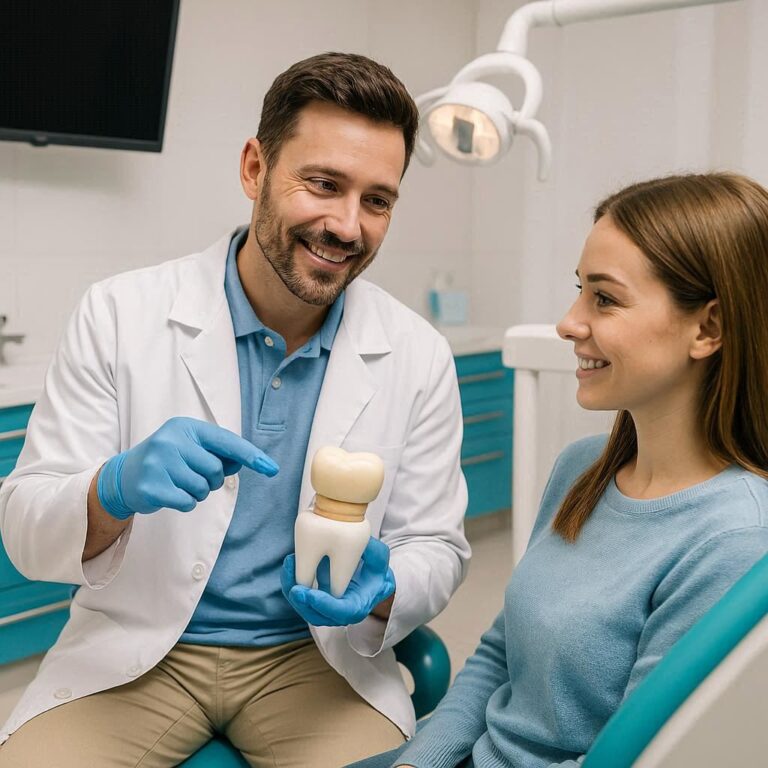
Before we dive into costs, let’s clarify what a crown is. A dental crown is a custom-made “cap” that is permanently cemented over an existing tooth. It fully encases the visible portion of the tooth above the gum line, restoring its shape, size, strength, and appearance.
Think of it like a durable, protective helmet for a tooth that has been compromised. Crowns are a versatile and long-lasting solution for several common dental problems:
-
To Protect a Weak Tooth: Often from severe decay that a large filling can’t support.
-
To Restore a Broken or Worn-Down Tooth.
-
To Support a Tooth with a Large Filling when there isn’t much natural tooth left.
-
To Cover a Dental Implant, providing the visible chewing surface.
-
To Hold a Dental Bridge firmly in place.
-
For Cosmetic Enhancement, such as covering a severely discoloured or misshapen tooth.
-
Following a Root Canal Treatment, as the tooth becomes more brittle and needs protection.
As one Brisbane prosthodontist we spoke to noted, “A crown is often the final, restorative piece of the puzzle. It’s not just a ‘cover-up’; it’s a functional restoration that allows a patient to use their tooth normally for many years to come.”
Breaking Down the Cost: Key Factors That Influence Your Final Quote
Understanding why prices differ helps you compare quotes effectively. Here are the main variables that will affect what you pay for a dental crown in Brisbane.
1. The Material of the Crown
This is the single biggest factor in cost. Each material offers a different balance of strength, aesthetics, and biocompatibility.
-
Porcelain-Fused-to-Metal (PFM): A classic workhorse. A metal substructure provides strength, fused with a layer of porcelain for a natural look. Very durable and cost-effective, but the metal can sometimes show as a dark line at the gum over time, and the porcelain can be less translucent than a natural tooth.
-
Full-Cast Gold: The historical gold standard for durability and biocompatibility. It wears down at a rate similar to natural tooth enamel, is incredibly strong, and requires less tooth reduction. The cost is high due to the price of gold, and the appearance is not tooth-coloured.
-
All-Ceramic / All-Porcelain (e.g., E.max, Zirconia): This is the most popular category today for its superb aesthetics. Modern ceramics like lithium disilicate (E.max) and zirconia are incredibly strong and can be matched perfectly to the shade and translucency of your natural teeth. They are metal-free, making them ideal for patients with metal sensitivities and for front teeth.
-
Zirconia: A specific type of ultra-strong ceramic. It can be used for both the strong substructure and the full crown. It’s exceptionally durable, making it excellent for back teeth (molars), and highly aesthetic for front teeth in its monolithic or layered forms.
2. The Complexity of Your Individual Case
No two teeth are the same. Your specific situation will dictate the time, skill, and additional procedures required.
-
Tooth Position: Molars are harder to access and take more force, sometimes requiring stronger materials. Front teeth require finer aesthetic detail.
-
Amount of Tooth Structure Remaining: A simple crown on a solid tooth stump is straightforward. If the tooth is severely broken down, it may require a core build-up (adding material to create a foundation) or a post and core, which adds time and cost.
-
Need for a Root Canal: If the tooth’s nerve is infected or dead, a root canal treatment will be needed before the crown, adding a separate significant cost.
-
Gum Health and Positioning: If the tooth’s margin is deep below the gum line, the dentist may need to perform crown lengthening surgery or use specialised techniques to capture the impression, increasing complexity.
3. The Dental Practice and Location
Overheads vary across Brisbane, influencing fees.
-
Suburb and Practice Overheads: A practice in a high-rent area like the Brisbane CBD, Indooroopilly, or Newfarm may have slightly higher fees than one in a suburban location. This isn’t always indicative of quality, but of business costs.
-
Dentist’s Expertise and Technology: A highly experienced dentist or a specialist prosthodontist who focuses on complex restorative work will typically charge more for their expertise. Practices that invest in the latest technology—like intraoral scanners (digital impressions), CEREC milling machines for same-day crowns, and high-end dental labs—may also reflect that investment in their pricing.
4. Laboratory Fees
Most crowns are crafted by master dental technicians in a laboratory. The lab fee is a major component of your total cost. Higher-quality materials and more skilled, time-intensive craftsmanship from premium labs cost more. Some clinics have in-house labs, which can sometimes reduce this external cost.
Realistic Dental Crown Cost Ranges in Brisbane (2025-2026)
Here is a detailed breakdown of what you can realistically expect to pay. These are approximate price ranges for a single dental crown at a general dental practice. They assume a standard case without extraordinary complexity.
Comparative Cost Table by Material
| Crown Material | Average Cost Range (per tooth) | Best For | Pros | Cons |
|---|---|---|---|---|
| Porcelain-Fused-to-Metal (PFM) | $1,200 – $1,700 | Back teeth (molars, premolars) where strength is key and aesthetics are less critical. | Very strong, durable, time-tested, more affordable than all-ceramic. | Metal margin may become visible; less natural translucency; potential for porcelain chipping. |
| All-Ceramic (E.max) | $1,600 – $2,200 | Front teeth and premolars where high aesthetics are essential. Excellent blend of strength & beauty. | Superb, lifelike aesthetics; metal-free; good strength for most applications. | Can be less durable than zirconia for heavy grinders on back teeth; cost is higher than PFM. |
| Zirconia | $1,800 – $2,500+ | All tooth positions, especially molars for heavy chewers and patients who grind. Also great for implants. | Exceptional strength & durability; excellent biocompatibility; very good aesthetics. | Can be opaque if not layered; typically the highest cost option; requires significant tooth reduction. |
| Full Cast Gold | $1,800 – $2,400+ | Back teeth, particularly for patients who grind or have limited space. A niche but excellent choice. | Unmatched durability and longevity; gentle on opposing teeth; minimal tooth removal. | Very noticeable (not tooth-coloured); high cost of materials; less commonly offered now. |
Important Note: These prices are for the crown fabrication and placement only. They often do NOT include initial consultations, X-rays, any necessary preparatory work (like a core build-up), or the temporary crown. Always ask for a detailed, written treatment plan and quote.
Understanding the Full Treatment Cost: The “Hidden” Items
Your final bill will be an itemised sum of several components. A transparent dentist will provide this breakdown.
-
Initial Consultation & Examination: $50 – $150 (often waived if proceeding with treatment).
-
X-rays & Diagnostic Records: $50 – $250 (may include a panoramic or CT scan for complex cases).
-
Preparatory Work (if needed): Core build-up: $200 – $500. Post and core: $400 – $800.
-
Root Canal Treatment (if needed): $1,000 – $2,000+ (varies by tooth and specialist involvement).
-
Temporary Crown: Usually included in the crown fee, but confirm.
-
The Permanent Crown: The fee from the table above.
-
Follow-up/Adjustment Visits: Usually included for a short period post-placement.
*A key piece of advice for patients: “Always request a full, written treatment plan. A quote that just says ‘crown – $1,800’ is not enough. You need to see the itemisation for diagnostics, any adjunctive procedures, and the crown itself. This protects you and ensures you are comparing like-with-like when seeking second opinions.”*
How to Pay for Dental Crowns in Brisbane: Options and Support
The out-of-pocket expense can be managed. Here are the primary payment avenues in Australia.
1. Private Health Insurance (Extras Cover)
This is the most common way patients offset the cost.
-
How it Works: You pay the dentist the full fee, then claim a rebate from your insurer. Some clinics offer HICAPS, providing an on-the-spot rebate.
-
What to Check: Your annual limits for “Major Dental” or “General Dental.” Crowns typically fall under Major Dental. You may have a waiting period (often 12 months) for major dental work.
-
The Rebate: Insurers pay a rebate based on their own schedule of fees, which is often lower than current market dentist fees. You pay the gap (the difference). For a $2,000 crown, if your insurer’s schedule fee is $1,500 and they cover 60%, their rebate is $900. Your out-of-pocket cost is $1,100.
-
Pro Tip: Contact your insurer before treatment. Ask: “What is my available major dental limit?” and “What is the rebate for a porcelain crown (item number 615)?” Use item numbers for accuracy.
2. Dental Payment Plans
Many practices offer interest-free or low-interest payment plans through third-party providers like DentiCare or Afterpay.
-
Interest-Free Periods: Common for 6-12 months on treatments over a certain amount (e.g., $1,000+). You make regular fortnightly or monthly payments.
-
Benefit: Allows you to proceed with treatment immediately and budget the cost over time without high-interest credit card debt.
3. The Medicare Child Dental Benefits Schedule (CDBS)
For eligible children aged 2-17, the CDBS provides up to $1,095 over two calendar years for basic dental services, which can include crowns. Check your child’s eligibility via your Medicare online account.
4. Superannuation Early Release
In cases of severe and chronic dental pain where treatment is deemed medically necessary, you may apply to the ATO for early release of superannuation funds. This is a complex, last-resort option requiring supporting documentation from your dentist and doctor.
5. Comparing Quotes: A Practical Guide
Getting 2-3 quotes is wise. When comparing, look beyond the bottom line:
-
Compare the Materials: Is it the same brand and type of ceramic (e.g., E.max vs. Zirconia)?
-
Compare the Inclusions: Does the quote include the build-up, temporary, and all appointments?
-
Assess the Dentist: Your comfort and trust in the practitioner are invaluable. A cheaper quote is not a bargain if you feel rushed or unheard.
-
Consider the Technology: Does the clinic use modern digital impressions (more comfortable) or traditional putty? Can they offer a same-day crown if that’s important to you?
Choosing the Right Dentist in Brisbane for Your Crown
The skill of the dentist and technician is as important as the material. Here’s how to find a great provider.
-
Seek Personal Recommendations: Ask friends, family, or your local GP.
-
Read Online Reviews Thoughtfully: Look for patterns in reviews about crown work, customer service, and explanations.
-
Schedule a Consultation: This is your interview. A good dentist will:
-
Listen to your concerns.
-
Conduct a thorough examination (including X-rays).
-
Explain why you need a crown and discuss all material options.
-
Provide a clear, written treatment plan and quote.
-
Show you before-and-after photos of their crown work.
-
Make you feel comfortable asking questions.
-
Helpful List: Questions to Ask During Your Consultation
-
“What material do you recommend for my specific tooth and why?”
-
“Can you show me examples of similar crowns you’ve done?”
-
“What is included in this quoted price, and what might be additional?”
-
“Who makes your crowns, and can you tell me about the laboratory?”
-
“What is the process if I am not happy with the fit or look of my crown?”
-
“What warranty or guarantee do you offer on the crown work?”
The Dental Crown Procedure: What to Expect
Knowing the steps can ease anxiety. The traditional process takes two appointments, spaced a few weeks apart.
First Visit: Preparation & Impression
-
Numbing: The tooth and surrounding gum are completely numbed for comfort.
-
Tooth Reshaping: The dentist carefully removes a thin, precise layer of enamel from all sides of the tooth to create space for the crown.
-
Impression: A digital scan or a physical mould (impression) is taken of the prepared tooth and opposing teeth. This is sent to the lab.
-
Temporary Crown: A temporary acrylic crown is fitted to protect the tooth while your permanent crown is being crafted.
Second Visit: Fitting the Permanent Crown
-
The temporary crown is removed.
-
The permanent crown is tried in, checked for fit, bite, and colour.
-
Once perfect, it is permanently cemented onto your prepared tooth.
The Rise of Same-Day CEREC Crowns: Some clinics use CEREC technology. They take a digital scan and mill the crown from a ceramic block in-office, all in one 2-3 hour appointment. The quality is excellent, but not all cases are suitable, and not all practices offer this.
Caring for Your New Crown: Ensuring Longevity
A crown is an investment. With proper care, it can last 10-15 years or longer.
-
Maintain Impeccable Oral Hygiene: Brush twice daily and floss meticulously. Crowns don’t decay, but the tooth at the margin (where crown meets tooth) is vulnerable.
-
Use the Right Tools: Consider a soft-bristled toothbrush and floss threaders or water flossers to clean around the crown base.
-
Protect Your Investment: If you grind or clench your teeth (bruxism), your dentist will likely recommend a night guard to protect both your crown and natural teeth from excessive force.
-
Avoid Bad Habits: Don’t chew ice, hard lollies, or non-food items. Don’t use your teeth as tools.
-
Attend Regular Check-ups: See your dentist every 6-12 months for professional cleaning and to ensure the crown remains in perfect condition.
Conclusion
Navigating dental crown costs in Brisbane requires balancing material choice, clinical need, and budget. By understanding the factors that influence price—from ceramic types to laboratory quality—and exploring payment options like health insurance rebates or payment plans, you can approach this treatment with confidence. The key is to choose a dentist who provides clear communication and a detailed plan, ensuring your investment results in a healthy, functional, and beautiful smile for years to come.
Frequently Asked Questions (FAQ)
Q: Does getting a dental crown hurt?
A: No. The procedure is performed under local anaesthetic, so you should feel no pain during the appointments. Some mild sensitivity or discomfort around the gum is normal after the anaesthetic wears off, but this is usually manageable with over-the-counter pain relief.
Q: How long does the entire crown process take?
A: The traditional two-appointment process typically takes 2-3 weeks from start to finish, allowing time for the laboratory to craft your crown. Some clinics offering same-day CEREC crowns can complete it in a single 2-3 hour visit.
Q: Can I get a crown covered by the public health system in Brisbane?
A: Public dental services in Queensland are prioritised for eligible concession card holders and children, and wait times can be very long. While some crown work may be available for front teeth in certain cases, it is extremely limited. Most adults seek crown treatment through the private system.
Q: What happens if my crown comes loose or falls off?
A: Contact your dentist immediately. Keep the crown safe. Do not try to re-glue it yourself with superglue. If it’s intact and the tooth is undamaged, the dentist can often re-cement it. If lost or broken, a new one will need to be made.
Q: Are there any alternatives to a dental crown?
A: It depends on the problem. For smaller cavities, a large filling or inlay/onlay (a partial crown) might suffice. For a missing tooth, alternatives include a bridge or implant. However, for a severely damaged or root-canaled tooth, a crown is often the only long-term restorative option. Your dentist will discuss all viable alternatives with you.
Additional Resources
-
Australian Dental Association (ADA) – Find a Dentist: Use the ADA’s search tool to find accredited dental practices in your Brisbane suburb. https://www.ada.org.au/Find-a-Dentist
-
PrivateHealth.gov.au: The Australian Government website for comparing private health insurance policies, which can help you understand different levels of dental cover.
-
Services Australia – Child Dental Benefits Schedule: Official information on eligibility and using the CDBS for children’s dental care. https://www.servicesaustralia.gov.au/child-dental-benefits-schedule
Disclaimer: This article is for informational purposes only and does not constitute specific dental or financial advice. Dental costs are estimates and can vary significantly. Always consult directly with a qualified dental professional for a personalised assessment, diagnosis, and treatment plan. Authoritative pricing can only be provided by a dentist following an examination.
Date: January 05, 2026
Author: Brisbane Dental Health Guide