The Complete Guide to Dental Expander Cost: What to Expect in 2026
- On
- InDENTAL
If you or your child has been told a dental expander is needed, your first question is likely about the investment. “How much does a dental expander cost?” isn’t a simple question with a single answer. The price can vary widely, influenced by the type of expander, your geographic location, the complexity of your case, and the professional providing your care.
This guide will walk you through every aspect of dental expander costs. We’ll break down the numbers, explain what you’re paying for, and provide practical advice on navigating insurance and payment plans. Our goal is to arm you with the knowledge you need to make a confident, informed decision about this important treatment.
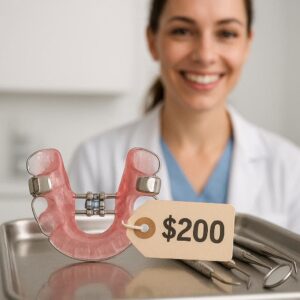
Table of Contents
ToggleUnderstanding Dental Expanders: More Than Just a Device
Before we dive into costs, it’s crucial to understand what a dental expander is and what it does. A dental expander, often called a palatal expander, is an orthodontic appliance used to widen the upper jaw. It’s most commonly used in children and adolescents whose jaw bones haven’t fully fused, but it’s also used in adults for specific purposes.
The primary goal is to correct a narrow palate, which can cause a range of issues:
-
Crowded or crooked teeth
-
A crossbite (where upper teeth fit inside lower teeth)
-
Breathing problems, including sleep apnea
-
Impacted teeth that cannot erupt properly
By gently applying pressure to the two halves of the upper jaw, the expander creates new bone growth, literally making more space in the mouth. This foundational treatment often paves the way for straighter teeth and better overall oral health.
Types of Dental Expanders and Their Cost Implications
The type of expander prescribed is one of the biggest factors in the total cost. Each has a different design, purpose, and manufacturing process.
1. Rapid Palatal Expander (RPE)
This is the most common type. It’s fixed (cemented to teeth) and has a screw in the middle that you turn with a special key at home, typically once per day.
-
Typical Use: Children and teens with a narrow upper arch.
-
Cost Range: $1,500 to $3,500. This often includes the appliance, installation (cementation), all adjustment visits, and removal.
2. Removable Expander
Similar in function to an RPE but not cemented in place. It uses acrylic and wires to apply gentle expansion pressure.
-
Typical Use: For milder cases or as a precursor to other orthodontic work.
-
Cost Range: $1,000 to $2,500. Generally less expensive due to simpler design and no cementation process.
3. Surgically-Assisted Rapid Palatal Expansion (SARPE)
For adults whose jawbones have fully fused, a minor surgical procedure is needed to assist the expansion. An oral surgeon makes small cuts in the bone, and then an expander is placed.
-
Typical Use: Adults requiring significant expansion.
-
Cost Range: This is a major cost driver. The expander itself may cost $2,000-$4,000, and the surgical fees are separate, often ranging from $3,000 to $8,000+. Total costs can easily reach $5,000 to $12,000+.
4. Hybrid or Implant-Supported Expanders
These are anchored to temporary implants in the jawbone, not the teeth. This allows for more direct bone expansion with less stress on the teeth.
-
Typical Use: Complex cases or where tooth-borne expansion isn’t ideal.
-
Cost Range: $4,000 to $7,000+, due to the implants and specialized laboratory work.
Dental Expander Types and Cost Overview
| Expander Type | Best For | Key Feature | Average Cost Range |
|---|---|---|---|
| Rapid Palatal Expander (RPE) | Children & Teens | Fixed, patient-activated screw | $1,500 – $3,500 |
| Removable Expander | Mild Cases | Can be taken out for cleaning | $1,000 – $2,500 |
| Surgically-Assisted (SARPE) | Adults | Requires outpatient surgery | $5,000 – $12,000+ |
| Implant-Supported | Complex Cases | Anchored to jawbone implants | $4,000 – $7,000+ |
Breaking Down the Total Cost: What Are You Actually Paying For?
When you receive a quote, it’s rarely just for a piece of metal or acrylic. The fee is typically a package price that covers the entire course of treatment. Here’s what that package usually includes:
-
Initial Consultation and Diagnostic Records: This includes X-rays (like a panoramic or CBCT scan), photographs, and dental impressions or digital scans. These are essential for designing your custom appliance.
-
The Appliance Itself: The cost of the materials and the laboratory fee for a technician to handcraft your expander.
-
Placement/Installation: The orthodontist’s time and expertise to carefully cement or fit the expander.
-
All Adjustment Visits: Throughout the active expansion phase (usually 2-4 months), you’ll have periodic check-ups to monitor progress.
-
Retention Period: After active turning stops, the expander remains in place for several months to allow new bone to solidify. Monitoring during this phase is included.
-
Removal: The appointment to safely remove the expander once treatment is complete.
-
Emergency Visits: Coverage for any issues like loose bands or discomfort.
A note from orthodontists: “Patients often see the expander as a simple device, but the true value is in the diagnosis, customized treatment planning, and professional oversight. We’re guiding a biological process of bone growth, which requires significant expertise to do safely and effectively.”
Major Factors That Influence Your Final Price
Why does the cost vary so much from person to person and practice to practice? These are the key variables:
-
Geographic Location: Orthodontic fees are higher in metropolitan areas and regions with a higher cost of living.
-
Provider Expertise and Practice Overhead: A highly experienced orthodontist or one with a prestigious reputation may charge more. A state-of-the-art office with digital scanners and advanced imaging also factors into practice costs.
-
Case Complexity: A severe crossbite with significant crowding requires more precise planning and longer monitoring than a mild case.
-
Type of Expander: As outlined above, a removable appliance costs less than a surgical one.
-
Additional Treatments: An expander is frequently Phase 1 of a two-phase treatment. The quoted cost may or may not include future braces or aligners. Always ask.
Navigating Insurance and Payment Options
Few people pay the entire cost out-of-pocket. Understanding your financial options is critical.
Dental Insurance and Expandera
Most dental insurance plans with orthodontic coverage will cover a portion of medically necessary expander treatment, typically for patients under age 18. Coverage is often a lifetime maximum (e.g., $1,500 to $2,000) for orthodontics.
-
What to Do: Contact your insurance provider before treatment. Ask: “Do I have orthodontic coverage? What is my lifetime maximum? What percentage of a palatal expander procedure is covered? Is pre-authorization required?”
Flexible Spending Accounts (FSA) and Health Savings Accounts (HSA)
These are powerful tools. Expander treatment is a qualified medical expense. You can use pre-tax dollars from these accounts to pay for it, saving you effectively 20-30% depending on your tax bracket.
Payment Plans
Nearly all orthodontic offices offer in-house payment plans. These typically involve a down payment (often 20-30%) followed by monthly, interest-free installments over the course of treatment. This makes the cost much more manageable.
Medical Insurance for SARPE
For surgically-assisted expansion, the surgical fee may be billed to your medical insurance, as it is a surgical procedure. This can significantly reduce your out-of-pocket expense. The orthodontic portion (the expander itself) may still fall under dental insurance.
Helpful Checklist: Questions to Ask During Your Consultation
-
Is the quoted price an all-inclusive package? What exactly does it include?
-
Do you offer a detailed, written treatment plan and cost estimate?
-
Will you submit a pre-authorization to my insurance and provide me with an estimate of benefits?
-
What payment plan options do you offer?
-
What is the protocol for emergencies, and are those visits covered in the fee?
-
If this is Phase 1, what is the estimated cost and timing for Phase 2 (braces)?
Making an Informed Decision: Value Over Price
While cost is a major consideration, it should not be the only one. Choosing an orthodontic provider is a decision that affects your health for decades.
The Risks of “Discount” Orthodontics: A poorly planned or executed expansion can lead to relapse (the jaw narrowing again), root damage, tooth tipping instead of bone movement, or even creating a gap that cannot be closed. Correcting these problems costs far more than doing it right the first time.
How to Find the Right Provider:
-
Seek board-certified orthodontists. They have undertaken additional years of specialized training.
-
Read reviews and ask for before-and-after photos of expander cases.
-
Choose a practice where you feel comfortable, your questions are answered thoroughly, and the treatment plan is explained clearly.
Conclusion
The cost of a dental expander is a significant investment in long-term oral health and function, ranging from roughly $1,000 for simple cases to over $12,000 for complex surgical intervention. The final price hinges on the type of appliance, your specific needs, and your location. By understanding the breakdown of costs, proactively engaging with your insurance, and prioritizing the expertise of your provider over price alone, you can navigate this process with confidence and achieve a healthy, beautiful result that lasts a lifetime.
Frequently Asked Questions (FAQ)
Q: Does dental insurance cover expanders for adults?
A: It’s less common but possible. Coverage primarily depends on your plan’s orthodontic age limit and whether the treatment is deemed medically necessary (e.g., to treat sleep apnea or a severe crossbite). Always check with your insurer.
Q: How long does an expander stay in?
A: The active turning phase is typically 2-4 weeks. The expander then remains passively in place for about 3-6 months as new bone forms and stabilizes. Total time is usually 4-8 months.
Q: Is the procedure painful?
A: You will feel pressure and tightness, especially after a turn and for about 5-10 minutes. It’s more often described as “uncomfortable” than truly painful. Over-the-counter pain relievers can manage any discomfort.
Q: Can I get an expander instead of braces?
A: Usually not. An expander addresses jaw width. While it can sometimes create enough space to resolve crowding, most patients still need braces or aligners (Phase 2) to precisely position individual teeth after expansion.
Additional Resource
For a visual understanding of the process and to hear from other patients, the American Association of Orthodontists (AAO) website at www.aaoinfo.org is a trusted, non-commercial source. Their “Find an Orthodontist” tool can help you locate qualified specialists in your area for consultations.
Disclaimer: This article is for informational purposes only and does not constitute medical advice. The cost estimates provided are national averages and can vary. For an accurate diagnosis and treatment plan tailored to your specific situation, please consult a licensed orthodontist. Published January 11, 2026.

dentalecostsmile
Newsletter Updates
Enter your email address below and subscribe to our newsletter