Dental Hygienist Aesthetic: Building a Professional and Trustworthy Image
Dental hygienists occupy a unique space in the practice. They spend more one-on-one time with patients than anyone else. They clean teeth. They educate. They notice the small changes that signal bigger problems. They are the frontline of preventive care.
But their role goes beyond clinical skill. The dental hygienist aesthetic shapes how patients feel during their visit. A hygienist who looks professional, calm, and approachable puts patients at ease. A hygienist who seems rushed or disorganized increases anxiety.
This guide explores the dental hygienist aesthetic. From wardrobe to communication to ergonomics, we will cover how hygienists can present themselves in a way that builds trust and supports their career.

Why the Dental Hygienist Aesthetic Matters
Hygienists are often the staff members patients see most frequently. While the dentist may perform procedures, the hygienist sees patients for routine cleanings every six months. This consistency builds a relationship.
The Trust Factor
Patients trust hygienists who look the part. Clean scrubs, neat hair, and a calm demeanor signal competence. Patients are more likely to listen to oral health advice from someone who appears organized and professional.
“I have been seeing the same hygienist for years. She always looks put together. It makes me feel like she takes her work seriously. I trust her advice because she clearly cares about details.” — Patient testimonial
The Comfort Factor
Hygienists work inches from a patient’s face. They hold sharp instruments. They spray water. Patients are vulnerable. A hygienist who looks clean, smells clean, and moves gently reduces fear. A hygienist who looks disheveled or smells of strong perfume creates discomfort.
The Career Factor
Hygienists who present themselves well are more likely to be promoted to lead roles. They are chosen for training positions. They are trusted with complex patients. A strong aesthetic is an investment in your professional growth.
The Core Elements of the Dental Hygienist Aesthetic
The aesthetic is built on several pillars. Let us explore each one.
1. Wardrobe: Clean, Practical, and Professional
Your clothing must be functional. You lean over patients. You work with water and aerosols. You move constantly. Comfort and safety come first.
Scrubs
Scrubs are the uniform of the profession. Choose wisely.
- Fit: Well-fitted scrubs look professional. Avoid oversized or tight clothing.
- Color: Most practices have brand colors. Navy, teal, and gray are common. Patterns are acceptable in some offices.
- Fabric: Moisture-wicking and wrinkle-resistant fabrics look better and feel more comfortable. Choose fabrics that withstand frequent washing.
- Pockets: You need pockets for pens, floss samples, and your probe.
Footwear
You stand for most of the day. Support matters.
- Clinical clogs: Brands like Dansko and Crocs offer support and easy cleaning.
- Professional sneakers: Clean, solid-colored sneakers with good arch support.
- Compression socks: These improve circulation and reduce fatigue.
- Avoid: High heels, open-toe shoes, sandals, and shoes with poor grip.
Accessories
Keep it minimal and safe.
- Name badge: Wear it proudly. Patients like to know your name.
- Watch with a second hand: Useful for timing procedures.
- Safety glasses: Required for infection control. Choose anti-fog lenses.
- Loop or loupes: If you use magnification, ensure they are clean and fit well.
- Jewelry: Small earrings are fine. Avoid dangling earrings, bracelets, and rings that can interfere with procedures.
2. Grooming: Neat and Hygienic
Grooming is about hygiene as much as appearance.
Hair
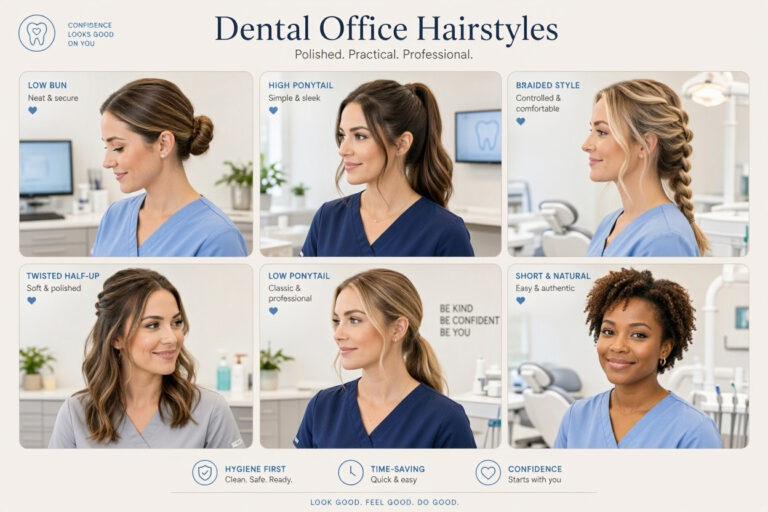
- Tied back: Long hair must be secured. It should not fall into your face or a patient’s mouth.
- Styles: Ponytails, buns, braids, and pixie cuts are practical and professional.
- Headbands: Wide headbands keep hair out of the face.
- Color: Natural colors are safest. Fun colors may be acceptable in some practices.
Nails
- Short and clean: Long nails can tear gloves and harbor bacteria. They also make it difficult to handle instruments precisely.
- No acrylics or gels: These can lift and trap bacteria.
- Polish: Clear or light colors are acceptable in most practices.
- Nail hygiene: Keep nails clean and trimmed.
Makeup
- Natural look: Keep it simple and professional.
- Masks: If you wear a mask all day, focus on eyes and brows.
- Skincare: Healthy skin is the best foundation.
Fragrance
- Avoid strong perfumes: Some patients are sensitive to fragrances. You work close to their faces. Choose unscented products.
3. Ergonomics: Protecting Your Body
Hygienists are at high risk for musculoskeletal injuries. The aesthetic includes how you position your body and your workspace.
Proper Posture
- Neutral spine: Keep your back straight and shoulders relaxed.
- Adjust the chair: Position the patient at a comfortable height.
- Use loupes: Magnification reduces the need to lean forward.
- Sit close: Position yourself close to the patient to avoid reaching.
Stretching
- Take micro-breaks: Stretch your neck, shoulders, and wrists between patients.
- Use ergonomic tools: Lightweight instruments with larger handles reduce strain.
- Adjust lighting: Good lighting reduces eye strain and improves posture.
“I ignored ergonomics for years. Now I have chronic neck pain. I wish I had invested in loupes and proper posture earlier. Your body is your most important tool.” — Sarah Johnson, Registered Dental Hygienist
4. Communication Style: Educating with Empathy
Your aesthetic is not just visual. It is how you speak and listen.
The Gentle Educator
Hygienists are educators. You teach patients about oral health. But lectures do not work. Empathy does.
- Ask questions: “How often do you floss?” instead of “You need to floss more.”
- Listen: Let patients explain their habits and barriers.
- Offer solutions: “What if you kept floss picks in your car? Would that make it easier?”
- Celebrate wins: “Your gums look healthier this visit. Whatever you are doing, keep it up.”
The Calm Professional
Patients are often anxious during cleanings. Your tone matters.
- Speak softly: A gentle voice lowers anxiety.
- Explain what you are doing: “I am going to measure your gum pockets now. It might feel a little prickly.”
- Pause for breaks: If a patient seems uncomfortable, stop and check in.
- Offer comfort: “Would you like a break? Take your time.”
5. Social Media Presence
Many hygienists share their work lives on social media. Your online presence is part of your aesthetic.
What to Share
- Behind-the-scenes: A day in the life of a hygienist.
- Educational content: “What is a periodontal pocket?” or “How to floss correctly.”
- Style posts: “What I wear to work” or “My favorite scrubs.”
- Career tips: Advice for new hygienists.
- Self-care: How you protect your body and manage stress.
What to Avoid
- Patient information: Never post photos or details about patients.
- Negative posts: Avoid complaining about your job or coworkers.
- Controversial topics: Keep your professional profile neutral.
Comparative Table: Aesthetic Choices by Practice Type
| Practice Type | Wardrobe Style | Grooming Focus | Communication Tone |
|---|---|---|---|
| General/Family | Colorful scrubs, comfortable shoes | Neat hair, minimal jewelry | Warm, educational |
| Cosmetic | Elegant scrubs, polished look | Professional makeup, neat nails | Confident, informative |
| Pediatric | Fun scrubs, themed accessories | Playful hair accessories | Engaging, playful |
| Periodontal/Specialty | Plain scrubs, surgical cap | Minimal jewelry, short nails | Calm, detailed |
| Holistic/Biological | Natural fabrics, earth tones | Natural look, no fragrance | Educational, wellness-focused |
Important Notes for Readers
Note on Infection Control: Clothing must be clean and changed daily. Scrubs should be washed separately from other laundry. Avoid jewelry that can trap bacteria.
Note on Safety: Long hair must be tied back. Dangling jewelry is a hazard. Safety glasses protect your eyes from splashes.
Note on Ergonomics: Invest in loupes and ergonomic instruments. Your body is your most important tool. Stretch between patients.
Note on Boundaries: Stay professional. Do not share personal problems with patients. Do not gossip about coworkers.
Note on Self-Care: The work is physically demanding. Take breaks. Stay hydrated. Protect your mental health.
Conclusion
The dental hygienist aesthetic is a blend of professionalism, practicality, and warmth. Focus on clean, well-fitted scrubs, neat grooming, and a comforting communication style. Protect your body with good ergonomics. Present yourself as both competent and caring. When your aesthetic aligns with your skills, patients trust you and your career thrives.
Frequently Asked Questions (FAQ)
Q: What should a dental hygienist wear to work?
A: Clean, well-fitted scrubs in your practice’s colors. Comfortable, supportive shoes. Safety glasses. Minimal jewelry. Hair tied back.
Q: Can dental hygienists wear nail polish?
A: Clear or light-colored polish is usually acceptable. Avoid long nails, acrylics, and gels, which can harbor bacteria and make instrument handling difficult.
Q: Why is ergonomics important for dental hygienists?
A: Hygienists are at high risk for neck, back, and wrist injuries. Proper posture, loupes, and ergonomic tools reduce strain and extend your career.
Q: How can a dental hygienist build trust with anxious patients?
A: Speak softly, explain what you are doing, pause for breaks, and listen to their concerns. Empathy builds trust.
Q: How can a dental hygienist look professional on social media?
A: Share behind-the-scenes content, educational posts, and career tips. Avoid patient information, negative posts, and controversial topics.
Additional Resource:
For more career guidance and professional development, visit the American Dental Hygienists’ Association (ADHA) website.