Navigating Dental Implant Costs in Sioux Falls SD: A Comprehensive Guide to Investing in Your Smile
A smile is a universal language, a cornerstone of first impressions, and a vital component of self-esteem. Yet, for many in Sioux Falls living with missing teeth, that simple, joyful expression can become a source of hidden embarrassment, functional difficulty, and even health decline. If you find yourself researching the “cost of dental implants Sioux Falls SD,” you are embarking on a journey that transcends mere dentistry—you are exploring an investment in your quality of life, health, and future well-being.
The search for a permanent tooth replacement solution often leads to the celebrated dental implant, and rightfully so. Hailed as the modern “gold standard,” an implant is the only restoration that replaces both the tooth root and crown, offering stability, bone preservation, and a natural feel unmatched by bridges or dentures. However, the initial quote can be surprising, even daunting. A single figure presented without context can lead to more questions than answers. Why is there such a range in prices? What exactly am I paying for? Is the lower-cost option a bargain, or a risk?
This exclusive guide is designed to be your definitive resource. We will move beyond superficial price lists and delve into the intricate details that define the cost of dental implants in Sioux Falls. You will gain a comprehensive understanding of the procedure’s components, the factors that create price variations, and the critical questions to ask potential providers. Our goal is to empower you, the informed resident of Sioux Falls and the surrounding region, to make a confident decision—not based on fear or price alone, but on value, expertise, and a clear vision of the lasting benefits for your health. This is not just about replacing a tooth; it’s about restoring your ability to eat, speak, and smile without a second thought. Let’s begin.
Chapter 1: Understanding the Dental Implant—The “Gold Standard” Explained
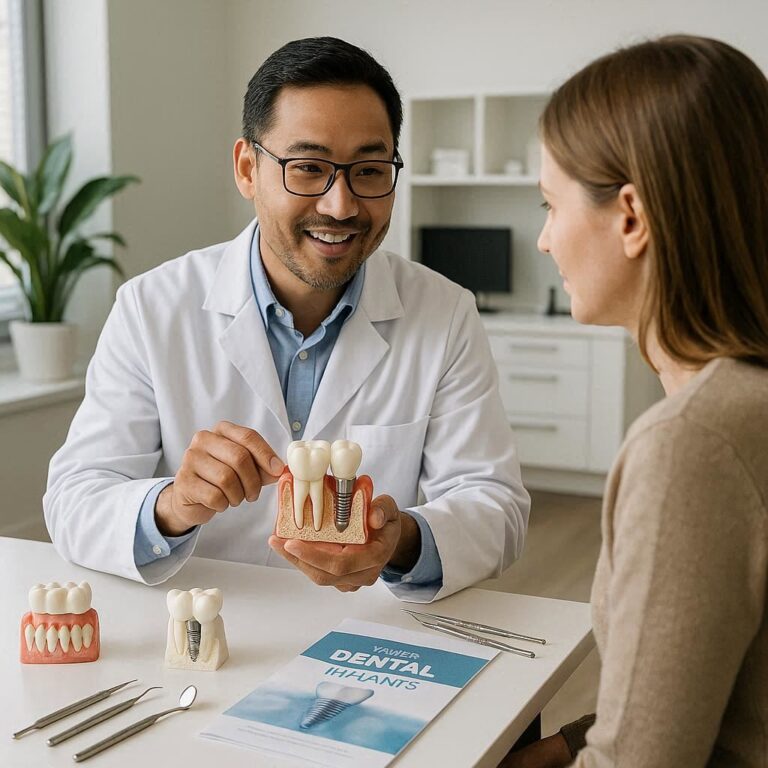
Before dissecting costs, one must fully appreciate what a dental implant is and why its design justifies its position as the premier restorative solution. A dental implant is not a single item but a sophisticated, multi-part system engineered to mimic the natural structure and function of a tooth.
The Three Core Components:
-
The Implant Fixture (The “Root”): This is a small, biocompatible titanium or zirconia screw that is surgically placed into your jawbone. Through a process called osseointegration, the bone cells fuse directly to the surface of the implant over a period of 3-6 months, creating an incredibly sturdy and permanent foundation. This is the revolutionary step that differentiates implants from all other prosthetics.
-
The Abutment (The “Connector”): Once osseointegration is complete, the abutment is attached to the implant fixture. This component protrudes slightly above the gum line and serves as the secure connector between the implant and the final restoration. It can be made of titanium, zirconia, or gold alloy.
-
The Prosthetic Restoration (The “Tooth”): This is the visible part—the crown, bridge, or denture that is custom-crafted to match the color, shape, and size of your natural teeth. For a single tooth, this is a crown. For multiple teeth, a custom bridge or an implant-supported overdenture can be attached to multiple implant fixtures.
The Biological and Functional Advantage:
Unlike a dental bridge, which requires grinding down adjacent healthy teeth for support, an implant stands independently. Unlike dentures, which rest on the gums and can slip, implants are anchored in bone. This independence preserves your natural tooth structure and, critically, provides functional chewing force directly to the jawbone. This stimulation prevents the bone resorption (deterioration) that inevitably follows tooth loss, maintaining your facial structure and preventing the “sunken” look associated with long-term tooth loss and denture wear.
Understanding this triad—fixture, abutment, and crown—is essential because each component carries its own cost, influenced by material quality, brand, and laboratory craftsmanship. The procedure’s multi-stage nature, involving surgery, healing, and custom fabrication, also contributes to the overall investment. It’s a blend of biomedical engineering, precise surgery, and aesthetic artistry.
Chapter 2: The Core Cost Breakdown—What Makes Up a Sioux Falls Dental Implant Quote?
A transparent cost estimate from a Sioux Falls implant dentist should itemize the following elements. Knowing these will help you compare “apples to apples” between different consultations.
1. Initial Diagnostic and Planning Phase:
This is the blueprint for success and is non-negotiable for a predictable outcome.
-
Comprehensive Examination & Consultation: Includes oral health assessment, discussion of goals, and review of medical history.
-
Advanced 3D Cone Beam CT Scan: This is a critical cost driver and a marker of a high-quality practice. Unlike traditional X-rays, a CBCT provides a three-dimensional view of your jawbone, revealing bone density, volume, and the precise location of nerves and sinuses. This allows for virtual surgical planning, often called “guided surgery,” which increases safety, accuracy, and can reduce surgery time. This technology represents a significant investment for the dental practice, reflected in its fee.
-
Diagnostic Models & Treatment Planning Time: The dentist’s expertise in formulating a customized step-by-step plan.
2. Surgical Phase:
The cost for the placement of the implant fixture itself.
-
Surgeon’s/Implantologist’s Expertise: This fee varies significantly based on the provider’s training, experience, and specialization (oral surgeon, periodontist, or general dentist with advanced training).
-
Cost of the Implant Fixture: The brand and material of the implant. Leading, research-backed brands (e.g., Nobel Biocare, Straumann, Zimmer Biomet) with decades of clinical data typically cost more than generic or lesser-known brands. They often come with robust warranties and proven surface technology for faster osseointegration.
-
Surgical Guides: If used, a 3D-printed surgical guide fabricated from the CBCT scan plan adds cost but enhances precision.
-
Anesthesia/Sedation Fees: Ranging from local anesthetic to IV sedation, administered by a trained professional.
3. Restorative Phase:
The creation and placement of the visible tooth/teeth.
-
Abutment: Can be a standard stock abutment or a custom-milled abutment (higher cost, better fit and aesthetics).
-
Prosthetic Crown/Bridge/Denture: This is highly variable. A crown can be made from:
-
Porcelain-Fused-to-Metal (PFM): A durable, lower-cost option with a metal substructure.
-
All-Ceramic or All-Zirconia: The premium choice for aesthetics and biocompatibility, offering a lifelike translucency and strength without metal.
-
-
Dental Laboratory & Technician Fees: The skill of the ceramist crafting your restoration is paramount. Many top Sioux Falls dentists use elite, often local or regional, dental labs known for their artistry. This quality comes at a price.
4. Ancillary Procedures (If Needed):
Many patients require additional procedures to create an ideal foundation for the implant.
-
Tooth Extractions: Including simple or surgical extractions.
-
Bone Grafting/Sinus Lift: If bone volume is insufficient due to atrophy or sinus proximity, grafting material must be placed and healed (4-12 months) before implant placement. This adds substantial material and procedure costs.
-
Tissue Grafting: For improving the aesthetics and health of the gum tissue around the implant.
5. Follow-up & Maintenance:
Includes post-operative check-ups and the essential long-term maintenance protocol to ensure the longevity of your investment.
Chapter 3: The Sioux Falls Cost Landscape: A Detailed Analysis
Sioux Falls benefits from a competitive dental market with a range of providers, from general dentists to specialized surgical centers. While costs are influenced by national averages and material expenses, local overhead (office location, staff salaries, technology investment) plays a key role. It’s crucial to understand that the figures below are estimates; your personal treatment plan will determine the final cost.
Estimated Cost Ranges for Common Implant Scenarios in Sioux Falls, SD
| Treatment Scenario | Description | Estimated Total Cost Range (Per Arch/Full Mouth) | Key Cost Drivers & Notes |
|---|---|---|---|
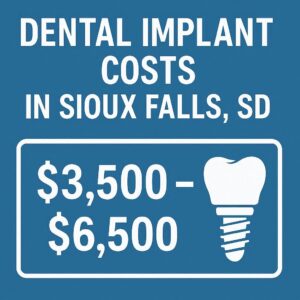
| Single Dental Implant | Includes implant fixture, abutment, and a custom crown. | $3,500 – $6,500+ | The wide range depends on implant brand, crown material (PFM vs. zirconia), need for grafting, and provider’s expertise. This is the “all-in” cost for one tooth. |
| Implant-Supported Bridge (3-4 units on 2 implants) | Replaces 2-3 missing teeth in a row using two implants as supports. | $7,000 – $15,000+ | More cost-effective per tooth than single implants. Cost varies with number of implants and pontics (false teeth), and framework material. |
| All-on-4® or Full-Arch Implant Prosthesis | A full arch of teeth (upper or lower) permanently supported by 4-6 strategically placed implants. | $18,000 – $35,000+ per arch | A transformative, life-changing solution for those with failing dentition or dentures. Price includes implants, a temporary prosthesis, and a final high-quality acrylic or zirconia bridge. Highly technique-sensitive. |
| Implant-Retained Overdenture (Removable) | A denture that snaps onto 2-4 implants for superior stability compared to traditional dentures. | $10,000 – $20,000+ per arch | A more affordable full-arch option than fixed bridges. Cost includes implant fixtures, locator attachments, and a new denture. |
| Bone Grafting (Site Preservation or Major) | Adding bone material to the implant site. | $350 – $1,200+ per site (Minor) / $1,500 – $4,000+ (Major Sinus Lift) | Material type (synthetic, donor, or patient’s own bone) and extent of procedure greatly affect cost. Often a necessary prerequisite. |
Chapter 4: Key Variables That Influence Your Final Investment
Why does Patient A pay $4,500 and Patient B pay $6,000 for a single implant in the same city? These variables are the reason.
-
Case Complexity & Oral Health Status:
-
Bone Quantity & Quality: The single greatest variable. Ample, dense bone simplifies surgery. Deficient bone requires grafting (adding time and cost).
-
Gum Health: Active periodontal disease must be controlled before implant placement.
-
Anatomical Landmarks: Proximity to the maxillary sinus or the inferior alveolar nerve requires advanced planning and possibly additional procedures.
-
-
Provider’s Expertise and Practice Overhead:
-
Specialist vs. General Dentist: An oral surgeon or periodontist who performs implants daily may charge a higher surgical fee than a general dentist. This often reflects advanced training, specialized equipment, and a focus on complex cases.
-
Technology Investment: Practices with in-house CBCT, 3D printers for surgical guides, and digital scanners (instead of messy impressions) have higher overhead but offer superior planning and comfort. This technology cost is factored into fees.
-
Practice Location & Amenities: A state-of-the-art facility in a prime Sioux Falls location will have different operational costs than a modest suburban office.
-
-
Material and Laboratory Selection:
-
Implant System: Top-tier systems have extensive research, precision manufacturing, and reliable warranties. They are a long-term investment in predictability.
-
Prosthetic Materials: A zirconia crown from a master ceramist costs more than a PFM crown from a budget lab. The difference is seen in aesthetics, biocompatibility, and potential longevity.
-
Abutment Type: A custom-milled zirconia abutment for a front tooth provides optimal gum contour and aesthetics versus a standard titanium abutment.
-
Chapter 5: The Critical Choice: Selecting Your Sioux Falls Dental Implant Provider
Choosing based on price alone is the riskiest approach. Your implant’s success depends on the skill of the team placing and restoring it. Consider this a 20+-year investment and vet providers accordingly.
Essential Vetting Criteria:
-
Credentials and Continuing Education: Look for documented post-graduate training in implantology (e.g., Fellowships, Master’s programs, credentials from the American Academy of Implant Dentistry). Ask how many implants they place annually.
-
Technology: Does the practice have a CBCT scanner and use guided surgery technology? This is a hallmark of modern implantology.
-
Portfolio of Results: Review before-and-after photos of actual patients. Ask to see cases similar to yours.
-
Consultation Experience: Was it thorough? Did the dentist listen? Was the treatment plan explained clearly with itemized costs? Were all your options (including non-implant options) discussed?
-
Surgical Specialists: For complex cases (full arches, significant bone loss), ask if a surgical specialist (oral surgeon/periodontist) will be involved, and if the restorative dentist will handle the final crown/bridge. A team approach is often ideal.
-
Patient Reviews & Testimonials: Read independent reviews on Google, Facebook, and Healthgrades. Look for comments on staff, cleanliness, follow-up, and overall experience.
-
Warranty: What kind of warranty is offered on the implant fixture and the prosthetic work? Reputable practices stand behind their work.
Chapter 6: Financing Your Smile: Making Implants Accessible in Sioux Falls
Understanding that payment is a major concern, reputable Sioux Falls dental practices offer numerous pathways to manage this investment.
-
Dental Insurance: While rarely covering the full cost, some plans may contribute towards the crown or the extraction/bone graft portion. Verification of benefits is crucial.
-
Third-Party Medical Credit Cards: (e.g., CareCredit, Sunbit). These often offer promotional periods with 0% interest if paid in full within 6-24 months. Caution: If not paid in full, high retroactive interest rates can apply.
-
In-House Payment Plans: Some practices offer structured, interest-free monthly payments directly to the office.
-
Health Savings Accounts (HSA) / Flexible Spending Accounts (FSA): These pre-tax dollars can be used for implant procedures, effectively reducing your net cost.
-
Personal Loans or Home Equity Lines: For larger cases like full-arch reconstruction, this may be a viable option with potentially lower interest rates.
A Critical Note on “Low-Cost” or “Discount” Implants: Be exceedingly cautious of advertisements promising implants at a fraction of the typical cost. Investigate what is not included (the abutment? the crown? the CBCT scan?). The implant fixture itself is often only 1/3 of the total cost. Extremely low prices may indicate the use of inferior, non-vetted implant brands, lower-cost (and less experienced) labs, or a business model that rushes procedures. Your oral health is not the place for cut-rate solutions.
Chapter 7: The Long-Term Value—Why Implants Are a Wise Investment
To view dental implants solely as an expense is to misunderstand their value proposition. A proper analysis considers cost-per-year and quality of life.
-
Durability & Longevity: With proper care and maintenance, the implant fixture can last a lifetime. The crown may need replacement after 15-20 years. Compare this to dental bridges, which last 7-15 years on average and often require replacement, potentially involving new costs for adjacent teeth.
-
Health Preservation: Implants prevent bone loss, maintain facial structure, and protect adjacent teeth from excessive wear and shifting. This can prevent costly dental problems in the future.
-
Functional & Psychological ROI: The ability to eat any food (steak, apples, corn on the cob) without pain or hesitation has a direct impact on nutrition and social enjoyment. The confidence to smile, speak, and laugh freely is priceless and impacts personal and professional interactions.
-
Denture Cost Avoidance: For full-arch patients, the cost of repeated denture relines, repairs, adhesives, and replacements over 20+ years can approach the one-time cost of a permanent implant solution, without any of the functional or social drawbacks.
Conclusion: Your Path Forward to a Confident Smile
Navigating the cost of dental implants in Sioux Falls requires moving beyond initial sticker shock to an informed assessment of value. Your journey should begin with a comprehensive consultation at a reputable practice that prioritizes diagnostics, transparency, and patient education. By understanding the detailed breakdown of costs, the critical variables at play, and the profound long-term benefits, you can confidently invest in a solution that restores not just your smile, but your health, function, and confidence for decades to come.
Frequently Asked Questions (FAQs)
Q: Does dental insurance in South Dakota cover implants?
A: Coverage is typically limited. Most plans classify implants as a “cosmetic” or “elective” procedure, though they may cover portions of related treatment like extractions, bone grafts, or the final crown under a prosthetic benefit. Always get a pre-treatment estimate.
Q: How long does the entire implant process take in Sioux Falls?
A: From consultation to final crown placement, a straightforward case can take 4-8 months. The majority of this time is the healing and osseointegration period (3-6 months). Cases requiring bone grafting can extend the timeline to 9-12 months or more.
Q: Are dental implants painful?
A: The surgery is performed under local anesthesia (like a filling) and often with sedation, so you feel no pain during the procedure. Post-operative discomfort is typically manageable with over-the-counter or prescribed pain medication and resembles that of a tooth extraction. Most patients report it was less uncomfortable than they anticipated.
Q: What is the success rate of dental implants?
A: In the hands of an experienced provider, dental implants have a documented success rate of over 95-98% over 10+ years. Success depends on patient health (e.g., uncontrolled diabetes, smoking can lower success rates), oral hygiene, and the skill of the dental team.
Q: Can I get dental implants if I’ve been missing teeth for many years and have worn dentures?
A: Absolutely. This is a very common scenario. While bone loss may have occurred, advanced techniques like bone grafting, sinus lifts, and the strategic angled placement of implants (as in the All-on-4® technique) make it possible for most patients to be candidates, even those who have worn dentures for decades.
Q: How do I care for my dental implants?
A: They require diligent, but not difficult, care similar to natural teeth: brushing twice daily, flossing specially with implant-friendly floss or water flossers, and using antibacterial mouthwash. Regular professional cleanings and check-ups (every 3-6 months as recommended) are non-negotiable to monitor the health of the implant and surrounding tissues (peri-implantitis).
Additional Resources
-
American Academy of Implant Dentistry (AAID): Find credentialed implant dentists and patient education materials. https://www.aaid.com
-
International Congress of Oral Implantologists (ICOI): A global resource for implant education and a provider finder. https://www.icoi.org
-
South Dakota Dental Association (SDDA): To verify the licensure and standing of a dentist in South Dakota. https://www.sddental.org
-
National Institute of Dental and Craniofacial Research (NIDCR): Information on dental implants from a leading U.S. research institution. https://www.nidcr.nih.gov/health-info/implants
Author: The Sioux Falls Dental Health Advisory
Date: December 08, 2025
Disclaimer: The information provided in this article is for educational and informational purposes only and does not constitute professional dental or financial advice. Costs, technologies, and recommendations can vary. Always consult directly with a qualified dental professional for personalized treatment plans and exact pricing.