The Complete Guide to Dental Implants Cost in Denver
- On
- InDENTAL IMPLANTS
Navigating the world of dental implants in Denver can feel overwhelming, especially when you’re trying to understand the costs involved. You’re not just investing in a tooth; you’re investing in your smile, your confidence, and your long-term oral health. We get it—the price tag can be a significant consideration. This guide is designed to cut through the confusion and provide you with a clear, honest, and comprehensive look at what you can expect to pay for dental implants in the Denver metro area. We’ll break down the numbers, explain what influences the cost, and offer practical advice on making this vital investment in yourself.

Table of Contents
ToggleUnderstanding the Value Behind the Investment
Before we dive into the specifics of cost, it’s crucial to frame dental implants for what they are: a long-term solution. Unlike bridges or dentures, a dental implant is designed to fuse with your jawbone, acting as a permanent replacement for your tooth root. This process, known as osseointegration, provides unmatched stability and helps preserve your jawbone health, preventing the facial collapse often associated with missing teeth.
As Dr. Elena Rodriguez, a prosthodontist in Cherry Creek, notes: “Patients often focus on the initial outlay for implants, but the true cost analysis spans decades. A well-placed implant can last a lifetime with proper care, while other solutions may need replacement or repair every 5 to 15 years. You’re paying for longevity, function, and health.”
Breaking Down the Cost of a Single Dental Implant in Denver
The total fee for a single dental implant is typically presented as a comprehensive package. This “all-in” cost covers the entire journey from consultation to final crown. In Denver, for a standard, straightforward single tooth replacement, you can expect a general price range.
Important Note: The following figures are realistic averages for the Denver market as of early 2026. They are provided to give you a reliable financial framework. Your personal quote may be higher or lower based on factors we will detail in the next section.
Typical Cost Range for a Single Tooth Implant
A complete single dental implant procedure in Denver generally falls between $3,500 and $6,000.
This package usually includes:
-
The Surgical Phase: Consultation, 3D imaging (CBCT scan), the implant post itself, the surgical placement procedure, and any follow-up visits.
-
The Restorative Phase: The abutment (the connector piece) and the final, custom-made crown.
To make this clearer, here’s a table breaking down what that investment typically covers:
| Cost Component | Description | Average Cost Range (Denver) |
|---|---|---|
| Initial Consultation & Imaging | Exam, X-rays, and essential 3D CBCT scan for surgical planning. | $150 – $400 |
| Implant Surgery | Includes the cost of the implant post (titanium or zirconia) and the procedure to place it. | $1,500 – $2,500 |
| Abutment | The connector that attaches the crown to the implant post. | $300 – $700 |
| Custom Crown | The final, visible tooth, crafted from high-quality materials like porcelain or zirconia. | $1,200 – $2,500 |
| Bone Grafting (if needed) | Additional procedure to build up insufficient jawbone. Not always required. | $500 – $1,200 per site |
| Sinus Lift (if needed) | Specialized graft for implants in the upper back jaw. Not always required. | $1,000 – $2,500 |
Helpful List: What’s NOT usually included in a basic package quote?
-
Extractions of the failed tooth prior to implant placement.
-
Treatment for active gum disease (periodontitis).
-
Sedation or anesthesia fees, if beyond local anesthetic.
-
The cost of a temporary tooth replacement during healing.
Major Factors That Influence Your Final Price in Denver
Why such a wide range? The final cost of your dental implants in Denver is highly personalized. Understanding these variables will help you interpret the estimates you receive.
1. The Complexity of Your Specific Case
This is the biggest driver of cost. A simple case with ample bone and a straightforward placement in the front of the mouth will be at the lower end of the spectrum. Complexity—and added cost—arises from:
-
Need for Bone Grafting or a Sinus Lift: If you’ve been missing a tooth for a while, bone loss may have occurred. Rebuilding that foundation is a separate, skilled procedure that adds to the timeline and cost.
-
The Position of the Missing Tooth: Implants in the front (aesthetic zone) often require more precise planning and custom temporaries. Molars in the back withstand more force and may require a slightly larger implant system.
-
Your Oral Health Status: Active infections, gum disease, or the need for multiple extractions must be addressed before implant surgery can begin, adding preparatory steps and costs.
2. The Expertise of Your Dental Provider
In Denver, you have several options for who places your implant:
-
General Dentist: May offer competitive pricing for straightforward cases.
-
Periodontist: A gum and bone specialist often handles more complex cases involving grafting or medical histories.
-
Oral Surgeon: A specialist in complex extractions and surgery.
-
Prosthodontist: A specialist in the restoration and replacement of teeth, often designing the final smile.
Specialists typically command higher fees due to their advanced training and experience with complex situations. This expertise can be invaluable for long-term success.
3. Technology and Materials Used
A clinic that invests in state-of-the-art technology often reflects that in its pricing, but this technology also adds significant value and safety.
-
3D Cone Beam CT (CBCT) Scans: This is the gold standard for implant planning in Denver. It allows for precise, virtual placement, minimizing risks and improving outcomes. Not all offices have this in-house.
-
Guided Implant Surgery: Using the 3D scan, a surgical guide is printed, allowing for minimally invasive, flapless surgery. This leads to less swelling, faster healing, and incredible precision.
-
Implant Brand & Material: There are hundreds of implant brands. Top-tier, researched brands (like Nobel Biocare, Straumann, or Zimmer) often cost more but come with extensive long-term data and robust warranties. The material of your crown (e.g., premium zirconia vs. standard porcelain-fused-to-metal) also affects price.
4. Geographic Location Within the Metro Area
Operating costs vary. A practice in a high-rent district like Cherry Creek or the Denver Tech Center may have slightly higher fees than a practice in a suburban area like Arvada or Aurora. However, this is not a hard rule, and you should not sacrifice quality for a minor geographic price difference.
Cost of Full Mouth Dental Implants and Major Restorations in Denver
For patients missing all or most of their teeth, Denver offers transformative—and significant—investment options. These solutions provide a permanent, fixed alternative to traditional dentures.
Full Mouth Dental Implants: The Gold Standard
This typically involves placing a fixed, non-removable bridge on top of multiple implants. A common and highly stable technique is the “All-on-4®” (or similar arch) concept, where a full arch of teeth is supported by just four strategically placed implants.
Cost Range for Full Mouth Restoration in Denver:
-
Per Arch (Upper or Lower): $18,000 – $35,000+
-
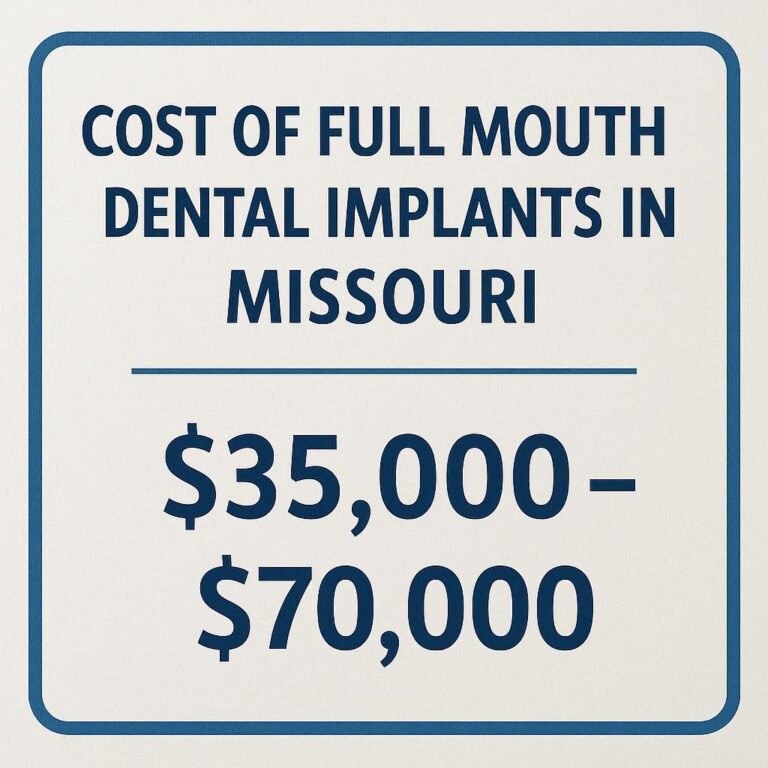
Full Mouth (Both Arches): $35,000 – $70,000+
This wide range accounts for the number of implants used (4, 6, or 8 per arch), the need for extensive grafting, the type of materials for the temporary and final bridgeworks, and the provider’s expertise.
Implant-Supported Dentures: A Stable Hybrid
A more affordable alternative to fixed bridges, these dentures “snap” or clip onto strategically placed implants (usually 2-4 per arch). They are removable by the patient for cleaning but offer dramatically more stability than conventional dentures.
Cost Range for Implant-Supported Dentures in Denver:
-
Per Arch: $10,000 – $20,000
Comparative Table: Full-Arch Solutions in Denver
| Feature | Implant-Supported Dentures | Fixed Full-Arch Implant Bridges (e.g., All-on-4®) |
|---|---|---|
| Description | Removable denture that attaches to implants via clips or bars. | Permanent, non-removable bridge fixed to implants. |
| Number of Implants | Typically 2-4 per arch. | Typically 4-6+ per arch. |
| Stability & Function | Very good; no slipping, but removable. | Excellent; feels and functions closest to natural teeth. |
| Bone Preservation | Good. | Excellent. |
| Cleaning | Removed for daily cleaning. | Cleaned like natural teeth, with flossing around implants. |
| Average Cost per Arch | $10,000 – $20,000 | $18,000 – $35,000+ |
| Best For | Patients seeking major improvement over dentures at a lower cost point. | Patients seeking the most permanent, natural-feeling solution. |
Navigating Insurance and Financing Options in Denver
Very few dental insurance plans cover the full cost of implants. Most classify them as a “cosmetic” or “elective” procedure. However, that doesn’t mean your insurance is useless.
Realistic Expectations for Dental Insurance:
-
May Cover Related Procedures: The crown portion is sometimes covered at the same benefit level as a traditional crown (often 50%). Some plans may contribute to the abutment or even the extraction.
-
Often Excludes the Implant Post: The surgical placement and the implant post itself are frequently excluded.
-
Check Your Medical Insurance: In some cases, if tooth loss was due to an accident or a diagnosed medical condition, a portion of the surgery might be covered under your medical insurance. This is rare but worth investigating.
Practical Financing Solutions Available in Denver:
-
In-House Membership Plans: Many Denver dental practices offer annual membership plans for uninsured patients, providing a discount on procedures like implants.
-
Third-Party Medical/Dental Financing: Companies like CareCredit, Alphaeon Credit, or LendingClub offer lines of credit specifically for healthcare. They often feature promotional periods with 0% interest if paid in full within a set time (e.g., 6, 12, or 18 months).
-
Payment Plans: Some clinics offer direct, in-house payment plans, allowing you to spread the cost over several months without a third-party financier.
-
Flexible Spending Accounts (FSA) or Health Savings Accounts (HSA): You can use pre-tax dollars from these accounts to pay for eligible implant procedure costs, providing an immediate discount equal to your tax rate.
Important Note: Always read the fine print on any financing agreement. Understand what the interest rate will jump to after any promotional period ends, and ensure the monthly payment fits comfortably within your budget.
How to Choose the Right Provider in Denver: It’s Not Just About Price
Selecting your implant dentist or surgeon is the most critical decision you will make. The lowest price can sometimes come with the highest risk of complications or failure.
Your Checklist for Vetting a Denver Implant Provider:
-
Credentials and Experience: Ask about their specific training in implant dentistry. How many implants do they place per year? Do they handle complex cases?
-
Technology: Do they use 3D CBCT scanning and guided surgery? This is a sign of a modern, precision-focused practice.
-
Before-and-After Gallery: Review actual cases they have completed. Do the results look natural and healthy?
-
Consultation Process: Is the consultation comprehensive? Do they take time to explain all options and answer your questions, or do they rush to a sales pitch?
-
Patient Reviews: Read reviews on independent platforms like Google. Look for consistent comments about quality, care, and follow-up.
-
Get a Detailed, Written Estimate: A trustworthy provider will give you a clear, itemized breakdown of all anticipated costs, including any potential additional procedures like grafting.
Conclusion
Understanding dental implants cost in Denver requires looking beyond a single number. It involves recognizing the value of a permanent solution, the factors that create a personalized price, and the importance of investing in skilled care. By educating yourself on the realistic ranges for single and full-mouth implants, exploring financing options, and carefully selecting a qualified provider, you can confidently make the decision to restore your smile and oral health for the long term.
Frequently Asked Questions (FAQ)
Q: What is the cheapest price I can find for a dental implant in Denver?
A: You might find ads for single implants around $1,500-$2,000. Be extremely cautious. This “budget” price often covers only the surgical placement of the implant post, not the abutment or crown, and may use lower-cost components or skip essential planning steps like 3D scans. The total, all-in cost for quality care rarely falls below $3,000 in the Denver market.
Q: How long does the entire implant process take?
A: From start to finish, it typically takes 4 to 9 months. The timeline includes healing after tooth extraction (if needed), bone grafting (if needed), the 3-6 month osseointegration healing period after implant surgery, and the fabrication of the final crown. Guided surgery and immediate-load techniques can sometimes shorten this.
Q: Does Medicaid in Colorado cover dental implants?
A: Generally, no. Colorado Medicaid (Health First Colorado) has very limited dental benefits for adults and almost never covers implants, which are considered a non-essential procedure. Coverage is typically restricted to emergency care and pain relief.
Q: Are dental implants painful?
A: The procedure itself is done under local anesthesia (like a filling), so you shouldn’t feel pain. Post-surgery, you can expect some discomfort, swelling, and bruising for a few days, which is easily managed with prescribed or over-the-counter pain medication. Most patients report the discomfort is less than they anticipated.
Q: Can I get dental implants if I have osteoporosis or diabetes?
A: Often, yes, but it requires careful management. Well-controlled diabetes is usually not a contraindication. For osteoporosis, particularly if you are taking certain medications like bisphosphonates, a thorough review with your physician and dentist is essential to assess and mitigate any risks.
Additional Resource
For a deeper understanding of the procedural steps and to visualize the journey, we recommend visiting the educational video library of the American Academy of Implant Dentistry (AAID). You can find trustworthy, patient-friendly animations that explain the science and process of implant dentistry at https://www.aaid-implant.org/implant-patient-videos/. This is an excellent way to prepare for your consultation with a Denver provider.
Date: January 12, 2026
Author: The Denver Implant Guide Team
Disclaimer: The information in this article is for educational purposes only and is not a substitute for professional medical advice, diagnosis, or treatment. Always seek the advice of your qualified healthcare provider with any questions you may have regarding a dental or medical condition. All cost estimates are based on Denver-area market averages and are subject to change. A personalized consultation is required for an exact quote.

dentalecostsmile
Newsletter Updates
Enter your email address below and subscribe to our newsletter