Dental Implants in Auburn: A Complete, Honest Guide to Restoring Your Smile
If you are missing one or more teeth, you have probably already noticed how it affects your daily life. Maybe you avoid smiling in photos. Perhaps you struggle to chew your favorite foods. Or you might worry that a denture will slip when you talk.
You are not alone. Many people in Auburn face the same challenge.
The good news is that modern dentistry offers a long-term solution that looks, feels, and functions like natural teeth: dental implants.
This guide is different from other articles you may have read. We will not overload you with complicated medical terms or unrealistic promises. Instead, we will walk you through everything you need to know about dental implants in Auburn—from the first consultation to the final crown—using simple, clear, and friendly language.
Let us begin.

What Exactly Are Dental Implants?
Before we dive into costs or clinics, it helps to understand what a dental implant actually is.
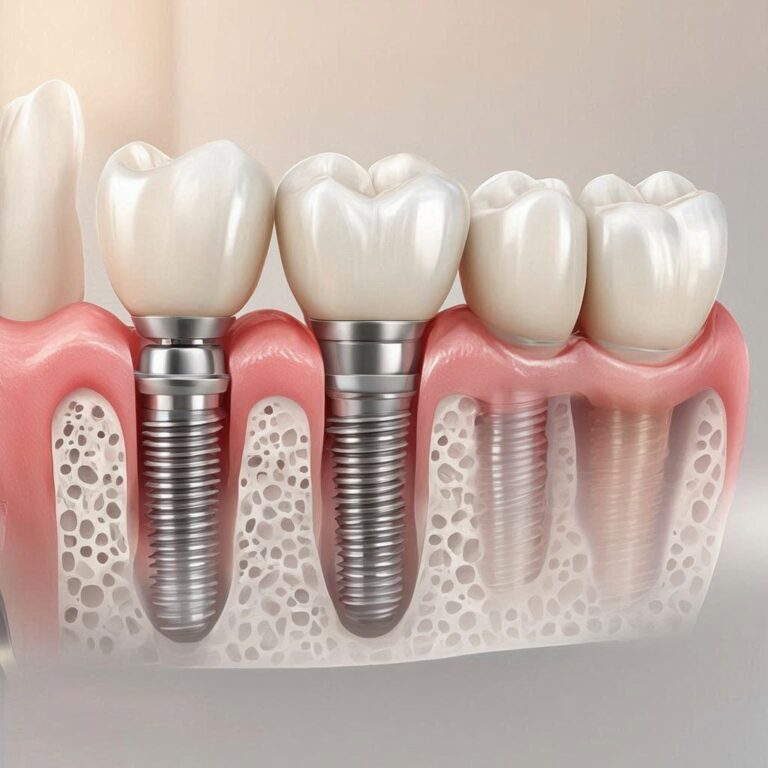
A dental implant is a small, screw-like post made of medical-grade titanium. A dentist surgically places this post into your jawbone. Over time, the bone grows around the implant and locks it into place. This process is called osseointegration. Once the implant is stable, the dentist attaches an artificial tooth (a crown) on top.
Think of it this way: the implant acts like the root of a natural tooth, and the crown acts like the visible part.
The Three Main Parts of a Dental Implant
- The Implant Fixture – The titanium screw inserted into the jawbone.
- The Abutment – A small connector piece screwed into the implant. It holds the crown.
- The Crown – The custom-made artificial tooth. It matches the color, shape, and size of your natural teeth.
Why Choose Implants Over Other Options?
You have other choices for replacing missing teeth: bridges and dentures. But implants offer unique advantages.
| Feature | Dental Implants | Traditional Bridge | Removable Denture |
|---|---|---|---|
| Looks like natural teeth | Yes | Usually | Not really |
| Prevents bone loss | Yes | No | No |
| Affects nearby teeth | No (keeps them intact) | Yes (shaves down adjacent teeth) | No |
| Stability while eating | Excellent | Good | Can slip or click |
| Longevity | 20+ years to lifetime | 5–15 years | 5–10 years |
Note: Implants require a surgical procedure and a higher upfront investment. However, many patients find that the long-term benefits—comfort, confidence, and durability—are well worth it.
Why Consider Dental Implants in Auburn?
You might wonder: why look specifically in Auburn? Can’t I go anywhere?
You can. But choosing a local provider for your dental implants in Auburn comes with real advantages.
Convenience and Follow-Up Care
The implant process takes several months. It involves multiple appointments: consultation, implant placement, healing check-ups, and crown attachment. Having a dentist nearby means less travel time and easier scheduling.
Community Reputation
Local dentists in Auburn depend on word-of-mouth and long-term relationships. They are not just treating you for one visit. They want you to be happy for years. This often translates into more personalized care.
Familiarity with Local Patient Needs
Auburn has a mix of young families, professionals, and retirees. Local implant dentists understand common concerns in this community, from dental anxiety to budget considerations.
Am I a Good Candidate for Dental Implants?
This is one of the most common questions we hear.
The short answer is: most healthy adults are candidates. But there are a few important factors.
Ideal Candidate Checklist
- Healthy gums – No active gum disease.
- Enough jawbone density – The bone must be thick enough to hold the implant.
- Good overall health – Conditions like uncontrolled diabetes or autoimmune diseases may affect healing.
- Non-smoker or willing to quit temporarily – Smoking reduces blood flow and can cause implant failure.
- Realistic expectations – Implants are not a quick fix. They require patience.
What If I Don’t Have Enough Bone?
Do not worry. This is very common, especially if you have been missing a tooth for years. Without a tooth root, the jawbone slowly shrinks.
In this case, your dentist may recommend a bone graft. This is a minor procedure where the dentist adds bone material to the weak area. After a few months of healing, you can receive the implant.
Some patients also need a sinus lift (for upper back teeth). Again, this is routine and safe.
Quotation from a real Auburn patient (name changed for privacy):
“I was told I had bone loss and thought implants were impossible. But my dentist explained the bone graft clearly. It added three months to my timeline, but now my implant feels rock solid.” – Mark, 58, Auburn
The Step-by-Step Process of Getting Dental Implants in Auburn
Let us break down exactly what happens from start to finish. This will help you feel prepared and less anxious.
Step 1: Initial Consultation (Day 1)
You meet with an implant dentist in Auburn. They will:
- Examine your mouth and gums.
- Take X-rays or a 3D CBCT scan (this shows bone density and nerve positions).
- Discuss your medical history and medications.
- Explain the treatment plan and cost estimate.
What you should ask during this visit:
- How many implants have you placed?
- Do you do the whole procedure in-house, or do I need a specialist?
- What is the total cost, including the crown?
- What happens if the implant fails?
Step 2: Treatment Planning (A few days later)
The dentist creates a custom surgical guide. This ensures the implant goes into the exact right position. Computer-guided implant placement is now common in Auburn clinics. It is more precise and less invasive.
Step 3: Implant Placement Surgery (Day of surgery)
This is usually done with local anesthesia. You are awake but feel no pain. For anxious patients, sedation options (like laughing gas or oral medication) are available.
The dentist:
- Makes a small incision in the gum.
- Drills a precise hole into the jawbone.
- Places the titanium implant screw.
- Sutures (stitches) the gum closed.
The entire procedure for a single implant takes about 60 to 90 minutes.
Does it hurt?
Most patients report mild discomfort after the anesthesia wears off. It is often less painful than a tooth extraction. Over-the-counter pain relievers usually work fine.
Step 4: Osseointegration (Healing period – 3 to 6 months)
This is the waiting phase. Your jawbone grows around the implant. You will wear a temporary partial denture or flipper if the missing tooth is in a visible area.
During this time, you eat soft foods and avoid chewing directly on the implant site.
Step 5: Abutment Placement (Small second surgery)
Once the implant is fully integrated, the dentist reopens the gum to attach the abutment. This is a quick, minor procedure. Some dentists place the abutment at the same time as the implant. It depends on your case.
Healing after abutment placement takes about two weeks.
Step 6: Crown Fabrication and Fitting (2–4 weeks)
The dentist takes impressions of your mouth. A dental lab creates your custom crown. You will choose the shade to match your natural teeth.
When the crown is ready, the dentist screws or cements it onto the abutment. They check your bite and make small adjustments.
Congratulations. You now have a new tooth.
Timeline Summary Table
| Stage | Typical Duration |
|---|---|
| Consultation & planning | 1–2 weeks |
| Implant surgery | 1 day |
| Osseointegration (healing) | 3–6 months |
| Abutment placement | 1 day |
| Crown fabrication | 2–4 weeks |
| Final crown attachment | 1 day |
| Total (without bone graft) | 4–8 months |
Note: If you need a bone graft, add 3–6 months before the implant placement.
How Much Do Dental Implants in Auburn Cost?
Let us talk honestly about money. This is often the biggest concern.
Dental implants are an investment. In Auburn, prices vary based on the dentist, the implant system used, and whether you need additional procedures like bone grafts.
Average Price Ranges in Auburn (2025 estimate)
| Procedure | Low Estimate | High Estimate |
|---|---|---|
| Single implant (including crown) | $3,500 | $6,000 |
| Implant-supported bridge (3–4 teeth) | $7,000 | $15,000 |
| Full arch fixed denture (All-on-4, one jaw) | $15,000 | $30,000 |
| Bone graft (per site) | $500 | $2,000 |
| Sinus lift | $1,500 | $3,000 |
| CT scan (3D imaging) | $250 | $500 |
Why the wide range?
- Experience of the dentist – A prosthodontist or oral surgeon may charge more than a general dentist.
- Implant brand – Premium brands like Nobel Biocare or Straumann cost more than generics.
- Crown material – Zirconia (metal-free) is more expensive than porcelain-fused-to-metal.
- Location within Auburn – Clinics in high-rent areas may have higher fees.
Does Insurance Cover Dental Implants?
It depends. Many dental insurance plans call implants a “cosmetic” procedure and exclude them. However, more plans now cover part of the cost, especially if the tooth was lost due to an accident or medical condition.
What to check with your insurance:
- Is there a missing tooth clause?
- What is the annual maximum benefit?
- Does the plan cover the crown (often yes) but not the implant?
Payment Options in Auburn
Most Auburn implant dentists offer:
- CareCredit – A medical credit card with promotional financing.
- In-house payment plans – Monthly installments over 6–24 months.
- Discount for upfront payment – Some clinics offer 5–10% off if you pay in full.
Important note: Be very careful with “cheap dental implants” advertised online. Extremely low prices often mean lower quality materials, less experience, or hidden fees. Your health is not a place to bargain hunt.
Risks, Complications, and Honest Truths
We believe in transparency. Dental implants have a high success rate—about 95% to 98% for lower jaws and slightly lower for upper jaws. But they can fail.
Common Reasons for Implant Failure
- Peri-implantitis – Gum infection around the implant. This is preventable with good hygiene.
- Failed osseointegration – The bone never bonds with the implant. More common in smokers.
- Nerve damage – Rare, but can cause numbness in the lip or chin.
- Allergic reaction – Extremely rare (titanium allergy exists but is uncommon).
Signs of a Failing Implant
- Persistent pain or swelling months after surgery.
- The implant feels loose.
- Receding gums around the implant.
- Difficulty chewing.
What happens if an implant fails?
The dentist removes it. After the bone heals (2–3 months), you can try again. Sometimes a larger implant or bone graft is needed.
How to Maximize Success
- Brush and floss daily (yes, implants need flossing too).
- Visit your Auburn dentist every 6 months for check-ups.
- Do not smoke. If you do, consider quitting.
- Wear a night guard if you grind your teeth. Grinding can crack crowns.
Quotation from an Auburn dental hygienist:
“Patients often think implants are ‘fake’ and don’t need care. That’s wrong. The gum around an implant is just as vulnerable to infection as natural teeth.”
Finding the Right Implant Dentist in Auburn
Not all dentists who place implants have the same training. Some take a weekend course. Others have years of advanced training in implantology.
Types of Implant Providers
| Provider Type | Training Level | Best For |
|---|---|---|
| General dentist with implant training | Moderate | Single, simple implants |
| Oral surgeon | Highest (4+ years surgical residency) | Complex cases, bone grafts, full arches |
| Periodontist | Gum and bone specialist | Patients with gum disease or thin gums |
| Prosthodontist | Advanced restorative training | Full mouth reconstruction, aesthetics |
Questions to Ask Before Choosing
- How many implants have you placed? (Look for hundreds or thousands.)
- Do you use 3D CT scanning and surgical guides?
- What implant brand do you use and why?
- Can you show me before-and-after photos of similar cases?
- What is your protocol for handling complications?
- Do you offer sedation?
Red Flags to Avoid
- A dentist who guarantees 100% success (no ethical dentist can).
- No CT scan used (2D X-rays are not enough for safety).
- Pressure to decide immediately.
- No written treatment plan or cost breakdown.
Recovery and Aftercare: What to Expect
The first few days after implant surgery are the most uncomfortable. After that, most people return to normal activities.
Day-by-Day Recovery Guide
Day 1:
Bleeding and swelling are normal. Use ice packs (20 minutes on, 20 off). Eat cold soft foods like yogurt or smoothies. Do not spit or use a straw.
Days 2–3:
Swelling peaks. Stick to soft foods: mashed potatoes, scrambled eggs, soup. Rinse gently with warm salt water after 24 hours.
Days 4–7:
Swelling goes down. You can return to work or normal activities. Avoid chewing on the implant side.
Week 2:
Stitches dissolve or are removed. Most discomfort is gone.
Months 1–3:
You barely notice the implant. But the bone is still healing. Do not bite hard foods with that area.
Long-Term Maintenance Checklist
- Use a soft-bristled toothbrush.
- Floss daily with implant-specific floss (thicker and stiffer).
- Use a water flosser (Waterpik) on low setting.
- Avoid chewing ice, hard candy, or pens.
- See your Auburn dentist every 6 months for implant monitoring.
- If you smoke, reduce or quit. Smoking is the #1 cause of late implant failure.
Dental Implants vs. Other Options: A Clear Comparison
You have choices. Let us compare them honestly.
Dental Implant vs. Fixed Bridge
| Factor | Implant | Bridge |
|---|---|---|
| Adjacent teeth affected | No | Yes (shaved down) |
| Bone preservation | Yes | No |
| Lifespan | 20+ years | 7–15 years |
| Initial cost | Higher | Lower |
| Treatment time | 4–8 months | 2–3 weeks |
Verdict: If you are young or want a permanent solution, choose the implant. If you need a fast, cheaper fix and your adjacent teeth already have large fillings, a bridge may work.
Dental Implant vs. Removable Partial Denture
| Factor | Implant | Partial Denture |
|---|---|---|
| Stability | Excellent | Can move or click |
| Comfort | Feels natural | Bulky, covers palate |
| Speech | Normal | May lisp initially |
| Maintenance | Brush/floss | Must remove and clean |
| Cost over 10 years | Lower (no replacement) | Higher (replacements, adhesives) |
Verdict: Partial dentures are a temporary or budget-friendly option. Implants are a lifetime investment in quality of life.
Full Arch Implants: All-on-4 in Auburn
If you are missing all teeth in one jaw (upper or lower), you do not need an implant for every missing tooth. That would be expensive and excessive.
The All-on-4 technique uses just four implants to support a fixed full arch of teeth. Sometimes five or six implants are used (All-on-5 or All-on-6).
How All-on-4 Works
- Four implants are placed strategically (two straight, two angled).
- A temporary fixed bridge is attached the same day (same-day teeth).
- You heal for 4–6 months with a soft diet.
- The final permanent bridge is made of zirconia or acrylic with a titanium bar.
Pros of All-on-4
- No need for bone grafting in many cases.
- Fixed teeth the same day as surgery.
- More affordable than individual implants (about $15k–$30k per arch).
- Never remove your teeth.
Cons of All-on-4
- More expensive than traditional dentures.
- Requires surgery.
- Cleaning takes practice (special floss and water flossers).
Note: Some Auburn clinics offer “same-day teeth.” Be cautious. Immediate loading is possible, but not everyone is a candidate. Rushing can lead to failure.
Frequently Asked Questions (FAQ)
1. Do dental implants hurt?
Most patients say the procedure itself is painless due to anesthesia. Afterward, mild soreness is normal. It is often less painful than a tooth extraction.
2. How long do dental implants last?
With good care, 20 years to a lifetime. The crown may need replacement after 10–15 years due to normal wear, but the implant screw can last forever.
3. Can I get dental implants if I have gum disease?
Not until the gum disease is treated. Active infection will cause implant failure. Your dentist will first perform scaling, root planing, or periodontal therapy.
4. Are dental implants covered by Medicare or Medicaid?
Original Medicare generally does not cover dental implants. Some Medicare Advantage plans (Part C) offer limited dental benefits. Medicaid coverage varies by state. In most cases, you will pay out of pocket.
5. Can I have an MRI with dental implants?
Yes. Titanium is not magnetic. It is safe for MRI and CT scans.
6. What is the success rate for dental implants in Auburn?
The same as national averages: 95-98% for lower jaw, 90-95% for upper jaw. Success depends on your health, habits, and the dentist’s skill.
7. How soon after extraction can I get an implant?
Immediate implant placement (same day) is possible if no infection is present. Delayed placement (3–6 months) gives the bone time to heal. Late placement (6+ months) often requires a bone graft.
8. Do dental implants feel like natural teeth?
Yes. After healing, most patients cannot tell the difference. You can bite, chew, and smile with confidence.
Additional Resources
For more reliable information on dental implants, visit the American Academy of Implant Dentistry (AAID) patient education page.
👉 Link: https://www.aaid.com/patients/ (Open in a new tab. This resource explains implant types, patient stories, and how to find a qualified implant dentist.)
Final Thoughts: Is a Dental Implant Right for You?
Deciding to get dental implants is a personal choice. It involves time, money, and a minor surgery. But for the right candidate, the rewards are life-changing.
You will eat without fear. You will smile without hiding your mouth. You will not worry about denture adhesive or clicking noises.
If you live in Auburn, you have access to skilled implant dentists who use modern technology like 3D CT scans and guided surgery. Start with a consultation. Ask the questions we listed. Take your time.
Your smile is worth the investment.
Conclusion
Dental implants in Auburn offer a permanent, natural-looking solution for missing teeth. The process takes several months and costs between $3,500 and $6,000 per tooth, but success rates are high. Choose an experienced local dentist, follow proper aftercare, and your new tooth can last a lifetime.