Dental Implants in MI Farmington Hills
If you are reading this, chances are you have thought about fixing your smile. Maybe you have a missing tooth. Perhaps you struggle with uncomfortable dentures. Or you simply want to learn about dental implants in MI Farmington Hills without the confusing medical jargon.
You have come to the right place.
This guide is different. It is not a sales pitch. It is not a copy-pasted medical brochure. It is a thoughtful, honest, and human-written resource. We will walk through every step together. We will talk about costs, pain, timing, and what really happens when you sit in that dentist’s chair.
By the end, you will feel informed, confident, and ready to make the best decision for your health and your wallet.
Let us begin.
Why Dental Implants? Understanding the Big Picture
Before we dive into the local details of Farmington Hills, let us take a step back. Why do millions of people choose implants over bridges or dentures?
The answer is surprisingly simple: implants work like natural teeth.
A dental implant is a small, strong titanium post. A dentist places it into your jawbone. Over time, the bone grows around it. This creates a rock-solid foundation. On top of that post, you attach a crown, a bridge, or even a full set of dentures.
Here is what makes implants special:
-
They preserve your jawbone. When you lose a tooth, the bone underneath starts to melt away. Implants stop that process.
-
They do not harm neighboring teeth. A traditional bridge requires grinding down healthy teeth. Implants stand alone.
-
They feel natural. You can eat, laugh, and brush without worrying about slipping or clicking.
-
They last decades. With good care, many implants last a lifetime.
But let us be honest. Implants are not magic. They require surgery. They cost more upfront than a bridge. And they take several months to complete.
That said, for most people, the long-term benefits far outweigh the temporary inconveniences.
“I was terrified of the surgery. But the team in Farmington Hills walked me through every step. Six months later, I forgot which tooth was even missing.” — Local patient, age 58
Dental Implants in MI Farmington Hills: What Makes This Location Unique?
Farmington Hills is not a small town, but it has a community feel. You have excellent health care options here. When it comes to dental implants in MI Farmington Hills, you benefit from a mix of suburban accessibility and metropolitan expertise.
Many dentists in this area have advanced training in implantology. Some are affiliated with the Michigan Dental Association. Others have studied at the renowned University of Michigan School of Dentistry.
What does that mean for you?
It means you do not have to drive to Detroit or Ann Arbor for top-tier implant care. It means competitive pricing. It means shorter wait times for consultations.
Local clinics also understand Michigan insurance plans. Many accept Delta Dental, Blue Cross Blue Shield of Michigan, and even Medicaid for certain preliminary procedures like extractions.
A note on realism: Not every patient is a candidate for implants. Heavy smokers, people with uncontrolled diabetes, or those with severe bone loss may need additional treatments. A good Farmington Hills dentist will tell you the truth, not just sell you a procedure.
The Complete Step-by-Step Process of Getting Implants
Let us demystify the journey. Most people imagine a single dramatic surgery. In reality, getting dental implants is a calm, measured process. It happens in clear stages.
Step 1: The Initial Consultation (60–90 minutes)
You walk into a clean, modern office. A receptionist greets you. You fill out medical history forms. Then you meet the implant dentist.
During this visit, the dentist will:
-
Examine your mouth visually
-
Take digital X-rays or a 3D CT scan
-
Discuss your goals and budget
-
Check bone density
-
Review medications and health conditions
What you should ask:
-
“How many implants have you placed?”
-
“What happens if the implant fails?”
-
“Do you offer sedation?”
Step 2: Treatment Planning
The dentist uses special software to map out the exact position of each implant. This prevents damage to nerves and sinuses. You will see a virtual model of your future smile.
If you have low bone density, the dentist may recommend a bone graft. This adds healing time, usually 4–6 months. Be patient. A bone graft is often the difference between a failed implant and a successful one.
Step 3: The Surgical Placement (Day of Surgery)
On surgery day, you will receive local anesthesia. Most patients also choose nitrous oxide (laughing gas) or oral sedation. The dentist makes a small cut in the gum. They drill a precise hole into the jawbone. Then they screw in the titanium implant.
How long does it take?
-
Single implant: 30–60 minutes
-
Multiple implants: 1.5–2.5 hours
You will feel pressure but not sharp pain. Afterward, you may have mild swelling. This is normal.
Step 4: Osseointegration – The Waiting Period
This is the most important phase. Osseointegration means your bone grows tightly around the implant. It takes 3 to 6 months. During this time, you wear a temporary tooth or a flipper.
Do not rush this step. If you place a crown too early, the implant can fail. Trust the biology.
Step 5: Abutment Placement
Once the implant is fused to the bone, the dentist reopens the gum slightly. They attach a small connector piece called an abutment. This sticks out above the gum line. It acts as the anchor for your new tooth.
Healing from the abutment procedure takes about two weeks.
Step 6: The Final Crown
Your dentist takes impressions of your mouth. A dental lab custom-makes your crown to match the shape, size, and color of your natural teeth. When the crown is ready, the dentist screws or cements it onto the abutment.
You look in the mirror. You smile. It feels like your own tooth.
Cost Breakdown for Dental Implants in MI Farmington Hills
Let us talk money. This is where many readers get anxious. Here is the honest truth: dental implants are not cheap. But they are an investment in your health that lasts decades.
Below is a realistic cost table for dental implants in MI Farmington Hills based on 2025 averages. These numbers include the surgery, materials, and crown.
| Procedure | Low End | Average | High End |
|---|---|---|---|
| Single implant (all-inclusive) | $3,200 | $4,500 | $6,000 |
| Implant-supported bridge (3 teeth) | $7,000 | $9,500 | $13,000 |
| Full arch (All-on-4 per arch) | $15,000 | $20,000 | $28,000 |
| Bone graft (if needed) | $600 | $1,200 | $2,500 |
| Sinus lift | $1,500 | $2,500 | $4,000 |
| CT scan | $250 | $350 | $500 |
Important note: These prices often do not include the temporary tooth, extractions, or sedation. Always ask for a line-item estimate.
Does Insurance Cover Implants?
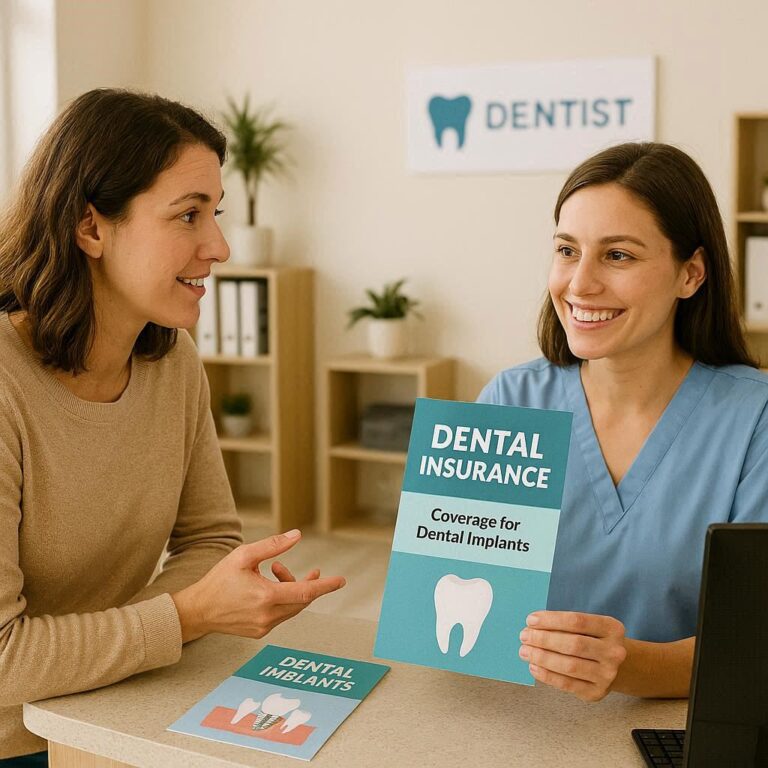
Many dental insurance plans call implants a “major procedure.” They may cover 30% to 50% after a waiting period. Some plans exclude implants entirely.
Medical insurance may help if tooth loss resulted from an accident or a medical condition like oral cancer. Always file both dental and medical claims if possible.
Financing Options in Farmington Hills
Most local offices partner with:
-
CareCredit (medical credit card)
-
LendingClub
-
In-house payment plans (ask specifically)
Some clinics offer a 5% discount for paying in full with cash or check.
Single Tooth Implant vs. Bridge vs. Denture: An Honest Comparison
You have options. Let us compare them side by side. This will help you decide if implants are truly right for you.
| Feature | Single Implant | Traditional Bridge | Removable Partial Denture |
|---|---|---|---|
| Longevity | 20+ years | 7–15 years | 5–8 years |
| Cost over 20 years | Lower | Medium | Higher (replacements) |
| Affects healthy teeth? | No | Yes (grinds down neighbors) | No, but can be uncomfortable |
| Bone preservation | Yes | No | No |
| Eating restrictions | None | Slight (avoid very sticky foods) | Many (no hard or sticky foods) |
| Comfort | Like natural tooth | Good | Fair (can move) |
For a single missing tooth, an implant is almost always the best clinical choice. For multiple missing teeth, a bridge or partial denture may be acceptable if budget is very tight.
A realistic quote from a Farmington Hills prosthodontist:
“I tell my patients: if you plan to live in your home for 30 years, you buy a good roof. Your mouth is the same. Buy quality.”
Who Is a Good Candidate for Implants? (And Who Is Not)
Let us be clear. Not everyone can get implants on the first try. A responsible dentist will screen you carefully.
Good candidates:
-
Adults with fully developed jawbone (usually over 18)
-
Non-smokers or willing to quit for 2 months
-
People with healthy gums (no active periodontal disease)
-
Those with enough bone height and width
-
Patients willing to commit to 4–9 months of healing
Challenging cases (but still possible with extra steps):
-
Heavy smokers (high failure rate)
-
Uncontrolled diabetes (slow healing)
-
Patients taking bisphosphonates for osteoporosis
-
People who grind or clench teeth severely
-
Those with very thin bone (needs graft)
Usually not candidates:
-
Children or teenagers
-
Active chemotherapy patients
-
Severe untreated psychiatric conditions
-
Patients with uncontrolled autoimmune diseases
What if you are not a candidate?
Do not lose hope. Mini implants, zygomatic implants, or traditional dentures may still work for you. Always seek a second opinion.
Pain, Recovery, and What to Expect After Surgery
Fear of pain stops many people from even scheduling a consultation. Let me reassure you: modern implant surgery is remarkably comfortable.
On a scale of 1 to 10:
-
During surgery: 1 or 2 (you feel pressure, not pain)
-
First 24 hours: 3 to 5 (manageable with ibuprofen)
-
Days 2–3: 2 to 4 (swelling peaks then fades)
-
After 1 week: 0 to 1 (mild tenderness)
Most patients say the tooth extraction they had years ago hurt more than the implant placement.
Recovery timeline:
-
Day 1: Rest. Ice packs. Soft foods. No spitting.
-
Day 3: Swelling goes down. You can return to desk work.
-
Day 7: Sutures removed. Most normal activities resume.
-
Week 2–4: Soft food diet continues. Avoid crunchy things.
-
Month 3–6: Normal chewing allowed after crown placement.
Foods to eat during healing:
-
Smoothies (no straws for 1 week)
-
Mashed potatoes
-
Scrambled eggs
-
Greek yogurt
-
Protein shakes
-
Soup (warm, not hot)
Foods to avoid for 2 months:
-
Popcorn (kernels get stuck)
-
Nuts and seeds
-
Steak or tough meats
-
Ice cubes
-
Chewy candy
How to Choose the Right Implant Dentist in Farmington Hills
You have choices. Many general dentists place implants. Some periodontists and oral surgeons focus only on implants. Who should you trust?
Ask these 5 questions before booking:
-
“How many implants have you placed in the last 12 months?”
Look for 50+ per year for a general dentist. Oral surgeons often place 200+. -
“What happens if the implant fails?”
A good dentist offers a free replacement within 1–2 years. -
“Do you use 3D CT scanning?”
If no, walk away. 3D imaging is standard of care. -
“Who makes your crowns? Local lab or overseas?”
Local labs cost more but offer better fit and faster adjustments. -
“Can I speak to a past patient?”
Confident dentists will say yes.
Credentials to look for:
-
DDS or DMD (dentist)
-
MS or Certificate in Periodontics (specialist)
-
Fellowship in the International Congress of Oral Implantologists (ICOI)
-
Active member of the American Academy of Implant Dentistry
Red flags to avoid:
-
“Same-day implants for everyone” (rarely realistic)
-
Prices half the local average (corners are cut)
-
No CT scan on premises
-
Pushy financing without medical evaluation
Full Arch Implants: All-on-4 and All-on-6 Explained
If you have lost most or all of your teeth, you do not need one implant per tooth. That would be expensive and excessive.
Instead, dentists use a technique called All-on-4 or All-on-6.
Here is how it works:
-
4 or 6 implants are placed strategically in your jaw
-
Those implants support a fixed bridge of 10–14 teeth
-
The bridge snaps onto the implants but only a dentist can remove it
-
You never take it out like dentures
Benefits of full arch implants:
-
Full chewing power (eat apples and corn on the cob)
-
No adhesives or pastes
-
Prevents the “sunken face” look of bone loss
-
Cleans like natural teeth (brush and floss)
Cost reality for Farmington Hills:
-
All-on-4 upper arch: $15,000 – $22,000
-
Both arches (full mouth): $28,000 – $45,000
Yes, that is significant. But compare it to 30 years of denture adhesives, denture relines, and social embarrassment. Many patients say it was the best money they ever spent.
“I cried when I ate my first steak in 12 years. My dentures always slipped. Now I forget I have implants.” — Farmington Hills patient, age 71
Maintenance and Long-Term Care for Your Implants
Implants do not get cavities. But they can get a disease called peri-implantitis – inflammation and bone loss around the implant. The main cause? Poor oral hygiene.
Daily care routine:
-
Brush twice a day with a soft toothbrush
-
Floss with implant-specific floss or superfloss
-
Use a water flosser (Waterpik) on low setting
-
Avoid smoking (major cause of implant failure)
Professional maintenance:
-
See your dentist every 6 months
-
Annual X-rays to check bone levels
-
Special plastic scalers (metal scalers scratch implants)
Lifespan expectations:
-
Implant screw: 20+ years to lifetime
-
Crown: 10–20 years (may need replacement)
-
Abutment screw: may need tightening every 5–10 years
If you take care of your implants, they will likely outlive you.
Common Myths and Fears About Implants (Debunked)
Let us address the stories you have heard at coffee shops or on social media.
Myth 1: “Implants are experimental.”
False. Implants have been used successfully since the 1960s. Over 5 million implants are placed in the U.S. each year.
Myth 2: “The surgery is extremely painful.”
False. Most patients say it hurts less than a tooth extraction.
Myth 3: “My body will reject the implant.”
Extremely rare. Titanium is biocompatible. Failure is usually due to infection or smoking, not rejection.
Myth 4: “Implants are only for rich people.”
Financing makes them accessible to many middle-income families. Some clinics offer sliding scales.
Myth 5: “I am too old for implants.”
Age is not a barrier. Healthy 90-year-olds get implants. The question is health, not birthday candles.
Preparing for Your First Consultation: A Checklist
You want to make the most of your time and money. Here is a simple checklist before you visit any Farmington Hills implant dentist.
Documents to bring:
-
Insurance card (dental and medical)
-
List of current medications (including aspirin and blood thinners)
-
Any recent X-rays (if you have them)
-
Referral from your general dentist (if any)
Questions to write down:
-
What is the total cost including everything?
-
What sedation options do you offer?
-
How long from start to finish?
-
What is your policy on failed implants?
-
Do you offer a warranty on the crown?
Personal prep:
-
Do not smoke for 24 hours before (if possible)
-
Eat a light meal before (if not using IV sedation)
-
Arrange a driver if you plan on sedation
Realistic Timeline from First Call to Final Smile
Patience is the hardest part of implants. Here is a realistic calendar for a typical single tooth implant in Farmington Hills.
| Stage | Time | What happens |
|---|---|---|
| Week 1 | Day 1 | Consultation and CT scan |
| Week 2 | Day 7–10 | Treatment plan presented |
| Week 3–4 | Day 21–30 | Bone graft (if needed) |
| Week 8–24 | Day 60–180 | Healing after graft (if done) |
| Week 25 | Day 175 | Implant placement surgery |
| Week 26–38 | Day 180–270 | Osseointegration (bone healing) |
| Week 39 | Day 273 | Abutment placement |
| Week 41 | Day 287 | Impressions for crown |
| Week 43 | Day 301 | Final crown delivery |
Total: approximately 10 months for a case needing a bone graft. Without a graft, about 5–6 months.
Do not let this timeline scare you. Most of that time is passive healing. You live normally. You wear a temporary tooth. And at the end, you have a permanent solution.
Alternatives to Dental Implants (When Implants Are Not Right)
Sometimes implants are not the answer. Maybe you have severe bone loss and cannot afford a graft. Maybe you have a medical condition. Or maybe you simply prefer a non-surgical option.
Here are three realistic alternatives.
1. Traditional Removable Dentures
-
Cost: $600 – $3,000 per arch
-
Pros: No surgery. Fast (2–4 weeks).
-
Cons: Can slip. Requires adhesives. Does not preserve bone.
2. Fixed Dental Bridge
-
Cost: $2,000 – $5,000 for 3-unit bridge
-
Pros: Fixed in place. Faster than implants (3 weeks).
-
Cons: Damages healthy teeth. Lasts 7–15 years.
3. Resin-Bonded Bridge (Maryland Bridge)
-
Cost: $1,500 – $3,000
-
Pros: Minimal grinding of teeth.
-
Cons: Not for back teeth. Can debond easily.
If you choose an alternative, that is okay. The best treatment is the one you can afford and maintain.
Local Resources for Dental Implants in MI Farmington Hills
You are not alone. Several local organizations and professionals can help you navigate your implant journey.
Professional associations:
-
Michigan Dental Association – Find member dentists
-
Farmington Hills Dental Society – Local study club
Financial assistance programs:
-
Michigan Department of Health and Human Services – Limited dental benefits for qualifying low-income adults
-
CareCredit – Widely accepted in Farmington Hills
-
Smiles for Life Foundation – Grants for medically necessary dental care
Low-cost or sliding scale clinics near Farmington Hills:
-
Covenant Community Care (Detroit) – Sliding scale fees
-
University of Detroit Mercy Dental Clinic – Reduced fees for care by students (supervised)
Frequently Asked Questions (FAQ)
1. How long do dental implants last?
With good care, the titanium implant lasts a lifetime. The crown on top lasts 10–20 years.
2. Can I get a dental implant in one day?
Sometimes. “Teeth-in-a-day” exists for specific cases with good bone. Most people still need 3–6 months of healing.
3. Does insurance cover dental implants in MI Farmington Hills?
Some plans cover 30–50% of the crown portion. Few cover the implant surgery. Always check with your provider.
4. Are dental implants safe for seniors?
Yes. Age alone is not a risk. Overall health is what matters.
5. What is the failure rate of implants?
About 5% over 10 years. Smoking raises failure to 15–20%.
6. Can I get implants if I have gum disease?
Not active gum disease. You must treat the gum disease first, then wait for healing.
7. Do implants hurt more than extractions?
No. Most patients say extractions hurt more.
8. How do I clean under an implant bridge?
Use superfloss, interdental brushes, or a water flosser.
9. Can implants get cavities?
No. But the gum around them can get infected (peri-implantitis).
10. What is the cheapest dental implant option?
Mini implants. They cost about $1,500–$2,500 each but are less durable for back teeth.
Conclusion
Dental implants in MI Farmington Hills offer a permanent, natural-feeling solution for missing teeth, but they require time, patience, and a realistic budget. Choose an experienced local dentist who uses 3D imaging and offers clear warranties. Whether you need one tooth or a full arch, this investment in your smile pays dividends in confidence and quality of life for decades.
Additional Resource
For a free, unbiased guide to comparing implant dentists in Oakland County, visit the Michigan Dental Association’s consumer page at:
https://www.michigandental.org/patients (external link – opens in new tab)