Dental Implants In Roselle Park: Your Complete, Honest Guide To A Restored Smile
Losing a tooth can feel frustrating. Maybe you feel self-conscious when you laugh. Perhaps chewing has become a chore. You are not alone. Many people in Roselle Park face this situation every year.
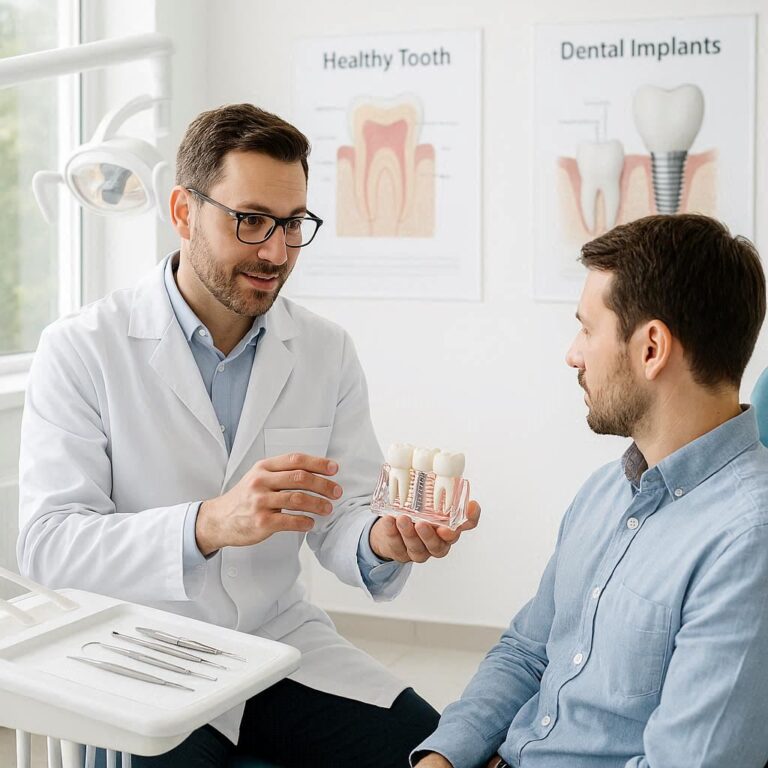
The good news? Modern dentistry offers a fantastic solution: the dental implant. Think of it as a new, artificial tooth root. It is surgically placed into your jawbone. Over time, it fuses with the bone. This creates a sturdy base for a crown.
If you live in Roselle Park or the surrounding Union County area, you have access to excellent implant services. This guide walks you through everything. We will cover the process, the costs, the benefits, and the realistic risks. No fluff. No false promises. Just the facts you need.
Let us get started on your journey to a confident, functional smile.
Why Choose A Dental Implant? Moving Beyond Bridges And Dentures
For decades, the only solutions for missing teeth were bridges or dentures. These work, but they come with compromises. A dental implant changes the game entirely.
Think about your natural teeth. They have roots. These roots stimulate your jawbone every time you chew. This stimulation keeps the bone healthy and strong.
When you lose a tooth, you lose that root. The jawbone in that area starts to shrink. This is called resorption. A traditional bridge or denture sits on top of the gums. It does nothing to stop bone loss.
Here is why an implant is different.
The Natural Feel And Function
An implant replaces the root. Your new tooth is anchored into the bone. It feels, functions, and looks like a natural tooth.
-
Chewing power: Implants restore nearly 100% of your chewing force. Eat apples, steak, and corn on the cob without worry.
-
Stability: No clicking, slipping, or embarrassing moments. Your tooth stays put.
-
Comfort: There are no plastic bases covering your palate (like with dentures). It feels clean and natural.
Protecting Your Facial Structure
This is a big one. Your jawbone needs stimulation. Without it, the bone melts away. Over several years, this changes your face. Your lips may sink in. Your chin may become more pointed. You can look older than you are.
Implants stop this process. By fusing with the bone, they provide the necessary stimulation. You keep your natural facial shape.
Saving Your Other Teeth
A traditional dental bridge is a team effort. To replace one missing tooth, a dentist often grinds down the two adjacent teeth. These healthy teeth are permanently altered to support a three-unit bridge.
An implant stands alone. It does not touch or damage your neighboring teeth. You keep your natural tooth structure intact.
Note from our team: Preserving healthy tooth structure is one of the most valuable gifts of modern dentistry. An implant helps you do exactly that.
The Step-By-Step Journey Of Getting Dental Implants In Roselle Park
The idea of surgery can be intimidating. Let us demystify the process. You will not feel pain during the procedure. Modern anesthesia and sedation options make it very comfortable.
Most implant treatments follow a similar timeline. The total process usually takes 3 to 9 months. This waiting period is a good thing. It allows the bone to heal and bond with the implant.
Here is what a typical journey looks like.
Step 1: The Initial Consultation (Planning Is Key)
Your first visit is all about information gathering. You meet with a local implant dentist in Roselle Park. They will:
-
Examine your mouth and remaining teeth.
-
Take digital X-rays or a 3D CT scan.
-
Review your medical history.
-
Discuss your goals and budget.
This is your chance to ask questions. Bring a list. The dentist will determine if you have enough jawbone density. If not, do not worry. There are solutions (we cover bone grafting later).
Step 2: Tooth Extraction (If Needed)
If the damaged tooth is still in your mouth, the dentist removes it first. Many dentists can place the implant immediately after extraction. This is called an immediate implant. Other times, they prefer to let the gum heal for a few weeks first. Both approaches work. Your dentist will recommend the best path.
Step 3: Bone Grafting (When Necessary)
Think of your jawbone like the foundation of a house. You need a solid foundation to build. If your bone is too thin or too soft, you may need a bone graft.
A bone graft sounds scary, but it is routine. The dentist adds bone material to the area. This material can come from:
-
Your own body (another part of your mouth).
-
A donor (human or animal bone, processed to be safe).
-
A synthetic material.
You then wait for several months. During this time, your body replaces the graft with your own natural bone. This creates a strong, thick foundation for the implant.
Important note: Do not skip this step if your dentist recommends it. Placing an implant in weak bone is a recipe for failure. Patience here leads to long-term success.
Step 4: Implant Placement Surgery (The Main Event)
This is the day you get your new tooth root. The procedure is done in the dentist’s office. It usually takes 60 to 90 minutes for a single implant.
Here is what happens:
-
Numbing: The dentist numbs the area with local anesthetic. You may also choose sedation (like nitrous oxide or an oral pill) if you feel nervous.
-
Incision: A small cut is made in your gum to expose the bone.
-
Drilling: A special, precise drill creates a small hole in the bone. The hole is exactly the size of the implant.
-
Placement: The titanium implant (which looks like a small screw) is gently twisted into the hole.
-
Closing: A healing cap is placed on top. The gum is then stitched closed over or around the cap.
You drive home the same day. You are awake and aware. Most people describe the feeling as pressure, not pain.
Step 5: Osseointegration (The Waiting Game)
This is the most critical phase. Osseointegration is a fancy word that means “bone fusing to metal.” Your jawbone grows right up against the surface of the titanium implant.
Why titanium? Because your body accepts it. Titanium is biocompatible. Bone cells love attaching to it.
This process takes 3 to 6 months. During this time, you wear a temporary tooth replacement. You eat soft foods and keep the area clean. You let your body do its magic.
Step 6: Abutment Placement
Once osseointegration is complete, the implant is fully locked into your bone. Now it needs a connector. This connector is the abutment.
The dentist makes a small opening in your gum to expose the implant. They screw the abutment onto it. The abutment sticks up slightly above the gum line. This is the piece that will hold your final crown.
Your gums need about 2 weeks to heal around the abutment.
Step 7: The Final Crown (Your New Tooth)
Finally, the beautiful part. The dentist takes an impression of your abutment. A dental lab custom-makes your new tooth (the crown). The crown is matched to the color, shape, and size of your natural teeth.
On your final visit, the dentist simply screws or cements the crown onto the abutment. That is it. You walk out with a brand new, fully functional tooth.
A quick timeline summary:
| Phase | Action | Typical Duration |
|---|---|---|
| 1 | Consultation & Planning | 1-2 visits |
| 2 | Extraction & Bone Graft (if needed) | 1 visit + 4-6 months healing |
| 3 | Implant Placement Surgery | 1 visit (60-90 min) |
| 4 | Osseointegration (Healing) | 3-6 months |
| 5 | Abutment Placement | 1 visit + 2 weeks healing |
| 6 | Final Crown Placement | 1 visit |
| Total | Full Treatment | ~4-9 months |
The Costs: What To Expect For Dental Implants In Roselle Park
Let us talk money. This is often the biggest concern for people. Dental implants are an investment. They cost more upfront than a bridge or denture.
But think long-term. A bridge may last 7 to 10 years before needing replacement. Dentures need adjustments and relining every few years. A well-maintained implant can last 30 years or a lifetime.
Here is a realistic breakdown of costs in the Roselle Park area (Union County, NJ).
Average Price Ranges (Per Tooth)
These are estimates without insurance. Prices vary based on the dentist, the lab, and your specific needs.
-
Complete single-tooth implant (all steps): $3,500 – $6,000
-
Implant placement surgery only: $1,500 – $2,500
-
Abutment: $300 – $500
-
Porcelain crown: $1,200 – $2,500
-
Bone graft (if needed): $500 – $1,500 per area
-
CT scan (3D imaging): $250 – $500
Factors That Influence Price
Several things can raise or lower your final bill.
-
Number of implants: One tooth is cheapest. Replacing all teeth on an arch with 4-6 implants (called All-on-4) costs $15,000 – $30,000 per arch.
-
Need for bone grafting: Many patients need this. It adds time and cost, but it is essential for success.
-
The dentist’s experience: An experienced implant specialist may charge more. Their success rate is also higher.
-
Material of the crown: Porcelain fused to metal is cheaper. Solid zirconia is more expensive but looks more natural and is stronger.
-
Location: Roselle Park has competitive prices compared to Manhattan or Hoboken, but slightly higher than rural New Jersey.
Does Insurance Cover Dental Implants?
This is a gray area. Traditional dental insurance often calls implants “cosmetic.” They may not cover the implant itself.
However, many plans now cover parts of the procedure.
-
The crown: Most plans cover 50% of a crown.
-
Extraction: Almost always covered.
-
Bone grafting: Sometimes covered if medically necessary.
Call your insurance provider. Ask these specific questions:
-
“Do you cover surgical implant placement?”
-
“What is my deductible and annual maximum?”
-
“Do you cover the crown on an implant?”
A practical tip: Some dentists in Roselle Park offer in-house payment plans. Others work with third-party financing like CareCredit. Do not let cost stop you from having a consultation. Many offices offer a free or low-cost initial exam.
Are You A Good Candidate? Honest Eligibility Criteria
Most healthy adults are good candidates. But not everyone. Let us be honest about what makes a good implant patient.
Good Signs You Are A Candidate
-
You have one or more missing teeth.
-
Your jawbone is fully grown. (Implants are not for children or teens).
-
You have healthy gums. Gum disease must be treated first.
-
You do not smoke heavily. Smoking significantly increases failure rates.
-
You are committed to good oral hygiene.
-
You have enough bone density. If not, you are still a candidate after a bone graft.
Warning Signs That Need Addressing
-
Uncontrolled diabetes: High blood sugar slows healing. If your diabetes is managed, implants can still work.
-
Heavy smoking or tobacco use: Smokers have a much higher failure rate. Quitting for 2-3 weeks before and after surgery helps.
-
Radiation therapy to the jaw: This damages bone and blood vessels. Special consideration is needed.
-
Medication-related issues: Drugs like bisphosphonates (for osteoporosis) can interfere with bone healing.
-
Teeth grinding (bruxism): You will need a night guard to protect the implant.
Honest note: Age is not a barrier. Healthy 80 and 90-year-olds get implants successfully. The key is overall health, not the number on your birthday cake.
Comparing Implants To Other Tooth Replacement Options
A table helps here. See how the implant stacks up against the alternatives.
| Feature | Dental Implant | Traditional Bridge | Removable Partial Denture |
|---|---|---|---|
| Replaces the root | Yes | No | No |
| Prevents bone loss | Yes | No | No |
| Affects adjacent teeth | No (keeps them intact) | Yes (grinds them down) | No, but metal clasps can damage them |
| Chewing power | ~100% | ~70-80% | ~30-50% |
| Lifespan | 30+ years (often lifetime) | 7-15 years | 5-10 years |
| Removable | No (fixed) | No (fixed) | Yes |
| Feeling in mouth | Like a natural tooth | Bulky at times | Very bulky and loose |
| Initial cost (per tooth) | Higher | Medium | Lower |
| Long-term value | Excellent | Moderate | Poor |
The bottom line: A bridge or denture is cheaper today. An implant is cheaper over 20 years. More importantly, an implant preserves your health. Bridges and dentures do not.
The Recovery Process: What Feels Normal And What Does Not
Let us talk about the days after surgery. Knowledge reduces fear.
The First 24-48 Hours (The “Uncomfortable” Phase)
-
Bleeding: Some minor oozing is normal. Bite on a gauze pad.
-
Swelling: Your cheek may swell. Use an ice pack (20 minutes on, 20 off).
-
Pain: Most people take over-the-counter ibuprofen. Some need a prescription for the first 2-3 days.
-
Diet: Cold, soft foods only. Think yogurt, smoothies (no straw!), applesauce, and pudding.
-
Do not: Spit, rinse vigorously, drink alcohol, or smoke.
Days 3-7 (The “Improving” Phase)
Swelling peaks around day 3, then goes down. You start feeling much better. You can introduce warm, soft foods like scrambled eggs, mashed potatoes, and soup.
You can gently rinse with warm salt water (1/2 tsp salt in 1 cup water) after day 2.
Weeks 2-4 (The “Normal” Phase)
Most people return to work the day after surgery. By week two, you forget you had anything done. The gum heals nicely. You can eat most foods, but avoid extremely hard or sticky things (like nuts or taffy) near the implant site.
Signs Of Trouble (Call Your Dentist)
-
Severe pain that gets worse after day 3.
-
Bleeding that does not stop with pressure.
-
A fever over 101°F (38.3°C).
-
Pus or a foul taste (signs of infection).
-
The implant feels loose (very rare).
Long-Term Care: Keeping Your Implant For Life
Here is the best news. Implants do not get cavities. The crown is made of porcelain or ceramic. Decay cannot touch it.
However, the gum and bone around the implant are still vulnerable. You can develop a condition called peri-implantitis. This is like gum disease but around an implant. It causes bone loss and implant failure.
Prevention is simple.
Your Daily Implant Hygiene Routine
-
Brush twice a day: Use a soft-bristled toothbrush. Pay attention to where the gum meets the crown.
-
Floss daily: Use special implant floss or “super floss.” It has a stiff end to thread under the crown.
-
Water flosser (highly recommended): A Waterpik is fantastic for implants. It blasts away food and bacteria from hard-to-reach areas.
-
Avoid chewing ice or hard candy: You can crack the porcelain crown (though the implant itself is very strong).
Professional Maintenance
See your dentist or hygienist every 6 months. They will use special plastic or graphite instruments to clean your implant. Metal scrapers can scratch the titanium surface.
They will also take annual X-rays to check the bone level around your implant.
A simple checklist for implant longevity:
-
✅ Brush and floss daily.
-
✅ Visit your dentist twice a year.
-
✅ Wear a night guard if you grind your teeth.
-
✅ Do not use your teeth as tools (opening packages).
-
✅ Quit smoking.
Finding The Right Implant Dentist In Roselle Park
Not all dentists place implants. Some refer you to a specialist. You have options. Who should you choose?
Types Of Implant Providers
| Provider | Expertise Level | Best For |
|---|---|---|
| General Dentist with implant training | Good for simple, single-tooth cases | Straightforward cases with good bone |
| Oral Surgeon | Highest for surgery and bone grafting | Complex cases, bone loss, impacted teeth |
| Periodontist | Expert in gums and bone | Patients with gum disease or thin gums |
| Prosthodontist | Expert in the restoration (crown) | Complex full-mouth reconstructions |
In Roselle Park, many general dentists have advanced implant training. For a single tooth, a skilled general dentist is often perfect. For multiple teeth or heavy bone loss, ask for a referral to an oral surgeon.
Questions To Ask At Your Consultation
Do not be shy. You are hiring a professional. Ask these questions:
-
“How many implant procedures do you perform each year?” (Look for 50+)
-
“What is your success rate?”
-
“Do you use a CT scan for planning?”
-
“What happens if my implant fails?” (Reputable dentists offer some warranty)
-
“Can I see before-and-after photos of your patients?”
-
“What sedation options do you offer?”
Local Considerations For Roselle Park
You want someone nearby. You will make multiple visits. A 5-minute drive to a Roselle Park dentist beats a 45-minute drive to Manhattan.
Look for a practice that offers:
-
Emergency care: In case something goes wrong on a weekend.
-
Payment plans: To make the investment manageable.
-
Modern technology: In-office CT scan and digital impressions are big pluses.
Realistic Benefits And Potential Risks (Being 100% Honest)
Let us give you the complete picture. No treatment is perfect. Here are the real pros and cons.
The Benefits (Why Patients Love Implants)
-
Permanent solution: Do it once. Be done.
-
Natural look and feel: No one will ever know it is an implant.
-
Preserves jawbone: Protects your facial structure.
-
No food restrictions: Eat corn, ribs, and nuts without fear.
-
High success rate: Over 95% for healthy patients.
-
Boosts confidence: Smile freely, laugh openly.
The Risks (What Can Go Wrong)
These are rare, but you deserve to know.
-
Infection: Like any surgery, the site can get infected. Antibiotics usually fix this.
-
Nerve damage: In the lower jaw, an implant can be placed too close to the inferior alveolar nerve. This can cause temporary or (rarely) permanent numbness in your lip or chin. A good CT scan prevents this.
-
Implant failure (early): The bone does not fuse (osseointegration fails). This happens in about 5% of cases, often in smokers.
-
Implant failure (late): Peri-implantitis (bone loss around the implant) caused by poor hygiene.
-
Sinus problems: For upper back teeth, an implant can protrude into the sinus cavity. A sinus lift (bone graft) prevents this.
The honest truth: The risks are low for a healthy, non-smoking patient who chooses an experienced dentist and follows home care instructions.
Frequently Asked Questions (FAQ)
Q: Does getting a dental implant hurt?
A: The procedure itself is painless due to local anesthesia. Afterward, most people compare the soreness to having a tooth pulled. Over-the-counter pain relievers manage it well.
Q: How long does the entire process take?
A: Typically 4 to 9 months. Most of that time is waiting for your bone to heal and fuse with the implant. Rushing this step increases failure risk.
Q: Can I get a dental implant if I have gum disease?
A: Yes, but only after treating the gum disease first. Active infection in your mouth greatly increases implant failure. Your dentist will get your gums healthy before starting.
Q: Are dental implants covered by Medicare or Medicaid?
A: Original Medicare (Part A and B) does not cover dental implants. Some Medicare Advantage plans (Part C) offer dental benefits. NJ Medicaid (NJ FamilyCare) covers implants only in very limited, medically necessary cases.
Q: What is the success rate of dental implants?
A: For healthy non-smokers with good bone density, success rates are 95-98% over 10+ years. Success is highest in the front (anterior) lower jaw.
Q: Can I have all my teeth replaced with implants?
A: Absolutely. The “All-on-4” technique uses 4 to 6 implants to support a full arch of fixed teeth. You never remove them. They look and function like natural teeth.
Q: Is there an age limit for implants?
A: No. As long as you are healthy enough for a simple oral surgery, age is not a barrier. Many seniors successfully get implants.
Q: What happens if my implant fails?
A: Your dentist will remove the implant (a simple procedure). Once the area heals, you can try again, often with a larger implant or a bone graft. Reputable dentists may offer a partial refund or replacement warranty.
Additional Resources
For more trusted information about dental implants and oral health, visit the American Academy of Implant Dentistry (AAID). They offer patient guides, a dentist locator, and the latest research.
👉 Link: www.aaid.com (Look for the “For Patients” section)
Conclusion
Dental implants in Roselle Park offer a permanent, natural-looking solution for missing teeth. They preserve your jawbone, protect healthy teeth, and restore 100% of your chewing power. While the upfront cost and treatment time are higher than alternatives, the long-term value for your health and confidence is unmatched. Find a skilled local dentist, follow the healing guidelines, and you can enjoy your new smile for a lifetime.