Dental Implants Pain Afterwards
If you are reading this, you have probably made the decision to restore your smile with a dental implant. Or maybe you are still thinking about it, and the only thing holding you back is the fear of pain. That is completely normal. No one looks forward to discomfort, especially when it involves their mouth.
The good news is that dental implants are one of the most predictable and successful procedures in modern dentistry. But let us be real: you will likely feel something afterwards. The question is not if there will be discomfort, but what kind of discomfort, how long it lasts, and what you can do about it.
This guide walks you through exactly what to expect regarding dental implants pain afterwards. No sugar-coating. No scary stories. Just honest, useful information to help you prepare, recover, and feel confident.

Understanding the Procedure: Why Pain Happens
Before talking about the pain itself, it helps to understand what happens during dental implant surgery. An implant is a small titanium post that your dentist surgically places into your jawbone. This post acts as an artificial tooth root. Over time, your bone grows around it in a process called osseointegration.
Your body sees the surgery as a minor injury. That is a good thing. Inflammation, tenderness, and mild pain are signs that your body is healing. Without these reactions, the implant would not integrate properly.
Important note: Pain is not the enemy. Unmanaged or unexpected pain is. Most people describe the feeling after surgery as soreness, not sharp pain.
What Does Post-Implant Pain Actually Feel Like?
Everyone experiences pain differently. But most patients report similar sensations after their implant placement.
Common descriptions include:
-
A dull ache in the jaw, similar to after having a wisdom tooth removed
-
Tenderness when touching the area
-
Throbbing that comes and goes during the first 48 hours
-
Soreness when opening the mouth wide
-
Discomfort that peaks in the evening
Sharp, stabbing, or electric-shock-like pain is not typical. If you feel that, contact your dentist immediately.
Pain intensity scale (0 to 10)
| Pain Level | Description | How Common? |
|---|---|---|
| 0–2 | No pain or very mild awareness of the area | Rare on day 1 |
| 3–4 | Mild ache, noticeable but not distracting | Very common |
| 5–6 | Moderate discomfort, needs over-the-counter relief | Common for 24–48 hours |
| 7–8 | Strong pain, hard to ignore | Uncommon |
| 9–10 | Severe, debilitating pain | Not normal – call your dentist |
Most people stay between 3 and 6 during the first two days. By day three, the number drops significantly.
The First 24 Hours: What to Expect Right After Surgery
The moment you leave the dentist’s office, the local anesthetic will still be working. You might feel numb in your lip, cheek, or chin. This is normal and lasts a few hours.
During the first 24 hours:
-
Little to no pain while numb – Take advantage of this window to eat soft food and take your first dose of pain medication before the numbness fades.
-
Bleeding and oozing – Slight pink saliva is normal. Bright red bleeding is not.
-
Swelling begins – It usually starts around 6 to 8 hours after surgery.
-
Sleep with your head elevated – This reduces throbbing and swelling.
What to avoid:
-
Spitting or using a straw
-
Rinsing your mouth aggressively
-
Touching the implant site with your tongue or finger
-
Hot drinks and hard foods
-
Smoking or vaping – this is critical for healing
Quotation from a real patient (paraphrased for privacy):
“I was so scared of the pain that I almost canceled. But honestly, the worst part was the numbness wearing off. Once I took ibuprofen, it was fine. More annoying than painful.”
Days 2 to 7: The Peak and Decline of Discomfort
Day two is often when people feel the most discomfort. The anesthetic is completely gone. Swelling usually peaks around 48 hours after surgery. You may feel a throbbing sensation, especially when lying down.
Day-by-day breakdown
| Day | Typical Pain Level | What You May Feel |
|---|---|---|
| 1 | Low (while numb) | Numbness, mild ache |
| 2 | Moderate (peak) | Throbbing, swelling, tenderness |
| 3 | Moderate to mild | Swelling still present, pain declining |
| 4 | Mild | Soreness when chewing on other side |
| 5 | Minimal | Occasional twinge |
| 6–7 | Very mild to none | Mostly healed, some gum tenderness |
Helpful list: Signs of normal healing vs. problems
Normal signs:
-
Swelling that goes down after day 3
-
Bruising on the cheek or under the chin
-
Mild bleeding when brushing nearby teeth
-
Pain that responds to medication
Not normal signs (call your dentist):
-
Pain that gets worse after day 3
-
Fever or chills
-
Pus or foul taste in the mouth
-
Numbness that spreads beyond the surgical area
-
Implant feels loose
Comparing Pain: Single Implant vs. Multiple Implants
It makes sense that placing more implants causes more discomfort. But the difference is often smaller than people expect. Your body responds to trauma in a localized way. However, there are some differences worth noting.
| Factor | Single Implant | Multiple Implants (2–4) |
|---|---|---|
| Surgery time | 30–60 minutes | 1.5–2.5 hours |
| Swelling | Mild to moderate | Moderate to significant |
| Pain duration | 2–4 days | 3–6 days |
| Medication needed | OTC often enough | Possibly prescription |
| Eating difficulty | Minimal | Moderate first 3 days |
For full-arch implants (like All-on-4), the recovery is more intense during the first week. But many patients say the pain is still less than they expected, especially compared to living with failing teeth.
Managing Pain: Medications That Actually Work
You do not need to suffer. Modern pain management is effective and safe when used correctly.
Over-the-counter options
-
Ibuprofen (Advil, Motrin) – Best for inflammation and bone pain. This is often the first choice.
-
Acetaminophen (Tylenol) – Good for general pain but does not reduce swelling.
-
Combination therapy – Taking ibuprofen and acetaminophen together (staggered) can be as effective as low-dose opioids.
Example schedule (always follow your dentist’s advice):
8:00 AM – Ibuprofen 400mg
11:00 AM – Acetaminophen 500mg
2:00 PM – Ibuprofen 400mg
5:00 PM – Acetaminophen 500mg
Prescription medications
Some dentists prescribe stronger pain relievers for the first 48 hours, especially after multiple implants or bone grafting. These may include:
-
Tramadol
-
Hydrocodone-acetaminophen (Norco, Vicodin)
-
Codeine-acetaminophen (Tylenol #3)
These work well but can cause nausea, constipation, and drowsiness. Use them only as directed and stop as soon as you can switch to over-the-counter.
What about antibiotics?
Antibiotics do not treat pain. They prevent infection. Take them exactly as prescribed, even if you feel fine. An infected implant is extremely painful and can fail.
Natural and Home Remedies That Help
Medication is not the only answer. Simple home care strategies can significantly reduce dental implants pain afterwards without extra pills.
Cold therapy (first 48 hours)
Apply an ice pack to the outside of your face for 15–20 minutes at a time. Wait 20 minutes before reapplying. This constricts blood vessels and reduces swelling, which directly lowers pain.
Warm compress (after 48 hours)
Once swelling plateaus, switch to moist heat. A warm towel or a gel pack heated in water improves blood flow and relaxes sore jaw muscles.
Salt water rinses
Starting 24 hours after surgery, gently rinse with warm salt water (one teaspoon of salt in a cup of warm water). Do not swish hard. Let the water fall out of your mouth naturally. This keeps the area clean and soothes irritated gums.
Elevate your head
Sleep with two pillows. Gravity pulls fluid away from your face, reducing morning throbbing.
Distraction and rest
Your body heals faster when you are relaxed. Watch a movie series. Listen to audiobooks. Avoid stressful work emails. Give yourself permission to rest.
Pain from Bone Grafting vs. Implant Alone
Sometimes your jawbone is not thick or dense enough to support an implant. In these cases, your dentist performs a bone graft first. The implant comes later.
Pain comparison table
| Procedure | Typical Pain Duration | Peak Intensity | Recovery Speed |
|---|---|---|---|
| Implant only | 2–4 days | Mild to moderate | Fast |
| Bone graft only | 4–7 days | Moderate | Medium |
| Bone graft + implant together | 5–10 days | Moderate to significant | Slower |
If you have both procedures at the same time, expect more swelling and a longer recovery. But many people prefer one surgery instead of two. Talk to your dentist about what is right for you.
Important note: A bone graft from your own body (autograft) usually causes more post-op pain than donor bone (allograft) or synthetic materials. Ask your dentist which type they plan to use.
Eating and Drinking: How It Affects Your Comfort
What you put in your mouth directly impacts how much pain you feel. Hard, hot, or spicy foods can irritate the surgical site. Cold, soft foods are your best friends.
Best foods for the first 3 days
-
Smoothies (no seeds, use a spoon instead of a straw)
-
Greek yogurt
-
Mashed potatoes (room temperature)
-
Scrambled eggs
-
Applesauce
-
Cottage cheese
-
Protein shakes
-
Broth-based soups (cooled down)
Foods to avoid
-
Chips, nuts, popcorn
-
Steak or tough meats
-
Crusty bread
-
Spicy curries or hot sauces
-
Carbonated drinks (the bubbles can irritate)
-
Alcohol – increases bleeding and slows healing
Hydration tip
Drink plenty of water. Dehydration makes pain worse and delays healing. Sip from a glass. Do not use a straw for at least one week.
When Does Pain Signal a Problem?
Most pain is normal. But some pain is a red flag. Knowing the difference can save your implant.
Signs of dry socket (less common with implants than extractions)
-
Intense pain that starts 2–4 days after surgery
-
Pain that radiates to your ear or temple
-
Bad taste in the mouth
-
Visible empty-looking socket
Signs of infection
-
Increasing pain after day 3
-
Swelling that spreads to your eye or neck
-
Fever over 100.4°F (38°C)
-
Pus draining from the site
-
Foul odor
Signs of nerve involvement (rare but serious)
-
Numbness or tingling in your lip, chin, or tongue that lasts more than 8 hours
-
Electric shock sensation when touching the area
-
Difficulty smiling or drooping on one side
If you experience any of these, call your dentist immediately. Do not wait to “see if it gets better.”
Pain After the Final Crown Placement
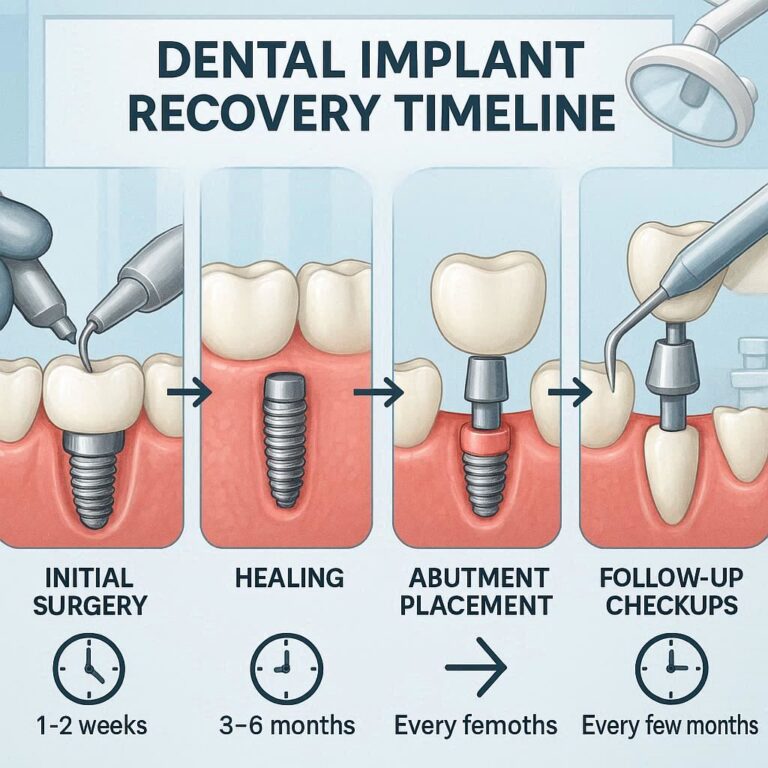
Many people do not realize that there are two surgical phases. First, the implant post is placed. Then, after several months of healing, the abutment and crown are attached.
The second appointment is much easier. In fact, most people feel little to no pain afterwards.
What to expect during crown placement
-
Your dentist may use local anesthetic, but often it is not necessary
-
You might feel pressure or tapping
-
No cutting or stitching is involved
Post-crown discomfort
-
Mild gum soreness for 24–48 hours
-
Sensitivity to cold on the new crown (normal for a few weeks)
-
Feeling that the crown is “high” when biting – this can cause jaw pain and should be adjusted
If you experience ongoing pain when biting on the crown months later, it may mean the implant is not integrating properly or the crown needs adjustment.
Psychological Pain: Fear and Anxiety Management
Let us talk about the pain you feel before the procedure. Anticipatory anxiety is real. It can make actual post-op pain feel worse than it is.
Strategies to reduce fear-related pain
-
Ask for sedation – Nitrous oxide (laughing gas), oral sedatives, or IV sedation can make the procedure feel like it lasted five minutes.
-
Bring headphones – Listen to music or a podcast during surgery.
-
Have a support person – Someone to drive you home and reassure you helps more than you think.
-
Remember the alternative – Living with a missing tooth or failing root canal often causes chronic, low-grade pain that is worse than two days of recovery.
“The fear of pain was 10 times worse than the actual pain.” – This is one of the most common things patients say after their implants.
Long-Term Pain: Can an Implant Hurt Years Later?
A successful implant should not cause chronic pain. If you have dental implants pain afterwards that lasts beyond the healing period (two weeks), or if pain starts months or years later, something is wrong.
Possible causes of late implant pain
| Cause | Symptoms | Solution |
|---|---|---|
| Peri-implantitis | Bleeding, redness, bone loss on X-ray | Deep cleaning, possibly surgery |
| Loose crown or abutment | Pain when biting, clicking sound | Retightening or replacement |
| Grinding (bruxism) | Morning jaw pain, headaches, cracked crown | Night guard |
| Nerve entrapment | Tingling, burning, electric shocks | Specialist evaluation |
| Implant fracture | Sudden pain when chewing, rare | Implant removal |
Do not ignore late pain. Early treatment can save the implant. Delaying often leads to implant failure.
Comparing Dental Implant Pain to Other Dental Procedures
Sometimes putting pain in perspective helps. Here is how dental implants pain afterwards compares to other common treatments.
| Procedure | Typical Pain (0–10) | Pain Duration | Recovery Ease |
|---|---|---|---|
| Simple filling | 0–1 | None | Very easy |
| Root canal (before treatment) | 6–8 (infection pain) | Days to weeks | Moderate |
| Root canal (after) | 1–3 | 1–2 days | Easy |
| Tooth extraction (simple) | 3–5 | 2–4 days | Moderate |
| Wisdom tooth removal (impacted) | 5–7 | 4–7 days | Difficult |
| Single dental implant | 3–5 | 2–4 days | Moderate |
| Bone graft | 4–6 | 4–7 days | Moderate to difficult |
As you can see, a single implant is very comparable to a routine extraction. It is not the monster some people imagine.
Special Cases: Sinus Lifts and Nerve Repositioning
Some patients need additional procedures because of their anatomy. These are less common but worth mentioning.
Sinus lift (upper back teeth)
A sinus lift adds bone to the upper jaw near the sinus cavity. This procedure causes more pressure-like pain in the cheek and under the eyes.
-
Pain lasts 5–7 days on average
-
You may feel congestion or sinus pressure
-
No blowing your nose for two weeks (seriously)
Nerve repositioning (lower jaw, very rare)
This is major surgery. It is only done when the inferior alveolar nerve runs exactly where the implant needs to go.
-
Pain is significant for the first week
-
Hospital stay may be required
-
Recovery is 2–4 weeks
For 98% of implant patients, these complex procedures are not needed.
Recovery Timeline Summary (What to Expect Each Day)
Here is a realistic, hour-by-hour look at the first week. Use this as a general guide.
Days 0–1 (surgery day and first night)
-
Numb for 3–6 hours
-
Eat soft food before numbness wears off
-
Take first pain pill as numbness fades
-
Sleep elevated
Day 2
-
Peak swelling
-
Throbbing sensation common
-
Pain may wake you up at night – take medication on schedule
-
Stick to cold compresses
Day 3
-
Swelling starts to go down
-
Pain drops noticeably
-
You may feel well enough to return to desk work
-
Switch to warm compresses
Day 4
-
Mild soreness only when touching the area
-
Can eat softer solid foods like pasta or fish
-
Bruising may appear (normal)
Day 5–7
-
Little to no pain
-
Can resume light exercise (no heavy lifting)
-
Stitches may dissolve or be removed
Week 2
-
Almost completely back to normal
-
Gum tissue looks pink and healthy
-
You may forget you had surgery
Practical Tips for a Low-Pain Recovery
These small actions make a big difference. Follow them, and your dental implants pain afterwards will likely stay on the mild side.
-
Fill your prescription before surgery – The last thing you want is to wait at a pharmacy while in pain.
-
Prep meals ahead – Make smoothie packs, cook soup, and portion out yogurt.
-
Arrange a ride – Even if you feel fine, anesthesia impairs judgment.
-
Do not use a straw – For at least 7 days. Suction dislodges blood clots.
-
Do not smoke or vape – This is non-negotiable. Nicotine kills healing tissue.
-
Brush carefully – Clean the other teeth, but avoid the implant site for 3 days.
-
Do not check the site with your tongue – Let it heal in peace.
-
Take the first pain pill before the numbness wears off – Staying ahead of pain is easier than catching up.
Frequently Asked Questions (FAQ)
1. How long does dental implants pain afterwards last?
For most people, moderate pain lasts 2–3 days. Mild soreness can last up to a week. After that, you should feel normal.
2. Is a dental implant more painful than an extraction?
No. Most patients say they are very similar. Some even say the implant hurts less because there is no empty socket left behind.
3. Can I go back to work the next day?
You can, but you may not want to. If your job is physical, take 2–3 days off. If you work at a desk, one day is often enough.
4. When can I eat normally again?
Most people return to a normal diet by day 7. Avoid very hard or sticky foods for two weeks.
5. Why does my implant hurt when I bite down?
It could be that the crown is too high. It could also be a sign of peri-implantitis or a loose screw. See your dentist for an adjustment.
6. Does the second stage (crown placement) hurt?
Very little. Most patients say it is less uncomfortable than a filling.
7. What if I have no pain at all after surgery?
That is fine. Some people have very high pain tolerances. No pain does not mean the implant is failing.
8. Can I drink coffee after dental implant surgery?
Wait 48 hours. Hot liquids increase bleeding. After that, drink it lukewarm and rinse with water afterwards.
9. Will my insurance cover pain medication?
Most dental insurance plans do not cover prescription pain meds. Use a goodrx coupon or ask for generic ibuprofen 600mg.
10. When should I call my dentist about pain?
Call if pain worsens after day 3, if you have a fever, if you see pus, or if the pain is sharp and electric.
Additional Resource
For a step-by-step video guide on what happens during dental implant surgery and real patient recovery diaries, visit the American Academy of Implant Dentistry’s patient education page:
🔗 https://www.aaid.com/patients
This official resource includes surgeon-reviewed articles, implant success statistics, and a directory of qualified implant dentists near you.
Conclusion
Dental implants pain afterwards is real, but it is usually mild to moderate and short-lived. Most people compare it to having a tooth pulled. The first 48 hours require the most patience, with some throbbing and swelling. After that, the discomfort fades quickly. By following proper aftercare, taking medication ahead of the pain, and knowing when to call your dentist, you can recover smoothly and focus on the reward: a permanent, natural-looking tooth that functions just like the real thing.