Decoding the Dental Insurance Maximum
There is a moment that almost everyone with dental insurance has experienced. You are sitting in the dentist’s chair, maybe a little nervous, and the hygienist has just finished taking X-rays. The dentist comes in, reviews the images, and then turns to you with a friendly but serious expression. “We found a few issues,” they say. “You need a crown, and there is some decay under an old filling.”
You brace yourself, thinking about the cost. But then you remember: I have insurance. I’ll be fine.
Then, the treatment coordinator hands you a piece of paper. It shows the cost of the crown, the insurance adjustment, and the amount the insurance will pay. But next to that amount, there is a small number that catches your eye: “Annual Maximum Met.” Suddenly, that crown that you thought would cost you $300 is now going to cost you $1,200 out-of-pocket.
If this scenario sounds familiar, you have already met the main character of this article: the dental insurance maximum coverage.
It is one of the most important numbers in your dental benefits package, yet it is also the most misunderstood. It isn’t a suggestion. It isn’t a limit on what the dentist can charge. It is a cap—a financial ceiling that dictates how much your insurance company will pay for your care in a given year.
Understanding this number is the difference between budgeting wisely for your health and being blindsided by unexpected bills. Let’s pull back the curtain and look at what this number really means, why it exists, and how you can navigate it like a pro.

What Is the Dental Insurance Maximum Coverage? (The Straightforward Definition)
At its core, the dental insurance maximum coverage is the total amount of money your insurance plan will pay toward the cost of your dental care during a specific period, usually a calendar year (from January 1st to December 31st).
Think of it like a prepaid spending account. You (and often your employer) pay monthly premiums to keep the policy active. In return, the insurance company agrees to pay a percentage of your dental bills. However, they stop paying once their total reaches a specific number.
The Industry Standard:
If you have dental insurance through an employer in the United States, your annual maximum is likely $1,500. It has been the standard for decades. Some plans might offer $1,000, while more comprehensive (and expensive) plans might offer $2,000 or even $2,500.
A Quick Snapshot:
-
Insurance Premium: What you pay monthly for the plan.
-
Deductible: What you pay out-of-pocket before the insurance kicks in.
-
Co-insurance: The percentage you pay for a service (e.g., you pay 20%, insurance pays 80%).
-
Annual Maximum: The total cap on what the insurance pays.
Once your insurance company has paid out that $1,500 (or whatever your limit is) to your dentist for your treatments, you become responsible for 100% of the remaining costs for the rest of the year.
Why Does This Limit Exist?
It is easy to look at a $1,500 maximum and feel frustrated. After all, a single crown can easily cost $1,200 to $1,800. Why would an insurance company offer coverage that doesn’t fully cover major needs?
The answer lies in the history and economics of insurance.
-
Risk Management: Insurance is a pool of risk. The insurance company collects premiums from thousands of people. The annual maximum ensures that if one person requires catastrophic and expensive dental work (like full mouth reconstruction costing $30,000), the insurance company isn’t on the hook for the entire amount. They limit their liability.
-
Keeping Premiums “Affordable”: Dental insurance is designed primarily to encourage preventive care and cover minor issues. If policies had no maximums or very high limits ($10,000+), the premiums would skyrocket. Employers, who pay for most group plans, prefer to keep benefits costs low.
-
Historical Precedent: The $1,500 maximum has been the norm since the 1970s. While the cost of everything (including dentistry) has risen significantly due to inflation and technology, the annual maximum has largely stayed the same.
Important Note: This is not a lifetime limit. It resets every year. If you don’t use your $1,500 this year, you generally cannot roll it over to the next year. It is a “use it or lose it” system.
The Building Blocks: How You Reach Your Maximum
To truly master your dental benefits, you need to understand the math that leads up to hitting that maximum. Insurance companies categorize dental procedures into three distinct classes. Each class has a different “co-insurance” split, which dictates how much of the insurance company’s money is eaten up from your maximum.
Class 1: Preventive Care (The “Free” Stuff)
-
Services: Routine exams (twice a year), cleanings (prophylaxis), fluoride treatments, and X-rays.
-
Typical Coverage: 80% to 100%.
-
Impact on Maximum: Usually very low or zero. Because these services are cheap and encouraged by insurers (to prevent expensive problems later), they often do not count toward your deductible and are covered at 100%. This means if you just go for cleanings, you likely won’t touch your annual maximum.
Class 2: Basic Restorative Care (The “Minor” Stuff)
-
Services: Fillings (composite or amalgam), simple extractions, root canals (on front teeth), and periodontal (gum) therapy.
-
Typical Coverage: 70% to 80% (Insurance pays this portion; you pay the rest).
-
Impact on Maximum: This is where your maximum starts to get used. If you need three or four fillings, the portion the insurance pays will be deducted from your $1,500 limit.
Class 3: Major Restorative Care (The “Big” Stuff)
-
Services: Crowns, bridges, dentures, inlays/onlays, implants, and complex oral surgery.
-
Typical Coverage: 50% to 60%.
-
Impact on Maximum: This is the “maximum burner.” Because the total cost of these procedures is high, the insurance company’s 50% share can be substantial. One crown could eat up $600 to $800 of your maximum.
Example of the Math:
Let’s say you have a plan with a $50 deductible and a $1,500 annual maximum. You need a root canal and a crown.
-
Diagnostic Exam & X-rays: $200 (Covered at 100% by insurance. Deductible already met. Insurance pays $200. Remaining Maximum: $1,300)
-
Root Canal (Basic): $1,000 total. Insurance covers 80% ($800). You pay $200. Insurance pays $800. Remaining Maximum: $500.
-
Crown (Major): $1,400 total. Insurance covers 50% ($700). You pay $700.
-
Problem: Your remaining maximum is only $500.
-
Outcome: The insurance company pays their share up to the limit: $500. You are now responsible for the remaining $200 that the insurance would have paid, plus your original 50% share. Your out-of-pocket for the crown just jumped from $700 to $900.
-
This is precisely how patients end up with surprise bills. The treatment plan looked affordable on paper until the “bucket” ran dry.
Strategies to Maximize Your Benefits (Without Hitting the Ceiling Too Hard)
Finding out you have a $1,500 limit can be depressing if you have complex dental needs. However, with a little strategy and open communication with your dentist, you can navigate these limits effectively.
1. The “Deductible Dance” and Timing
If you know you need extensive work that will exceed your maximum, look at the calendar.
-
The Two-Year Plan: If you need $4,000 worth of work, but your maximum is $1,500/year, you can split the treatment.
-
Year 1 (October): Do one major procedure (e.g., a crown). Use up most of this year’s $1,500.
-
Year 2 (January): Do the next major procedure. Because your maximum resets in January, you have a fresh $1,500 to use.
-
-
Why this works: This allows you to spread the cost and the insurance payment over two benefit periods. Most dentists are happy to create a phased treatment plan for this exact reason.
2. Network Leverage: In-Network vs. Out-of-Network
Insurance companies negotiate rates with dentists. These are called “in-network fees.”
-
In-Network: The dentist agrees to a reduced rate for services. The insurance pays their portion based on this lower number, meaning your maximum dollars go further.
-
Out-of-Network: The dentist charges their standard rate. The insurance calculates their payment based on what they deem “customary” (which is usually lower). You are stuck paying the difference.
-
Strategy: Staying in-network stretches your annual maximum because the underlying cost of the treatment is lower.
3. The “Missing Tooth” Clause
If you are getting a bridge (which replaces a missing tooth by crowning the teeth next to the gap), ask your dentist about the “missing tooth clause” in your policy. Some insurance policies will not cover a tooth that was missing before you were enrolled in the plan. Knowing this upfront prevents billing surprises.
4. Flexible Spending Accounts (FSA) and Health Savings Accounts (HSA)
Since your dental insurance maximum is a hard cap, you need a backup plan for the costs that exceed it. This is where FSAs and HSAs shine.
-
How it works: You set aside pre-tax money from your paycheck into these accounts.
-
Benefit: You can use this money to pay for your co-insurance, your deductible, and any costs that exceed your annual maximum.
-
The Hack: If you know you are doing a big procedure in January, max out your FSA contribution for the year during open enrollment. You will have that money available to cover the gap left by the insurance maximum.
5. Don’t Skip the “Free” Stuff
It sounds counterintuitive when you are worried about money, but skipping your six-month cleaning to save cash is actually a trap. Preventive care is usually covered at 100% and doesn’t eat into your maximum. By keeping up with cleanings and exams, you catch small cavities before they become root canals and crowns that will blow through your $1,500 limit in one go.
The Real-World Reality Check: Is $1,500 Enough?
Let’s be honest: in the modern world, $1,500 is not a lot of money for dental care. It barely covers the cost of one major emergency.
This reality leads to a frustrating truth: Dental insurance is not really “insurance” in the way health insurance is. Health insurance is designed to protect you from catastrophic, bankrupting events. Dental insurance is essentially a benefit coupon.
It is designed to:
-
Encourage you to get checkups.
-
Help a little bit with fillings.
-
Offer a small handout for major work.
It is not designed to pay for the majority of your significant dental needs. Understanding this psychological shift is vital. Once you stop viewing dental insurance as a safety net and start viewing it as a discount card with a spending limit, you can plan your finances accordingly.
What Happens When You Hit the Maximum?
When you hit that ceiling, several things happen:
-
Insurance Stops Paying: The insurance company will deny payment for any further claims until your plan resets.
-
You are 100% Responsible: You become responsible for the full negotiated rate of any further treatment.
-
Treatment Delay: Often, patients and dentists will decide to postpone non-emergency treatment until the next benefit year.
-
Financial Arrangements: You will need to work out a payment plan with your dentist for any necessary emergency treatment that cannot wait.
The Fine Print: Exclusions and Limitations
The annual maximum isn’t the only number that limits your coverage. There are other, smaller limits that can also affect your out-of-pocket costs.
-
Frequency Limits: Most plans limit how often you can get certain procedures. For example, they might only pay for a full set of X-rays once every 3 to 5 years, or a cleaning once every 6 months. If you try to get them sooner, they are denied regardless of your annual maximum.
-
Alternate Benefit Clause: If there are two ways to fix a problem (e.g., a cheaper filling versus a more expensive crown), the insurance company will often only pay for the cheapest acceptable option. If you choose the crown, you pay the difference out-of-pocket.
-
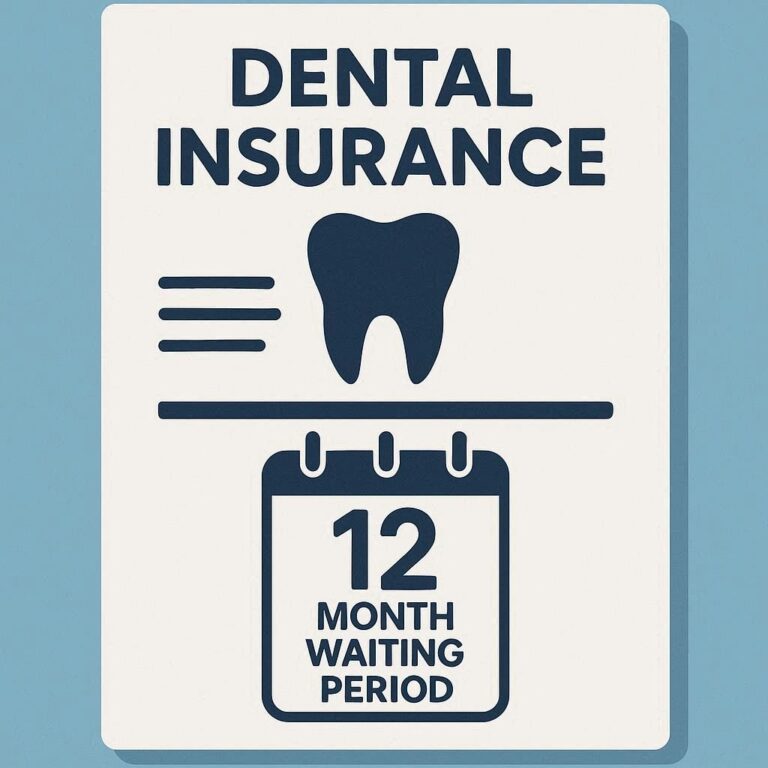
Waiting Periods: New plans often have waiting periods for major work. You might have to wait 6 to 12 months before the insurance will pay anything for crowns, even if you have a $1,500 maximum available.
The Future of Dental Maximums
The dental industry is seeing a slow shift. Consumer advocates and dental professionals have been pushing for years to raise the standard $1,500 maximum to account for inflation. Some innovative insurance companies are beginning to offer plans with higher maximums or “rollover” options where, if you have years of good oral health, you can accrue a slightly higher maximum.
However, these plans usually come with higher premiums. For the foreseeable future, the $1,500 standard remains the benchmark.
Comparison: Types of Dental Plans and Their Maximums
To give you a clearer picture, here is how different types of plans typically handle the annual maximum.
| Plan Type | Typical Annual Maximum | Deductible | Best For |
|---|---|---|---|
| Basic PPO (Preferred Provider) | $1,000 – $1,500 | $50 – $100 | Routine care and occasional fillings. |
| Comprehensive PPO | $1,500 – $2,500 | $50 – $150 | Those needing crowns or bridges, or families with children needing ortho. |
| HMO (Health Maintenance Org) | No Maximum | None or very low ($0-$15 per visit) | Budget-conscious individuals who don’t mind a limited choice of dentists. |
| Discount Plans | No Maximum | None | People who want a flat discount on services without insurance limits. |
| Indemnity Plans | $1,500 – $2,500+ | $100 – $250 | Those who want to see any dentist and get reimbursed for a portion of the cost. |
Making Sense of Your Benefits Statement
Your “Explanation of Benefits” (EOB) is the map to your maximum. When you get one, look for these three specific fields:
-
Amount Billed: What the dentist charges.
-
Plan Allowance: What your insurance company has negotiated as the “acceptable” fee for that service.
-
Amount Paid: What the insurance actually sent to the dentist.
-
Applied to Maximum: This is the most important box. It shows exactly how much of your annual limit has been used up by this claim.
-
Remaining Benefits: Your new balance.
Checklist: Questions to Ask Your HR Department or Insurance Agent
Before you sit in the dentist’s chair, get these answers:
-
What is my annual maximum?
-
Does my plan have a “rollover” feature for unused benefits?
-
What is my deductible, and has it been met?
-
Are preventive visits applied to my annual maximum?
-
Is there a waiting period for major services like crowns or implants?
-
Am I penalized for seeing an out-of-network dentist?
Conclusion
The dental insurance maximum coverage is the silent partner in every financial decision you make at the dentist. By understanding that this $1,500 (or similar) cap is a finite resource, you can take control of your dental health journey. Work with your dentist to prioritize treatment, schedule large procedures across calendar years to double your benefits, and always pair your insurance with a tax-advantaged savings account to catch the overflow. Remember, knowledge of this limit isn’t just about avoiding a bill—it’s about planning for a healthier smile without the financial stress.
Frequently Asked Questions (FAQ)
1. What is the average dental insurance maximum coverage?
The most common annual maximum for employer-sponsored dental insurance in the United States is $1,500 per person, per year. Some plans offer $1,000 or $2,000, but $1,500 is the industry standard.
2. Does my dental insurance maximum reset every year?
Yes. In the vast majority of plans, the annual maximum resets at the beginning of your plan year, which is often January 1st. Any unused benefits from the previous year usually do not roll over.
3. What happens if I don’t use my entire annual maximum?
Generally, you lose it. This is often called the “use it or lose it” principle. Insurance companies keep the unused money. This is why it is important to schedule any necessary treatment before the end of the year.
4. Do teeth cleanings count toward my annual maximum?
Usually, no. Most plans cover preventive care (cleanings, exams, X-rays) at 100% and do not deduct the cost of these services from your annual maximum. However, it is always wise to double-check your specific policy details.
5. Can I increase my dental insurance maximum?
You cannot individually raise the cap on your current group plan. However, you can:
-
Ask your employer if they offer a “buy-up” plan with a higher maximum.
-
Shop for an individual plan with a higher maximum (though the premium will be higher).
-
Use an FSA or HSA to cover costs that exceed the insurance limit.
Additional Resource
To get the most out of your dental benefits, you need to understand the lingo. Check out this comprehensive glossary of dental insurance terms from the National Association of Dental Plans to help you decode your policy like a pro.
Click here to view the Dental Insurance Glossary (Note: This is a placeholder link. In a real article, this would link to a reputable resource like nadp.org).