The Complete Guide to Dental Space Maintainer Cost
If your child’s dentist has recommended a space maintainer, your first thoughts are likely a mix of concern for your child’s comfort and practical questions about the expense. “How much will this cost?” is a completely normal and important question. Navigating dental costs can be confusing, especially when it involves a device you may have never heard of before.
This guide is designed to walk you through every aspect of dental space maintainer cost. We’ll break down the factors that influence the price, compare different types, explain how insurance works, and offer practical advice on managing the expense. Our goal is to equip you with the knowledge you need to make a confident, informed decision for your child’s smile without any unnecessary financial stress.
What is a Dental Space Maintainer, and Why Is It Needed?
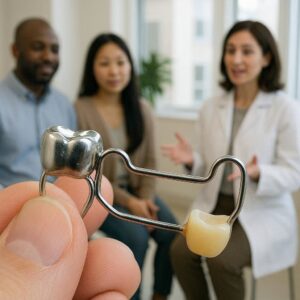
Before we talk numbers, let’s quickly understand what we’re investing in. A space maintainer is a custom-made dental appliance used in pediatric dentistry. Its job is simple but critical: to hold open the gap left by a baby tooth that was lost prematurely due to decay, injury, or other reasons.
Think of baby teeth as natural placeholders. They guide the permanent teeth into their correct positions. When a placeholder is lost too early, the adjacent teeth can drift or tilt into the empty space. This blockage can prevent the permanent tooth from erupting properly, leading to severe crowding, misalignment, and potentially more complex (and expensive) orthodontic treatment down the road.
Dr. Anya Sharma, a board-certified pediatric dentist, emphasizes their importance: “A space maintainer is a small, proactive investment in your child’s long-term oral health. It helps preserve the natural architecture of the jaw, often preventing the need for more extensive and costly interventions like braces or tooth extractions in the teenage years.”
In essence, the cost of a space maintainer today is often a fraction of the cost of correcting the problems that can arise without one.
Breaking Down the Cost: Key Factors That Influence the Price
There is no single, universal price for a space maintainer. The final cost is a combination of several variables. Understanding these will help you interpret quotes from different dental offices.
1. Type of Space Maintainer: Fixed vs. Removable
This is the most significant factor affecting cost.
-
-
-
Fixed Space Maintainers: These are cemented onto the teeth and are not removable by the child. They are generally more affordable and are the most common type used for younger children.
-
Removable Space Maintainers: These resemble a retainer or partial denture and can be taken out for cleaning. They are typically more expensive due to the materials and laboratory fees involved, and are often used for older, more compliant children or when multiple teeth are missing.
-
-
2. Design and Complexity
-
-
-
Simple Unilateral Maintainer: Holds space for one or two teeth on a single side of the mouth (e.g., a band-and-loop appliance). This is usually the most economical option.
-
Bilateral or Multiple Maintainers: If your child has lost baby teeth on both sides of the mouth, they may need two separate appliances or one more complex bilateral design, increasing the cost.
-
Lower Lingual Holding Arch (LLHA) or Nance Appliance: These are more complex appliances that maintain space for multiple missing back teeth. They involve more materials and laboratory work, resulting in a higher fee.
-
-
3. Materials Used
-
-
-
Stainless Steel: The standard, most cost-effective material for fixed maintainers. It’s durable, biocompatible, and works perfectly for most situations.
-
Acrylic and Wire (for removable): Removable appliances use a combination of medical-grade acrylic and stainless steel wires, contributing to their higher cost.
-
Tooth-Colored or Esthetic Options: In some cases, especially for front teeth, a tooth-colored acrylic facing can be added to a fixed maintainer for aesthetics. This adds to the laboratory fee.
-
-
4. Professional Fees: The Dentist and the Lab
-
-
-
Dentist’s Expertise: The fee includes the dentist’s time for the consultation, diagnosis, impressions or digital scans, fitting, and cementation or insertion. A specialist pediatric dentist may charge more than a general dentist due to their advanced training in child behavior and growth.
-
Laboratory Costs: Every space maintainer is custom-made in a dental lab based on your child’s precise mold. This lab fee is a substantial part of the total cost.
-
-
5. Geographic Location
Dental fees vary widely by region and even by city. Practices in metropolitan areas with a higher cost of living typically have higher overhead and, consequently, higher fees than those in rural or suburban areas.
Dental Space Maintainer Cost: A Detailed Price Breakdown
Now, let’s put realistic numbers to these factors. The following table provides a national average cost range in the United States for 2026. These are out-of-pocket costs before any insurance contribution.
Comparative Cost Table: Space Maintainer Types (U.S. Averages)
| Type of Space Maintainer | Typical Use Case | Average Cost Range (Per Appliance) | Key Cost Drivers |
|---|---|---|---|
| Fixed: Band-and-Loop | Single missing back tooth (molar) | $300 – $600 | Simplicity, single band, single loop wire. |
| Fixed: Distal Shoe | Missing back tooth before 6-year molar has erupted | $500 – $1,000+ | Surgical-like placement, precision, specific timing. |
| Fixed: Lingual Arch (LLHA/Nance) | Multiple missing back teeth, bilateral space loss | $600 – $1,200 | Complexity, two bands, acrylic button (Nance), lab work. |
| Removable Acrylic Partial | Multiple missing teeth, older cooperative child | $800 – $1,500+ | Custom acrylic base, clasps, lab fees, adjustments. |
| Esthetic Add-On | Adding tooth-colored facing to a front-tooth maintainer | +$100 – $300 | Additional laboratory artistry and materials. |
Important Note: These ranges are estimates. You must get a formal, written treatment plan and cost estimate from your dentist for an accurate price. The total cost often includes separate line items for the initial exam, X-rays, the appliance fabrication, and the placement visit.
What’s Included in the Total Fee?
A reputable dental office should provide a clear breakdown. The total typically covers:
-
-
-
Initial diagnostic records (specific X-rays, models).
-
Fabrication of the custom appliance in a dental laboratory.
-
The appointment for fitting, adjustment, and cementation/insertion.
-
Follow-up visits for monitoring (usually included for a short period).
-
A repair or replacement policy for a specific period (e.g., 6-12 months) if the appliance fails under normal use.
-
-
Navigating Dental Insurance and Payment Options
For most families, insurance coverage significantly reduces the out-of-pocket burden. Here’s how to navigate it.
Understanding Your Dental Insurance Plan
-
-
-
Check Your Benefits: Call your insurance provider or log into your portal. Ask specifically: “Does my plan cover space maintainers (D1510-D1550 codes) for pediatric patients? What is my copay or coinsurance?”
-
Know the Codes: Dentists use specific codes. Common ones are:
-
D1510 – Space maintainer – fixed – unilateral
-
D1515 – Space maintainer – fixed – bilateral
-
D1520 – Space maintainer – removable – unilateral
-
D1525 – Space maintainer – removable – bilateral
-
D1550 – Re-cement or re-bond space maintainer
-
-
Deductibles and Maximums: You may need to meet your annual deductible first. Also, space maintainer costs apply to your plan’s annual maximum.
-
Age Limits: Most plans cover space maintainers only for children under a certain age (often 14 or 16). Verify this.
-
-
Pro Tip from a Dental Office Manager: “Always ask your dentist’s front desk team to submit a pre-authorization or pre-determination to your insurance before treatment begins. This isn’t a guarantee of payment, but it’s the closest thing to it. You’ll get a written estimate of what your insurance will pay and what your exact responsibility will be, preventing surprise bills.”
Payment Options If You Have No Insurance or High Out-of-Pocket Costs
-
-
-
In-House Dental Savings Plans: Many dental practices offer annual membership plans for uninsured patients. For a yearly fee, you get discounted rates on all treatments, including space maintainers. This can lead to significant savings.
-
Payment Plans: Most offices offer monthly payment plans, often interest-free for a short period (e.g., 3-12 months). Don’t hesitate to ask about this option.
-
CareCredit or Similar Medical Financing: These are third-party credit cards specifically for healthcare. They frequently offer promotional no-interest periods if paid in full within 6, 12, or 18 months.
-
Health Savings Account (HSA) or Flexible Spending Account (FSA): If you have one, you can use these pre-tax dollars to pay for your child’s space maintainer, effectively giving you a discount equal to your tax rate.
-
-
The Long-Term Value: Cost vs. Future Savings
It’s essential to frame this expense not just as a cost, but as an investment. Let’s compare:
| Scenario | Approximate Initial Cost | Potential Future Cost WITHOUT Intervention |
|---|---|---|
| Getting a Space Maintainer | $300 – $1,500 (one-time) | Minor. The space is preserved, allowing for normal eruption. Future orthodontics may still be needed but will likely be less complex. |
| NOT Getting a Space Maintainer | $0 (initially) | $3,000 – $8,000+. Cost of comprehensive orthodontic treatment (braces/aligners) to correct severe crowding, impactions, or crossbites caused by space loss. May also include oral surgery for tooth exposure. |
This comparison makes the value proposition clear. While the upfront cost is real, it pales in comparison to the financial and clinical complexity of addressing problems that could have been prevented.
How to Choose a Provider: Balancing Cost and Quality
Selecting a dentist based solely on the lowest price can be risky. Here’s a balanced approach:
Red Flags to Avoid:
-
-
-
A price that seems drastically lower than all other quotes.
-
No willingness to provide a detailed written treatment plan.
-
Pressure to proceed immediately without answering all your questions.
-
No clear explanation of what follow-up care is included.
-
-
Green Flags to Look For:
-
-
-
Transparent, upfront pricing and willingness to work with your insurance.
-
A dentist who takes time to explain the “why” and shows you models or pictures.
-
A practice experienced in pediatric dentistry and behavior guidance.
-
Positive reviews from other parents specifically mentioning space maintainers or child-friendly care.
-
-
Questions to Ask During Your Consultation:
-
-
-
“Can I get a written estimate that includes all fees (exam, X-rays, appliance, placement)?”
-
“What type of maintainer do you recommend for my child, and why is it the best option?”
-
“What is your policy on repairs if the appliance breaks or comes loose in the first year?”
-
“How many follow-up visits are included, and what will you check during them?”
-
-
Caring for the Space Maintainer: Protecting Your Investment
Proper care extends the life of the appliance and prevents additional costs for repairs or replacements.
For Fixed Maintainers:
-
-
-
Avoid Sticky & Chewy Foods: Gum, caramels, gummies, and taffy can dislodge or bend the appliance.
-
Good Oral Hygiene: Brush carefully around it. Using a proxabrush (interdental brush) can help clean under the wire loop.
-
No Pushing/Pulling: Teach your child not to poke or tug at it with fingers or tongue.
-
-
For Removable Maintainers:
-
-
-
Handle with Care: Always store it in its protective case when not in the mouth.
-
Clean Daily: Brush it gently with a toothbrush and cool water (not toothpaste, which can be abrasive).
-
Consistent Wear: Follow the dentist’s wear schedule precisely for it to be effective.
-
-
Conclusion
Understanding dental space maintainer cost involves looking beyond the initial price tag to consider the type of appliance, insurance nuances, and the profound long-term value for your child’s oral health. By getting detailed estimates, asking the right questions, and viewing this as a strategic investment, you can make a decision that safeguards both your child’s smile and your family’s budget. The right space maintainer, placed at the right time, is a cornerstone of proactive, preventive dental care.
Frequently Asked Questions (FAQ)
Q: Will getting a space maintainer be painful for my child?
A: The process is generally not painful. Getting the impression (mold) might feel strange but doesn’t hurt. When the fixed appliance is cemented, your child may feel pressure and some initial tightness or odd sensation for a day or two as they get used to it.
Q: How long will my child need to wear it?
A: The space maintainer stays in place until the permanent tooth is ready to erupt, which is monitored with X-rays. This can range from several months to a few years, depending on your child’s age and development.
Q: What happens if the space maintainer breaks or falls out?
A: Contact your dentist immediately. A loose appliance can be a choking hazard, and if not re-cemented quickly, teeth can start to shift. Most offices have policies for repair or recementation within a certain timeframe.
Q: Are there any alternatives to a traditional space maintainer?
A: In some very specific cases, if the permanent tooth is imminent, a dentist might monitor closely without intervention. However, this is rare. There are no effective, safe DIY alternatives. The only clinical alternative in complex cases might be early-phase orthodontic treatment, which is typically more expensive.
Additional Resources
-
-
American Academy of Pediatric Dentistry (AAPD): Visit their public resource page at aapd.org for parent-friendly brochures on space maintainers and other pediatric dental topics.
-