Navigating Dental Insurance: The Real Difference Between D5211 and D5225
When you are looking at a dental treatment plan, the strings of numbers—known as CDT codes—can feel like a secret language. If you are preparing for a partial denture, you will likely see two specific codes pop up: D5211 and D5225.
While they might look nearly identical, choosing the wrong one can lead to insurance denials or a restoration that doesn’t fit your lifestyle. This guide breaks down everything you need to know about these two dental milestones.
Understanding the Basics of Partial Dentures
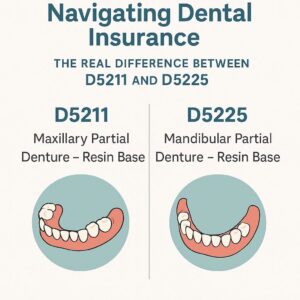
Before we dive into the technical specs, let’s clarify what these codes actually represent. Both D5211 and D5225 refer to maxillary (upper) partial dentures. These are used when a patient is missing some teeth in the upper jaw but still has some natural teeth remaining to act as anchors.
The primary difference isn’t where they go, but what they are made of.
What is D5211?
The D5211 code refers to a maxillary partial denture with a resin base. This is essentially a plastic denture. It is often reinforced with a simple wire clasp that hooks onto your natural teeth. You might hear dentists call this a “flipper” or an “interim partial,” though D5211 is often intended for more long-term use than a standard temporary flipper.
What is D5225?
The D5225 code represents a maxillary partial denture with a flexible base. Instead of rigid acrylic (plastic), this denture is made from a specialized thermoplastic material (like Valplast). It is designed to bend and flex with the natural contours of your mouth.
Direct Comparison: D5211 vs. D5225
To help you visualize the choice, here is a breakdown of how these two options stack up against each other:
| Feature | D5211 (Resin Base) | D5225 (Flexible Base) |
| Material | Rigid Acrylic Resin | Thermoplastic (Flexible) |
| Clasps | Usually metal wire clasps | Material-colored flexible clasps |
| Weight | Heavier and bulkier | Lightweight and thin |
| Aesthetics | Metal clasps may be visible | Virtually invisible “gum-colored” clasps |
| Durability | High (but can crack if dropped) | Extremely high (shatter-proof) |
| Adjustability | Easy to reline or add teeth | Difficult to modify or repair |
Why the Material Matters
The material of your denture affects more than just the price; it changes how you eat, speak, and feel about your smile.
The Rigidity of D5211
Because D5211 uses a resin base, it is stiff. This stiffness is actually a benefit if you need a very stable “bite.” However, because it doesn’t give, it can sometimes create sore spots on the gums if the fit isn’t perfect.
The Comfort of D5225
D5225 is often the favorite for patients with sensitive gums. Because the material is thin and flexible, it doesn’t require the bulky metal hooks that D5211 uses. It “snaps” into place using the natural undercuts of your teeth.
“The shift toward flexible bases like D5225 has changed the game for patient comfort. Many people forget they are even wearing a prosthetic because the material mimics the natural movement of oral tissues.”
Key Pros and Cons
D5211 (Resin/Acrylic)
Pros:
-
Cost-Effective: Usually the most affordable long-term partial option.
-
Repairable: If you lose another tooth, a lab can often add a new tooth to this existing base.
-
Adjustable: Your dentist can “reline” the plastic if your gums shrink over time.
Cons:
-
Aesthetics: Metal wires can sometimes be seen when you smile.
-
Breakability: If dropped on a hard floor, the acrylic can snap in half.
D5225 (Flexible)
Pros:
-
Superior Aesthetics: No metal means no “silver” showing in your smile.
-
Comfort: Very thin and lightweight.
-
Hypoallergenic: Great for patients allergic to the monomers found in traditional acrylics.
Cons:
-
Difficult Repairs: If the denture breaks or you lose another tooth, you often have to replace the entire unit.
-
Staining: The flexible material can be more porous and may stain if not cleaned meticulously.
Insurance and Cost Considerations
When it comes to the difference between d5211 and d5225, your wallet will notice a gap.
-
D5211 is standard. Most insurance plans cover it at a “Basic” or “Major” percentage (usually 50%).
-
D5225 is considered a premium upgrade. Some insurance companies may “down-code” this. This means they will only pay the amount they would have paid for a D5211, leaving you to pay the remaining balance out of pocket.
Note for Readers: Always ask your dental office for a “Pre-Determination of Benefits” before starting the work. This prevents any surprise bills.
Which One Should You Choose?
-
Choose D5211 if: You are on a budget, you might lose more teeth in the future (requiring additions), or you don’t mind the feel of a traditional acrylic base.
-
Choose D5225 if: You want the most natural-looking smile possible, you have metal sensitivities, or you prioritize a lightweight, comfortable fit over the ability to repair the device later.
Summary of Key Differences
The choice between these two boils down to flexibility versus adjustability. D5211 is a rigid, reliable, and repairable classic made of resin. In contrast, D5225 offers a modern, flexible, and metal-free alternative that prioritizes aesthetics and immediate comfort. Both serve the same purpose—restoring your smile—but do so using very different technologies.
Frequently Asked Questions
Can I switch from a D5211 to a D5225 later?
Yes, but you would need an entirely new denture made. Because the materials are different, you cannot “convert” an acrylic denture into a flexible one.
Is D5225 more expensive than D5211?
Generally, yes. The laboratory costs for flexible materials are typically higher than traditional resin, and that cost is passed on to the patient.
Which one lasts longer?
In terms of material strength, D5225 is harder to break. However, D5211 often “lasts” longer because it can be adjusted as your mouth changes, whereas D5225 usually needs total replacement if your oral anatomy shifts.
Additional Resource
For a full list of dental coding standards and descriptors, visit the American Dental Association (ADA) CDT Code Education page.