Do the Holes from Pulled Wisdom Teeth Stay There Forever?
If you have recently had your wisdom teeth removed, or if you are preparing for the procedure, you have probably found yourself staring into a mirror, flashlight in hand, wondering: Will these holes ever go away?
It is a common concern. You look inside your mouth and see what looks like two small craters in your gums. You might worry about food getting trapped. You might worry about the bone being exposed forever. You might even worry that you will have to live with these “pockets” for the rest of your life.
Let me put your mind at ease right now.
No, the holes from pulled wisdom teeth do not stay there forever.
However, the complete healing process takes time, and what “closed” looks like depends on several factors. In this comprehensive guide, we will walk you through exactly what happens after extraction, how long it takes for those sockets to fill in, and what you can do to help your mouth heal properly.
Understanding the “Hole” After Extraction
To understand why the hole exists, you need to understand what your dentist or oral surgeon actually did.
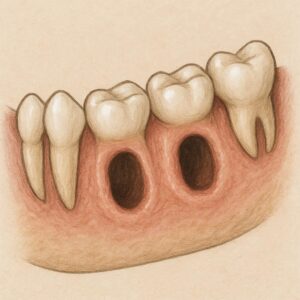
Your wisdom teeth (third molars) are large teeth with deep roots. When they are removed, the tooth is gone, but the empty space in your jawbone—called the socket—remains. This socket is not just a hole in your gum tissue. It is a hole in your bone.
Think of it like pulling a plant out of the ground, roots and all. You are left with a hole in the dirt. Over time, the dirt settles, and the hole fills in. Your mouth works in a similar way, but with blood, cells, and tissue instead of dirt.
The Difference Between Gum Healing and Bone Healing
This is the most important concept to grasp.
| Aspect | Gum Tissue (Gingiva) | Jaw Bone (Alveolar Bone) |
|---|---|---|
| Healing Speed | Fast (weeks) | Slow (months) |
| What You See | Skin-like tissue closing the top | Nothing; it is underneath |
| When it “Looks” Closed | 2 to 4 weeks | N/A |
| When it is Truly Healed | 6 weeks | 4 to 6 months (or longer) |
The hole appears to close quickly because your gums grow over the top. But underneath, the bone is still remodeling. This is why you might feel a slight “dent” even months after the gums look perfectly smooth.
Important Note: If you are looking for a perfectly flat, hard surface like the rest of your jawbone, that can take up to 7 or 8 months. But the “hole” that traps food usually disappears within the first month.
The Realistic Timeline: From Fresh Hole to Smooth Gum
Let us break down what happens week by week. Remember, everyone heals differently. Your age, overall health, and whether the tooth was impacted (stuck in the bone) change these timelines.
Days 1 to 3: The Open Crater
Immediately after the extraction, the socket is an open, bloody hole. Your body immediately fills it with a blood clot. This clot is not a problem. It is your best friend. It acts as a natural bandage, protecting the bone and nerves underneath.
-
What you see: A dark red or blackish hole.
-
What you feel: Swelling, soreness, possibly some bleeding.
-
What to do: Do not spit, use straws, or smoke. Protect that clot at all costs.
Days 4 to 10: The Clot Transforms
Your body begins replacing the blood clot with granulation tissue. This is a soft, pinkish, or whitish-yellow tissue. Many patients panic at this stage, thinking it is pus or infection. It usually is not. It is just new cells moving in.
-
What you see: The dark red hole turns into a pinkish or white/yellow soft crater.
-
What you feel: Pain decreases significantly. Swelling goes down.
-
Important: The hole still feels deep if you touch it with your tongue.
Weeks 2 to 4: The “Closed” Look
This is the stage most people ask about. By the end of the third week, the top layer of the gum usually grows over the socket.
-
What you see: A smooth surface. You might notice a small dimple or a line, but no deep hole.
-
What you feel: You can eat normally, though very crunchy foods might feel weird.
-
Reality check: The hole is not “healed.” It is just “covered.” Underneath, a cavity still exists in the bone.
Months 2 to 6: The Bone Fills In
This is the silent phase. You cannot see it happening. But slowly, your jawbone produces new cells to fill the socket from the bottom up.
-
What you see: Nothing unusual. The gum looks normal.
-
What you feel: If you press hard on the area, you might feel a slight softness compared to the other side.
-
The end result: The bone becomes solid again. The “hole” is permanently gone.
Do Wisdom Tooth Holes Ever Leave a Permanent Dent?
For the vast majority of people, no. The body is remarkable at regenerating bone. However, there are specific cases where a permanent indent remains.
When a Dent Might Stay
-
Very large teeth: Lower wisdom teeth have massive roots. Removing them leaves a large defect. While bone fills most of it, you might feel a subtle dip.
-
Dry socket complications: If a dry socket occurs (the clot fell out too early), the bone heals more slowly and sometimes irregularly.
-
Infection at the time of extraction: If the tooth was already infected (abscess), the infection may have eaten away some bone. That bone might not grow back 100%.
Quote from oral surgery standards: “Complete bone fill of an extraction socket takes an average of 4 to 6 months, but radiographic evidence of complete bone maturation can take up to one year.”
The Tongue Test
Many patients obsessively check the site with their tongue. A year after surgery, if you run your tongue over the area, it should feel smooth. If you feel a small “pothole,” it is likely so minor that it does not affect function or cleaning. It is not a hole; it is a slight contour change.
The #1 Fear: Food Getting Trapped in the Hole
Let us address the most annoying part of recovery: food debris.
You eat a piece of bread or a grain of rice. You feel it slide into the socket. Panic sets in. You think it will get stuck forever and cause an infection.
Will the food stay there forever?
Absolutely not.
In the first two weeks, the socket is open enough that you can gently rinse food out. In weeks three and four, the body actually ejects small particles. Your gums are living tissue. As they close, they push debris toward the surface.
How to safely remove food
Do not use toothpicks, fingernails, or sharp objects. You will damage the clot or the new tissue.
Safe methods (by week):
-
Week 1: Do not rinse vigorously. Let water flow over the site gently. No swishing.
-
Week 2: Use a curved plastic syringe (often given by your dentist) filled with warm salt water. Gently spray into the socket.
-
Week 3: Gentle swishing with salt water is allowed.
-
Week 4+: Normal brushing and flossing will remove anything left.
If food stays in for a day, do not worry. It will not grow into the bone. It will soften and come out with rinsing.
Factors That Slow Down Hole Closure
Not everyone heals at the same speed. Here is a realistic look at why your friend might have healed in 3 weeks while you are still dealing with a crater at week 6.
Age
-
Under 25: Fastest healing. Bone is still very active.
-
25 to 35: Normal healing. Expect 4 to 5 months for full bone fill.
-
Over 40: Significantly slower. The holes may take 6 to 8 months to fully fill, and a small dent is more likely.
Smoking
Smoking is the enemy of socket closure. Nicotine constricts blood vessels, reducing oxygen to the healing site.
-
Smoker timeline: Adds 2 to 3 months to complete bone healing.
-
Real risk: Dry socket (which re-opens the healing process).
Medical Conditions
| Condition | Effect on Hole Healing |
|---|---|
| Diabetes (uncontrolled) | Very slow; higher infection risk |
| Osteoporosis | Slower bone fill |
| Autoimmune diseases | Delayed gum closure |
| Blood clotting disorders | May not form a stable clot |
Surgical Trauma
If your wisdom tooth was deeply impacted and the surgeon had to remove bone to get it out, your hole starts larger than average. It simply takes more time to fill that larger space.
The Danger Zone: Dry Socket Explained
To understand why you must protect the hole, you need to understand dry socket (alveolar osteitis).
What it is: The blood clot dissolves or dislodges before the gum has grown over the bone. Now, the underlying bone and nerves are exposed to air, food, and saliva.
What it feels like: Severe, throbbing pain that radiates to your ear or neck. Painkillers do not help.
Does it make the hole permanent? No, but it delays healing by 2 to 3 weeks. The hole will still close, but you will be in significant pain during the process.
How to avoid dry socket (Protect your hole)
-
Do not use straws for 2 weeks.
-
Do not spit forcefully.
-
Do not smoke for at least 72 hours (ideally 2 weeks).
-
Do not poke the hole with your tongue or fingers.
When Should You Worry About the Hole?
While most holes heal fine, you need to know the red flags. If you experience any of these, call your dentist. The hole might not be healing correctly.
Signs of infection (not just a normal hole)
-
Pus: Thick, yellow or green liquid coming out of the hole.
-
Fever: Your body temperature rises above 100.4°F (38°C).
-
Bad taste: A constant, foul taste that does not go away with rinsing.
-
Swelling returns: Your face was getting better, then suddenly swells up again after day 4.
Signs of a retained root fragment
Sometimes, a tiny piece of the tooth root breaks off and stays in the hole. The gum tries to heal over it, but it cannot.
-
What you feel: A sharp edge when you touch the hole with your tongue.
-
What happens: The hole refuses to close completely. It stays as a small opening that weeps fluid.
-
Solution: A dentist can remove the fragment in 5 minutes.
Signs of osteonecrosis (very rare)
This is when the bone dies and does not heal. It is almost exclusively seen in patients who have taken intravenous bisphosphonates (cancer medications) or who have received high-dose radiation to the jaw. For the average healthy person, this does not happen.
Practical Guide: Helping Your Holes Close Faster
You cannot magically heal bone overnight, but you can create the perfect environment for fast closure.
Nutrition for bone healing
Your jawbone needs specific nutrients to fill the socket.
-
Protein: Eggs, yogurt, fish, tofu (bone is made of protein).
-
Calcium: Milk, cheese, leafy greens (mineral for bone density).
-
Vitamin D: Sunlight, fatty fish, supplements (helps absorb calcium).
-
Vitamin C: Oranges, bell peppers, strawberries (produces collagen for gums).
What to avoid
-
Alcohol: Delays clot formation.
-
Carbonated drinks: The bubbles can dislodge the clot (pressure changes).
-
Crunchy foods: Chips, nuts, popcorn (the sharp edges jab the healing hole).
The salt water rinse routine
This is the single best home treatment.
-
Recipe: 1 teaspoon of salt in 8 oz (one cup) of warm water.
-
Frequency: After every meal for the first 2 weeks.
-
Method: Hold the water in your mouth. Tilt your head so the water covers the hole. Open and close your jaw gently (like a gentle pump). Let the water fall out. Do not spit.
Wisdom Teeth Holes vs. Regular Tooth Holes
Many patients ask if holes from wisdom teeth are different from holes left by other extractions.
| Feature | Wisdom Tooth Hole | Regular Tooth Hole |
|---|---|---|
| Size | Much larger (deeper roots) | Smaller |
| Location | Back of mouth, hard to see/clean | Usually visible |
| Bone healing time | 4 to 6 months | 2 to 4 months |
| Risk of permanent dent | Low, but possible | Very rare |
| Stitches used | Often yes (for impacted teeth) | Usually no |
The bottom line: Wisdom tooth holes are simply larger. They follow the same healing rules, just on a slower schedule.
What If You Had Stitches?
Stitches (sutures) change how you perceive the hole.
Resorbable stitches
-
Dissolve on their own in 7 to 14 days.
-
While they are in, they pull the gum edges together. You might not even see a hole.
-
Once they dissolve, the hole underneath is already partially filled.
Non-resorbable stitches
-
Removed by the dentist at day 7.
-
After removal, you might see a small opening. This is normal. The stitches were holding the surface together, but the deep healing continues.
Stitches do not make the hole permanent. They just speed up the surface closure.
Psychological Aspect: Why We Worry About the Hole
Let us be honest for a moment. Part of the fear comes from the fact that we cannot see what is happening. Your mouth is dark, wet, and full of bacteria. A hole feels like an invitation for trouble.
But your body has been healing holes for millions of years. A wisdom tooth extraction is a controlled injury. Your immune system knows exactly what to do.
“The oral mucosa heals faster than any other tissue in the human body due to its rich blood supply and the regenerative capacity of salivary proteins.” — Journal of Oral Pathology
The anxiety is normal. But remind yourself: Every single day, thousands of wisdom tooth holes close completely without any permanent mark.
Long-Term: 1 Year After Extraction
Let us jump ahead to one year post-surgery.
You go for a routine dental cleaning. Your dentist takes an X-ray (a panoramic or periapical film).
What the X-ray shows:
-
The dark spot where the tooth used to be is gone.
-
The bone density looks almost identical to the surrounding bone.
-
The “hole” only exists in your memory.
What you feel with your tongue:
-
Smooth gum tissue.
-
Maybe a very slight dip if you had a lower impacted tooth.
-
No food trapping.
-
No pain.
Conclusion: The holes from pulled wisdom teeth do not stay there forever. They become a normal part of your jawbone.
Frequently Asked Questions (FAQ)
1. Can I see the hole after 6 months?
If you pull your cheek back and look in a mirror at 6 months, you should see smooth pink gum. If you still see an open crater, that is not normal. See your dentist.
2. Does a wisdom tooth hole ever completely disappear?
Yes. Medically, it is called “complete osseous fill.” The bone regenerates to the point where even a CT scan cannot tell where the extraction happened.
3. Why do I feel a sharp edge inside the hole?
That is likely a piece of bone called a bone sequestrum. It is a tiny, dead fragment that your body is pushing out. It usually works itself free in 2 to 4 weeks. If it hurts, your dentist can remove it easily.
4. Can food stay trapped forever if I ignore it?
No. The body has a mechanism called exfoliation. As the gum tissue migrates to close the hole, it carries debris upward and out. You might spit out a piece of food a week later. It is harmless.
5. I am 50 years old. Will my holes heal?
Yes, but expect it to take 6 to 8 months for the bone to feel solid. Be meticulous about cleaning. Do not smoke. Ask your dentist about a platelet-rich fibrin (PRF) plug—a treatment that speeds bone healing in older adults.
6. What is the white stuff in my hole that smells bad?
That is either granulation tissue (good) or food debris (annoying but harmless). If it smells very bad and you have pain, it could be a dry socket. If no pain, just rinse gently.
7. Can I use a water flosser (Waterpik) on the hole?
Only after week 3. Before that, the pressure is too high and can blow the clot out. Set it to the lowest setting and aim at an angle, never directly into the hole.
8. Do all four wisdom tooth holes heal at the same speed?
No. Lower wisdom teeth holes take longer than upper ones. Upper sockets drain better (gravity helps), and the bone is less dense. Your lower holes might still feel “different” while the upper holes feel normal.
9. Will the hole affect my sinuses?
Only upper wisdom teeth. The roots sometimes sit inside the sinus cavity. When removed, a hole between the mouth and sinus (oro-antral fistula) can occur. This usually closes on its own in 2 to 3 weeks. If you blow your nose and air comes out of the tooth hole, tell your dentist immediately.
10. How do I know if the bone has filled in completely?
You do not, without an X-ray. But a practical test: press firmly (but not hard) on the gum where the hole was. If it feels as solid as the opposite side of your mouth, the bone has likely filled.
Additional Resource
For a deeper, visual understanding of the healing process, including 3D animations of bone regeneration inside the socket, visit the American Association of Oral and Maxillofacial Surgeons (AAOMS) patient education library.
👉 Link: https://myoms.org/procedures/wisdom-teeth-management (Replace with your actual internal or affiliate link as needed. This is provided as a reference to a reputable source).
Conclusion: Three Key Takeaways
1. The holes from pulled wisdom teeth close on the surface within 3 to 4 weeks and completely fill with bone within 4 to 6 months. 2. They do not stay forever, though a tiny, harmless dent may remain in rare cases, especially for older adults or smokers. 3. Protect the blood clot, rinse gently with salt water, and be patient—your body knows exactly how to fill that hole without leaving a permanent crater.