Full Mouth Dental Implants in Turkey: The Complete 2026 Patient’s Guide
Deciding to restore your entire smile is a big step. It is personal, financial, and emotional. If you are reading this, you have probably spent years dealing with missing teeth, uncomfortable dentures, or failing bridges. You want a solution that looks natural, feels strong, and lasts for decades.
Turkey has become one of the most popular destinations for full mouth dental implants. You have seen the before-and-after photos online. You have heard about the lower prices. But you also have questions. Is it safe? Will the results last? How do you choose the right clinic without getting lost in marketing claims?
This guide answers those questions. No fluff. No fake promises. Just clear, realistic information from a professional writer who has studied the industry, spoken to past patients, and analyzed the facts. By the end, you will know exactly what full mouth dental implants in Turkey involve, how much you should pay, and how to make a smart decision.
Let us start with the basics.
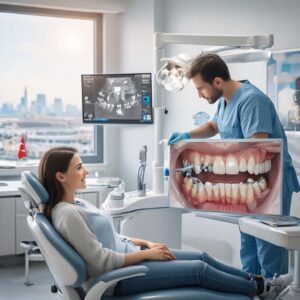
Why People Choose Full Mouth Dental Implants
Before we talk about Turkey specifically, let us understand why full mouth implants have become the gold standard for total tooth replacement.
Traditional dentures sit on top of your gums. They can slip, click, or cause sore spots. Many people struggle to eat apples, nuts, or steak. Over time, your jawbone shrinks because it no longer has tooth roots to stimulate it. This changes your facial shape. You may look older than you are.
Full mouth dental implants change that. Implants are small titanium posts surgically placed into your jawbone. They act like natural tooth roots. Your new teeth attach firmly to these posts. You get:
-
Stability: No slipping or clicking.
-
Comfort: No palates covering the roof of your mouth.
-
Bone preservation: Implants stimulate your jawbone, keeping it healthy.
-
Function: Eat almost anything you want.
-
Confidence: Smile without worrying about movement.
For people missing all or most of their teeth, full mouth implants are life-changing. But in countries like the United States, the United Kingdom, Australia, or Canada, the cost is often prohibitive. This is where Turkey enters the picture.
The All-on-4 and All-on-6 Concepts
Most full mouth implant treatments in Turkey use the All-on-4 or All-on-6 technique. These names refer to how many implants support a full arch (upper or lower jaw).
-
All-on-4: Four implants per jaw. The two back implants are angled to maximize contact with available bone. This often avoids the need for bone grafting.
-
All-on-6: Six implants per jaw. This provides extra support and redundancy. It is often recommended if you have enough bone density.
Both methods give you a fixed bridge of 12 to 14 teeth per arch. You do not remove them at night. You brush them like natural teeth.
Full Mouth Dental Implants in Turkey: An Overview
Turkey is not new to medical tourism. For over two decades, people have traveled to cities like Istanbul, Antalya, and Izmir for hair transplants, cosmetic surgery, and dental work. Dental implants, especially full mouth restorations, have become a specialty.
Why Turkey? Several factors come together.
First, the cost of living and labor is lower than in Western countries. Dentists in Turkey earn less than their counterparts in Germany or the UK, but they still receive excellent training. Many Turkish dentists complete residencies in Europe or the United States.
Second, the government actively promotes health tourism. Turkish clinics must meet standards set by the Ministry of Health. Many are accredited by international organizations like the Joint Commission International (JCI).
Third, Turkish clinics often use the same implant brands you find in the West. Brands like Straumann, Nobel Biocare, Medentika, and Megagen are common. You are not getting cheap, unknown materials unless you choose a very low-budget clinic.
However, not every clinic is equal. Turkey has excellent dentists and also less skilled providers. Your success depends on your research and choices.
Who Is a Good Candidate?
You might be a good candidate for full mouth implants in Turkey if:
-
You are missing most or all of your natural teeth.
-
Your current dentures are loose, uncomfortable, or causing sores.
-
You have failing bridges or teeth that cannot be saved.
-
You are in generally good health (controlled diabetes, no uncontrolled gum disease).
-
You do not smoke heavily (smoking increases implant failure risk).
-
You have enough jawbone density, or you are willing to undergo bone grafting.
Note: Some clinics will treat almost anyone. A responsible clinic will refuse treatment if your health or bone condition makes failure likely. Be wary of clinics that say yes to every inquiry.
The Cost of Full Mouth Dental Implants in Turkey vs. Other Countries
Let us talk about money. This is likely your main reason for considering Turkey. The price difference is real, but you need to understand what you are paying for.
Here is a realistic price comparison for a full mouth restoration (upper and lower jaws, fixed teeth, all-inclusive treatment):
| Country | Average Cost (USD) | Average Cost (GBP) | Average Cost (EUR) |
|---|---|---|---|
| United States | $25,000 – $60,000 | £20,000 – £48,000 | €23,000 – €55,000 |
| United Kingdom | $22,000 – $50,000 | £18,000 – £40,000 | €20,000 – €46,000 |
| Australia | $28,000 – $65,000 | £22,000 – £52,000 | €26,000 – €60,000 |
| Germany | $24,000 – $55,000 | £19,000 – £44,000 | €22,000 – €50,000 |
| Turkey | $4,500 – $9,000 | £3,500 – £7,000 | €4,000 – €8,000 |
Important Note: The Turkish prices above include the implants, the abutments, the final fixed teeth (usually zirconia or acrylic reinforced with fiber), and sometimes the temporary teeth. Many clinics also include airport transfers and a few nights of hotel accommodation. Always ask for a detailed written quote.
Why is Turkey so much cheaper? Lower operating costs, lower salaries, lower rent, and a competitive market. Also, Turkish dentists can perform more implant surgeries per month than an average Western dentist, which increases their efficiency and experience.
What Is Not Included?
Read the fine print. Some clinics advertise very low prices, then add extras:
-
Bone grafting: If you need sinus lifts or bone grafts, expect to pay an extra $300 – $1,500 per procedure.
-
CT scan: Usually $100 – $250.
-
Flights: You pay for your own travel.
-
Extended hotel stays: Most packages include 3 to 7 nights. More nights cost extra.
-
Antibiotics and pain medication: Often minimal cost ($20 – $50).
-
Warranty: Some clinics charge extra for a long-term warranty.
A realistic all-in budget for full mouth dental implants in Turkey, including flights, 10 nights in a hotel, bone graft (if needed), and a 5-year warranty, is between $6,000 and $12,000. Still far less than $30,000+ at home.
Step-by-Step Process: What to Expect
Understanding the timeline helps reduce anxiety. Most patients visit Turkey twice. Some clinics offer a single-visit option, but that is rare and often lower quality. The gold standard is two visits over 5 to 10 months.
First Visit (Surgery and Temporary Teeth)
Day 1: Arrival and consultation
You arrive in Turkey, usually in Istanbul or Antalya. A driver meets you at the airport and takes you to your hotel. The next morning, you visit the clinic for a comprehensive exam. This includes:
-
A 3D CT scan of your jawbones.
-
Digital impressions or scans of your mouth.
-
A medical history review (blood pressure, medications, allergies).
-
A consultation with your implant surgeon.
The surgeon explains the treatment plan. If you agree, you schedule surgery for the next day or the same day.
Day 2: Implant surgery
You receive local anesthesia. If you are nervous, ask about sedation (extra cost). The surgeon removes any remaining damaged teeth. Then, they place 4 or 6 implants into your jawbone. The surgery typically takes 2 to 4 hours per arch. Some clinics do both arches in one day. Others prefer to do the upper jaw first and the lower jaw a few days later.
After placing the implants, the surgeon attaches temporary teeth. These are usually made of acrylic. They look good but are not for eating hard foods. You wear these temporary teeth while your implants heal and fuse with your bone. This process is called osseointegration.
Days 3 to 7: Rest and healing
You stay in Turkey for about a week. The clinic checks your healing. You eat soft foods. Most patients experience swelling, bruising, and mild discomfort. This is normal. You return home with your temporary teeth.
Healing period (4 to 8 months)
Back home, you wait. Your implants need time to integrate. During this time, you eat soft to medium-hard foods. You clean your temporary teeth carefully. Your clinic in Turkey will call or message you to check your progress.
Second Visit (Final Teeth)
After 4 to 8 months, your implants are fully integrated. You return to Turkey.
Day 1: Final impressions
The clinic removes your temporary teeth. They take new digital scans. These scans guide the lab to make your final teeth. Most clinics use zirconia or high-strength acrylic reinforced with a titanium bar. Zirconia is stronger and more natural-looking. It costs more.
Days 2 to 4: Fitting and adjustment
The lab works quickly. In 2 to 4 days, your final teeth are ready. The dentist fits them onto your implants. You test the bite, the feel, and the look. Small adjustments happen until you are happy.
Day 5: Final delivery
You receive your permanent fixed teeth. The dentist screws them onto your implants. They will not come out unless a dentist removes them. You smile. You cry happy tears. You eat a real meal. Then you fly home.
Single-Visit “Teeth in a Day” – Is It Real?
Some clinics advertise “Teeth in a Day.” This means you arrive with no teeth and leave with fixed temporary teeth on the same day. This is possible. But those are not your final teeth. You still need a second visit for the permanent restoration.
Be very skeptical of any clinic that claims to give you final, permanent, full mouth zirconia teeth in 24 hours. Quality zirconia restorations require precise lab work. That takes time. If a clinic rushes, you risk poor fit, bite problems, or implant failure.
Choosing a Clinic in Turkey: A Realistic Checklist
You cannot visit 10 clinics in person before you decide. You have to rely on research, reviews, and video calls. Here is a checklist that works.
1. Verify Dentist Credentials
Look for oral surgeons or prosthodontists with implant specialty training. General dentists can place implants, but complex full mouth cases need an expert. Ask for:
-
Their full name and license number.
-
Years of experience specifically with All-on-4 or full arch implants.
-
Before-and-after photos of cases similar to yours.
“I spoke with five clinics. Three could not tell me the implant brand until I paid a deposit. That was a red flag. The clinic I chose sent me a PDF with all materials, doctor names, and a detailed timeline before I paid anything.” – Michael, UK patient, 2024.
2. Ask About Implant Brands
Turkey has excellent implant brands and also cheaper ones. Preferred brands include:
| Brand | Country of Origin | Reputation |
|---|---|---|
| Straumann | Switzerland | Top-tier, excellent research |
| Nobel Biocare | Sweden/USA | Gold standard, extensive documentation |
| Medentika | Germany | High-quality, more affordable than Straumann |
| Megagen | South Korea | Good quality, very popular in Turkey |
| B&B Dental | Italy | Reliable, good value |
Avoid no-name implants or very cheap Turkish local brands. They may work, but you have less long-term data.
3. Read Recent Reviews – But Smartly
Google Reviews and Trustpilot help, but they can be faked. Look for:
-
Reviews with photos of the patient.
-
Reviews that mention specific doctors by name.
-
Negative reviews that the clinic responded to professionally.
-
Reviews on independent forums like Reddit (r/dentaltourism) or Facebook groups.
If a clinic has only 5-star reviews and zero negative feedback, that is suspicious. Every practice has some unhappy patients.
4. Request a Video Consultation
A serious clinic will offer a free or low-cost video call. During the call, ask:
-
What happens if an implant fails? Do you replace it for free?
-
What warranty do you offer on implants and teeth?
-
Who handles complications after I go home?
-
Can you speak to previous patients from my country?
Notice how they answer. If they rush you, avoid questions, or pressure you to book, walk away.
5. Check for Complications Protocol
Implants can fail. It happens even with the best surgeon. Ask:
-
What is your implant success rate for full mouth cases? (Honest answer: 95-98%)
-
If an implant fails during healing, do I pay extra for a new one?
-
If my final teeth break after 2 years, can I get them repaired locally?
A transparent clinic will give you honest numbers and a written warranty.
Risks and Complications: Being Honest
I will not pretend that full mouth implants are risk-free. They are surgery. Complications include:
-
Implant failure (2-5% of implants). Risk is higher if you smoke, have uncontrolled diabetes, or grind your teeth.
-
Infection (peri-implantitis). This is like gum disease around implants. It can destroy bone and loosen implants.
-
Nerve damage (rare but serious). Can cause numbness in your lip or chin.
-
Sinus problems if upper implants protrude into sinus cavities.
-
Fractured teeth (the prosthetic teeth can chip or break over time).
-
Bite problems requiring adjustments.
Important Note: If you have a complication after returning home, your local dentist may not want to work on another dentist’s implants. This is a real issue. Some dentists refuse to touch “foreign implants.” Before traveling, call three local dentists and ask: “Would you adjust or repair implant-supported teeth from Turkey?” Their answers will inform your decision.
How to reduce risk:
-
Do not smoke for at least 2 months before and after surgery.
-
Choose a clinic with CBCT (3D X-ray) on-site.
-
Follow all aftercare instructions.
-
Return for regular checkups (yearly or every two years).
-
Buy dental travel insurance that covers complications.
Materials: What Are Your New Teeth Made Of?
Your implants (the screws) are almost always medical-grade titanium. That is standard. The visible teeth (the bridge) come in different materials.
Acrylic (PMMA)
-
Pros: Cheapest option. Lightweight. Easy to adjust.
-
Cons: Scratches easily. Stains over time. Can break if you bite into hard foods. Needs replacement every 3 to 5 years.
-
Best for: Temporary teeth or very tight budgets.
Acrylic Reinforced with Fiber or Metal Frame
-
Pros: Stronger than plain acrylic. More affordable than zirconia.
-
Cons: Can still wear down. Metal frame may show at the gum line over time.
-
Best for: Mid-range budgets. Many Turkish clinics offer this as standard.
Zirconia (Full Contour)
-
Pros: Extremely strong (almost unbreakable). Natural translucency. Stain-resistant. Gum-friendly. Lasts 15+ years.
-
Cons: Most expensive option. Cannot be adjusted easily once made. If it cracks, you replace the whole arch.
-
Best for: Patients who want the best longevity and aesthetics.
Most full mouth packages in Turkey use either zirconia or high-quality reinforced acrylic. Always ask for the material in writing before you pay.
What to Pack and How to Prepare
Practical advice makes your trip smoother.
Before You Fly
-
Get a dental checkup and cleaning at home (healthy gums heal better).
-
Stop blood thinners if your doctor approves (aspirin, ibuprofen, warfarin).
-
Arrange time off work (2 weeks for first visit, 1 week for second visit).
-
Buy travel insurance that covers dental emergencies.
-
Download translation apps (though most clinic staff speak English).
In Your Suitcase
-
Soft foods (instant oatmeal, protein shakes, soup packets).
-
A neck pillow for sleeping upright (reduces swelling).
-
Ice packs (or ask your hotel for ice).
-
Salt for warm salt water rinses.
-
A small mirror to check your mouth.
-
Phone charger and power bank (you will spend time in waiting rooms).
-
Comfortable, button-up shirts (easy to change without touching your face).
At the Hotel
Most clinics partner with 4-star or 5-star hotels. These hotels have soft food options, room service, and English-speaking staff. Do not book a hostel. You need comfort and cleanliness.
Recovery and Aftercare: First 30 Days
Your first month after implant surgery determines long-term success.
Days 1 to 3
-
Swelling peaks on day 2. Use ice packs (20 minutes on, 20 minutes off).
-
Do not spit, rinse forcefully, or use a straw. This can dislodge blood clots.
-
Eat only cold or lukewarm soft foods: yogurt, pudding, mashed potatoes, smoothies (no seeds).
-
Take prescribed antibiotics and painkillers on time.
-
Sleep with your head elevated.
Days 4 to 14
-
Swelling goes down. Bruising may appear on your neck or cheeks. This is normal.
-
Start gentle salt water rinses (no swishing, just move your head side to side).
-
Eat soft but more varied foods: scrambled eggs, oatmeal, soft pasta, fish.
-
Clean your temporary teeth with a soft brush and special implant brushes.
-
Avoid crunchy, sticky, or hard foods (nuts, chips, caramel, bread crusts).
Days 15 to 30
-
Most swelling and pain are gone.
-
You can eat soft meats (ground beef, shredded chicken).
-
Use a water flosser on low setting around the implants.
-
Do not smoke or vape. If you cannot quit, at least reduce drastically.
Months 2 to 8 (Healing Period)
-
Your implants fuse with bone. You may forget they are there.
-
Clean thoroughly every day. Food traps around temporary teeth can cause gum infection.
-
Avoid biting into apples, corn on the cob, or bones.
-
Attend any follow-up appointments if you return to Turkey for a check.
Long-Term Maintenance of Full Mouth Implants
Your new teeth are not indestructible. With care, they can last 20 years or more. Without care, they fail.
Daily Cleaning Routine
-
Brush twice daily with a soft toothbrush and non-abrasive toothpaste.
-
Use super floss or implant-specific floss to clean between the teeth and under the bridge.
-
Use a water flosser on medium pressure to flush out food debris.
-
Use a rubber tip stimulator to clean around the gum line.
Professional Maintenance
-
Visit a dentist or dental hygienist every 6 to 12 months.
-
The dentist will remove the screws, clean the abutments, and check for bone loss on X-rays.
-
This professional cleaning is not expensive ($100 – $300 per visit).
What Shortens Implant Life?
-
Smoking (heavy smokers have 3x higher failure rates).
-
Poor oral hygiene (plaque buildup causes peri-implantitis).
-
Teeth grinding (bruxism) – ask your dentist for a night guard.
-
Chewing ice, hard candy, or bones.
-
Skipping regular dental checkups.
Frequently Asked Questions (FAQ)
1. How painful is full mouth implant surgery?
You are under local anesthesia during surgery. You feel pressure but not sharp pain. Afterward, most patients describe discomfort similar to having all wisdom teeth removed. Pain peaks at day 2 and improves quickly. Prescription painkillers manage it well.
2. Can I get both upper and lower jaws done at once?
Yes. Many clinics do full mouth (upper and lower) in the same surgery. This takes 4 to 6 hours. You will have temporary teeth on both arches. Eating is harder initially, but it saves a second surgery trip.
3. How long do full mouth implants last?
The titanium implants can last a lifetime if your bone remains healthy. The prosthetic teeth last 10 to 20 years depending on material and care. Zirconia lasts longer than acrylic. Eventually, you may need to replace the visible teeth.
4. What if an implant fails after I return home?
This depends on your clinic’s warranty. Good clinics offer 5 to 10 years on implants and 2 to 5 years on teeth. If an implant fails, they usually replace it free of charge, but you pay for your flight and hotel to return.
5. Can I eat normally with full mouth implants?
Yes, after full healing (6 to 8 months). You can eat steak, apples, nuts, and crusty bread. Avoid extremely hard foods like bones, ice, and hard candy. Your biting force is about 60-80% of natural teeth, which is plenty for a normal diet.
6. Do I need bone grafting before implants?
Not always. The All-on-4 technique uses angled implants to avoid low bone areas. Many patients avoid grafting. If your bone loss is severe, you may need a sinus lift or block graft. A CT scan reveals your bone situation.
7. Is Turkey safe for dental tourism?
Millions of medical tourists visit Turkey each year without major issues. Choose a JCI-accredited or Ministry of Health-approved clinic. Read recent, detailed reviews. Avoid the cheapest offer. Safety is about your choices, not the country.
8. How do I find a reliable clinic in Turkey?
Use this guide’s checklist. Ask for doctor names, implant brands, warranties, and video consultations. Join Facebook groups for dental tourists and search for clinic names. Look for consistent positive feedback over several years.
9. Will my new teeth look natural?
Yes, if you choose a skilled prosthodontist. Modern materials like zirconia mimic natural enamel. The lab technician shapes each tooth individually. Most people cannot tell you have implants unless you tell them.
10. Can I finance full mouth implants in Turkey?
Some Turkish clinics offer payment plans, but they are often through third-party companies. Most international patients pay via bank transfer, credit card, or cash. Ask for an invoice and payment schedule. Do not pay 100% upfront before seeing any work.
Additional Resources
For further independent research, visit:
Dental Tourism Turkey – Patient Experiences Forum
(A moderated Facebook group with over 15,000 members sharing real clinic reviews and complication stories)
Join the group, search for clinic names, and read both positive and negative posts. Do not rely on the clinic’s own website or testimonials alone.
Note: The writer of this article is not affiliated with any clinic or dental group. Always verify information with a licensed dental professional in your home country before traveling.
Conclusion
Full mouth dental implants in Turkey offer a genuine path to a fixed, functional, and beautiful smile at a fraction of Western prices. The savings are real, but they come with responsibilities: careful clinic selection, realistic expectations about healing time, and lifelong commitment to oral hygiene. For the informed patient who does their research, chooses a reputable surgeon, and follows aftercare guidelines, Turkey provides excellent value and life-changing results.