The Ultimate Guide to Invisalign Cost in Sydney, USA
In the charming city of Sydney, USA—a community known for its vibrant neighborhoods and focus on quality of life—the decision to pursue a straighter smile is both a personal and a financial one. As you contemplate Invisalign, the revolutionary clear aligner system, your mind inevitably turns to the central, practical question: “What will this cost?” However, framing this question purely as an expense overlooks the profound nature of the undertaking. This is not merely a purchase; it is an investment—an investment in your dental health, your self-esteem, and the non-verbal communication you present to the world every single day. The journey toward understanding the cost of Invisalign in Sydney is a journey toward understanding value. It requires peeling back the layers of a single lump-sum quote to comprehend the expertise, technology, time, and personalized care embedded within it. This comprehensive guide, crafted exclusively for the residents of Sydney and its surrounding areas, aims to be your definitive resource. We will move beyond generic national averages to explore the local economic factors at play, provide you with the tools to discern between a bargain and true value, and equip you with the knowledge to partner confidently with a dental professional. Your smile is your signature; understanding the cost of perfecting it is the first step toward claiming the confidence that comes with it.
2. Understanding the Sydney, USA Dental Landscape: A Unique Market
Before delving into numbers, it’s essential to contextualize the dental care market in Sydney. Unlike major metropolitan coastal cities, Sydney operates with its own distinct economic rhythm. The cost of living, commercial real estate prices for dental practices, and local competition all influence service fees. Sydney is home to a mix of long-established family dental practices, high-tech orthodontic specialty clinics, and larger dental service organizations. This diversity is beneficial for consumers, as it offers a range of service models and price points. However, it also necessitates careful research. The average overhead for a clinic in the downtown Sydney area, with state-of-the-art 3D scanners and digital impression systems, will differ from that of a smaller practice in a neighboring suburb. Furthermore, the concentration of providers in certain areas can create competitive pricing, while in others, limited options may affect market rates. Recognizing that you are navigating a specific, localized ecosystem—not a national monolith—empowers you to ask better questions and interpret the quotes you receive with greater acuity.
3. The Core Question: What is the Average Cost of Invisalign in Sydney, USA?
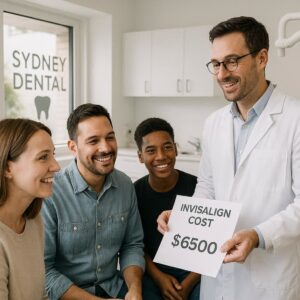
Based on extensive research and consultations with local practices in 2025, the total cost of Invisalign treatment in Sydney, USA, typically ranges from $3,500 to $8,500 or more. It is critical to understand that this is a broad spectrum, and the vast majority of patients will fall somewhere in the middle, with a common range between $4,500 and $6,500 for a full, comprehensive case of moderate complexity.
Invisalign Cost Spectrum in Sydney, USA (2025 Estimates)
| Treatment Tier & Case Complexity | Typical Cost Range | What’s Included (Generally) |
|---|---|---|
| Invisalign Express (or Similar) | $3,500 – $4,500 | Designed for very minor, cosmetic fixes (e.g., slight crowding of front teeth). Limited number of aligners (often 10-14), shorter treatment time (under 6 months). |
| Invisalign Lite / Moderate | $4,000 – $5,500 | For mild to moderate misalignment. Includes a limited set of aligner trays (typically up to 20) and one set of refinements if needed. |
| Invisalign Comprehensive | $5,000 – $8,500+ | The full package for moderate to complex cases (severe crowding, spacing, overbite, underbite). Includes all aligners needed for the entire treatment, unlimited refinements during the active treatment period, and a full set of retainers. This is the most common prescription. |
| Invisalign First (for Children) | $3,800 – $5,800 | Early interceptive treatment for children ages 6-10. Cost reflects the specialized planning and potential for guiding jaw development. |
Note: These are all-inclusive fee estimates for the complete treatment plan as provided by the practitioner. They should encompass all related appointments, barring unforeseen complications.
This “all-inclusive” fee is the figure you should seek during your consultation. It demystifies the process and allows for accurate financial planning, moving beyond a per-aligner or per-visit charge that can lead to unexpected costs.
4. The Detailed Breakdown: What You’re Really Paying For
When you receive a quote for Invisalign, you are not simply paying for a set of plastic trays. You are investing in a complete clinical service package. Here is a detailed breakdown of what that fee encompasses:
-
Professional Expertise and Diagnosis: This is the foundation. You are paying for the doctor’s years of education, training, and clinical experience to correctly diagnose your malocclusion (bite issue), predict tooth movement, and design a safe, effective treatment plan. This intellectual capital is the most significant component of the cost.
-
Advanced Digital Technology: The Invisalign process begins with a precise digital scan of your teeth (replacing messy traditional impressions). This scan creates a 3D digital model. The software fee paid by your provider to Align Technology, and their investment in the intraoral scanner itself, are factored into your cost.
-
The ClinCheck® Treatment Plan: Your provider uses specialized software to meticulously plan the movement of each tooth, step-by-step, across the entire treatment. This digital blueprint is a collaborative tool between the doctor and Align Technology’s technicians and is unique to you.
-
The Custom Aligners Themselves: The manufacturing of your sequential sets of aligners, each milled from proprietary SmartTrack® material, is a significant technical expense covered by the treatment fee.
-
All Clinical Visits and Monitoring: The fee includes every check-up appointment (usually every 6-10 weeks) throughout your 12-24 month treatment. At these visits, your provider assesses progress, addresses any concerns, and provides your next sets of aligners.
-
Refinement Phase(s): For Comprehensive plans, this is crucial. Rarely does a tooth move exactly as predicted. The refinement phase involves taking new scans mid-treatment to create a new set of aligners to fine-tune the final position of your teeth, ensuring an optimal result. This is often where the value of a comprehensive package shines.
-
Final Retainers: The long-term success of any orthodontic treatment depends entirely on wearing retainers. Your Invisalign fee should include the cost of your first set of final retainers (typically either Vivera® clear retainers or a bonded wire retainer).
-
Practice Overhead: This includes the staff’s time (treatment coordinators, dental assistants), the utilities and lease for the clinic, sterilization protocols, and administrative support—all necessary for a safe, professional, and comfortable patient experience.
5. The Crucial Factors That Determine Your Final Invisalign Cost
Understanding why costs vary is the key to evaluating your own quotes. Let’s explore these factors in depth.
5.1. Complexity and Severity of Your Case
This is the single most important determinant. A simple case of minor lower-front crowding requiring 14 aligners is a different clinical challenge than correcting a significant overbite with crossbite and rotated molars requiring 40+ aligners and multiple attachments (tooth-colored composite bumps that aid in complex movements). More complex cases demand more sophisticated planning, more aligners, longer treatment times, and a higher level of clinical oversight, all of which increase the cost.
5.2. The Expertise of Your Provider: Orthodontist vs. General Dentist
In Sydney, both orthodontists and general dentists provide Invisalign. An orthodontist is a specialist who has completed 2-3 additional years of accredited residency training solely in moving teeth and correcting jaw alignment. A general dentist is a skilled primary care provider who may take additional continuing education courses in Invisalign. Often, an orthodontist may charge a premium for their specialized expertise, particularly for complex cases. However, many general dentists with extensive Invisalign experience offer excellent care for mild-to-moderate cases, sometimes at a slightly lower price point. The key is to evaluate the provider’s specific experience, before-and-after portfolio, and your comfort level with them.
5.3. Geographic Location Within the Sydney Area
As with all real estate and services, location matters. A premier orthodontic practice in the heart of downtown Sydney, with higher commercial rents, may have slightly higher fees than a practice in a nearby community like West Sydney or a suburban clinic. However, this is not a strict rule, and convenience to your home or work is a valid consideration that may outweigh a minor cost difference.
5.4. Practice Overhead and Technology Investment
A clinic that invests heavily in the latest technology—such as iTero Element® or 3M™ True Definition scanners, digital X-rays, and cone-beam computed tomography (CBCT) for complex cases—may incorporate these costs into their fees. This technology can enhance diagnostic precision, comfort, and treatment predictability, potentially offering greater value.
5.5. Length and Required Number of Aligner Trays
While not billed per tray, the treatment scope is directly related to the number of aligners needed. An Express 5 case (5 months of aligners) will logically cost less than a two-year Comprehensive treatment involving 40+ trays and a refinement phase.
6. Invisalign Package Tiers: Express, Lite, Comprehensive, and More
Align Technology offers different product tiers to suit various clinical needs. Your provider will recommend the appropriate tier based on your initial scan and diagnosis.
-
Invisalign Express 5/7/10: For very minor, cosmetic adjustments. Limited to a specific number of aligners (e.g., 5, 7, or 10 sets) with no refinements included. Ideal for closing small gaps or minor relapse after previous orthodontics.
-
Invisalign Lite: Targets mild to moderate cases. Includes up to 14 initial aligners and one set of refinement aligners (up to 14 more). A good option for less complex crowding or spacing.
-
Invisalign Moderate: A step above Lite, often with a larger allowance for initial and refinement aligners.
-
Invisalign Comprehensive: The gold standard for full treatment. Covers all aligners needed for the full course of treatment, from start to finish, including unlimited refinements for up to five years from the start date. This provides maximum flexibility to achieve the ideal result, regardless of unexpected tooth movements.
-
Invisalign First: A specialized system for Phase 1 treatment in children, addressing a mix of baby and adult teeth to guide jaw growth and create space.
7. The Financial Roadmap: Paying for Your Treatment
Few patients pay the entire fee upfront. Reputable practices in Sydney offer multiple pathways to manage the cost.
7.1. Dental Insurance and Invisalign
Many dental insurance plans with orthodontic coverage treat Invisalign similarly to traditional braces. Coverage is often a lifetime benefit (typically $1,000 to $2,500) for patients under age 19, and sometimes for adults. The key is to understand your plan’s details: Is there an age limit? Is there a waiting period? Does the coverage apply to any provider, or only in-network ones? Your dental office’s administrative staff are experts at navigating this and can provide a pre-treatment estimate.
7.2. Flexible Spending Accounts (FSAs) and Health Savings Accounts (HSAs)
These are powerful tax-advantaged tools. You can use pre-tax dollars from your FSA or HSA to pay for Invisalign, effectively receiving a discount equivalent to your marginal tax rate. Plan ahead, as FSAs are “use-it-or-lose-it” within the plan year (with some grace periods), while HSA funds roll over indefinitely.
7.3. In-House Payment Plans and Third-Party Medical Financing
Most practices offer interest-free or low-interest payment plans that spread the cost over the treatment period (e.g., 24 monthly payments). For longer terms, they may partner with third-party financiers like CareCredit, Alphaeon Credit, or Sunbit. These can offer 6, 12, 18, or 24-month promotional periods with no interest if paid in full within that time, or longer-term fixed-interest loans. Always read the terms carefully.
8. The Consultation: Your Key to an Accurate Quote and Building Trust
The initial consultation, which is often free or low-cost in Sydney, is your most important step. Come prepared with questions: “Is this an all-inclusive quote?” “Which Invisalign tier are you recommending and why?” “What is included if my teeth don’t move as planned?” “What is your policy on refinements?” “What is the total estimated treatment time?” A trustworthy provider will be transparent, show you digital simulations of your potential results, and discuss all financial options without pressure. This meeting is as much about evaluating the person and practice as it is about getting a number.
9. Beyond Cost: How to Assess Value and Choose the Right Provider
While cost is a major factor, the cheapest option is rarely the best value in orthodontics. Consider:
-
Provider Experience and Credentials: Look for an Invisalign “Preferred” or “Elite” provider status, which indicates a high volume of cases completed. Ask to see before-and-after photos of cases similar to yours.
-
Communication and Comfort: Do you feel heard? Is the treatment coordinator patient with your questions? You will have a long-term relationship with this team.
-
Technology and Convenience: Does the practice use digital scans? Do they offer virtual check-in options? These factors contribute to a smoother experience.
-
Reviews and Testimonials: Read Google, Facebook, and dedicated review site feedback from other Sydney patients.
10. Potential Additional Costs and “Hidden” Fees to Inquire About
To avoid surprises, explicitly ask if the quoted price includes:
-
Any necessary preparatory work (e.g., interproximal reduction/IPR, which is minimal enamel contouring).
-
The final set of retainers (Vivera retainers often come in a pack of 3-4 sets; know how many are included).
-
Replacement retainers if lost or broken (usually an additional cost).
-
Any post-treatment retention check-ups.
-
The fee for missed or cancelled appointments (policies vary).
11. Comparing Invisalign to Traditional Braces: A Cost-Benefit Analysis
In Sydney, the cost of traditional metal braces is often comparable to, or sometimes slightly lower than, Invisalign for equivalent cases. However, the cost-benefit analysis extends beyond price:
-
Aesthetics: Invisalign is virtually invisible.
-
Comfort and Oral Hygiene: Removable aligners allow for normal brushing, flossing, and eating, reducing the risk of decay and gum inflammation common with fixed braces.
-
Dietary Restrictions: No food restrictions, as aligners are removed for meals.
-
Appointment Frequency: Often fewer emergency visits for broken brackets or wires.
The “premium” for Invisalign is often justified by the enhanced quality of life during treatment.
12. The Long-Term Value of Invisalign: An Investment in Oral Health
A properly aligned smile is easier to clean, reducing lifelong risks of periodontal disease and uneven tooth wear. It can alleviate strain on jaw joints (TMJ) and improve function. Furthermore, the confidence boost from a smile you love is immeasurable, impacting social interactions and professional opportunities. When viewed through this lens, the cost of Invisalign is a long-term investment in both physical health and personal well-being, with dividends paid every time you smile.
13. Conclusion: Your Path to a Confident Smile
Navigating the cost of Invisalign in Sydney, USA, requires moving beyond a simple price comparison to a holistic assessment of value, expertise, and personal goals. By understanding the factors that influence pricing—from case complexity to provider choice—and leveraging available financial tools like insurance and payment plans, you can make a confident, informed decision. Your investment is not just in a product, but in a personalized journey toward a healthier, more radiant smile that reflects the best version of yourself.
14. Frequently Asked Questions (FAQs)
Q: Can I get Invisalign for free in Sydney, USA?
A: Invisalign is a premium elective treatment and is not provided for free by private practices. You may find discounted or low-cost options through dental school clinics (though the nearest may be in a larger city), but these involve treatment by supervised students and often have long waitlists. They are not “free,” but are significantly reduced cost.
Q: Is Invisalign cheaper than braces in Sydney?
A: Not typically. They are generally in the same price range, with Invisalign sometimes being slightly more expensive for comparable cases. The value proposition of Invisalign lies in its aesthetics, comfort, and convenience, not in being a lower-cost alternative.
Q: Why did I get one quote for $4,200 and another for $6,800?
A: This is common and highlights the importance of consultations. The difference could be due to: 1) The providers diagnosing different complexities or recommending different Invisalign tiers. 2) A specialist orthodontist vs. a general dentist. 3) One quote being all-inclusive (Comprehensive) and the other being for a limited (Lite) package. Always clarify exactly what the quote includes.
Q: Does Medicare or Medicaid cover Invisalign in Sydney?
A: Traditional Medicare (Part A & B) does not cover routine dental procedures, including orthodontics, for adults. Medicaid coverage for orthodontics is extremely limited and varies by state. In most cases, it is only covered for children under 21 when the treatment is deemed “medically necessary” (e.g., to correct a severe skeletal discrepancy causing functional problems), not for cosmetic reasons. It almost never covers Invisalign specifically.
Q: How can I get the best price on Invisalign in Sydney?
A: Focus on value, not just the lowest price. Get 2-3 detailed consultations to compare plans and fees. Ask about seasonal promotions (common at year-end or around school holidays). Use your FSA/HSA funds. Enquire about a discount for paying in full upfront (some practices offer 3-5% off). Choose a provider you trust; a poorly executed treatment to save money can lead to more expense later.
Date: December 12, 2025
Author: The Sydney Dental Insights Team
Disclaimer: The information provided in this article is for educational and informational purposes only and does not constitute professional medical or financial advice. Treatment costs are estimates and can vary significantly based on individual patient needs, provider expertise, and specific clinical circumstances. Always consult directly with a certified orthodontist or dentist for a personalized assessment and quote.