Maximize Dental Insurance Coverage: A Smart Patient’s Guide to Saving Thousands
Navigating the world of dental insurance can often feel like trying to solve a puzzle where the pieces keep changing shape. You pay your monthly premiums faithfully, yet when you sit in the dentist’s chair, there is always a lingering question: How much will I actually have to pay out of pocket?
The truth is that most people only use a fraction of the benefits they are entitled to. Dental insurance is not like medical insurance. It operates on a different set of rules, with annual maximums, waiting periods, and a complex system of “usual and customary” fees that can be confusing.
But here is the good news. With a little bit of strategy and a clear understanding of how your plan works, you can significantly reduce your out-of-pocket expenses. This guide is designed to help you do exactly that. We will walk you through the fine print, teach you the language of dental codes, and show you how to time your treatments so that your insurance works for you, not against you.
Whether you are planning a simple cleaning or a major restorative procedure like a crown or implant, this article will serve as your roadmap to financial confidence in dental care.

Understanding the Basics: How Dental Insurance Actually Works
Before you can maximize your coverage, you need to understand the machinery behind it. Dental insurance is often misunderstood because it functions less like “insurance” against catastrophe and more like a “wellness benefit.”
Most plans focus on prevention. They want you to visit the dentist regularly because catching a small cavity early is significantly cheaper than paying for a root canal later. This is why most plans offer generous coverage for preventive care but become more restrictive as the complexity of the treatment increases.
The 100-80-50 Structure
The majority of dental insurance plans follow a classic structure known as the 100-80-50 model. This refers to the percentage of the cost the insurance company agrees to cover for different types of care.
| Category | Typical Coverage | Examples |
|---|---|---|
| Preventive | 80% – 100% | Cleanings, exams, X-rays, fluoride treatments |
| Basic | 70% – 80% | Fillings, simple extractions, root canals |
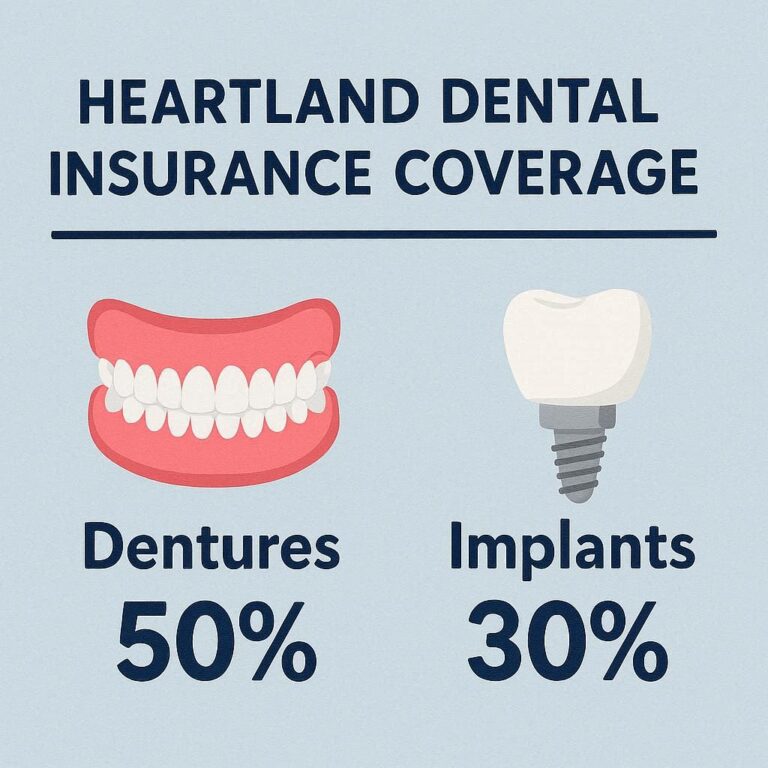
| Major | 50% – 60% | Crowns, bridges, dentures, implants |
Understanding this breakdown is the first step. If you need a crown (major), you are responsible for roughly half the cost. However, if you combine that crown with a necessary filling (basic) during the same benefit period, the insurance handles a larger percentage of the filling, reducing your total bill.
The Annual Maximum: Your Golden Number
Perhaps the most critical number on your insurance card is the annual maximum. This is the absolute ceiling of what the insurance company will pay for your care within a calendar year (usually January 1 to December 31).
Historically, annual maximums have remained frustratingly stagnant. While the cost of dental care has risen with inflation, many annual maximums still hover around $1,000 to $1,500 per person.
Important Note: This is a “use it or lose it” benefit. If you do not use your full annual maximum by December 31, it does not roll over. You are essentially donating that money back to the insurance company.
Deductibles and Co-pays
You also need to consider your deductible. This is a fixed amount you must pay out-of-pocket before the insurance kicks in (except for preventive care, which is often deductible-free). Deductibles typically range from $25 to $100 per person.
Co-pays are the remaining percentage you owe after the insurance pays its share. If your plan covers 80% of a filling, your co-pay is 20%.
Strategic Timing: The Key to Maximizing Benefits
If you want to maximize dental insurance coverage, timing is everything. Because benefits reset annually, the way you schedule your treatments can save you thousands of dollars.
The Calendar Year Strategy
Let us imagine you need a dental implant. The total cost might be $4,000. Your insurance covers 50% for major services, with an annual maximum of $1,500.
If you start and finish the implant in one calendar year, the insurance will pay only up to $1,500. You are left with a $2,500 bill.
However, if you split the treatment:
-
Year 1: Perform the extraction and the implant placement (the surgical part). Insurance pays $1,500.
-
Year 2: Place the crown on the implant (the restoration). Insurance pays another $1,500.
Suddenly, your insurance has contributed $3,000 instead of $1,500. By leveraging two annual maximums, you have effectively halved your out-of-pocket cost.
Preventive Care Scheduling
Never cancel your six-month cleaning just because you are busy. Preventive visits are the foundation of maximizing coverage. They usually cost you nothing and ensure that small problems are caught while they are still in the “basic” category rather than escalating to “major” category treatments.
The “Double Dip” for Families
If you have a family plan, each member usually has their own annual maximum. However, if a dependent needs a high-cost treatment, check if your plan has a “family maximum” versus an “individual maximum.” In some plans, unused portions of a family member’s coverage can sometimes be allocated to another, though this is rare and depends entirely on the specific contract.
Decoding the Dental Lingo: CDT Codes
Dentists use a standardized system called Current Dental Terminology (CDT) codes to communicate with insurance companies. The code used determines how much the insurance pays.
Two different codes can result in wildly different reimbursement rates. Being aware of this can help you have a more informed conversation with your dental office.
Common Code Categories
-
D0120 / D0150: Periodic vs. comprehensive exams. A comprehensive exam (often for new patients) pays more than a periodic recall exam.
-
D1110: Prophylaxis (adult cleaning). This is preventive.
-
D4341 / D4342: Periodontal scaling and root planing. This is “deep cleaning.” It falls under basic or major depending on the plan and is often necessary for gum disease. Many patients are surprised to learn that if they have gum disease, their standard cleaning code changes, and so does the cost.
-
D2740: Crown – porcelain/ceramic. A standard major code.
-
D3310: Endodontic therapy (root canal) – anterior tooth. This is a basic code.
Why Codes Matter
If a dentist diagnoses a “filling” (basic) but the cavity is too large for a filling to survive, they must use a “crown” (major) code. Insurance will then pay less.
Sometimes, a dentist can use a “build-up” code (D2950) in conjunction with a crown. This build-up is often covered under basic benefits, while the crown is under major. Understanding this allows you to ask the billing coordinator, “Which portion of this treatment falls under basic, and which falls under major?” This helps you anticipate your out-of-pocket responsibility accurately.
In-Network vs. Out-of-Network: The Financial Crossroads
One of the most impactful decisions you make regarding your dental health is choosing where to go for treatment.
PPO Plans and Negotiated Rates
If you have a Dental PPO (Preferred Provider Organization), you have a list of “in-network” providers. These dentists have signed contracts agreeing to accept “negotiated rates” for their services.
This is crucial because:
-
Write-offs: If a dentist charges $1,500 for a crown, but the insurance negotiated rate is $1,000, you are only responsible for your percentage of the $1,000. The $500 difference is a “write-off” and does not count toward your deductible or maximum.
-
No Balance Billing: In-network providers cannot bill you for the difference between their fee and the negotiated rate.
Out-of-Network Considerations
If you choose an out-of-network dentist, you are usually still covered, but the insurance calculates their payment based on what they deem “usual and customary” (U&C) for your area. If your dentist charges $1,500 and the insurance U&C is $1,000, the insurance will only pay their percentage of the $1,000. You are responsible for the remaining $500 plus your co-pay.
Quotation from a dental billing specialist: “Patients often think out-of-network means no coverage. That is rarely true. It just means you will pay more because you lose the contracted write-off. Always ask the office for a ‘predetermination’ before starting major work to see exactly what you will owe.”
Table: In-Network vs. Out-of-Network
| Factor | In-Network | Out-of-Network |
|---|---|---|
| Cost | Lower out-of-pocket due to negotiated rates | Higher out-of-pocket; may involve balance billing |
| Paperwork | Office files claims; minimal work for you | Office may file, but you risk higher balance bills |
| Maximum Utilization | Write-offs help stretch your annual max further | You pay more per service, depleting your max faster |
| Flexibility | Limited to specific dentists | Freedom to choose any dentist |
The Power of the Predetermination of Benefits
Before you undergo any expensive procedure—think crowns, bridges, implants, or full-mouth reconstruction—ask your dentist to send a predetermination of benefits to your insurance company.
This is not a guarantee of payment, but it is a detailed estimate. It tells you:
-
Is the procedure covered?
-
What percentage does the plan pay?
-
How much of your annual maximum remains?
-
What is your estimated out-of-pocket cost?
A predetermination takes the guesswork out of financial planning. It allows you to see if you need to split treatment across two calendar years to maximize insurance coverage. If the predetermination shows a higher cost than expected, you have the opportunity to discuss alternative treatment plans with your dentist before any work is done.
Maximizing Group Plans vs. Individual Plans
Most people receive dental insurance through an employer. Group plans generally offer better value than individual plans because the risk is spread across a large pool of people.
Employer-Sponsored Plans
These are typically the most cost-effective. However, you are limited to the enrollment period. If you anticipate needing major work, consider enrolling in the premium plan during open enrollment, even if it costs a bit more per month. The higher premium usually comes with a higher annual maximum and lower deductibles, which pays off quickly if you need a crown or root canal.
Individual/Family Plans
If you are self-employed or your employer does not offer dental, you can purchase an individual plan. Be wary of:
-
Waiting periods: Many individual plans make you wait 6 to 12 months before covering basic or major services.
-
Missing tooth clauses: If you lost a tooth before the policy started, the insurance may refuse to cover a replacement (implant/bridge).
Coordination of Benefits (COB)
If you are covered under two plans (e.g., your employer and your spouse’s), you can sometimes “stack” benefits. Typically, the primary plan pays its portion, and the secondary plan pays a portion of what is left, up to 100% of the total bill. This requires careful coordination, but it can virtually eliminate out-of-pocket costs for major work.
Common Mistakes That Cost You Money
Even with a great insurance plan, certain habits can undermine your ability to maximize dental insurance coverage.
1. Waiting Until December to Schedule
December is the busiest month for dental offices. If you wait until the last week of the year to use your remaining benefits, you risk not getting an appointment. If the work is not completed in December, the insurance resets on January 1, and you lose that remaining benefit.
2. Ignoring Your Explanation of Benefits (EOB)
The EOB sent by your insurance company after a visit is not just a formality. It tells you exactly how your benefits were applied. Review it carefully. If the code listed does not match the work you received, or if the insurance paid less than expected, call your insurer immediately. Mistakes happen, and catching them quickly is the only way to correct them.
3. Assuming All Dentists Are the Same Price
Fees vary dramatically between dental offices. A crown in a metropolitan area might cost $1,200 at one practice and $1,800 at another. Since insurance pays a percentage based on their fee schedule, going to a practice with higher overhead costs may leave you with a much higher balance. It is acceptable to ask for a fee schedule upfront.
4. Not Using Flexible Spending Accounts (FSA) or Health Savings Accounts (HSA)
If your employer offers an FSA or HSA, you can set aside pre-tax dollars to pay for your portion of dental care. This effectively gives you a discount equal to your tax bracket (often 20-30%). If you know you need a crown next year, fund your FSA accordingly.
What to Do When Insurance Denies a Claim
Denials are frustrating, but they are not always final. You have the right to appeal. Insurance companies deny claims for several reasons:
-
Frequency limitations: You tried to get X-rays too soon after the last set.
-
Missing tooth clause: The policy won’t cover a replacement for a tooth missing before enrollment.
-
Medical necessity: The insurer disagrees with the dentist that the procedure was necessary.
The Appeal Process
-
Ask the Dentist: Most dental offices have a dedicated insurance coordinator. Ask them to review the denial. Often, they can submit a narrative (a letter) with X-rays to prove medical necessity.
-
Member Grievance: If the office cannot resolve it, file a formal grievance with your insurance company. Keep records of all calls, including names and reference numbers.
-
State Insurance Commissioner: As a last resort, if you believe the denial violates your contract, you can file a complaint with your state’s Department of Insurance. This often prompts a quick review from the insurance company.
A Comprehensive Strategy for Major Dental Work
If you are facing a treatment plan that costs several thousand dollars, a scattered approach will cost you. Here is a step-by-step strategy to maximize dental insurance coverage for complex cases.
-
Get a Written Treatment Plan: Ensure the plan includes all CDT codes and fees.
-
Verify Your Remaining Benefits: Call your insurer or check your portal to confirm how much of your annual maximum remains.
-
Request a Predetermination: Have the office send the plan to insurance. Wait for the written response.
-
Analyze the Timing: If the cost exceeds your remaining maximum, ask the office if the treatment can be phased. For example, can Phase 1 (diagnostic and surgical) be done in November, and Phase 2 (restorative) in January?
-
Secure Financing: If your out-of-pocket is still high, ask the dental office about in-house financing or third-party options like CareCredit. Sometimes, paying in full upfront yields a 5% discount.
-
Schedule Early: Book your appointments immediately to secure the dates, especially if you are straddling two calendar years.
Debunking Common Dental Insurance Myths
The world of dental insurance is rife with misconceptions. Let’s clear a few up.
Myth: Dental insurance covers “cosmetic” dentistry.
Reality: Insurance rarely covers purely cosmetic procedures (teeth whitening, veneers). However, if a procedure is medically necessary to restore function (like a crown on a front tooth that is also cosmetic), it is covered.
Myth: If the insurance doesn’t pay, I don’t have to pay the dentist.
Reality: Your insurance agreement is between you and the insurer. The contract for treatment is between you and the dentist. If insurance denies a claim, you are responsible for the balance unless the office explicitly stated in writing that the treatment was “fully covered.”
Myth: You can only go to the dentist twice a year.
Reality: If you have periodontal disease (gum disease), your insurance may cover cleanings every three to four months. These are billed under periodontal maintenance codes (D4910) rather than standard cleanings. If your dentist recommends this, verify your coverage. It is medically necessary and often covered, though it uses your benefits faster.
The Future of Dental Benefits and Maximizing Value
The landscape of dental insurance is slowly changing. Some companies are introducing rollover benefits, allowing unused portions of the annual maximum to carry over to the next year, up to a certain cap. Others are adopting teledentistry benefits for consultations.
To stay ahead:
-
Review your plan annually: During open enrollment, do not just auto-select the same plan. If your dental needs changed (e.g., you now have a child, or you need implants), choose the plan that aligns with that need.
-
Look beyond premiums: A plan with a $50 monthly premium and a $1,000 max is worse than a plan with a $70 premium and a $2,000 max if you need a crown. Do the math based on your anticipated needs.
Conclusion
Maximizing dental insurance coverage is not about luck. It is about understanding the mechanics of your plan, communicating clearly with your dental provider, and strategically timing your treatment. By focusing on preventive care, utilizing the full value of your annual maximum, and never hesitating to ask for a predetermination, you can transform your insurance from a confusing expense into a powerful tool for maintaining your oral health without breaking the bank.
Remember, the goal is to use your benefits to their fullest potential before they expire. A little bit of planning today can save you hundreds, if not thousands, of dollars tomorrow.
Frequently Asked Questions (FAQ)
1. How often can I get dental X-rays covered by insurance?
Typically, insurance covers bitewing X-rays once a year (every 12 months) and a full mouth series (FMX) once every 3 to 5 years. Check your specific plan for frequency limitations.
2. Can I switch dentists to get better insurance coverage?
Yes. If your current dentist is out-of-network, switching to an in-network provider will likely reduce your out-of-pocket costs significantly due to negotiated rates. However, consider the value of the relationship with your current provider.
3. What happens if I don’t use my dental insurance by the end of the year?
You lose it. Unused annual maximums and flexible spending account (FSA) funds typically do not roll over. If you have remaining benefits, schedule any outstanding treatment (even if it is just a small filling) before December 31.
4. Does dental insurance cover implants?
Many plans now cover implants, but they often classify them under “major” services with a 50% coverage rate. Some plans may only cover the crown portion and not the surgical implant fixture. Always get a predetermination.
5. Is it worth buying individual dental insurance if I need a lot of work?
Usually, no. Individual plans often have waiting periods (6-12 months) for major work. If you need immediate care, paying out-of-pocket or using a dental discount plan may be more cost-effective than paying premiums for a year while waiting for coverage to activate.
Additional Resource
To further assist you in making informed decisions, we recommend utilizing the National Association of Dental Plans (NADP) website. The NADP is a reliable resource that provides consumer guides explaining the differences between DHMO, DPPO, and discount plans. You can also verify the credentials of insurance providers and access educational materials that clarify your rights as a consumer.
Link to explore: https://www.nadp.org/consumers/