New ADA Dental Codes for 2026: A Complete Guide for Practitioners
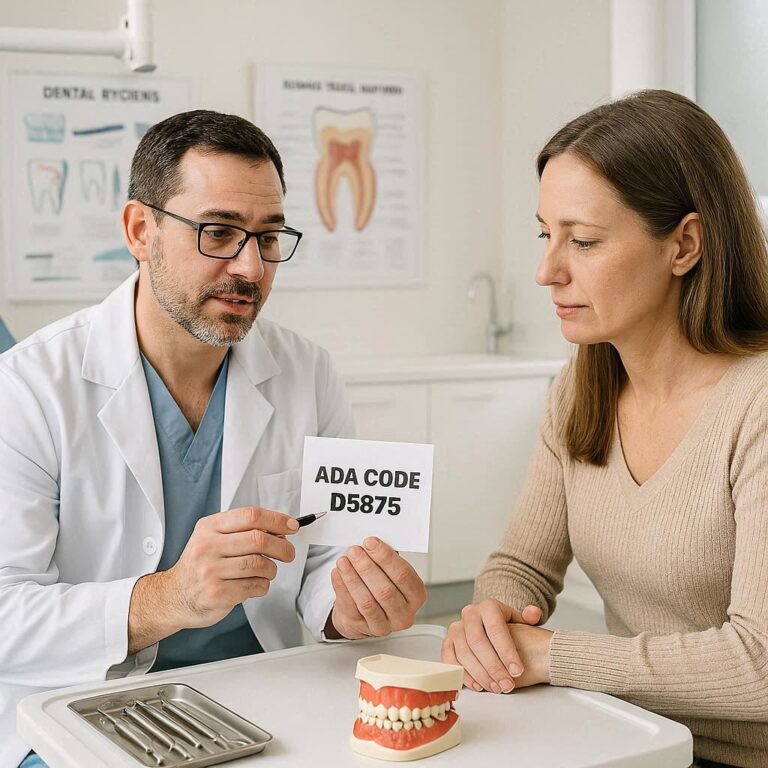
If you work in dentistry, you know the feeling. A new year rolls around, and with it comes a thick envelope from the American Dental Association (ADA). Inside are the latest updates to the Current Dental Terminology (CDT) code set.
It is easy to set that envelope aside. You have patients to see, charts to complete, and a team to manage. But ignoring the new ADA dental codes for 2026 is not an option. These codes dictate how you bill, how you get paid, and how you document the quality of care you provide.
Every September, the ADA releases the new codes that take effect on January 1 of the following year. For 2026, we are seeing a continuation of the ADA’s push toward precision, value-based care, and the integration of new technologies.
The goal of this guide is simple. We want to help you navigate these changes without the headache. We will walk through the new additions, the revisions that matter, and the deletions you need to watch out for. Whether you are a solo practitioner, a billing specialist, or a dental student preparing for the future, this article is your reliable roadmap.
Let us dive into what is changing and, more importantly, how to make these changes work for your practice.
Why the ADA Updates Dental Codes Every Year
Before we look at the specific numbers, it helps to understand the “why” behind the process. The ADA’s Code Maintenance Committee meets twice a year. They receive requests from dentists, specialty organizations, insurance carriers, and even government agencies like CMS.
These requests are not random. They reflect what is actually happening in dental offices across the country.
When a new material becomes popular, when a surgical technique improves, or when a technology like digital impression scanning becomes the standard, the code set must adapt. The old codes might not accurately describe the work being done. If the code does not fit, the claim gets denied, or the dentist gets underpaid.
The 2026 updates continue this trend. We are seeing a focus on:
-
Clarity: Splitting broad codes into specific ones to reduce denial rates.
-
Technology: Recognizing digital workflows that are no longer “experimental” but standard of care.
-
Medical-Dental Integration: More codes that bridge the gap between oral health and systemic health.
Understanding this context helps you see the new codes not as a burden, but as a tool to better represent your expertise.
How to Read the 2026 CDT Code Changes
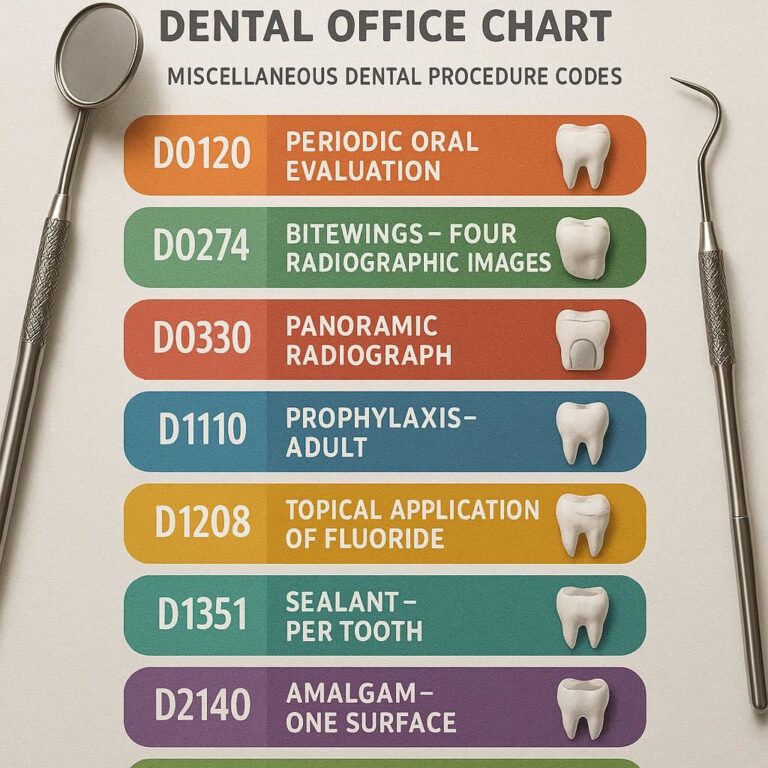
The CDT code set is organized into categories. These are usually noted by the first digit of the code (D0xxx, D1xxx, etc.).
When reviewing the “new ADA dental codes for 2026,” you will encounter three types of changes:
-
New Codes: These are entirely new procedural codes for services that previously did not have a specific identifier.
-
Revision Codes: These are existing codes where the nomenclature (name) or descriptor (description) has been changed to better reflect current practice.
-
Deleted Codes: These codes are being retired. If you use them after December 31, 2025, your claim will automatically reject.
For 2026, the ADA has focused heavily on the D1000-D1999 (Diagnostic) and D7000-D7990 (Oral and Maxillofacial Surgery) categories, along with some significant shifts in restorative codes.
Let us break these down into digestible sections.
Section 1: Diagnostic Codes (D1000-D1999) – The Big Shift
For years, the diagnostic category has remained relatively stable. However, the 2026 update introduces a major philosophical shift regarding comprehensive examinations.
H3: The Evolution of the Comprehensive Oral Evaluation
Historically, code D0150 (Comprehensive Oral Evaluation) was the workhorse of the new patient visit. It implied a thorough assessment, including a hard and soft tissue exam, periodontal evaluation, and treatment planning.
For 2026, the ADA is introducing a new level of specificity to differentiate between standard comprehensive exams and those that require advanced medical complexity.
New Codes in Diagnostic
| Code | Nomenclature | Description |
|---|---|---|
| D0160 | Comprehensive Oral Evaluation – New Patient, High Complexity | This new code is used for a comprehensive evaluation of a new patient where the clinical condition or medical history presents a high level of complexity. This may involve significant medical history interactions, polypharmacy, or complex treatment planning coordination with physicians. |
| D0170 | Comprehensive Oral Evaluation – Established Patient, Significant Change | Previously, established patients often defaulted to periodic exams (D0120) even if they had a major medical event or a long absence. This code allows billing for a comprehensive re-evaluation when an established patient presents with a significant change in health status or after a prolonged interval (e.g., over 3 years). |
Revision: D0150 Refined
The existing code D0150 will now be specifically defined as a comprehensive evaluation for a new patient without the high complexity factors described in D0160.
What this means for your practice:
You will need to train your front desk and clinical team to identify “high complexity” factors. This is not about upcoding; it is about accurate documentation. If a patient is on multiple medications for heart disease, has a history of head and neck radiation, or presents with severe medical comorbidities, D0160 is likely the appropriate code. Your documentation must support the complexity.
Section 2: Restorative Codes – Precision in Materials
The restorative section (D2000-D2999) sees annual updates as material science evolves. For 2026, the ADA is refining how we bill for direct and indirect restoratives, specifically focusing on the substrate of the tooth.
Differentiating Tooth Structure
One of the most common sources of claim denials in restorative dentistry is the confusion between a “core buildup” and a “foundation.” The 2026 codes aim to eliminate this confusion by clarifying the surface being restored.
New Codes in Restorative
| Code | Nomenclature | Description |
|---|---|---|
| D2955 | Post Removal | While post removal has been billed under miscellaneous codes, this new specific code allows for the documentation of the time and skill required to remove an existing intraradicular post without damaging the remaining tooth structure. |
| D2990 | Resin Infiltration of Incipient Enamel Lesions | This code has been revised to clarify its use. It is specifically for the treatment of non-cavitated proximal or smooth surface lesions using resin infiltration. It is a minimally invasive alternative to traditional restorative fillings. |
Deleted Codes to Watch
The ADA is deleting several older codes for materials that are no longer widely used or considered standard of care. If you are still using D2920 (Recement crown) in a specific context, note that the descriptor is being tightened to avoid overlap with new adhesive bonding codes. Always verify that your billing software has purged the deleted codes for 2026 to prevent rejections.
Section 3: Oral and Maxillofacial Surgery – Clarity in Complexity
Surgical codes often have the highest fee variations and denial rates because insurers struggle to determine what is “medically necessary” versus what is “dental.”
The new ADA dental codes for 2026 introduce several codes to better describe surgical complexity, particularly regarding third molars and bone grafting.
Third Molar Extraction Specificity
For years, extracting wisdom teeth fell under D7210 (surgical extraction) or D7240 (impacted). However, the varying levels of impaction were not always clearly defined in the code descriptor itself.
New Codes in Oral Surgery
| Code | Nomenclature | Description |
|---|---|---|
| D7221 | Removal of Impacted Tooth, Soft Tissue, with Surgical Approach | This splits the old D7220 into a more granular level. This code is used when a flap is required to access the tooth, but no bone is removed. |
| D7231 | Removal of Impacted Tooth, Partial Bony | This code is for teeth where part of the crown is encased in bone, requiring bone removal for extraction. |
| D7241 | Removal of Impacted Tooth, Complete Bony | This is for teeth fully encased in bone, requiring significant bone removal and often sectioning of the tooth. |
| D7261 | Surgical Exposure of Impacted Tooth, with or without Orthodontic Bracket | This new code clarifies the surgical exposure of impacted teeth (usually canines) for orthodontic traction. Previously, this was often billed under unlisted codes, leading to inconsistent reimbursement. |
Important Note for Surgeons: The distinction between D7221, D7231, and D7241 is clinical. Your operative notes must clearly state the level of impaction and the surgical steps taken. Insurers will likely audit these codes heavily in the first year to ensure providers are not upcoding a soft tissue impaction as a complete bony impaction.
Section 4: The Rise of Digital Dentistry and Imaging
Digital dentistry is no longer a luxury. It is the standard. The 2026 code updates reflect the maturity of digital workflows, particularly in prosthodontics and orthodontics.
Digital Impressions and Fabrication
Previously, many labs billed directly for digital design and milling. Now, the ADA is introducing codes that allow the dental office to bill for the in-office digital workflow more accurately.
New Codes for Digital Workflows
| Code | Nomenclature | Description |
|---|---|---|
| D2890 | Digital Impression, Intraoral | While many offices have included this in the cost of the restoration, this code now allows for a specific line item when a digital impression is taken without a corresponding physical impression. This is particularly useful for orthodontic monitoring or implant planning. |
| D3991 | Fabrication of Custom 3D Printed Model | This is for the fabrication of a physical model derived from digital data. This is distinct from a study model and is used specifically for surgical guides, orthodontic retainers, or prosthodontic frameworks. |
| D5991 | Placement of 3D Printed Surgical Guide | This code covers the clinical placement and utilization of a 3D printed guide for implant placement. It separates the design (often lab billed) from the clinical placement (dentist billed). |
Section 5: Periodontics – Supporting the Data
Periodontal coding has been shifting toward evidence-based assessment. The 2026 updates add new codes for diagnostic technologies that have proven their clinical efficacy.
Genetic Testing and Biomarkers
The ability to test for genetic susceptibility to periodontitis (like IL-1 genotyping) or specific bacterial pathogens is becoming more common. The ADA is introducing codes to categorize this diagnostic testing.
New Codes in Periodontics
| Code | Nomenclature | Description |
|---|---|---|
| D4380 | Salivary or Gingival Crevicular Fluid (GCF) Biomarker Analysis | This is a new diagnostic code for the analysis of biomarkers (such as MMP-8 or interleukins) that indicate active periodontal disease. This is a non-invasive way to assess disease activity rather than just historical bone loss. |
| D4381 | Microbial DNA Testing for Pathogens | This code is specifically for the identification of specific periodontal pathogens (like A. actinomycetemcomitans or P. gingivalis) via DNA-PCR analysis. |
These codes help move periodontics from a purely clinical evaluation (probing depths) to a molecular diagnostic approach. For insurers adopting value-based care, these diagnostic codes can justify more aggressive early intervention.
Section 6: Anesthesia and Sedation – Safety First
Patient safety and the management of anesthesia are always a priority for the ADA. The 2026 updates refine how we bill for monitoring and the administration of sedation, particularly for pediatric patients and those with high anxiety.
Monitoring and Time Units
One of the most contentious areas in dental billing is the definition of “time units” for sedation. The new codes aim to standardize this to align with medical anesthesia coding (which uses 15-minute increments) more closely.
New Codes for Anesthesia
| Code | Nomenclature | Description |
|---|---|---|
| D9243 | Moderate Sedation – First 15 Minutes | This splits the previous “first 30 minutes” code. This allows for more precise billing when procedures are short but require sedation. It aligns with the medical model (CPT) that insurers are familiar with. |
| D9244 | Moderate Sedation – Each Subsequent 15 Minutes | This is the corresponding code for additional time. It replaces the previous “each additional 15 minutes” descriptor to ensure consistency. |
| D9245 | Deep Sedation/General Anesthesia – First 15 Minutes | Similar to above, this allows for more precise billing for the initial period of deep sedation. |
Important Note: Documentation is critical. Anesthesia time must be documented with start and stop times clearly noted in the clinical record. A separate anesthesia record is now considered best practice to support these time-based codes.
Section 7: Orthodontics – The Clear Aligner Era
Clear aligner therapy has fundamentally changed orthodontics. The 2026 codes introduce new ways to bill for the management of these cases, especially when they involve limited treatment or interceptive orthodontics.
Limited Aligner Therapy
Historically, orthodontic codes were designed for full-mouth banding (braces). Clear aligners often involve phased treatment or limited anterior movement.
New Codes in Orthodontics
| Code | Nomenclature | Description |
|---|---|---|
| D8090 | Comprehensive Orthodontic Treatment – Clear Aligner Therapy | This code distinguishes comprehensive orthodontic treatment using clear aligners from traditional fixed appliances (D8080). While the treatment is similar, the overhead, lab fees, and chair time differ. Separating them allows for more accurate actuarial data for insurers. |
| D8095 | Interceptive Orthodontic Treatment – Clear Aligner Therapy | This is for phased treatment in mixed dentition using aligner technology. Previously, interceptive care was often billed under D8070 (limited). This new code reflects the specific methodology used. |
Section 8: Coding for Medical-Dental Integration
One of the most exciting trends in dentistry is the recognition that oral health is integral to overall health. The new ADA dental codes for 2026 reflect this integration, particularly in the areas of sleep apnea, airway management, and diabetes screening.
Screening and Airway
Dentists are on the front lines of screening for obstructive sleep apnea (OSA) and airway issues in children. The new codes provide avenues for dentists to be compensated for this screening, which historically was an unpaid service.
New Codes for Integration
| Code | Nomenclature | Description |
|---|---|---|
| D0391 | Sleep Apnea Screening | This is a new diagnostic code for the administration of a validated sleep apnea screening questionnaire (like STOP-BANG or Epworth) and the review of findings. It acknowledges the dentist’s role in identifying patients at risk for OSA. |
| D5990 | Placement of Oral Appliance for Sleep Apnea | This code has been revised to include the fitting, insertion, and adjustment of the appliance. It now includes specific language about the titration process to achieve the therapeutic mandibular position. |
| D0410 | In-Office HbA1c Testing | While diabetes screening has been available, this code now specifically clarifies the use of point-of-care HbA1c testing in the dental setting. This is a massive step in medical-dental integration, allowing dentists to screen for undiagnosed prediabetes and diabetes. |
Section 9: Prophylaxis and Periodontal Maintenance
The lines between a “prophy” (D1110) and “periodontal maintenance” (D4910) have always been a source of confusion for patients and payers. The 2026 updates attempt to clarify the medical necessity of these services.
Clarifying Clinical Indications
The ADA is adding a new code to address patients who have gingivitis but no attachment loss. Previously, these patients fell into a gray area. They had inflammation, but not the history of periodontitis required for D4910.
| Code | Nomenclature | Description |
|---|---|---|
| D1120 | Gingival Inflammation Prophylaxis | This new code is for patients with clinical signs of gingivitis (bleeding, edema) but no radiographic bone loss or attachment loss. It is a step above a standard prophy (which implies health) but not as intensive as periodontal maintenance. |
This new code allows for appropriate reimbursement for the time and skill required to manage patients with active gingival inflammation before they progress to periodontitis.
Practical Implementation: How to Prepare Your Practice
Reading about the new ADA dental codes for 2026 is one thing. Implementing them is another. Here is a step-by-step guide to ensure your practice is ready for January 1st.
Step 1: Update Your Software
Contact your practice management software provider. Ensure that they will be pushing an update in December 2025 that includes the new 2026 codes and deletes the old ones. Do not assume this is automatic.
Step 2: Train Your Team
Schedule a “coding huddle” in late December.
-
Front Desk: They need to know the new nomenclature so they can discuss fees and estimates with patients accurately.
-
Clinical Team: Hygienists and assistants need to know what clinical findings trigger the new codes (e.g., high complexity for D0160, or gingival inflammation for D1120).
-
Billing Team: They need to understand the time increments for the new anesthesia codes (D9243, D9244) to avoid billing errors.
Step 3: Update Your Superbill
Your encounter form (superbill) needs a facelift. Remove deleted codes. Add the new ones. Use clear, plain-language descriptions next to the codes so your team knows when to select them.
Step 4: Audit Your Documentation
The new codes require higher specificity in documentation. For example, if you bill D7231 (Partial Bony Impaction), your operative note must mention “bone removal” specifically. If you bill D0160 (High Complexity), your medical history and clinical notes must reflect the complexity.
Anticipating Common Denials in 2026
Even with the best preparation, denials happen. Based on historical trends with new code releases, here are the top three denial risks for 2026 and how to avoid them.
-
The “New vs. Established” Trap: With the introduction of D0160 and D0170, payers will likely deny D0160 if the patient has been seen in the practice before (even if it was 5 years ago). Ensure your patient classification system is accurate.
-
Sedation Time Discrepancies: The shift to 15-minute increments (D9243) will cause a spike in denials if the total time does not match the procedure duration. Always document “sedation start time” and “sedation end time.”
-
Periodontal Maintenance vs. Prophy: With the new D1120 (Gingival Inflammation Prophylaxis), some insurers may try to downgrade D4910 claims to D1120 if the documentation of bone loss is not clear. Ensure your periodontal charting includes radiographic evidence to support D4910.
The Future of Dental Coding Beyond 2026
While we focus on the immediate changes, it is helpful to look at the horizon. The ADA is moving toward a more fluid integration with medical coding (CPT). We are likely to see more codes in the coming years that address:
-
Tele-dentistry: As virtual visits become permanent, codes will continue to evolve to cover asynchronous and synchronous consultations.
-
Artificial Intelligence: As AI-assisted radiographic interpretation becomes standard, we will likely see codes for “AI-aided diagnosis” similar to those emerging in medical radiology.
-
Regenerative Medicine: Codes for platelet-rich fibrin (PRF) and stem cell therapies in oral surgery are expected to be refined in the next 2-3 years to remove ambiguity.
Staying ahead of these trends requires continuous education. The CDT manual is your primary source, but subscribing to ADA coding newsletters or joining state dental association coding webinars can keep you proactive rather than reactive.
Conclusion
The new ADA dental codes for 2026 represent more than just a list of numbers. They represent the evolution of the dental profession. They acknowledge that dentistry is becoming more complex, more integrated with medicine, and more technologically advanced.
By adopting these new codes—D0160 for high-complexity exams, D1120 for gingival inflammation, the refined surgical extraction codes, and the digital workflow codes—you are not just complying with regulations. You are accurately representing the high-quality care you provide every day.
Preparation is key. Update your software, train your team, and refine your documentation. The practices that invest time in understanding these changes now will be the ones that experience smoother reimbursements, fewer denials, and a stronger bottom line in 2026.
Frequently Asked Questions (FAQ)
1. When exactly do the new ADA dental codes for 2026 go into effect?
All new, revised, and deleted codes take effect on January 1, 2026. While the codes are published in September 2025, you cannot legally bill them until the start of the new year. Claims submitted after this date using deleted codes will be rejected.
2. Where can I purchase the official 2026 CDT Code Book?
The official manual is published by the American Dental Association. You can purchase it directly from the ADA Store (ada.org/store). Be cautious of third-party sellers; ensure you are buying the official version to avoid errors.
3. If I start a case in 2025 but finish it in 2026, which codes do I use?
Generally, you use the codes that are active on the date of service (the date the procedure was performed). For multi-appointment procedures, you should use the code that is valid on the day of each specific visit. However, for long-term treatment plans like orthodontics, check with the specific insurance carrier for their policy on global periods.
4. Will insurance companies automatically recognize these new codes?
Most major dental insurers update their systems to recognize the new CDT codes by January 1st. However, there is often a lag of a few weeks. If you receive an initial denial for a new code in early January, it is often a system delay. You should verify the code with the payer before resubmitting.
5. What is the difference between D0160 (High Complexity) and D0150?
D0150 is the standard comprehensive exam for a new patient. D0160 is specifically for a new patient whose medical history or oral condition requires significantly more time, expertise, and interdisciplinary coordination. You must document the specific factors that elevated the complexity.
Additional Resource
To ensure you are always compliant with the latest coding standards and to dive deeper into the rationale behind these changes, we recommend visiting the official source:
-
American Dental Association – CDT Code Central
Link: https://www.ada.org/en/publications/cdt
This is the definitive resource for code books, coding education, and updates directly from the Code Maintenance Committee.