Ozone Dental Treatment Cost Estimate: Your Complete Financial Guide
If you’re exploring modern, minimally invasive dental care, you’ve likely heard about ozone therapy. It’s a revolutionary approach that uses activated oxygen to treat cavities, gum disease, and infections with remarkable precision. But once the initial intrigue fades, a practical question emerges: “What does ozone dental treatment actually cost?” You’re not just looking for a number; you’re seeking a realistic financial picture to make an informed decision for your health.
Unlike a standard filling with a well-known price tag, ozone therapy costs can feel like a mystery. This isn’t because providers are secretive, but because the treatment is highly personalized and integrated into various procedures. A simple “one-price-fits-all” estimate doesn’t exist, and any source claiming otherwise isn’t giving you the full story.
This guide is designed to demystify the investment. We’ll break down the factors that influence the final cost, provide realistic price ranges based on common applications, and answer the crucial question of insurance coverage. Our goal is to equip you with the knowledge to have confident, productive conversations with dental professionals, ensuring you understand the value behind every dollar spent on your oral wellness.
Understanding Ozone Therapy: More Than Just a Price Tag
Before we discuss numbers, it’s essential to grasp what you’re potentially investing in. Ozone (O3) is a naturally occurring gas. In dentistry, a medical-grade generator creates it from pure oxygen. This ozone is then applied directly to teeth or gums in gas, water, or oil form.
Its power lies in its action: ozone is a potent antimicrobial agent. It disrupts the cell walls of bacteria, viruses, and fungi that cause decay and disease, effectively sterilizing the treated area. For teeth, this can mean eliminating decay-causing bacteria without always needing to remove as much tooth structure. For gums, it can reduce infection and promote healing.
Dr. Elena Martinez, a biological dentist, notes: “Ozone therapy shifts the paradigm from ‘drill and fill’ to ‘disinfect and restore.’ The cost isn’t just for a material; it’s for a therapeutic process that aims to preserve your natural biology and support long-term health.”
This foundational understanding is key. You’re not paying for a commodity; you’re investing in a targeted biological therapy that often works in concert with other treatments.
Why Cost Estimates Vary So Widely
If you search online, you might see figures ranging from $50 to over $800 per treatment. This vast range isn’t arbitrary. The final cost is a mosaic of several interlocking factors:
-
The Primary Dental Issue: Treating a small, early cavity (Stage 1) is vastly different from addressing a deep root canal infection or severe periodontal pockets. Complexity dictates time, materials, and ozone application method.
-
Geographic Location & Practice Overhead: A dental practice in a major metropolitan area with high rent and operational costs will typically have higher fees than one in a rural setting.
-
The Dentist’s Expertise & Training: Dentists who have pursued extensive postgraduate training in ozone therapy and biocompatible dentistry often charge fees that reflect their advanced skill set and the specialized equipment they use.
-
Integration with Other Procedures: Ozone is rarely a stand-alone “cure.” It’s commonly used as an adjunct. Therefore, its cost is usually bundled into a larger procedure.
Breaking Down the Cost: A Realistic Look at Common Applications
Here is a detailed, realistic cost breakdown for how ozone therapy is typically applied. Remember, these are estimates for the ozone component itself, which is usually an add-on fee to a standard procedure.
1. Ozone for Cavity Treatment and Prevention
This is one of the most common uses, especially for early-stage decay.
-
The Procedure: The dentist applies ozone gas directly to the decayed tooth to eliminate bacteria. For very small lesions, this might be followed only by a remineralizing paste. For larger ones, ozone is used to disinfect before placing a filling.
-
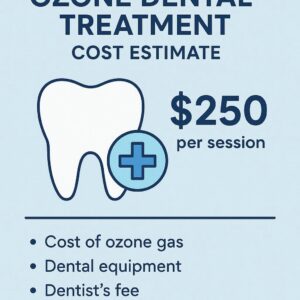
Ozone Cost Estimate: $50 – $150 per tooth. This is typically an add-on to the cost of the examination and the final restoration (filling).
-
Total Procedure Context: The total bill would include the exam ($75-$200), the filling ($150-$450), plus the ozone fee.
2. Ozone in Gum Disease (Periodontal) Therapy
Ozone is a powerful tool for managing gum infections, often used in scaling and root planing (“deep cleaning”).
-
The Procedure: Ozonated water may be used in the irrigation system during cleaning, or ozonated oil may be placed in deep pockets after scaling to suppress harmful bacteria.
-
Ozone Cost Estimate: $100 – $300 per quadrant (quarter of the mouth). This is an adjunct to the deep cleaning cost.
-
Total Procedure Context: Scaling and root planing per quadrant can range from $200-$400. The ozone fee is an additional investment in the antimicrobial efficacy of the treatment.
3. Ozone in Root Canal Therapy
This is a significant application, aiming to improve the success rate of root canals by ensuring better disinfection.
-
The Procedure: After cleaning the root canals, the dentist floods the intricate canal system with ozone gas to reach and eliminate microbes that traditional files and rinses might miss.
-
Ozone Cost Estimate: $150 – $400 per tooth. This is a critical add-on to a complex procedure.
-
Total Procedure Context: A molar root canal can cost $1,200-$2,000+. The ozone fee contributes to a more thorough biological cleaning.
4. Ozone for Tooth Sensitivity and Desensitization
A quick and non-invasive application.
-
The Procedure: Brief application of ozone gas to exposed dentin or neck of the tooth, often followed by a sealing agent.
-
Ozone Cost Estimate: $25 – $75 per tooth. Usually a straightforward add-on during a hygiene visit.
Comparative Cost Table: Ozone as an Adjunct Therapy
| Dental Procedure (Standard) | Typical Cost Range (Without Ozone) | Ozone Therapy Add-On Estimate | Potential Total Investment |
|---|---|---|---|
| Composite Filling (1 surface) | $150 – $450 | + $50 – $150 | $200 – $600 |
| Scaling & Root Planing (Per Quadrant) | $200 – $400 | + $100 – $300 | $300 – $700 |
| Root Canal Therapy (Molar) | $1,200 – $2,000+ | + $150 – $400 | $1,350 – $2,400+ |
| Cavity Prevention Treatment | $50 – $100 (remineralizing agents) | + $50 – $100 | $100 – $200 |
Important Note: These tables and estimates are for illustrative guidance. You must receive a formal, written treatment plan and cost estimate from your chosen dental provider before any procedure. Always ask for a detailed breakdown of all fees.
The Insurance Question: Will My Plan Cover It?
This is a critical part of your financial planning. The current landscape is challenging:
-
Generally Not Covered: Most traditional dental insurance plans classify ozone therapy as an “experimental,” “alternative,” or “not medically necessary” treatment. Therefore, they often deny coverage for the ozone portion of the procedure.
-
Possible Partial Coverage: The standard procedure it supports (like a filling or deep cleaning) is often covered according to your plan’s benefits. You would likely be responsible for the deductible, co-pay, and the entire add-on fee for ozone.
-
The Verification Imperative: Always, without exception, contact your dental insurance provider. Ask them: “Does my plan provide any benefits for dental ozone therapy (Current Procedural Terminology code D7999 – unspecified adjunctive procedure, or similar)?” Get the answer in writing if possible.
Financing Your Ozone Dental Treatment
Given the potential out-of-pocket expense, many practices offer solutions:
-
In-House Membership Plans: For an annual fee, these plans often provide discounts on treatments like ozone therapy.
-
Third-Party Medical Financing: Options like CareCredit or Alphaeon Credit allow you to pay over time, often with promotional interest-free periods.
-
Health Savings Accounts (HSA) & Flexible Spending Accounts (FSA): These are excellent resources, as you can use pre-tax dollars to pay for eligible medical expenses, which typically include ozone dental treatments.
How to Find a Qualified Provider and Get an Accurate Estimate
Finding the right professional is as important as understanding the cost.
-
Search for Specialists: Look for dentists who advertise “biological dentistry,” “holistic dentistry,” “ozone therapy,” or “integrative dental medicine.”
-
Verify Credentials: Check their website for postgraduate training from institutions like the International Academy of Oral Medicine and Toxicology (IAOMT) or the Academy of Comprehensive Ozonotherapy.
-
Schedule a Consultation: This is a non-negotiable step. A reputable dentist will require an examination before providing any estimate.
-
Ask the Right Questions:
-
“Can you explain how you would use ozone in my specific case?”
-
“Can you provide a written, itemized treatment plan that separates the ozone fee from the primary procedure fee?”
-
“What training have you completed in ozone therapy?”
-
“Do you offer any payment plans or membership options?”
-
A Final, Crucial Consideration: When evaluating cost, consider the long-term value. Ozone therapy aims to eliminate infection more thoroughly, which may lead to stronger, longer-lasting restorations, reduced need for future treatments, and better overall oral-systemic health. It’s an investment in preventive, biological care.
Conclusion
Understanding the cost of ozone dental treatment requires looking beyond a single fee to see it as an integrated, value-adding component of broader care. Your final investment is shaped by the procedure’s complexity, your location, and the dentist’s expertise, with realistic add-on fees ranging from $50 to $400. Since insurance rarely covers it, proactive financial planning using HSAs or practice payment plans is essential. The most important step is to consult a qualified biological dentist who can provide a personalized, written estimate and explain the long-term health benefits this innovative therapy can offer.
Frequently Asked Questions (FAQ)
Q: Is ozone dental treatment worth the extra cost?
A: For many patients, the value lies in its minimally invasive, antimicrobial approach. By aiming to eliminate the cause of decay (bacteria) and preserve more natural tooth structure, it can be a worthwhile investment in long-term oral health. Discuss your specific goals and dental philosophy with your provider.
Q: How many ozone sessions will I need?
A: For a single cavity or localized issue, one session during the procedure is typical. For chronic gum disease, multiple applications across several maintenance visits may be recommended. Your treatment plan should be customized to your needs.
Q: Does ozone therapy completely replace the need for drilling?
A: Not always. For very early, surface-level decay (Stage 1), it can sometimes be followed only by remineralization. For established cavities, ozone is used to disinfect the area before drilling, potentially allowing for a more conservative preparation and a smaller filling.
Q: Are there any side effects or risks?
A: When applied by a trained professional using proper equipment, ozone dental therapy is considered very safe. The ozone is delivered locally and converts back to oxygen quickly. It should not be inhaled in high concentrations, which is why professional training is paramount.
Additional Resource
For further reading on the science and applications of ozone in dentistry, we recommend visiting the resource library of the International Academy of Oral Medicine and Toxicology (IAOMT). They provide peer-reviewed research and patient education materials on ozone therapy and other biocompatible dental practices. (Note: This is a suggested resource for informational purposes; always discuss treatments directly with your healthcare provider).
Disclaimer: This article is for informational purposes only and does not constitute medical or financial advice. Dental costs vary widely. You must consult with a qualified dental healthcare provider for diagnosis, treatment, and a formal cost estimate based on your individual needs.