teeth whitening costs and insurance
A brilliant, white smile is more than a aesthetic luxury; it’s a social currency, a confidence booster, and a symbol of health. In an image-driven world, the demand for teeth whitening has skyrocketed, creating a multi-billion dollar industry. Yet, for the average person, pursuing that perfect shade is often met with a wall of financial ambiguity. The core dilemma is this: while the desire for a whiter smile is almost universal, the path to achieving it is clouded by confusing pricing, opaque insurance policies, and a minefield of over-the-counter promises. Is a $50 kit from the drugstore as good as a $500 in-office treatment? Will your dental insurance, which faithfully covers your cleanings, help with the cost? The answer is rarely simple. This comprehensive guide is designed to be your definitive roadmap. We will dissect the true costs of dentist-supervised whitening, unravel the often-frustrating intricacies of dental insurance regarding cosmetic procedures, and explore all legitimate avenues to make your smile goals financially achievable. This is not just about whitening teeth; it’s about making an empowered, informed investment in yourself.
Chapter 1: The Spectrum of Professional Teeth Whitening – From Lasers to Trays
Professional teeth whitening is not a one-size-fits-all service. The methods offered by dentists vary significantly in technique, speed, and intensity, which directly influences cost.
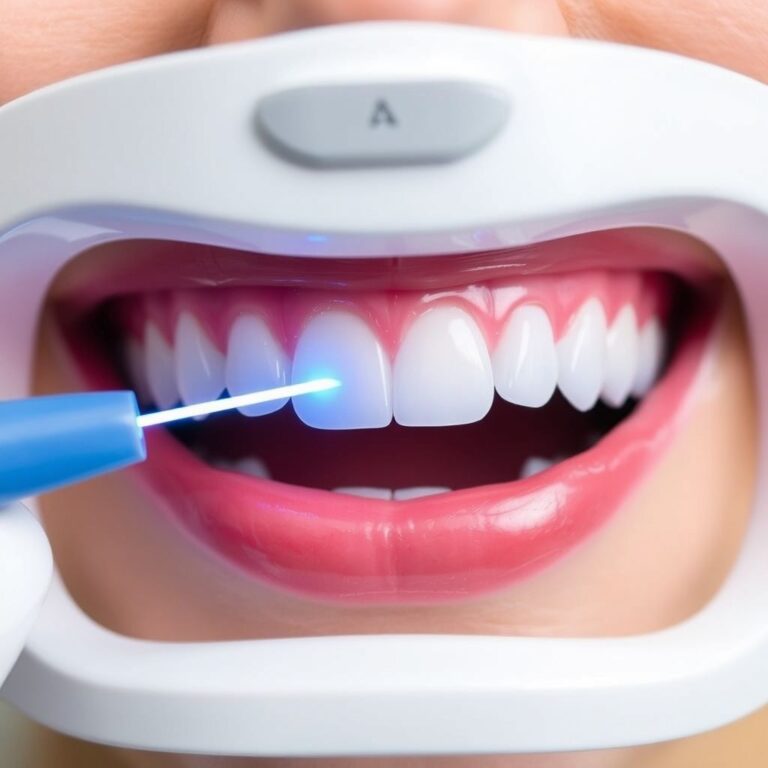
In-Office Power Whitening (Chairside Bleaching): This is the flagship service. It involves the application of a high-concentration peroxide gel (typically 25%-40% hydrogen peroxide) to the teeth, which is often activated by a special light, laser, or LED. The light is touted to accelerate the oxidation process that breaks down stains. The entire procedure is completed in about 60-90 minutes, offering immediate, dramatic results—often lightening teeth by 8 shades or more on a dental shade guide. The dentist’s role is crucial: gums and lips are protected with a barrier, and the gel is meticulously applied to ensure even coverage and minimize sensitivity.
Take-Home Professional Trays: This method offers a more gradual approach. Your dentist will take impressions of your teeth to create custom-fitted, flexible trays. You are given syringes of a professional-strength whitening gel (usually 10-22% carbamide peroxide, which breaks down into hydrogen peroxide). You wear the trays for a specified period each day (e.g., 30 minutes to several hours) or overnight, typically over 1-2 weeks. The results rival in-office whitening but develop over time. The custom trays ensure even gel distribution and prevent gum irritation far better than store-bought boil-and-bite kits.
Combination or Hybrid Approach (KöR, Zoom! DayWhite/NiteWhite): Many practices now offer tiered systems that combine the best of both worlds. This might include one in-office session to jump-start the process, followed by a series of take-home trays for maintenance and deepening the shade. Some advanced systems like KöR utilize a patented gel formulation and trays designed to work in a low-oxygen environment, claiming to whiten even tetracycline-stained or genetically discolored teeth that resist other methods.
Chapter 2: Decoding the Cost: What You’re Really Paying For at the Dentist
Seeing a price of $650 for teeth whitening can induce sticker shock. It’s vital to understand the value components that make up that figure.
1. Expertise & Diagnosis: This is the most critical element. A dentist doesn’t just apply bleach; they perform a comprehensive oral exam. They assess if your teeth and gums are healthy enough for whitening, identify the cause of discoloration (extrinsic stains from coffee vs. intrinsic from medication), and screen for contraindications like cavities, cracked enamel, or gum recession. This professional assessment prevents you from whitening over decay or causing severe sensitivity, potentially saving you from pain and expensive remedial treatments.
2. Customization & Safety Protocols: The custom trays used in take-home kits are a physical product of the dentist’s lab. They provide a perfect fit, which translates to efficient gel use (no waste), even whitening, and protected gums. The in-office procedure includes costly protective materials like liquid rubber dam or resin barriers to shield your soft tissues from high-concentration gels.
3. Product Quality & Concentration: Dentists use gels that are not available to the public. These are pharmaceutical-grade, stabilized, and have effective desensitizing agents like potassium nitrate and fluoride built into their formulas. The higher concentration and professional formulation deliver more predictable and lasting results than consumer products.
4. The Practice Overhead: The cost reflects the environment: the state-licensed facility, sterilized equipment, dental assistant’s time, malpractice insurance, and the technology used (e.g., the cost of the LED light unit).
National Average Cost Breakdown Table:
| Service Type | Average Cost Range (2025) | Key Inclusions | Typical Treatment Time |
|---|---|---|---|
| In-Office Power Whitening | $500 – $1,200+ | Comprehensive exam, all materials, tissue protection, 1-2 hour appointment, immediate results. | Single visit, 60-90 min |
| Professional Take-Home Trays | $300 – $600 | Dental exam, custom tray fabrication, professional-grade gel syringes (multiple applications). | 1-2 weeks of daily use |
| Combination/Hybrid System | $600 – $1,500+ | Initial in-office session, custom trays, booster gels, follow-up assessment. | 1 visit + 1-2 weeks |
| Over-the-Counter Kits | $20 – $150 | Standard one-size-fits-all trays or strips, lower-concentration gel. | Varies, 1-4 weeks |
Chapter 3: The Dental Insurance Conundrum – Why “Cosmetic” is a Key Word
Here lies the heart of the confusion for most patients. Standard dental insurance is designed as a maintenance plan for oral health, not appearance.
The Cosmetic Exclusion Clause: The vast majority of dental insurance plans explicitly exclude coverage for procedures deemed “cosmetic.” Teeth whitening, undertaken solely to improve aesthetics, almost always falls into this category. Whether it’s $200 or $2,000, if the purpose is cosmetic, the claim will be denied.
The Rare Exceptions: Medically Necessary Whitening. There are narrow scenarios where whitening might be partially covered:
-
Intrinsic Discoloration from Trauma: A tooth that has darkened due to nerve death following an injury.
-
Pre-Prosthetic Matching: Whitening natural teeth to match the shade of a necessary crown, bridge, or denture.
In these cases, the whitening is part of a broader, medically necessary treatment plan. Documentation from your dentist is crucial, and even then, coverage is not guaranteed and is often a subject of negotiation.
Verification is Non-Negotiable: Never assume. The single most important action you can take is to call your insurance provider, get the specific CPT code for the proposed whitening procedure from your dentist’s office, and ask: “Is CPT code D9972 (or the relevant code) covered under my plan, and if so, what are the limitations?” Get the representative’s name and a reference number for the call.
Chapter 4: Creative Pathways to Affordability: FSAs, HSAs, and Dental Savings Plans
If insurance won’t cover it, strategic financial tools can provide significant relief.
Flexible Spending Accounts (FSA) & Health Savings Accounts (HSA): These are your most powerful allies. The IRS explicitly classifies teeth whitening as a eligible expense only if it is medically necessary. However, many FSA/HSA administrators allow reimbursement for cosmetic whitening with a Letter of Medical Necessity (LMN) from your dentist. Even without an LMN, you can use these pre-tax dollars if you have a remaining balance, as administrators often approve the claim automatically. Key Strategy: Schedule your whitening procedure for late in the plan year when you know your FSA balance, or plan it for the beginning of the year to use your new HSA contributions.
Dental Savings Plans (Discount Plans): These are not insurance. For an annual membership fee (e.g., $100-$200), you gain access to a network of dentists who agree to provide services at a discounted fee schedule. A whitening procedure that normally costs $650 might be offered at a 40-60% discount to plan members. There are no claim forms or “cosmetic” exclusions—just the pre-negotiated price. Always confirm the specific discount with both the plan and the dentist before joining.
Practice Membership Plans: Many dental offices now offer in-house subscription plans. For a monthly or annual fee, patients receive preventive care (cleanings, exams, X-rays) and a significant percentage discount on other services, including cosmetic procedures like whitening. This can be an excellent value for those without insurance.
Chapter 5: The At-Home Dilemma – Professional-Grade Kits vs. Over-the-Counter
The market is flooded with options, creating a vast middle ground between dentist-administered and drugstore purchases.
Dentist-Dispensed Take-Home Kits: As described, these are the gold standard of at-home whitening. You pay for the custom trays and professional gel.
Direct-to-Consumer “Professional” Kits (SmileDirectClub, Smileactives, etc.): These online companies offer an intermediate model. They send an impression kit for you to make molds at home, which you mail back. They then send you custom trays and a milder version of professional gel. The cost is lower than dentist-dispensed kits ($150-$300), but you forfeit the in-person diagnosis and oversight. The fit of the trays may be less precise than those made from a digital intraoral scan.
Over-the-Counter Strips, Trays, and Toothpastes: These are the most accessible and cheapest options. They use the lowest allowable concentrations of whitening agents and rely on a one-size-fits-all approach. Results are subtle, uneven, and often temporary. Whitening toothpastes primarily work through abrasives and chemical agents to remove surface stains but do not change the intrinsic color of teeth.
Chapter 6: The Hidden Cost of Going Cheap: Risks of Unsupervised Whitening
Attempting to cut corners can lead to expenses far exceeding the cost of professional treatment.
-
Tooth Sensitivity & Gum Irritation: Improperly fitted trays or high-concentration gels bought online can cause significant, painful sensitivity and chemical burns on the gums.
-
Uneven or Spotty Results: Without custom trays, gel distribution is uneven, leading to blotchy whitening—lighter near the gums, darker at the tips.
-
Enamel Damage: Unregulated or acidic products can permanently damage the tooth’s protective enamel layer, leading to increased vulnerability to decay and sensitivity.
-
Masking Underlying Problems: Whitening over undiagnosed cavities or areas of decay can drive the bleaching agent into the pulp of the tooth, causing extreme pain and potentially necessitating a root canal—a procedure costing over $1,000.
Chapter 7: Case Study Analysis – Comparing Real-World Scenarios and Outcomes
Scenario A: Sarah, the Insurance-Holder.
Sarah has a PPO dental plan. She pays $450 for in-office whitening. She submits a claim expecting her 50% coverage. Outcome: Claim denied due to cosmetic exclusion. Total Cost: $450 out-of-pocket. Lesson: Verification could have set proper expectations. She could have used FSA funds.
Scenario B: David, the Strategic Planner.
David has an HSA. He visits his dentist for an exam ($150) and gets custom take-home trays ($400). His dentist provides an LMN due to mild intrinsic staining from childhood antibiotics. Outcome: HSA reimburses the full $550 tax-free. Total Cost: $0 from post-tax income, plus improved oral health from the exam. Lesson: Combining medical necessity and tax-advantaged accounts is optimal.
Scenario C: Maria, the Bargain Shopper.
Maria buys a $75 “professional” kit online and a $30 whitening toothpaste. She uses them aggressively. Outcome: She experiences severe gum irritation and zebra-stripe patterns on her teeth. She visits her dentist to fix the issues, costing $200 for the consultation and desensitizing treatments. Total Cost: $305, with subpar results and temporary pain. Lesson: The initial savings were erased by the cost of managing complications.
Conclusion: Summarizing the Content of the Article in Three Lines
Achieving a whiter smile is an investment that balances desired outcomes with financial and health considerations. While dental insurance typically excludes cosmetic whitening, strategic use of FSAs/HSAs, dental savings plans, and professional supervision provides viable pathways to affordability. The true cost encompasses not just the price of the gel, but the invaluable value of expert diagnosis, customized treatment, and long-term oral health protection, making professional guidance the most prudent choice for a safe, effective, and brilliant result.
Frequently Asked Questions (FAQs)
Q1: Will my dental insurance cover any part of my teeth whitening?
A: Almost certainly not if the procedure is purely for cosmetic purposes. Standard dental insurance plans contain exclusions for cosmetic treatments. Always verify with your provider using the specific procedure code.
Q2: What’s the single biggest difference between dentist whitening and store-bought kits?
A: Professional diagnosis and customization. A dentist ensures your mouth is healthy enough for whitening and provides custom-fitted trays for even, safe, and effective application. Store-bought kits are generic and lack any medical oversight.
Q3: Can I use my FSA or HSA to pay for teeth whitening?
A: Yes, but with an important caveat. The IRS only allows it if the procedure is medically necessary. However, many FSA/HSA debit cards will process the charge at a dental office automatically. To be fully compliant, obtain a Letter of Medical Necessity from your dentist. It is one of the best ways to use pre-tax dollars for the procedure.
Q4: How long do professional whitening results last?
A: Results can last from 6 months to 3 years, depending heavily on your diet (coffee, red wine, tea, berries), tobacco use, and oral hygiene. Maintenance with occasional touch-up treatments (like using leftover take-home gel a few times a year) is key.
Q5: Are there any teeth that won’t whiten?
A: Yes. Teeth with intrinsic stains from certain antibiotics (like tetracycline), excessive fluoride exposure, or trauma may not respond significantly to traditional bleaching. For these cases, dentists may recommend alternative cosmetic solutions like veneers or bonding.
Additional Resources
-
American Dental Association (ADA) – Whitening Section: Provides science-based information on safety and efficacy of various whitening methods. https://www.ada.org/
-
IRS Publication 502 (Medical and Dental Expenses): The definitive guide on what qualifies for FSA/HSA reimbursement. https://www.irs.gov/publications/p502
-
National Association of Dental Plans (NADP): Offers consumer resources to understand different types of dental coverage and discount plans. https://www.nadp.org/
Date: December 12, 2025
Author: The Dental Finance Editorial Team
Disclaimer: The information provided in this article is for educational and informational purposes only and does not constitute professional medical or financial advice. Treatment costs and insurance coverage vary widely. Always consult with a licensed dental professional and your insurance provider for decisions regarding your personal care.