Decoding Dental Code D3357: A Complete Guide to Pulpal Regeneration
If you or your child has been told that a tooth needs a root canal, you might feel like you are stepping into familiar territory. It is a common procedure. However, there is a newer, more biological approach that your dentist might mention, especially for young patients with immature teeth. This is where Dental Code D3357 comes into play.
Unlike a standard root canal that cleans and fills the canals, this code represents a paradigm shift in dentistry: regeneration. Specifically, D3357 is the Current Dental Terminology (CDT) code for Pulpal Regeneration.
But what does that actually mean for you? Is it a better option? Will your insurance cover it? This guide is designed to answer every question you have about Dental Code D3357. We will strip away the complex medical jargon and explain this procedure in plain, simple English, so you can walk into your dentist’s office feeling informed and confident.
What Exactly is Dental Code D3357? (A Simple Breakdown)
Let’s start with the basics. In the world of dentistry, every procedure has a specific code. Think of them as a universal language for dentists and insurance companies. When you see a code on a treatment plan or an Explanation of Benefits (EOB), it tells you exactly what work was done.
Dental Code D3357 is officially described as: Pulpal Regeneration.
In the simplest terms, this is a procedure designed to save a tooth by convincing the body to regrow the living tissue inside it.
The “Live Tooth” Concept
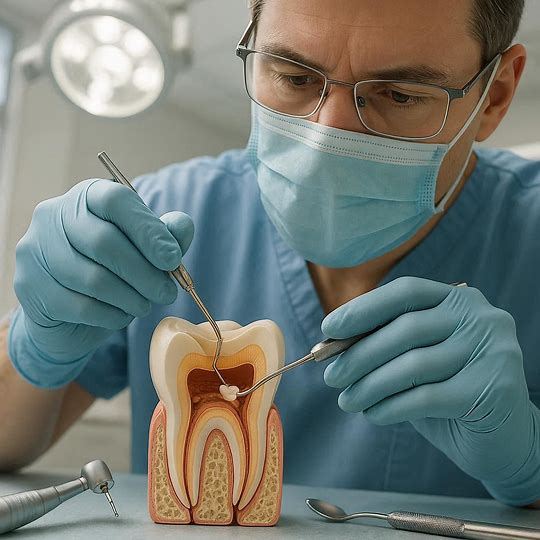
To understand why this is so special, you have to understand what a tooth is. A tooth isn’t just a hard, dead bone. It is a living structure. The center of the tooth contains the “pulp,” which is a bundle of living blood vessels, nerves, and connective tissue. This pulp is what keeps the tooth “alive” and allows it to sense temperature and heal from minor trauma.
In a traditional root canal, when that pulp gets infected or dies, we remove it entirely. The tooth becomes “non-vital.” It can still function, but it is technically dead and becomes more brittle over time.
Dental Code D3357 takes a different approach. Instead of removing all the pulp, the goal is to stimulate the remaining stem cells in the tooth root to create new, healthy pulp tissue. It aims to revitalize the tooth.
Important Note: D3357 is distinctly different from an “apexification” (Code D3351 or D3352). Apexification uses a material like MTA to create a hard barrier at the root tip to seal the tooth. Regeneration tries to regrow the living tissue itself.
Why is This Code Used?
Dentists and Endodontists (root canal specialists) use this code when they believe a tooth has the potential to heal itself. It is a minimally invasive approach to a serious problem, focusing on biology over synthetic materials.
When is D3357 Used? (Indications for the Procedure)
You won’t see Dental Code D3357 used for every toothache. It is reserved for very specific clinical situations. Because it relies on the body’s ability to regenerate, it is most effective in certain types of teeth and patients.
The Primary Candidate: Immature Permanent Teeth
The most common use for pulpal regeneration is in immature permanent teeth—typically in children and teenagers. Think of a tooth that has just recently erupted. Its root isn’t fully formed yet; the tip (the apex) is still wide open, often described as having a “blunderbuss” shape.
In a fully developed tooth, the root tip is tiny. In an immature tooth, it is wide. This wide opening is a gateway.
-
For traditional root canals: The wide-open apex makes it difficult to seal the tooth properly. It’s like trying to put a cork in the mouth of a swimming pool.
-
For regeneration: The wide opening provides a fantastic blood supply, bringing in stem cells and healing factors that can repopulate the canal.
The Diagnosis: Pulp Necrosis in a Young Tooth
The specific reason for the procedure is usually pulp necrosis (death of the pulp) resulting from:
-
Trauma: A hard hit to the mouth during sports or a fall can kill the blood supply to the tooth.
-
Deep Decay: A very large cavity that reaches the pulp can cause irreversible damage and infection.
In the past, a young patient with a dead front tooth from a soccer injury would face a complex apexification procedure. Now, with D3357, there is hope for saving not just the tooth structure, but its vitality.
The Procedure: How Pulpal Regeneration Works
If you are scheduled for a procedure using Dental Code D3357, knowing what to expect can significantly reduce anxiety. The process is unique because it usually happens over two visits.
Visit 1: The Disinfection Stage
This is arguably the most critical part of the entire process. The tooth is infected, but we need a sterile environment for healing to occur.
-
Access and Cleaning: The dentist will numb the area and drill a small opening in the top of the tooth to access the pulp chamber. Instead of removing all the tissue with files (as in a root canal), they will use a gentle irrigation technique to wash out the debris and bacteria.
-
The Magic Cocktail: They will place a special antibiotic paste inside the tooth. This paste is designed to sterilize the root canal system completely.
-
Temporary Seal: The tooth is sealed with a temporary filling. You will likely go home with this filling for a few weeks. This waiting period allows the antibiotics to do their work.
The Healing Phase (Between Visits)
This is the waiting game. The goal is to resolve all signs of infection. You shouldn’t have any pain, swelling, or tenderness.
Visit 2: The Regeneration and Sealing
Once the infection is gone, the actual regeneration begins.
-
Irrigation: The dentist will reopen the tooth and rinse out the antibiotic paste.
-
Creating a Blood Clot: This is the most innovative step. The dentist will use a small instrument to gently irritate the tissue just beyond the root tip (the periapical tissues). This causes a small amount of bleeding into the empty canal. This blood is rich with stem cells—the building blocks for new tissue.
-
Building the Scaffold: The canal fills with blood. This clot acts as a “scaffold” or a framework for the new tissue to grow into.
-
Sealing the Top: A biocompatible material (like MTA – Mineral Trioxide Aggregate) is carefully placed directly on top of the blood clot to seal it. Finally, a permanent filling or crown is placed to protect the tooth from fracture.
Over the following months and years, the hope is that the tooth’s walls will thicken and the root will continue to mature, a process you can actually see on follow-up x-rays.
Dental Code D3357 vs. Traditional Root Canal: A Head-to-Head Comparison
To truly appreciate what D3357 offers, it helps to see it side-by-side with the procedure it aims to replace or augment. The philosophy behind them is entirely different.
| Feature | Dental Code D3357 (Pulpal Regeneration) | Traditional Root Canal (e.g., D3310) |
|---|---|---|
| Goal | Revitalize the tooth; regrow living pulp tissue. | Remove the dead pulp; save the shell of the tooth. |
| Procedure | Disinfect, induce bleeding, seal over a blood clot. | Remove pulp, shape canals, fill with inert material (gutta-percha). |
| Tooth Outcome | Ideally, the tooth remains “vital” (alive). The root continues to develop. | The tooth is “non-vital” (dead). The root stops developing. |
| Strength | The tooth remains flexible and strong as it continues to mature. | The tooth becomes brittle and is more prone to fracture over time. |
| Primary Use | Immature permanent teeth with open root apices. | Mature teeth with fully formed roots. |
| Number of Visits | Typically two or more. | Usually one or two. |
As you can see, D3357 is the biological choice, while a traditional root canal is the mechanical choice. Neither is “wrong,” but regeneration is the clear winner when it comes to preserving long-term tooth vitality in young patients.
The Cost of Dental Code D3357: What to Expect Financially
Money is a practical concern. Dental procedures can be expensive, and because pulpal regeneration is a more specialized and newer technique, its cost can vary. It is impossible to give a single fixed price, but we can discuss the factors that influence it.
Factors Influencing the Price
-
Geographic Location: Dental fees in major metropolitan areas like New York or Los Angeles are typically higher than in rural areas.
-
Provider Type: An Endodontist (specialist) will charge more than a General Dentist for this procedure, due to their advanced training and specialized equipment.
-
Complexity: If the tooth has an active abscess or unusual anatomy, the procedure becomes more complex and may cost more.
-
Number of Visits: Because D3357 requires at least two visits, the cost reflects this additional chair time.
General Cost Range
While you should always get a specific quote from your dentist, you can expect the cost for D3357 to be in a similar range to, or slightly higher than, an apicoectomy or a complex root canal treatment.
-
Estimated Range: You might see fees ranging from $800 to $1,500 for the complete regenerative procedure. In some high-cost areas, or with a specialist, it could exceed $1,800.
Disclaimer: This is a market estimate. Actual costs depend on your specific provider and insurance contract.
Navigating Insurance for D3357
This is often the trickiest part. Dental insurance codes are standardized, but the way insurance companies apply those codes is not. Because D3357 (Pulpal Regeneration) is a relatively new code, insurance coverage can be inconsistent.
Is It Covered?
The answer is often: It depends on your plan.
Many insurance companies view D3357 as a surgical procedure. Here is how it typically shakes out:
-
Some plans cover it explicitly: If your plan is modern and comprehensive, it may list D3357 as a covered benefit, often under the “Major Restorative” or “Endodontics” section.
-
Some plans “downgrade” it: The insurance company might agree to pay for the treatment of the tooth, but only at the rate of a less expensive procedure, like an apexification (D3352). You would be responsible for the difference.
-
Some plans deny it as “experimental”: A small number of insurance carriers may still consider pulpal regeneration an experimental procedure, despite it being a recognized CDT code with extensive clinical research backing it. They may deny coverage entirely, requiring you to pay out-of-pocket.
How to Check Your Benefits
To avoid a surprise bill, be proactive.
-
Call Your Insurance Company: Ask the representative: “What is the coverage level for CDT code D3357, Pulpal Regeneration? Is it covered? If so, at what percentage? Does it apply to my deductible?”
-
Ask Your Dentist’s Office: The front desk staff deals with insurance every day. They can often do a “predetermination of benefits” for you. This involves sending the treatment plan to the insurance company before the work is done to get a written estimate of what they will pay.
Pro-Tip: Even if your insurance denies D3357 as “experimental,” you have the right to appeal. Ask your dentist for supporting literature or “peer-reviewed articles” that show the procedure’s success and acceptance in the dental community to submit with your appeal.
Potential Risks and Success Rates
No medical procedure is 100% guaranteed. Pulpal regeneration is a delicate biological process, and while success rates are promising, it is important to have realistic expectations.
What Does “Success” Look Like?
Success in pulpal regeneration is measured in three ways, often called the “triad of success”:
-
Resolution of Symptoms: The patient is pain-free, and there are no signs of infection (like an abscess).
-
Increased Root Wall Thickness: X-rays show that the dentin (the hard tissue) inside the root is getting thicker.
-
Continued Root Development: The root lengthens, and the tip (apex) closes naturally.
Possible Risks and Complications
-
Discoloration: One of the most common side effects, especially in front teeth, is that the tooth can darken or turn gray over time. This is often due to the materials used (like the antibiotics or MTA).
-
Lack of Regeneration: Sometimes, the body simply doesn’t respond. The infection might clear, but the tooth doesn’t grow thicker walls. In this case, the tooth is still saved (healthy and pain-free), but it didn’t achieve the full regenerative goal.
-
Re-infection: If the seal at the top of the tooth fails, bacteria can seep back in, causing a new infection.
Success Rates
Studies published in leading endodontic journals suggest that pulpal regeneration has a high success rate for resolving infection and achieving root maturation, often cited in the range of 80% to 95% for the primary goal of resolving the disease. However, achieving complete root development happens in a smaller percentage of cases.
The Long-Term Outlook: What Happens Years Later?
Choosing a procedure coded under D3357 is a long-term investment in the tooth’s health.
The Goal: A Stronger, Resilient Tooth
The ultimate benefit of a successful regeneration is a tooth that continues to behave like a natural, living tooth. Because the root walls thicken, the tooth is much more resistant to fractures compared to a devitalized tooth that has undergone a traditional root canal. For a young patient, this can mean keeping their natural tooth for a lifetime.
Follow-Up is Key
After the procedure, you will enter a long-term monitoring phase.
-
Yearly Checks: The dentist will take periodic x-rays (every 6-12 months for the first few years) to ensure the root is continuing to mature and no new issues are arising.
-
Monitoring Vitality: The dentist may also perform tests to see if the tooth is regaining sensation, a sign that nerves are growing back.
It is a commitment, but for the right candidate, the payoff—a living, natural tooth—is unmatched by any other treatment.
Frequently Asked Questions (FAQ)
Q: Is Dental Code D3357 painful?
A: The procedure itself is performed under local anesthesia, so you should not feel any pain during the visits. There might be some mild soreness or tenderness in the gums around the tooth for a day or two after the appointment, similar to what you might experience after a deep filling.
Q: How long does the D3357 procedure take per visit?
A: The first visit (disinfection) usually takes about 30 to 60 minutes. The second visit (regeneration and sealing) can take a similar amount of time, perhaps a bit longer depending on the complexity of placing the sealing material.
Q: Can Dental Code D3357 be used on a baby tooth?
A: It is very rarely used on primary (baby) teeth. The procedure is designed to stimulate continued root development, which is a concept that applies to permanent teeth. Baby teeth are already destined to fall out, so this complex treatment is typically reserved for saving permanent teeth.
Q: My dentist recommended an apexification (D3352) instead. What is the difference?
A: An apexification is an older, but still valid, technique. It places a barrier material (like MTA) at the open tip of the root to close it off. It stops the infection but does not encourage the root walls to thicken. Regeneration (D3357) aims to make the tooth stronger and more alive. Your dentist will choose the best option based on the specific state of your tooth and the latest clinical evidence.
Q: Will my tooth look different after this procedure?
A: There is a risk of the tooth darkening slightly over time. This is a known side effect, particularly with the materials used to create the blood clot seal. Your dentist will discuss this with you beforehand, especially if the tooth is in a highly visible area. There are internal bleaching options available later if aesthetics become a concern.
Conclusion
Dental Code D3357 represents an exciting frontier in modern dentistry. It moves beyond simply managing disease to actively harnessing the body’s natural healing abilities. By understanding that this code stands for pulpal regeneration, you recognize it as a procedure designed not just to save a tooth, but to revitalize it. While it is a specific treatment best suited for young, immature permanent teeth, its goal is profound: to allow a damaged tooth to live and grow strong again. Navigating the costs and insurance can be complex, but for the right candidate, the long-term benefit of a living, resilient tooth is an invaluable outcome.