Dental Code D3421: A Complete Guide to Bone Grafting Procedures
If you have been told by your dentist or oral surgeon that you need a bone graft, you have likely encountered the term Dental Code D3421. In the world of dentistry, these codes—known as Current Dental Terminology (CDT) codes—are the standardized language used to communicate specific procedures to insurance companies and to document patient records.
Dental Code D3421 is one of the most common codes used in oral surgery and periodontics. It specifically refers to a procedure involving the replacement of bone in the jaw. However, the world of dental coding can feel like a maze of numbers and jargon.
This guide is designed to walk you through everything you need to know about Dental Code D3421. We will break down what the procedure entails, why it is necessary, how it compares to other bone graft codes, and what you can expect regarding recovery and costs. Whether you are preparing for dental implants or dealing with bone loss due to periodontal disease, understanding this code will empower you to make informed decisions about your oral health.
What is Dental Code D3421?
At its core, Dental Code D3421 is defined as: “Bone graft in conjunction with a surgical implant placement – per site, in addition to D6010.”
Let’s break that down into plain English.
This code describes the procedure where a dentist or oral surgeon places bone grafting material into your jawbone at the exact same time that they place a dental implant. The graft is used to fill a void, build up ridge height, or add width around the implant fixture.
Breaking Down the Terminology
To fully understand D3421, it is helpful to look at the individual components of its definition:
-
Bone Graft: This refers to the act of transplanting bone tissue. In this context, it is synthetic or donated bone material used to encourage your body to grow new, strong bone.
-
In Conjunction with Surgical Implant Placement: This is the most critical part of the definition. It means the graft happens during the same surgery as the implant placement. The dentist places the implant screw into the bone, notices a gap or a deficiency, and then packs grafting material around it.
-
Per Site: This indicates that the code is charged for each individual surgical area or tooth location where the graft is performed.
-
In addition to D6010: D6010 is the primary code for “surgical placement of the implant body.” D3421 is an adjunct code. You cannot have D3421 without D6010. It is an “add-on” procedure.
Important Note: D3421 is specifically for grafts performed simultaneously with implant placement. If your dentist performs a bone graft and waits several months for it to heal before placing the implant, that would fall under a different category of codes.
Why Would You Need a D3421 Bone Graft?
The primary reason for needing a D3421 procedure is a lack of sufficient natural bone to fully support a dental implant. When a tooth is lost, the body no longer senses the need to maintain bone density in that area. This triggers a process called resorption, where the jawbone begins to shrink and deteriorate.
Here are the most common scenarios that lead to this procedure:
1. Socket Preservation After Extraction
When a tooth is pulled, the empty socket left behind is a hole in the bone. Sometimes, an implant can be placed immediately into this fresh socket. However, the socket is often slightly wider than the implant screw, leaving a small gap. A dentist will use D3421 to fill that gap with grafting material, preserving the bone width and height for the future implant.
2. Fenestration or Dehiscence Defects
Once the dentist drills the osteotomy (the hole for the implant), they may find that the implant thread is exposed on the side facing the lip or tongue.
-
Fenestration: A window-like hole in the bone exposing the implant.
-
Dehiscence: A crack or gap along the side of the implant.
In both cases, D3421 is used to cover the exposed threads with bone graft material.
3. Augmentation for Long-Term Stability
Implants need to be fully encased in bone to handle the force of chewing. If the bone is too thin, the implant could fail. By adding a graft at the time of surgery, the surgeon ensures that the implant is completely surrounded and supported, increasing the chances of long-term success.
The Procedure: What Happens During D3421?
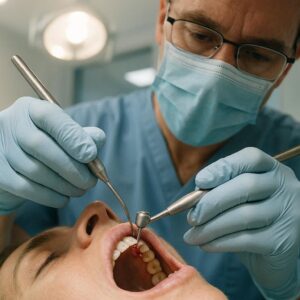
Understanding the physical process of a bone graft can help alleviate anxiety. While every surgeon has their own technique, the flow of a D3421 procedure is generally consistent.
Step 1: Anesthesia and Exposure
The procedure begins with local anesthesia to numb the area completely. For anxious patients, sedation options are often available. The surgeon then makes an incision in the gum tissue to expose the jawbone at the site of the missing tooth.
Step 2: Implant Placement (D6010)
The surgeon uses specialized drills to prepare the site and places the titanium implant post into the bone. This is the primary procedure.
Step 3: Assessment for Grafting
Once the implant is seated, the surgeon evaluates the site. They check for gaps between the implant and the socket walls or thin spots where the implant threads are visible. If there is a space larger than a certain threshold (usually 2mm), a graft is indicated.
Step 4: Grafting (D3421)
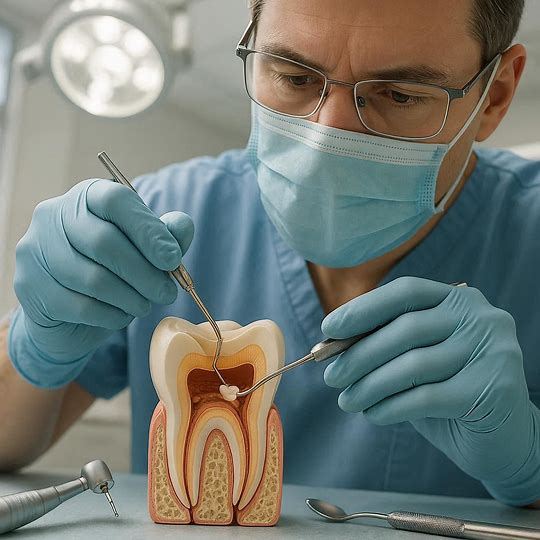
The surgeon selects the appropriate bone grafting material. This material is then gently packed into the voids around the implant. It is condensed to ensure there are no air pockets.
Step 5: Membrane Placement (Optional)
Sometimes, a collagen membrane is placed over the graft material. This acts as a barrier, protecting the graft particles and preventing fast-growing gum cells from invading the area before the slower-growing bone cells can form. If a membrane is used, it is often billed with a separate code (such as D4266 or D4267).
Step 6: Closure
The gum tissue is carefully stitched back into place, covering the graft and the implant. In many cases, the implant itself may have a healing cap protruding through the gum, or it may be completely buried under the gum to heal.
Reader Tip: Ask your surgeon whether the implant will be “exposed” or “buried” during the healing phase. This affects your post-op care.
Types of Bone Grafting Materials Used
Not all bone grafts are created equal. The material used for your D3421 procedure depends on the size of the defect, your surgeon’s preference, and your medical history. Here is a breakdown of the common types:
| Graft Type | Source | Pros | Cons |
|---|---|---|---|
| Autograft | Bone taken from another part of your own body (often the chin or hip). | The “Gold Standard.” Contains living bone cells. No risk of disease transmission. | Requires a second surgical site, increasing pain and recovery time. Limited supply. |
| Allograft | Donor bone from a human cadaver. Processed and sterilized. | No second surgery needed. Ample supply. Acts as a scaffold for your bone to grow into. | No living cells. Some patients have ethical or religious concerns. |
| Xenograft | Bone derived from animals, typically cows (bovine). | Excellent scaffold structure. Very slow resorption, maintaining volume well. High success rate. | No living cells. Strictly a scaffolding material. |
| Alloplast | Completely synthetic materials, such as calcium phosphate or bioactive glass. | No concerns about disease. Unlimited supply. No ethical issues. | Lacks biological factors found in natural bone. Healing can sometimes be slower. |
Most D3421 procedures utilize either Allograft or Xenograft materials due to their availability and the fact that they eliminate the need for a second surgical site.
D3421 vs. Other Bone Graft Codes: Avoiding Confusion
One of the biggest sources of confusion for patients (and even some insurance billing departments) is the difference between D3421 and other similar codes. They are not interchangeable. Using the table below, you can see how they differ:
| Code | Description | When is it used? |
|---|---|---|
| D3421 | Bone graft in conjunction with surgical implant placement – per site, in addition to D6010. | Graft done at the same time as implant placement to fill a defect around the implant. |
| D4263 | Bone replacement graft for ridge preservation – per site. | Graft done immediately after an extraction to preserve the socket, but before implant placement. (No implant placed yet). |
| D7953 | Bone replacement graft for ridge augmentation – per site. | A larger procedure to build up the jawbone (width or height) in an area where an implant will be placed later. Often called “block graft” or “major augmentation.” |
| D6104 | Bone graft at time of implant placement – per implant. | This is a newer code similar to D3421 but sometimes used for different grafting techniques. Check with your provider on which they use. |
Why this matters for your wallet: If your insurance covers implants, they usually have a “frequency” limitation. They might cover the graft (D3421), but if the wrong code is submitted (e.g., a ridge augmentation code instead of a simultaneous graft code), the claim might be denied for being “not a covered service” for that specific scenario.
Cost and Insurance Considerations for D3421
The cost of dentistry can be a significant barrier, so understanding the financial aspect of D3421 is crucial. Because D3421 is an adjunct code, it is rarely billed alone. You will be billed for the consultation, the implant placement (D6010), and the graft (D3421), and possibly other items like the abutment and crown later.
What Influences the Price?
The out-of-pocket cost for the D3421 procedure itself can vary widely based on:
-
Geographic Location: Costs in major metropolitan areas are typically higher than in rural areas.
-
Type of Material: Synthetic materials tend to be less expensive than processed human donor bone.
-
Practice Type: A periodontal specialist or oral surgeon may charge more than a general dentist due to their advanced training and expertise.
Average Cost Range
While prices fluctuate, you can generally expect the D3421 code to add $500 to $1,500 to your implant surgery bill. This is separate from the implant placement cost.
Navigating Insurance
Dental insurance can be tricky when it comes to implants and grafts.
-
Medical Necessity: Insurance companies look for “medical necessity.” If the graft is needed because of pathology (like a cyst) or severe trauma, they may be more likely to pay.
-
Annual Maximums: Most dental plans have low annual maximums ($1,500 – $2,000). If your implant costs $3,000 and the graft costs $1,000, you will likely hit your maximum and be responsible for the rest.
-
Waiting Periods: Many plans have waiting periods for major services like implants and grafts.
-
Alternative Benefit Plans: Some newer insurance plans are starting to offer better implant coverage, but it is still not universal.
Quote from the Field:
“Patients often ask me why the graft is so expensive. They see it as ‘just a little powder.’ I explain that it’s not the material cost that drives the price; it’s the surgical expertise required to place it, the biological understanding of wound healing, and the management of the site to ensure the implant survives for the next 20 years.” — Dr. Sarah Jenkins, DDS, MS, Periodontist.
Recovery and Healing: What to Expect
Healing from a D3421 bone graft is a process. Because the graft was placed at the same time as the implant, you are essentially healing from the implant surgery plus the graft.
Immediate Post-Op (Days 1-3)
-
Swelling: Expect swelling in the cheek and gum tissue. Apply ice packs for the first 24 hours to minimize this.
-
Bleeding: Some oozing is normal. Bite gently on gauze pads provided by your surgeon.
-
Diet: Stick to a soft food diet. Yogurt, smoothies, soup, and mashed potatoes are your best friends. Do not use a straw. The suction can dislodge the blood clot and damage the graft.
The Healing Phase (Weeks 1-8)
-
Tissue Healing: The gums will heal over the site within a few weeks.
-
Bone Healing: This is the slow part. The graft material acts as a scaffold. Over the next several months, your body’s own bone cells will slowly migrate into this scaffold, replacing it with your own living bone.
-
Activity: Avoid strenuous exercise for the first week to prevent bleeding and swelling.
Osseointegration (Months 3-6)
This is the most critical phase. The implant needs to fuse with the newly formed bone. The graft material you received (D3421) ensures that there is enough bone volume to successfully lock the implant in place. You will likely wait 3 to 6 months before the dentist will place the final crown on the implant.
Risks and Success Rates
Bone grafting in conjunction with implant placement (D3421) is a predictable and safe procedure with high success rates—often cited at 95% or higher in healthy patients.
However, like any surgical procedure, it carries potential risks:
-
Infection: Though rare, an infection can compromise the graft and the implant.
-
Graft Failure: The graft material may not integrate properly. This can happen if the site becomes infected or if there is excessive movement.
-
Wound Dehiscence: The gum tissue may open up, exposing the graft membrane or particles. If this happens, contact your dentist immediately. Often it can be managed with special rinses, but sometimes it requires a touch-up procedure.
-
Resorption: In rare cases, the body may resorb (break down) the graft material faster than it lays down new bone.
Frequently Asked Questions (FAQ)
Q: Is Dental Code D3421 painful?
A: The procedure itself is performed under anesthesia, so you will not feel pain during the surgery. Post-operatively, you can expect soreness and discomfort, similar to having a tooth extracted. This is usually well-managed with over-the-counter or prescription pain medication.
Q: How long does a D3421 bone graft last?
A: The graft material itself eventually dissolves or remodels. What lasts is the new bone that your body grows into that space. Once healed, that bone is your own and should last a lifetime, provided you maintain good oral hygiene.
Q: Can I eat normally after the graft?
A: Not immediately. You will need to stick to a soft food diet for at least a week or two. Hard, crunchy, or chewy foods can put pressure on the site and disrupt healing. Your dentist will give you specific dietary guidelines.
Q: Does insurance always cover D3421?
A: No. Coverage depends entirely on your specific plan. Many traditional dental insurance plans still classify implants and grafts as “major” or “elective” procedures with limited coverage. Always check with your insurance provider before treatment to understand your benefits.
Q: What happens if I don’t get the bone graft (D3421) when the dentist recommends it?
A: If the dentist recommends a graft due to a lack of bone around the implant, skipping it significantly increases the risk of implant failure. The implant may remain loose, or the exposed threads can lead to chronic inflammation and infection (peri-implantitis), eventually causing the implant to fall out.
Additional Resources
Understanding the terminology is the first step in taking control of your dental health. For further reading and to verify the official language of these codes, you can refer to the authoritative source:
-
The American Dental Association (ADA) – CDT Code Book: The ADA maintains the Code on Dental Procedures and Nomenclature. You can find more information about how these codes are structured on their official website.
-
Link to ADA CDT Codes Overview (Please note: This link leads to the ADA’s official page for the CDT code set, which is the definitive resource for dental coding.)
-
Conclusion
Dental Code D3421 represents a specific, yet vital, aspect of modern implant dentistry: the simultaneous bone graft. It is the solution for the common problem of insufficient bone volume at the time of implant placement. By filling voids and covering exposed threads, this procedure ensures the implant has the best possible foundation for long-term success. Understanding this code helps demystify the surgical process and prepares you for informed discussions with your dental provider regarding treatment plans and financial responsibilities.