Dental Code D3472: A Complete Guide to Endodontic Retreatment
If you have ever received a treatment plan from your dentist that looked like it was written in a secret code, you are not alone. Dental codes—those strange combinations of letters and numbers—are the standardized language of the dental world. They help your dentist communicate with your insurance company to ensure that the work performed on your teeth is properly documented and (hopefully) covered.
One code that often raises questions is D3472. It sounds clinical and a bit intimidating, but understanding it can actually help you make better decisions about your oral health. This guide is designed to walk you through everything you need to know about Dental Code D3472.
We’ll break down what it means, why you might need it, how it differs from other procedures, and what it means for your wallet. Let’s demystify this code together.
What is Dental Code D3472?
In the simplest terms, Dental Code D3472 refers to a specific procedure known as “Intentional Replantation.” This is a specialized dental surgery used as a last resort to save a tooth that has persistent infection or pain, usually after a root canal has failed.
The name essentially describes the process:
-
Intentional: The procedure is planned and deliberate.
-
Replantation: The tooth is taken out (extracted) and then put back into its socket.
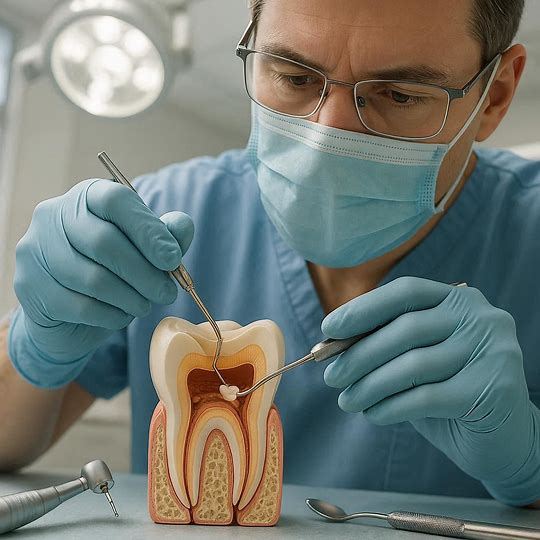
Think of it as a “remove, repair, and replace” strategy for a single tooth. Instead of removing a problematic tooth for good and replacing it with an implant or bridge, your dentist or an endodontist (a root canal specialist) will gently take the tooth out to work on it directly on a sterile table. Once the issue is fixed, the tooth is placed back into its original socket and stabilized.
Important Note: This is not the same as having a tooth knocked out in an accident and re-implanting it. Intentional replantation is a controlled, surgical procedure performed under local anesthesia.
The Official CDT Description
To be precise, let’s look at how the American Dental Association (ADA) defines this code in the Current Dental Terminology (CDT) manual. The official descriptor for D3472 is:
D3472: Intentional Replantation (including splinting)
This short line packs a lot of information. The “including splinting” part is crucial. It acknowledges that after the tooth is placed back into the socket, it will need some form of support (a splint) to hold it steady while the ligaments and bone begin to heal and reattach.
Why Would Someone Need an Intentional Replantation?
This procedure is not the first line of defense. It is typically considered a “heroic” measure—an option when more conventional treatments have failed or are impossible. Here are the most common scenarios where a dentist might recommend D3472:
1. Failed Root Canal Treatment
This is the most frequent reason. A standard root canal cleans the canals from the top of the tooth. Sometimes, the anatomy of the tooth is so complex (with tiny, curved, or extra canals) that the initial treatment couldn’t reach all the infection. If a non-surgical root canal retreatment isn’t possible or has also failed, intentional replantation offers a way to physically see and seal the tip of the root from the outside.
2. Blocked or Calcified Canals
As we age, the root canals in our teeth can become calcified (filled with hard deposits), making them impossible to navigate with standard root canal files. If a dentist can’t get to the bottom of the infection from the top, taking the tooth out to work on it from the bottom (the apex) becomes the only viable option.
3. Proximity to Vital Structures
In some cases, the tip of a tooth’s root is located very close to important anatomical structures, like the inferior alveolar nerve (the nerve that gives feeling to your lower lip and chin) or a major sinus cavity. Performing a traditional apicoectomy (a surgery where they cut the tip of the root through the gum) might be too risky. Taking the tooth out allows the doctor to work on it safely, away from these sensitive areas.
4. Perforation Repair
Sometimes, an instrument or the decay process can create a small hole (perforation) in the side of the root. Repairing this from the inside of the tooth can be very difficult. With intentional replantation, the perforation can be accessed directly and sealed with specialized materials.
The Intentional Replantation Procedure: A Step-by-Step Look
Understanding the steps involved can help ease any anxiety. Here’s a realistic walkthrough of what happens during a D3472 procedure.
Step 1: Examination and Planning
Before anything happens, your dentist or endodontist will take a 3D image (CBCT scan) of the tooth. This is essential for understanding the root’s shape, the location of the infection, and its relationship to nearby nerves and teeth.
Step 2: The “Intentional” Extraction
You will receive local anesthesia to numb the area completely. The dentist will then use specialized, gentle instruments to loosen the tooth. The goal is to remove the tooth atraumatically—meaning without damaging the root surface or the surrounding bone. The less trauma, the better the chances of healing.
Step 3: The Extracorporeal Repair (The “On-the-Table” Work)
Once the tooth is out, time is of the essence. The dentist immediately wraps the root in a solution to keep the cells on the root surface (the periodontal ligament cells) alive. Under a high-powered microscope, they will:
-
Inspect the root tip for cracks or extra canals.
-
Remove the infected tip of the root (about 2-3 mm).
-
Prepare a small cavity in the end of the root and fill it with a biocompatible material to seal it.
Step 4: Replantation and Splinting
The tooth is carefully placed back into its socket. The dentist will check the bite to ensure it’s not hitting too hard. To stabilize the tooth, they will apply a splint. This is often a thin, flexible wire or a composite material that bonds the treated tooth to the healthy teeth next to it, keeping it perfectly still.
Step 5: Post-Operative Care and Monitoring
You will be sent home with specific instructions, which usually include a soft-food diet and careful oral hygiene. The splint is typically removed after one to two weeks. Follow-up appointments and X-rays are necessary to monitor the healing of the bone and ligament over the following months and years.
| Procedure Step | What Happens | Why It Matters |
|---|---|---|
| 1. Evaluation | CBCT scan and clinical exam. | Creates a 3D map to ensure safety and plan the surgery. |
| 2. Atraumatic Extraction | Gentle removal of the tooth. | Preserves the root surface cells, which are vital for reattachment. |
| 3. Extracorporeal Repair | Root-end resection and filling outside the mouth. | Allows the dentist to directly visualize and seal the source of infection. |
| 4. Replantation & Splinting | Tooth is replaced and stabilized with a splint. | Holds the tooth in the ideal position for healing. |
| 5. Healing & Follow-up | Splint removal and long-term monitoring. | Ensures the bone and gum heal properly and the tooth remains functional. |
Comparing D3472 to Other Common Codes
It’s easy to confuse intentional replantation with other “last resort” procedures. Here’s a quick comparison to clarify the differences.
| Dental Code | Procedure Name | Key Difference |
|---|---|---|
| D3472 | Intentional Replantation | The tooth is completely removed from the mouth, treated, and then put back. |
| D3410 | Apicoectomy | An apicoectomy is surgery on the root tip through the gum, without removing the tooth. A small incision is made in the gum to access the bone and root tip. |
| D3346 | Retreatment of Root Canal | Retreatment is a non-surgical procedure. The dentist goes back through the crown of the tooth (the top) to remove the old filling material and clean the canals again. |
| D7140 / D7210 | Extraction | A simple or surgical extraction involves removing the tooth, but it is not put back in. The space is either left to heal or replaced with a bridge or implant later. |
Success Rates and Prognosis
You might be wondering, “Does this actually work?” The answer is yes, with reasonable expectations.
Studies on intentional replantation show success rates ranging from 75% to 90% over a period of several years. Success is defined as the tooth being firm (not loose), free of pain, and showing no signs of active infection on X-rays.
The success depends heavily on several factors:
-
The Skill of the Clinician: This is a highly technique-sensitive procedure. Experience matters greatly.
-
Minimizing Extra-Oral Time: The less time the tooth spends outside the mouth (ideally under 10-15 minutes), the better the chances the ligament cells will survive.
-
Absence of Root Fractures: If the tooth has a vertical crack, the prognosis is poor, and replantation is unlikely to work.
-
Patient Cooperation: Following post-op instructions, like not chewing on the tooth, is critical for healing.
The Financial Aspect: Cost and Insurance Coverage for D3472
Let’s talk about money. Dental procedures can be expensive, and D3472 is no exception because it combines surgical extraction, microscopic treatment, and replantation.
What is the typical cost?
The cost for intentional replantation can vary widely based on your location, the complexity of the case, and the specialist performing it. Generally, you can expect the fee to range from $1,200 to $2,500 or more.
This fee typically covers:
-
The surgical extraction and replantation.
-
The root-end resection and filling under a microscope.
-
The placement and removal of the splint.
-
Follow-up visits.
How does insurance handle D3472?
This is where it gets a little complicated. Insurance coverage for D3472 can be inconsistent because it is a less common procedure.
-
It may be covered as a surgical procedure: Most dental insurance plans have a category for “Surgery” or “Endodontics.” D3472 often falls under this umbrella.
-
Coverage percentage: If your plan covers endodontic surgery, it might pay a percentage (often 50% to 80%) of the allowed amount, after you meet your deductible.
-
Pre-authorization is a must: Before scheduling this procedure, ask your dentist’s office to send a pre-treatment estimate to your insurance company. This will tell you exactly how much they will pay and how much you will be responsible for.
-
The “Alternative Benefit” clause: Sometimes, an insurance company may view this as a heroic effort and only pay the benefit equivalent to a standard extraction, as that is the less expensive, more common alternative. Your dentist can often appeal this by providing the clinical justification and the CBCT scan results.
A Note from Your Dentist’s Office: Don’t be shy about asking for a detailed breakdown of the costs. A reputable office will be happy to explain the fees and help you navigate your insurance benefits.
Advantages and Disadvantages of Choosing D3472
Like any medical procedure, intentional replantation has its pros and cons. Weighing these carefully is an important part of your decision-making process.
The Pros (Why choose this?)
-
Preserves Your Natural Tooth: This is the single biggest advantage. Keeping your natural tooth maintains your natural bite, prevents the shifting of adjacent teeth, and avoids the need for a dental implant or bridge.
-
Cost-Effective in the Long Run: While the upfront cost can be high, it is often comparable to or less than an implant with a crown. Plus, you get to keep your own tooth.
-
Avoids Complex Surgery: In some cases, it bypasses the risks associated with a traditional apicoectomy that might be near a nerve or sinus.
-
Direct Visualization: The dentist can actually see the root tip and the problem, rather than working blindly through the gum.
The Cons (The risks and drawbacks)
-
It’s a Surgery: It is an invasive procedure involving an extraction, which comes with risks of pain, swelling, and infection (though these are manageable).
-
Uncertain Longevity: There is no guarantee it will work forever. The tooth could potentially fail months or years later.
-
Risk of Root Fracture: The manipulation of the tooth, though gentle, carries a small risk of damaging the root.
-
Tooth Loss if it Fails: If the replantation is unsuccessful, the tooth will need to be extracted, and you will have lost both the tooth and the investment in the procedure.
Frequently Asked Questions (FAQ)
Here are some common questions patients have about Dental Code D3472.
Q: Is intentional replantation painful?
A: You will be under local anesthesia during the procedure, so you shouldn’t feel any pain, just pressure. After the anesthesia wears off, you can expect some discomfort, swelling, and tenderness, similar to a surgical extraction. Your dentist will recommend over-the-counter or prescription pain relievers to manage this.
Q: How long does the tooth need to be splinted?
A: The splint is typically worn for a short period, usually between 7 and 14 days. This is enough time for the initial healing of the periodontal ligament fibers to begin stabilizing the tooth.
Q: Can any dentist perform D3472?
A: While a general dentist can perform this, it is most often done by an endodontist. Endodontists are specialists in tooth pain and root canal treatments. They have advanced training and use high-powered microscopes, which are essential for the delicate work involved in intentional replantation.
Q: What happens if the replantation fails?
A: If the tooth becomes infected again or fails to reattach, the only remaining option is usually extraction. At that point, you and your dentist would discuss tooth replacement options, such as a dental implant, a bridge, or a partial denture.
Q: How long does the entire process take?
A: The actual surgical appointment usually takes about 60 to 90 minutes. The healing and monitoring phase, however, lasts for several months to ensure the tooth is integrating properly.
Additional Resources
For further reading and to ensure you have the most current information, here are some valuable resources:
-
American Association of Endodontists (AAE): www.aae.org
The AAE website is an excellent resource for finding board-certified endodontists and patient-focused information on saving teeth. -
American Dental Association (ADA): www.ada.org
The ADA provides the official CDT codes and general information on dental procedures and oral health.
Conclusion
Dental Code D3472 represents a fascinating and advanced procedure in modern dentistry: intentional replantation. It is a testament to how far we’ve come in our ability to save natural teeth, even in seemingly hopeless situations. While it is a complex surgical process reserved for specific cases of failed root canals or anatomical challenges, it offers a valuable last chance to preserve your tooth and avoid extraction. Understanding this code empowers you to have an informed conversation with your dental specialist about all the possible options for your oral health.