Dental Code D3503: The Complete Guide to Tooth Fragment Reattachment
We have all been there. You are enjoying a meal, or perhaps you take a minor spill, and suddenly you feel that horrible, unmistakable sensation—a piece of your tooth has broken off. Your heart sinks. You might even start rummaging through your food to find the missing piece, hoping against hope that it can be saved.
The good news is that in many cases, it can be. Thanks to modern dentistry and specific billing codes like Dental Code D3503, your dentist can often reattach that broken piece, restoring your smile in a single visit. But what exactly is this procedure? How much does it cost? And will your insurance cover it?
If you are looking for clear, honest, and comprehensive answers, you have come to the right place. This guide is designed to walk you through everything you need to know about Dental Code D3503. Whether you are a patient dealing with a chipped tooth or a professional brushing up on billing nuances, consider this your go-to resource.
Let’s dive in and take the mystery out of this fascinating dental procedure.
What is Dental Code D3503? A Simple Breakdown
In the world of dentistry, codes are the universal language that dentists, insurance companies, and patients use to communicate about specific procedures. Think of them as a recipe book. If you tell someone you want to bake a “chocolate cake,” they have a general idea. But if you give them the specific recipe name and number, they know exactly what ingredients and steps are involved.
Dental codes work the same way.
Dental Code D3503 falls under the category of restorative procedures. Its official, full description is: “Reattachment of tooth fragment (excluding foreign object).”
Let’s break that down into plain English. This code is used when a piece of a patient’s natural tooth breaks off—usually due to an injury, such as a fall, a sports impact, or biting down on something unexpectedly hard—and the dentist is able to literally glue that original piece back into place.
This is different from fixing a chip with a white filling (bonding). In this case, the dentist is using your own enamel, your own tooth structure, to rebuild the tooth. It is the ultimate form of recycling!
The “Excluding Foreign Object” Clarification
You might notice the note in the official description: “(excluding foreign object).” This is an important distinction. This code is strictly for reattaching a piece of the patient’s own tooth. If a dentist were to cement something that is not part of the body back onto a tooth—like a jewel, a decorative charm, or a prosthetic fragment—that would fall under a different code entirely.
When is D3503 Used? Real-Life Scenarios
So, in what situations might a dentist actually use your tooth fragment to perform a repair? While it might sound a bit like a scene from a science fiction movie, it is a surprisingly common and effective procedure in the right circumstances.
The success of D3503 hinges almost entirely on the condition of the broken fragment and the remaining tooth. Here are the most common scenarios where this code comes into play:
-
Accidental Falls: Tripping and hitting your mouth on a coffee table or the pavement is a classic cause. If the broken piece is recovered and is clean, it is a prime candidate for reattachment.
-
Sports Injuries: Whether it is a rogue elbow during a basketball game or a hockey puck finding its way past your guard, sports are a leading cause of dental fractures.
-
Biting Accidents: We have all encountered unexpectedly hard food. An unpopped popcorn kernel, a cherry pit hiding in a smoothie, or a forgotten olive pit can easily cause a tooth to fracture.
-
Minor Trauma: Things like accidentally hitting your mouth with a glass bottle while drinking or a child bumping their mouth on a piece of playground equipment.
A Crucial Note for Patients:
If you break a tooth, time is of the essence. If you can find the broken piece, here is what you need to do:
Handle with Care: Pick it up by the edge, not the fractured surface. Avoid touching it any more than necessary.
Keep it Clean: Gently rinse it with water to remove any dirt or debris. Do not scrub it or use soap.
Keep it Moist: The tooth fragment needs to stay hydrated. The best way to do this is to place it in a container of milk, saline solution, or even your own saliva. If you have neither, you can wrap it in a wet paper towel. Do not let it dry out.
See a Dentist Immediately: Call your dentist right away. The sooner you get there, the higher the chance of a successful reattachment.
When Reattachment Isn’t the Best Option
It is also important to know when D3503 is not the right choice. A dentist will usually opt for a different restorative procedure if:
-
The fragment is lost or crushed. You can’t reattach what you don’t have.
-
The fragment is contaminated or dirty. While it can be cleaned, if it has been sitting in dirt for hours, the risk of complications rises.
-
The fracture extends below the gum line. This makes the repair much more complex and often requires a different approach.
-
The tooth pulp is exposed and damaged. If the nerve of the tooth is hanging out, you will likely need a root canal before any restoration, which changes the treatment plan.
The Step-by-Step Procedure: What Happens at the Dentist
Knowing what to expect can ease a lot of anxiety. If your dentist suggests using D3503, here is a friendly, step-by-step walkthrough of the procedure. It is usually quite quick, often taking less than an hour.
Step 1: Examination and Assessment
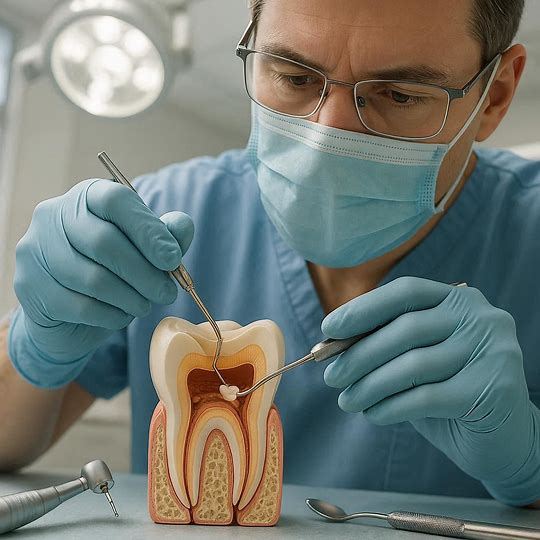
First, your dentist will examine the tooth and the broken fragment. They will likely take an X-ray to check the health of the tooth’s root and to ensure there are no other hidden fractures. They will also assess the broken piece to make sure it is a good fit.
Step 2: Fragment Preparation
While you wait (probably watching a sports channel on the ceiling-mounted TV), the dental assistant or dentist will take your tooth fragment and prepare it for its big comeback. This involves:
-
Cleaning and Sterilizing: The fragment is thoroughly cleaned to remove any bacteria or debris.
-
Acid Etching: A special gel is applied to the broken edge of the fragment. This creates microscopic pores in the enamel, which allows the bonding agent to form a much stronger grip. Think of it like sanding wood before painting—it gives the surface some “tooth” for the paint to hold onto.
Step 3: Tooth Preparation
While the fragment is being prepped, the dentist will do the same for the tooth in your mouth.
-
Cleaning the Site: The broken edge of the tooth in your mouth is carefully cleaned and isolated to keep it dry.
-
Acid Etching: Just like with the fragment, the dentist will apply the etching gel to the broken edge of your tooth to create a strong bonding surface.
Step 4: Bonding and Reattachment
This is the magic moment.
-
Adhesive Application: A thin layer of dental bonding agent (a type of liquid resin) is painted onto both the tooth and the fragment.
-
Positioning: The dentist will carefully place the fragment back onto the tooth, fitting it like a puzzle piece. It must be perfectly aligned to feel normal and look natural.
-
Curing: Once the piece is in the perfect position, the dentist will shine a special high-intensity light on it. This light hardens the bonding material in just a few seconds, locking the fragment in place.
Step 5: Finishing Touches
With the fragment now securely attached, the dentist will do some final polishing.
-
Smoothing the Seam: They will use fine tools and polishers to smooth out the seam where the fragment meets the tooth. The goal is to make it feel smooth to your tongue and look invisible to the naked eye.
-
Bite Check: Finally, they will check your bite to ensure the reattached piece isn’t hitting first and causing uneven pressure. If it is, they will make tiny adjustments until your bite feels normal and comfortable.
Dental Code D3503 vs. Other Restorative Codes
One of the most common points of confusion for patients is the difference between reattaching a fragment and simply rebuilding the tooth with a white filling. They are fundamentally different procedures, both in execution and in billing.
To help clarify, here is a simple comparison table.
| Feature | Dental Code D3503 (Reattachment) | Dental Code D2330-D2394 (Composite Bonding/Filling) |
|---|---|---|
| Material Used | The patient’s own natural tooth fragment. | A synthetic resin (composite) material. |
| Aesthetic Match | Perfect. It is your original enamel, so it will match the color, texture, and translucency of the rest of your tooth exactly. | Very good, but it requires artistic skill from the dentist to match the shade and opacity of your surrounding teeth. |
| Strength & Wear | The original enamel is incredibly strong and wears at the same rate as the rest of your teeth. | Composite is durable but may not be as strong as natural enamel and can stain or wear slightly differently over time. |
| Procedure Time | Usually faster, as the shape of the restoration (the fragment) is already perfect. | Can take longer, as the dentist must build the tooth up layer by layer and sculpt it to the correct shape. |
| Cost | Generally less expensive than a composite filling, as it uses less material and often less chair time. | Moderately priced, but cost varies based on the size and complexity of the restoration. |
| Long-Term Outlook | The bond line is the weakest point. If it fails, it usually does so cleanly, and the fragment may be able to be reattached again. | The entire restoration may chip or wear over time, requiring a full repair or replacement. |
In short: D3503 is nature’s restoration. Composite bonding is the artist’s recreation.
Cost and Insurance Considerations for D3503
Let’s talk money. Dental procedures can be expensive, and it is smart to be prepared. The cost for a procedure using D3503 can vary depending on where you live, the dentist’s experience, and the complexity of the break.
What is the Typical Cost?
Because the procedure is often quicker and uses fewer materials than a traditional filling, it can be a very cost-effective solution. You can generally expect the out-of-pocket cost for a D3503 procedure to range from $150 to $350.
This is significantly less than the cost of a more complex composite bonding case or a porcelain veneer, which can easily run into the thousands.
Will My Insurance Cover It?
This is where things get a little nuanced. Dental insurance is designed to cover procedures that are necessary for dental health.
-
Medical Necessity: Most insurance plans will consider D3503 a covered benefit because it is a restorative procedure needed to repair a broken tooth. It restores function and protects the tooth from further damage.
-
Classification: It typically falls under “Basic Restorative” care. Most dental insurance plans cover basic restorative procedures at a certain percentage—often 70% to 80%—after you have met your annual deductible.
-
Your Responsibility: This means if the procedure costs $250 and your plan covers basic services at 80%, the insurance would pay $200, leaving you responsible for the remaining $50 (plus your deductible, if it hasn’t been met yet).
A Word of Caution:
Always check with your insurance provider before the procedure. Ask them specifically how they cover “D3503 – reattachment of tooth fragment.” Also, ask if there are any waiting periods or frequency limitations. It is always better to know exactly what your financial responsibility will be beforehand.
The Pros and Cons of Choosing Reattachment
Deciding on the best treatment for a broken tooth is a conversation between you and your dentist. To help you have a more informed discussion, here is a balanced look at the advantages and potential disadvantages of opting for reattachment.
Advantages
-
Perfect Aesthetics: You cannot beat the look of your own natural enamel. It has the exact color, shine, and subtle variations that no composite resin can perfectly replicate.
-
Preservation of Tooth Structure: This procedure is minimally invasive. It doesn’t require drilling away healthy tooth structure to create a “retentive” shape for a filling. You are simply bonding the broken piece back on.
-
Natural Feel: Because it is your own enamel, it will feel exactly like the rest of your teeth to your tongue. There is no adjustment period to a new, foreign material.
-
Cost-Effective: As noted, it is often one of the most affordable ways to restore a front tooth.
-
Speed: In most cases, it can be completed in a single, relatively short appointment.
Disadvantages and Risks
-
The Bond Line is the Weak Point: The reattached fragment is just as strong as it ever was, but the joint where it meets the tooth is the weakest area. While strong, it is not indestructible.
-
Potential for Re-fracture: If you put significant pressure on that bond line (by biting something hard or experiencing another impact), it could break again. The good news is that it often breaks cleanly, and the fragment can sometimes be reattached again.
-
Visibility of the Crack: Depending on the nature of the break, the crack line might be slightly visible, even after polishing. It will be smooth, but a very fine line may remain.
-
Not Suitable for All Breaks: As discussed, if the fragment is lost or the break is complex, this option is off the table.
Long-Term Care and Longevity
So, you have had your tooth successfully reattached. How long will it last? With proper care, a reattached tooth fragment can last for many years. There are, of course, stories of them lasting a lifetime, and stories of them popping off again within a few months. The longevity depends heavily on you.
Think of it like a fine piece of clothing that has been expertly repaired. You wouldn’t treat it the same way you treat a sturdy pair of work jeans. Here is how to care for your “repaired” tooth:
-
Be Mindful of What You Bite: Avoid using the repaired tooth for tasks it wasn’t designed for. Do not bite your fingernails, chew on pens or pencils, or tear open packaging with your teeth.
-
Go Easy on Hard Foods: Be cautious with very hard or sticky foods. Think ice, hard candies, popcorn kernels, and chewy caramels or taffy. It is better to be safe than sorry.
-
Maintain Excellent Oral Hygiene: This is non-negotiable. Brush gently but thoroughly twice a day and floss daily. The edge where the fragment attaches is a potential plaque trap. Keeping it clean prevents decay around the repair, which is the most common cause of failure.
-
Wear a Nightguard if You Grind: If you know you grind your teeth at night (bruxism), talk to your dentist about getting a nightguard. The forces from grinding can be immense and can put a lot of stress on the bonded fragment.
-
Wear a Mouthguard for Sports: This should go without saying. If you play contact sports, a custom-fitted mouthguard is the best investment you can make to protect your smile, including your repaired tooth.
Frequently Asked Questions (FAQ)
We have covered a lot of ground. Here are answers to some of the most common questions people have about Dental Code D3503.
Q: What happens if I can’t find the broken piece of my tooth?
A: If the fragment is lost, your dentist cannot use D3503. They will likely discuss other restorative options with you, such as dental bonding using composite resin (a tooth-colored filling) or, for larger breaks, a veneer or crown.
Q: Is the reattachment procedure painful?
A: Generally, no. The procedure is usually painless. Because the bonding is only to the enamel surface, anesthesia is often not required. However, if the tooth is sensitive or the break is close to the nerve, your dentist may use a local anesthetic to numb the area and keep you comfortable.
Q: How long does the bond last?
A: With excellent care, the bond can last for many years—sometimes five, ten, or even more. However, it is not considered a permanent restoration and may eventually need to be repaired or replaced. Avoiding bad habits like nail-biting is key to its longevity.
Q: Will the reattached piece look exactly like my other teeth?
A: Yes! Because it is your actual tooth enamel, it will have the exact same color, translucency, and natural luster as the rest of your tooth. This is the single biggest advantage of this procedure.
Q: Can the same piece be reattached if it breaks off again?
A: Possibly. If the bond fails cleanly and the fragment itself is not damaged, the dentist can often clean both surfaces and re-bond it, just like the first time. This is another advantage over composite bonding, which would need to be completely redone.
Q: Can I eat normally after the procedure?
A: Your dentist will give you specific instructions. Usually, they advise you to avoid chewing on that tooth for the first 24 hours to allow the bond to reach its maximum strength. After that, you can slowly return to normal eating, but you should still be cautious with very hard foods.
Conclusion
Discovering you have chipped or broken a tooth can be a stressful experience. However, advancements in dental technology, and specifically procedures like the one identified by Dental Code D3503, offer a remarkable solution. By reattaching your own natural tooth fragment, your dentist can restore your smile in a way that is aesthetically perfect, minimally invasive, and often more affordable than other options.
While the long-term success of the repair depends on careful habits and good oral hygiene, the ability to literally put your smile back together is a fascinating and highly effective part of modern dentistry. If you ever find yourself in the unfortunate position of holding a piece of your tooth in your hand, remember this guide: keep it safe, keep it moist, and see your dentist immediately. There is a very good chance they can work their magic and make you whole again.
Additional Resource
For more official information on dental procedures and terminology, you can visit the American Dental Association (ADA) website. They are the authoritative source for the CDT (Current Dental Terminology) codes. Link to ADA website