Decoding Your Dental Bill: A Patient’s Guide to the ADA Code for Lab Fee
Have you ever stood at the front desk of your dentist’s office, holding a treatment plan, and felt like you were trying to read a foreign language? You are not alone. Between the clinical terms and the columns of numbers, it is easy to feel overwhelmed. One of the most common points of confusion for patients is a specific line item on that estimate: the lab fee.
You might see it listed as an “ADA Code” followed by a series of numbers. But what does that actually mean? Why is it separate from the procedure? And most importantly, who is responsible for paying it?
Understanding your dental benefits is a partnership between you and your dental team. In this guide, we are going to pull back the curtain on that specific part of your treatment plan. We’ll explore what the ADA code for lab fee represents, why it appears on your bill, and how it affects your final costs.
Think of this as your friendly, straightforward roadmap to navigating one of the trickiest parts of dental insurance. By the time you finish reading, you will feel more confident asking the right questions and understanding the answers.
What is an ADA Code, Anyway?
Before we dive into the specifics of lab fees, it helps to understand the system behind those five-digit numbers. The American Dental Association (ADA) manages a standardized system called the Code on Dental Procedures and Nomenclature. In plain English? It is the common language that dentists and insurance companies use to describe exactly what work is being done.
Every dental procedure, from a simple cleaning to a complex crown, has a specific code. This system ensures that when a dentist in California performs a root canal and sends a claim to an insurance company in New York, everyone is on the same page about what was done.
These codes are the foundation of your treatment plan and your insurance claim. They translate the dentist’s clinical work into a language that the billing department and your insurance carrier can understand.
The Mystery Line: Understanding Lab Fees
So, where does the lab fee fit into all of this? To understand that, you have to understand the journey of a dental restoration.
Let’s use a crown as an example.
-
The Preparation: Your dentist numbs the area and reshapes your tooth so it can accept a crown.
-
The Impression: The dentist takes a mold (impression) of your prepared tooth and the surrounding teeth. This ensures the final crown will fit perfectly with your bite.
-
The Temporary: A temporary crown is placed to protect your tooth while the permanent one is being made.
-
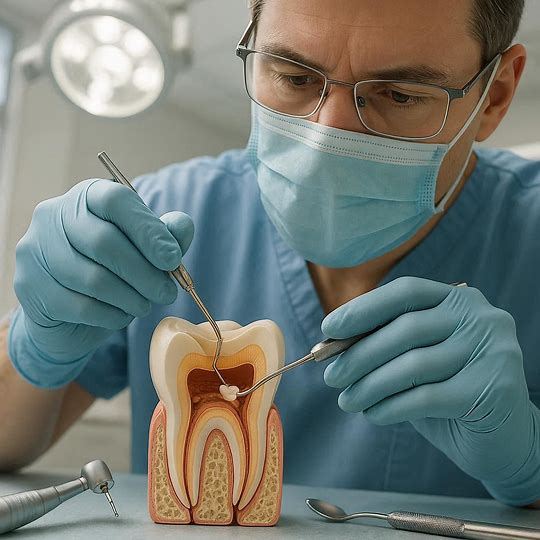
The Lab Work: The impression is sent to a dental laboratory. Here, skilled technicians, who are not dentists, work meticulously to craft your permanent crown out of porcelain, ceramic, gold, or a combination of materials.
-
The Delivery: The lab sends the finished crown back to the dentist’s office. At your second appointment, the dentist removes the temporary and cements the permanent crown into place.
The “lab fee” is the charge for step number four. It is the cost of the materials and the skilled labor that happens outside the dental office. The dentist pays this fee directly to the laboratory. When you see an ADA code for a lab fee on your bill, it represents the dentist passing that external cost along to you or your insurance.
Why Isn’t It Just Part of the Crown Cost?
This is the million-dollar question, and the answer lies in how insurance plans are structured.
Think of it like building a custom piece of furniture. You might pay for the lumber and the hardware (materials), and you pay the carpenter for their time and expertise (labor). A dental crown is similar.
-
The “Crown” procedure code usually covers the dentist’s work: the numbing, the tooth preparation, taking the impression, placing the temporary, and cementing the final crown. This is the “in-office” labor.
-
The “Lab Fee” code covers the external specialist’s work: the technician’s time and the materials used to physically create the crown.
Insurance companies often separate these costs to apply different coverage rules. For example, your plan might cover 50% of the “crown” procedure but have a different allowance or a separate deductible for the lab portion.
The Specific ADA Code for Lab Fees
There isn’t just one universal ADA code for a lab fee. The specific code depends entirely on what the lab is creating. However, they are typically found under the “Laboratory Procedures” section of the CDT (Current Dental Terminology) code set.
To make it practical, let’s look at a table of common lab procedures and their associated codes. This will help you decipher your next treatment plan.
| Procedure | Typical ADA Code | What This Represents |
|---|---|---|
| Porcelain/Ceramic Crown | D2740 | The lab cost for fabricating a crown that is all porcelain or ceramic. This is one of the most common lab fees a patient will see. |
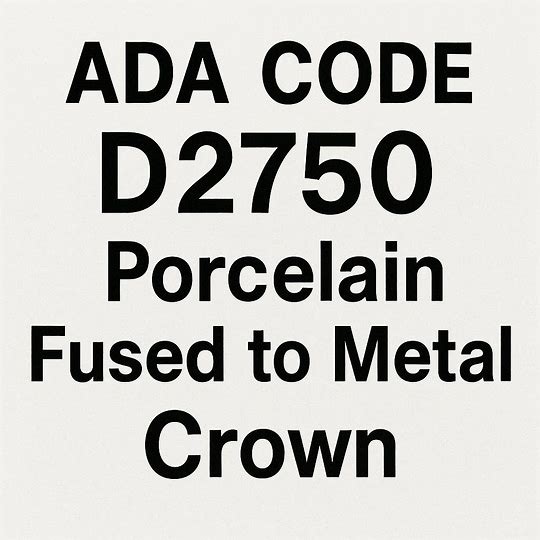
| Porcelain Fused to Metal Crown | D2750 | The lab fee for a crown that has a metal base covered with a layer of tooth-colored porcelain. |
| Full Cast Metal Crown | D2760 | The lab cost for a crown made entirely of a metal alloy, like gold or a base metal. |
| Complete Denture (Maxillary) | D5110 | The lab fee for fabricating a full upper denture. |
| Complete Denture (Mandibular) | D5120 | The lab fee for fabricating a full lower denture. |
| Removable Partial Denture | D5211- D5214 | Lab fees for a partial denture, which can be made with a metal or acrylic framework. |
| Porcelain Veneer | D2960 | The lab cost for creating custom veneers. |
| Core Buildup | D2950 | This is a lab fee for creating a foundation on a tooth that has lost a lot of its structure, necessary before placing a crown. |
| Diagnostic Casts | D0470 | The fee for pouring up study models. While sometimes done in-house, they are often sent to a lab. |
Important Note: This is not an exhaustive list, but it covers the heavy hitters. If you see a code starting with “D” followed by four numbers, you can always ask your dental office what it means.
Reading Your Treatment Plan: A Practical Guide
Now that you know what the ADA code for a lab fee looks like, let’s look at how it appears on a typical treatment plan. A well-organized estimate is your best friend in understanding costs.
Here is a sample scenario: You need a single porcelain crown on an upper molar.
Your treatment plan might look something like this:
| ADA Code | Description | Fee | Insurance Est. | Patient Est. |
|---|---|---|---|---|
| D2740 | Crown – Porcelain/Ceramic | $1,400 | $700 | $700 |
| D2950 | Core Buildup | $300 | $150 | $150 |
| D9995 | (Optional – e.g., 3D Print for Model) | $150 | $0 | $150 |
| Total Patient Responsibility | $1,000 |
In this example, the total fee for the crown procedure ($1,400) includes the implied lab cost. Some offices bundle the lab fee into the crown code. In other cases, it might be itemized separately with a specific code like D4270 (not a real lab code, but for illustration) for “Lab Fabricated Crown.” The key is that the total cost to you is the sum of the parts.
What Do These Numbers Mean?
-
ADA Code & Description: The “what” and “why” of the charge.
-
Fee: The full, undiscounted price the office charges for that specific line item. This includes the dentist’s time and the lab’s fee (whether bundled or separate).
-
Insurance Est.: An estimate of what your insurance company is expected to pay, based on your plan’s coverage percentage and annual maximum.
-
Patient Est.: Your estimated out-of-pocket cost. This is the Fee minus the Insurance Est.
Your “Patient Est.” total is the number you need to focus on.
Who Pays the Lab Fee? Insurance vs. Patient
This is where things get personal. Whether your insurance covers the lab fee depends entirely on your specific policy. There is no single rule.
When Insurance Helps
Most traditional PPO (Preferred Provider Organization) plans provide coverage for major restorative work like crowns and bridges. Because a lab fee is an inherent part of that service, it is usually covered as part of the procedure’s total allowance.
-
Coverage Percentage: Your plan might pay 50% of the “allowed amount” for a crown. This allowed amount typically includes a built-in lab fee component.
-
In-Network Benefits: If you see an in-network dentist, they have negotiated fees with the insurance company. The lab fee is factored into that negotiated rate.
-
Annual Maximum: Remember, your insurance has a cap on how much it will pay in a calendar year (often $1,500 or $2,000). The portion they pay for the crown and its lab fee counts against that limit.
When You Pay Out-of-Pocket
There are several scenarios where the lab fee might fall directly on your shoulders.
-
High-End Materials: Your insurance plan may cover the cost of a standard crown material but not a premium one. If you opt for a higher-grade ceramic or a gold crown for durability, the dentist’s fee will be higher to reflect the increased lab cost. You are responsible for the difference. This is often called an “upgrade” or “patient portion for materials.”
-
Deductible Not Met: If you haven’t met your yearly deductible, you may have to pay the full lab fee until you do.
-
Annual Maximum Reached: If you have already used up your insurance benefits for the year, you will be responsible for the full cost of any further work, including the lab fees.
-
Non-Covered Services: Some plans explicitly exclude certain procedures. If the lab work is for a service your plan doesn’t cover, the full fee is yours.
-
Out-of-Network Providers: If you see an out-of-network dentist, the lab fee component of their fee might be higher than what your insurance considers “usual and customary.” You could be responsible for this balance.
A Note for Readers: Never assume your insurance will cover a lab fee. The best course of action is always to ask your dental office for a predetermination of benefits. They will send your treatment plan to your insurance company, who will respond in writing with exactly what they will pay. This takes the guesswork out of the equation.
Navigating the Cost: Questions to Ask Your Dentist
Walking into a financial conversation can feel awkward, but remember, a good dental team wants you to be informed. They would much rather answer your questions upfront than have you be surprised by a bill later.
Here are a few friendly questions you can ask at your next appointment:
-
“Could you explain the different costs on my treatment plan to me?” This is an open-ended invitation for them to walk you through the itemized list.
-
“Does the fee for my crown include the lab cost, or is it separate?” This clarifies exactly what you are paying for.
-
“My insurance covers crowns at 50%. Is that 50% of the total fee, or just the dentist’s portion?” This helps you calculate your real out-of-pocket cost.
-
“Are there different material options for my crown, and how do those choices affect the lab fee?” This shows you are an engaged patient and allows them to present you with choices that fit your budget.
-
“Would you be able to send a predetermination to my insurance company before we start?” This is the single most powerful question you can ask. It protects you from financial surprises.
The Value Behind the Fee
It is easy to look at a number on a page and feel a sting of anxiety. Dental work is an investment. But when you see an ADA code for a lab fee, try to visualize the value behind it.
That fee represents the artistry and precision of a dental technician. These are highly skilled individuals who have spent years mastering their craft. They are using specialized equipment and high-quality materials to create a restoration that must:
-
Fit your tooth with microscopic accuracy.
-
Match the shade and translucency of your surrounding teeth.
-
Withstand the tremendous force of your bite.
-
Be durable enough to last for many years.
The technician isn’t just making a “cap” for your tooth. They are creating a custom, functional piece of medical art that is designed to restore your smile and your ability to chew comfortably.
When you understand the complexity of what happens in that lab, the fee starts to make a lot more sense. It is not just a random charge; it is the cost of expertise, materials, and time.
FAQs: Your Lab Fee Questions Answered
We have covered a lot of ground. Let’s wrap up the main points with some frequently asked questions.
Q: Is it normal for a lab fee to be almost as much as the dentist’s fee?
A: For complex cases like implant crowns or high-end aesthetic veneers, yes. The lab technician’s time and the cost of advanced materials can be significant. It is a reflection of the specialized skill required.
Q: I got a bill for a lab fee months after my crown was placed. Why?
A: This can happen if there is a delay in the insurance processing. The dentist’s office may have initially estimated your portion, but the insurance paid less than expected, leaving a balance. This is less common now with modern billing, but it can occur. If you receive a surprise bill, call the office immediately to ask for an explanation.
Q: Can I save money by having my dentist use a cheaper lab?
A: Dentists build relationships with labs based on quality and reliability. A cheaper lab might cut corners, leading to a crown that doesn’t fit, looks unnatural, or fails prematurely. This could end up costing you more in the long run. Trust that your dentist has chosen a lab that provides consistent, high-quality results.
Q: What if I can’t afford the lab fee?
A: Be honest with your dentist! Many offices offer payment plans through third-party financing companies like CareCredit. They may also have in-house payment options. Don’t let cost prevent you from having the conversation. Dental teams are usually very willing to work with patients to find a solution.
Additional Resources
For the most authoritative and up-to-date information on dental codes, you can always refer to the source. The American Dental Association publishes the official CDT (Current Dental Terminology) manual each year. While it is a technical resource, it is the foundation for all dental billing.
-
[Link to American Dental Association (ADA) website – ada.org]
Conclusion
Navigating dental insurance and treatment plans doesn’t have to be a mystery. Seeing an ADA code for a lab fee on your bill is not a mistake or an add-on; it is a transparent reflection of the external work required to create your dental restoration. By understanding what these codes mean and how they interact with your insurance coverage, you can move from feeling confused to feeling in control. Always remember to ask questions, request a predetermination of benefits, and view the fee not just as a cost, but as an investment in the skilled craftsmanship that goes into your long-term oral health.