Dental Code for Provisional Splinting
If you have ever treated a patient with a loose tooth, you know the drill (pun intended). The tooth has mobility, the patient is worried they might lose it, and you need to act fast. Your goal is simple: stabilize the tooth to promote healing or to prepare it for definitive restoration. But when you sit down to write the claim, the question hits you: Which dental code do I use for this splint?
In the world of clinical dentistry, splinting is a common procedure. In the world of dental billing, it is a minefield. Using the wrong code can lead to denied claims, lost revenue, and frustrated patients.
This guide is designed to clear up the confusion surrounding the dental code for provisional splinting. We will explore the nuances of the primary codes—D4322, D7270, and D5982—and help you understand exactly which one fits your specific clinical situation. Whether you are a seasoned dentist, a new graduate, or a billing coordinator, consider this your go-to resource.
Let’s untangle the wires and get your claims paid correctly.
What Is Provisional Splinting? A Quick Clinical Recap
Before we dive into the codes, we need to be on the same page clinically.
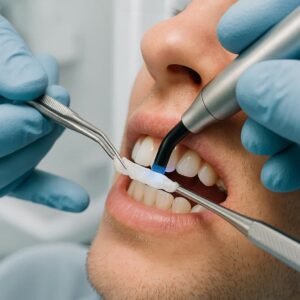
A provisional splint is a device used to connect two or more teeth together to stabilize them. Think of it as a temporary “buddy system” for teeth. When a tooth is loose due to trauma, periodontal disease, or occlusal trauma, a splint distributes the forces of chewing across a wider area, allowing the affected tooth to rest and heal.
These splints can be made in different ways:
-
Direct Intraoral Splinting: Using wire and composite resin to bond teeth together in the mouth.
-
Indirect Splints: Fabricated on a model in a lab and then cemented.
-
Removable Splints: Such as a vacuum-formed retainer that fits over the teeth.
The key word here is “provisional.” This is a temporary solution. It is not the final restoration. This temporary nature is what dictates the billing codes we use.
The Confusion: Why One Code Doesn’t Fit All
If you search for “dental code for provisional splinting” online, you will likely get a few different answers. You might see D4322, D7270, or even D5982 pop up.
The truth is, there isn’t a single “magic bullet” code. The correct code depends entirely on the reason you are splinting the teeth and the method you are using.
Are you splinting because of an injury (like a hockey puck to the mouth)? Or are you splinting because of severe gum disease? The answer to that question changes everything.
Let’s break down the three main contenders.
The Primary Code: D4322 (Splinting for Stabilization)
If you are looking for the most accurate code for what most dentists think of as “provisional splinting,” look no further than D4322.
The Full Descriptor: Splinting for stabilization, intraoral, permanent or provisional, per tooth, in addition to regularly provided procedures.
When to Use D4322
This is the workhorse code for splinting. It is designed for situations where the splint is part of periodontal therapy or treatment for occlusal trauma.
You should use D4322 when:
-
A tooth has mobility due to loss of bone support (periodontitis).
-
You are splinting to teeth to stabilize them during the active phase of periodontal treatment.
-
You are using wire and composite to connect teeth to prevent them from moving.
-
You are performing this service in addition to another procedure (like scaling and root planing, an exam, or occlusal adjustment).
Important Rules for D4322
-
Per Tooth Billing: As the descriptor states, this code is billed “per tooth.” If you splint teeth #24, #25, and #26 together, you would bill three units of D4322. However, check with your specific insurance carrier. Some prefer you to bill for the “splinted” teeth and not the anchor teeth.
-
In Addition To: This code implies that the splinting is an extra step. It is rarely covered if it is the only thing you do that day. It must be an adjunct to another primary service.
-
Medical Necessity: The documentation must clearly state the mobility of the teeth and why stabilization is necessary for periodontal health.
A Real-World Scenario for D4322
The Case: A 55-year-old patient with generalized moderate chronic periodontitis presents with mobility on the lower anteriors. You perform scaling and root planing on the quadrant. Due to the remaining mobility and the patient’s discomfort, you decide to splint #24 and #25 together using orthodontic wire and composite resin to stabilize them during the healing phase.
The Code: You would bill for the scaling and root planing (e.g., D4341) and then add D4322 for both #24 and #25.
The Trauma Code: D7270 (Tooth Reimplantation and/or Stabilization)
When trauma enters the equation, the coding changes. If a tooth has been knocked out (avulsed) or moved (luxated) due to an accident, the code you need is D7270.
The Full Descriptor: Tooth reimplantation and/or stabilization of accidentally evulsed or displaced tooth.
When to Use D7270
This code is specifically for emergency trauma care. It covers the work involved in stabilizing a tooth that has been displaced from its socket.
You should use D7270 when:
-
A patient comes in after a fall and a tooth is loose but still in the socket (luxation).
-
A tooth has been completely knocked out (avulsed) and you reimplant it.
-
You need to splint the traumatized tooth to the adjacent healthy teeth to keep it in place while the ligaments reattach.
This code is global. It covers the entire splinting procedure for that incident, not per tooth.
Important Rules for D7270
-
Accidental Trauma Required: The key word is “accidentally.” This code is not for splinting due to chronic disease; it is for acute injury. Your notes must document the nature of the accident.
-
Global Fee: Unlike D4322, which is per tooth, D7270 is a single fee that covers the reimplantation or stabilization of the involved tooth/teeth.
-
Time-Limited: This is inherently a provisional code. The splint placed under D7270 is meant to be temporary while the tooth re-establishes its attachment. It will be removed later (which is a separate procedure, D7999 for the removal).
A Real-World Scenario for D7270
The Case: A 12-year-old boy falls off his bike and hits his mouth. Tooth #8 is extremely mobile and extruded (pushed out). You gently reposition it and splint it to the adjacent teeth with composite and wire to hold it in place for the next two weeks.
The Code: You would bill D7270 to cover the repositioning and stabilization of the traumatized tooth.
The Laboratory Splint Code: D5982 (Surgical Splint)
Sometimes, a provisional splint isn’t made of wire and composite in your chair. Sometimes, it is a sturdy appliance made in a dental lab. This is where D5982 comes in.
The Full Descriptor: Surgical stent/splint.
When to Use D5982
This code is used when a splint is fabricated on a model, usually outside of the mouth, and then delivered to the patient. It is often used in surgical or post-surgical contexts.
You should use D5982 when:
-
You are placing a patient under IV sedation for multiple implants and need a surgical guide (stent) to place them correctly.
-
A patient has had major periodontal surgery or bone grafting, and you need a rigid, lab-processed splint to protect the site during initial healing.
-
You are creating a “bite-raising” splint to prevent tooth contact and protect a surgical site.
This is typically a lab-fabricated device. You take the impressions, send them to the lab, and the lab makes the splint. You then cement or place it in the patient’s mouth.
Important Rules for D5982
-
Separates Lab and Procedure Fees: This code usually covers the laboratory cost and the professional service of placing the stent. However, some dentists prefer to bill D5982 for the lab fee and then use a separate code for the placement.
-
Not for Periodontal Splinting: Be careful. If you have a lab make a “wraparound” splint for a patient with mobile teeth due to perio, this might be the code, but coverage is rare. Most medical necessity for periodontal splints points to the intraoral procedure (D4322).
A Real-World Scenario for D5982
The Case: A patient requires extraction of a mandibular molar and a large bone graft. To protect the graft site from occlusal forces during the critical healing phase, you take an impression. The lab fabricates a rigid acrylic splint that fits over the adjacent teeth and covers the graft site. You deliver and cement the splint.
The Code: You would bill D5982 for the lab-fabricated surgical splint.
Side-by-Side Comparison: Choosing the Right Code
To make this even clearer, here is a comparative table to help you decide at a glance.
| Feature | D4322 (Splinting for Stabilization) | D7270 (Stabilization – Trauma) | D5982 (Surgical Splint) |
|---|---|---|---|
| Primary Indication | Periodontal disease, occlusal trauma | Accidental injury (avulsion, luxation) | Post-surgical protection, implant guide |
| Billing Unit | Per tooth | Per incident (global) | Per appliance |
| Method | Usually direct (wire/composite in mouth) | Usually direct (wire/composite in mouth) | Usually indirect (lab-fabricated) |
| Key Phrase in Notes | “To stabilize teeth with mobility due to bone loss.” | “To stabilize tooth displaced in bicycle accident.” | “To protect graft site from occlusal forces.” |
| Typical Duration | Weeks to months (part of active therapy) | Days to weeks (ligament healing) | Weeks (surgical healing phase) |
A Practical Guide to Documentation
You can pick the right code, but if your documentation is weak, the insurance company will still deny the claim. To support your use of a dental code for provisional splinting, your notes must tell a clear story.
Here is a checklist of what to include:
-
The Diagnosis: What is wrong?
-
“Tooth #9 has Class III mobility.”
-
“Tooth #7 is avulsed and out of the mouth for 20 minutes.”
-
*”Post-op from bone graft #19.”*
-
-
The Medical Necessity: Why are you doing this?
-
“Splinting required to prevent further attachment loss and patient discomfort during chewing.”
-
“Splinting required to hold tooth in position while PDL fibers reattach.”
-
“Splint required to protect underlying graft from masticatory forces.”
-
-
The Procedure: What did you do?
-
*”Acid-etched #23-26, placed .0175 twist flex wire, and flowed composite to create a rigid splint.”*
-
“Repositioned #8 into socket and bonded to #7 and #9 with composite.”
-
-
The Teeth Involved: Always list the specific tooth numbers.
Important Note for Readers:
Insurance plans vary wildly. A procedure that is covered by one PPO may be excluded by another. Always verify the patient’s benefits before performing the procedure, especially for codes like D4322, which some plans consider “not a covered benefit” for periodontal therapy. It is always better to have a conversation with the patient about potential costs upfront than to surprise them with a bill later.
The Financial Reality: What to Tell Your Patients
Money is an uncomfortable topic for many dentists, but transparency builds trust. When discussing a provisional splint, be honest with your patient.
-
For D4322: “Your insurance may cover a portion of this as part of your periodontal therapy, but it often depends on your specific plan. There is a chance they may consider this a non-covered service. Our fee for splinting is per tooth, so the total for connecting these three teeth will be [Amount]. We will, of course, file a claim on your behalf.”
-
For D7270: “This is considered emergency trauma care. Most medical insurances and dental insurances have some level of coverage for accidents. We will help you file the claim, but please be prepared for your deductible and co-pay today.”
Beyond the Splint: The Removal
Finally, remember that what goes up must come down. The removal of a provisional splint is a procedure that also needs a code.
-
If the splint was simple composite: You can often use D2999 (Unspecified restorative procedure) for the removal and polish. You must include a descriptive narrative.
-
If the splint was a lab-fabricated appliance: Use D7999 (Unspecified oral surgery procedure) for the removal.
Just like with placement, documentation for removal is key. Note the date, the teeth, and the reason for removal (e.g., “Healing complete, splint removed”).
Conclusion
Navigating the world of dental coding requires a blend of clinical knowledge and administrative savvy. When it comes to the dental code for provisional splinting, the choice is clear once you assess the patient’s needs. Use D4322 for tooth stabilization due to periodontal disease or occlusal issues. Turn to D7270 for emergencies involving accidental tooth displacement. And rely on D5982 for laboratory-fabricated surgical stents. By matching the code to the diagnosis and documenting thoroughly, you protect your practice from denials and ensure your patients receive the care they need.
Frequently Asked Questions (FAQ)
1. Can I use D4322 for a splint placed after orthodontic treatment?
Generally, no. If you are splinting to prevent relapse after ortho, this is often considered a retention device. It is rarely a covered benefit under the “periodontal” rationale of D4322. You would likely need to bill this as an unmounted retainer or discuss the fee directly with the patient.
2. My patient has a splint placed at a different office. They want me to remove it. What code do I use?
You will use an unspecified code, most commonly D7999 (Unspecified oral surgery procedure) for the removal. You must write a clear narrative, such as: “Removal of provisional wire-and-composite splint from teeth #24-#26. Teeth polished.”
3. Is it better to bill D4322 or just include the splint in the fee for scaling and root planing?
It is always better to bill for it separately if it is a distinct service. By listing D4322 on the claim, you are documenting the complexity of the case and the extra time and material involved. Bundling it into the SRP fee means you are working for free.
4. Does medical insurance ever cover dental splints?
Yes! If the trauma is severe (like a jaw fracture or an avulsion from a car accident), the primary coverage may be through the patient’s medical insurance. In these cases, D7270 is often billed to the medical plan. It is crucial to verify with the patient’s medical benefits in these complex cases.