Dental Code D4321: The Complete Guide to Periodontal Splinting
If you have been told you have “loose teeth,” the news can be unsettling. It is a sensation that feels unnatural and often triggers anxiety about the future of your smile. In the world of dentistry, stability is the goal, and when teeth begin to shift or move due to gum disease or other factors, your dentist has a specific tool in their arsenal to help.
Enter Dental Code D4321. If you have seen this combination of letters and numbers on a treatment plan or an insurance Explanation of Benefits (EOB), you might be wondering what it means and why it is necessary.
This guide is designed to walk you through everything you need to know about D4321. We will break down the complex terminology, explain the procedure in plain English, discuss the costs involved, and help you understand why this treatment might be the key to saving your smile. Think of this as your friendly, expert companion on the road to understanding periodontal health.
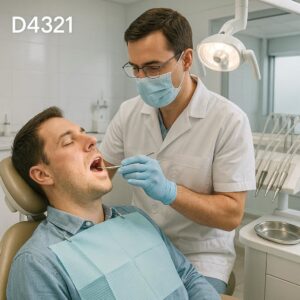
What is Dental Code D4321? A Simple Definition
Let’s start with the basics. In the dental world, codes are used to standardize communication between dentists and insurance companies. The Current Dental Terminology (CDT) code set, maintained by the American Dental Association (ADA), ensures that a root canal in California is described the same way as a root canal in Maine.
Dental Code D4321 is officially described as: “Periodontal splint, intracoronal, extracoronal, or combination.”
In simple, human terms, this code refers to the procedure of splinting teeth together. Imagine a fence post that is starting to wobble. You wouldn’t just reinforce that single post; you would likely connect it to the stable posts next to it with a rigid bar to provide support. That is precisely what a periodontal splint does for your teeth.
When a dentist performs a D4321 procedure, they are bonding two or more teeth together to create a single, stronger unit. By joining a loose tooth to its stable neighbors, the forces of chewing and biting are distributed across a wider area. This reduces the movement of the loose tooth, providing stability, comfort, and a longer life for that tooth.
Why Would You Need a D4321? Understanding the “Why”
Receiving a diagnosis that requires a splint can feel serious because it is. This isn’t a routine filling. The primary reason a dentist recommends a D4321 is tooth mobility—teeth that have become loose in their sockets.
This looseness is rarely spontaneous. It is almost always a symptom of an underlying issue. Here are the most common reasons why your teeth might need this type of support.
1. The Primary Culprit: Periodontal Disease
By far, the most frequent reason for tooth mobility is advanced periodontal disease (gum disease). To understand this, you have to look below the gum line.
-
Healthy Teeth: Your teeth are held in place by a complex support system: gums, the periodontal ligament, and the alveolar bone. Think of the bone as the foundation of a house.
-
The Effect of Gum Disease: Periodontitis is a bacterial infection that destroys this foundation. As the disease progresses, it eats away at the bone and the ligaments that hold the tooth in place. Once significant bone support is lost, the tooth begins to feel loose.
A D4321 splint is not a cure for gum disease, but it is a crucial management tool. It stabilizes the teeth after the active disease has been treated, buying time and preserving the function of the teeth.
2. The Strain of Occlusion (Your Bite)
Sometimes, the problem isn’t just disease; it’s physics. “Traumatic occlusion” or “occlusal trauma” occurs when excessive or misdirected forces are placed on teeth.
-
Bruxism (Teeth Grinding): Habitual clenching or grinding can put enormous pressure on teeth, slowly damaging the supporting structures and causing them to loosen over time.
-
Misaligned Bite: If your teeth don’t come together correctly, certain teeth may bear the brunt of the chewing forces, leading to mobility.
In these cases, a splint acts as a reinforcement, helping the teeth withstand the daily punishment they face.
3. Orthodontic Relapse or Missing Teeth
Teeth have a natural tendency to drift. If a tooth is missing and not replaced, the adjacent teeth may tilt into the space. This can alter the bite and create areas of instability. Similarly, after orthodontic treatment, there can be a slight tendency for teeth to shift back, sometimes leading to mobility if the support is weak.
A Note from Your Dentist:
“It is vital to understand that a splint is a supportive measure. Before we even consider a D4321, we must first address the underlying cause. If gum disease is the culprit, we need to get that under control with deep cleanings (scaling and root planing) first. Splinting a tooth without treating the infection is like painting over a rotten piece of wood.”
The Procedure: How a Periodontal Splint is Placed
The idea of gluing your teeth together might sound intimidating, but the procedure is generally straightforward and minimally invasive. It is typically performed by a general dentist or a periodontist (a gum specialist).
The process can vary slightly depending on the type of splint used. The code D4321 covers three main approaches: intracoronal, extracoronal, or a combination of both.
Let’s break down how it works.
Step 1: Diagnosis and Preparation
Before any splinting begins, the dentist will have already completed a comprehensive exam. They will have:
-
Measured the depth of your gum pockets.
-
Taken X-rays to assess bone loss.
-
Checked the degree of tooth mobility (often graded on a scale of 1 to 3).
-
Ensured that any active gum disease is under control.
On the day of the procedure, the dentist will discuss which teeth need to be splinted and explain the approach they will take.
Step 2: Understanding the Types of Splints (Intracoronal vs. Extracoronal)
This is the technical heart of the D4321 code. The choice between these methods depends on the location of the teeth, the amount of stability needed, and aesthetic considerations.
H3: Extracoronal Splinting (The Most Common)
An extracoronal splint is placed on the outside surfaces of the teeth. It is the more conservative and frequently used option.
-
The Process: The dentist lightly roughens the surfaces of the teeth to be splinted (usually the back sides to keep it hidden). They then apply a bonding agent and use a strong, tooth-colored composite resin material—the same material used for white fillings—to connect the teeth. Sometimes, for extra strength, a thin, high-strength ribbon or mesh (often made of polyethylene or glass fiber) is embedded within the resin.
-
The Result: The teeth are effectively “welded” together with a strong, aesthetic material that is barely visible. This is ideal for splinting front teeth or a few teeth together.
H3: Intracoronal Splinting (More Complex)
This is a more involved procedure where the splint is placed within the teeth.
-
The Process: The dentist prepares a small channel or groove within the biting surface or the back of the teeth. Into this channel, they place a rigid metal bar or wire. The channel is then sealed with a filling material to lock the bar in place.
-
The Result: This creates a very strong, rigid splint that is excellent for long-term stability. However, it is more invasive because it requires removing some healthy tooth structure to create the channel. It is often used for splinting posterior (back) teeth or for longer spans of teeth.
Step 3: Final Adjustments
Once the splinting material is in place and hardened, the dentist will check your bite. It is critical that the splint doesn’t create high spots that interfere with how your teeth come together. They will polish the splint to make it smooth, comfortable, and easy to clean.
The entire procedure for a simple extracoronal splint on a few teeth can often be completed in a single appointment.
D4321 vs. Other Codes: Avoiding Confusion
It is easy to confuse D4321 with other dental procedures, especially since the term “splint” is used in different contexts. Here is a helpful table to distinguish it from common look-alikes.
| Dental Code / Term | Procedure Description | Key Difference from D4321 |
|---|---|---|
| D4321 | Periodontal Splint (Intracoronal/Extracoronal) | PURPOSE: To stabilize mobile teeth due to bone loss or trauma. It is a therapeutic, long-term solution. |
| D5982 | Surgical Splint | PURPOSE: Used during or after surgery (like implant placement or jaw surgery) to protect the site. It is a temporary post-op device. |
| D9940 / D9941 | Occlusal Guard / Night Guard (Hard or Soft) | PURPOSE: A removable appliance worn to protect teeth from grinding (bruxism) or for TMJ issues. It does not bond the teeth together. |
| D7270 | Tooth Reimplantation / Stabilization | PURPOSE: Emergency stabilization of a tooth that has been knocked out (avulsed) and reinserted. It is a temporary measure. |
The simplest way to remember it: D4321 is a “permanent” or “semi-permanent” bond between teeth to fix looseness, while other splints are usually removable or temporary devices for protection.
The Cost of Dental Code D4321: What to Expect
Dental treatment is an investment in your health, and understanding the financial aspect is crucial. The cost for a D4321 procedure is not one-size-fits-all. It is highly variable and depends on several key factors.
Factors Influencing the Price
-
Number of Teeth Splinted: This is the biggest factor. Splinting two teeth together will cost significantly less than splinting six teeth across the front of your mouth. The cost is generally calculated based on the complexity and time involved.
-
Type of Splint: A simple, direct extracoronal splint using composite resin is less expensive than an intracoronal splint, which requires more precision and materials.
-
Geographic Location: Dental fees vary widely by region and even by city. A periodontist in a major metropolitan area will likely charge more than a general dentist in a rural town.
-
Provider Type: A specialist (periodontist) may charge a higher fee than a general dentist due to their advanced training and the complexity of cases they typically handle.
General Cost Range
While you should always get a personalized quote from your dentist, you can expect a general range. Since this is a procedure-based code, the fee is usually per tooth or per segment of the arch.
-
Lower End: For a simple, 2-tooth extracoronal splint in a general practice, you might see a fee ranging from $150 to $300 per tooth.
-
Average: For a moderate case involving 3-4 teeth, the total fee could range from $600 to $1,200.
-
Higher End: For a complex intracoronal splint involving multiple teeth performed by a specialist, the cost could be $1,500 or more.
Does Insurance Cover D4321?
This is where things can get tricky. Dental insurance is designed primarily to prevent and treat disease (like cavities and gum disease), not necessarily to manage its long-term consequences.
-
Not a Standard Benefit: D4321 is considered a “periodontal” procedure. Many basic dental insurance plans do not cover it, or they cover it at a lower percentage. It is not as universally covered as a routine filling or extraction.
-
Medical Necessity is Key: If your dentist can provide strong documentation (X-rays, charting showing mobility, records of bone loss) proving the procedure is medically necessary to save your teeth, your insurance company is more likely to consider coverage.
-
Typical Coverage Scenarios:
-
No Coverage: Many plans will classify D4321 as “not a covered benefit,” meaning you pay 100% out-of-pocket.
-
Major Restorative Coverage: Some plans will place it under the “major services” category. If your plan covers major work at 50%, they might pay half of the allowed amount after you meet your deductible.
-
Annual Maximums: Remember that all dental plans have an annual maximum (often $1,000 to $2,000). If you’ve already had other major work, this can be quickly exhausted.
-
Crucial Advice: Before proceeding, ask your dentist’s office to send a pre-determination of benefits to your insurance company. This will give you a written estimate of what (if anything) will be covered, so there are no surprises.
The Pros and Cons of Tooth Splinting
Deciding to go ahead with a D4321 procedure is a big step. It’s important to weigh the benefits against the new responsibilities it brings.
The Advantages: Why Patients Choose Splinting
-
Immediate Stability: The most obvious and immediate benefit. That worrying loose tooth suddenly feels firm and secure.
-
Preservation of Teeth: The primary goal is to keep your natural teeth functional for as long as possible, delaying or avoiding the need for extraction and replacement with bridges or implants.
-
Improved Comfort: Eating becomes easier and pain-free when teeth aren’t wobbling.
-
Psychological Boost: Knowing your teeth are stable can relieve a significant amount of anxiety about your dental health.
The Disadvantages and Responsibilities: What You Need to Know
-
Oral Hygiene is More Challenging: This is the single biggest “con” and the most important thing to manage. The splint creates new nooks and crannies where plaque and food can get trapped. If you don’t clean meticulously, you risk causing decay or worsening gum disease right where you’re trying to save the teeth.
-
Potential for Debonding: The bond is strong, but it can fail. Biting into something very hard (like a bone or hard candy) or suffering an impact could break the splint, requiring a repair visit.
-
Restricts Movement: While that’s the point, it does mean that if one tooth in the splint ever develops a problem (like needing a root canal or extraction), it becomes more complicated to treat that single tooth without affecting the others.
-
Aesthetic Changes: Although modern materials are excellent, an extracoronal splint on the front teeth might be slightly visible to a very close observer.
Life with a Splint: Maintenance is Everything
Getting a D4321 splint is not the end of the story; it’s the beginning of a new maintenance routine. The longevity of your splint depends almost entirely on how well you care for it.
At-Home Care: Your Daily Mission
You cannot clean a splinted area the same way you clean normal teeth. You have to adapt.
-
The Right Tools:
-
Interdental Brushes (Proxybrushes): These are your new best friend. They look like tiny pipe cleaners and are designed to slide under the splint and between the teeth to clean areas a toothbrush can’t reach.
-
Water Flosser (Waterpik): This is an excellent investment. The stream of water is incredibly effective at flushing out food debris and plaque from underneath the splint and along the gum line. Use it on a medium setting.
-
Super Floss: This type of floss has a stiff end to thread under the splint, a spongy section to clean around the teeth, and regular floss. It is specifically designed for bridges and splints.
-
-
Technique is Key:
-
Spend extra time in the splinted area.
-
Use the interdental brushes or water flosser at least once a day.
-
Be gentle but thorough. Don’t just brush the tops of the teeth; focus on the gum line and the spaces between them.
-
Professional Maintenance: Your Partner in Care
Your recall visits to the dentist will be more important than ever.
-
More Frequent Cleanings: Your dentist may recommend you come in for periodontal maintenance every 3 to 4 months instead of every 6 months. This allows the hygienist to professionally clean areas you can’t reach and monitor the health of the splinted teeth and gums.
-
Ongoing Monitoring: The dentist will check the integrity of the splint and the mobility of the teeth at every visit to ensure everything is holding up well.
Alternatives to a D4321 Periodontal Splint
Splinting isn’t the only option, though it is often the most conservative for mobile teeth. Depending on the severity of the situation, your dentist may discuss these alternatives with you.
-
Monitoring and Occlusal Adjustment: For very minor mobility, the dentist might simply adjust your bite (equilibration) to reduce harmful forces and monitor the situation closely to see if the tooth tightens up on its own.
-
Removable Partial Denture (RPD): If you are missing several teeth and the remaining teeth are loose, a well-designed RPD can sometimes act as a splint by surrounding and supporting the remaining teeth, though it doesn’t bond them together.
-
Extraction and Implant Placement: In cases where a tooth is hopeless—meaning there is simply not enough bone left to support it even with splinting—the only realistic option may be to remove the tooth. It can then be replaced with a dental implant, which is the gold standard for tooth replacement as it functions independently.
-
Orthodontic Treatment: In rare cases where mobility is caused by traumatic occlusion from misaligned teeth, orthodontics might be recommended to move the teeth into a more favorable position, relieving the pressure.
Frequently Asked Questions (FAQ)
Q: Is the D4321 procedure painful?
A: Most patients report little to no discomfort. The procedure is minimally invasive. The dentist works on the surface of your teeth, and anesthesia is rarely needed unless the preparation for an intracoronal splint goes near the nerve.
Q: How long does a periodontal splint last?
A: There is no set expiration date. With meticulous oral hygiene and regular dental check-ups, a splint can last for many years—sometimes 5, 10 years or more. However, they can occasionally chip or debond and may need repair.
Q: Can I still floss if my teeth are splinted together?
A: Yes, but you must change your technique. You cannot snap regular floss down between splinted teeth. You need to use “super floss,” a floss threader, or a water flosser to clean under and around the splinted area.
Q: Will the splint be noticeable when I smile?
A: For anterior (front) teeth, your dentist will take great care to make the splint as invisible as possible using tooth-colored materials. It is usually placed on the back of the teeth. Extracoronal splints on the front surface can be blended in, but they may be slightly visible up close. For back teeth, aesthetics are not a concern.
Q: My tooth is loose, but my dentist didn’t mention D4321. Why?
A: D4321 is typically used when there is a specific, diagnosed reason for mobility (like bone loss from gum disease) and non-surgical treatment has been completed. If your tooth is loose from an injury, it might be stabilized with a different temporary code (like D7270). Your dentist will recommend the best treatment for your specific diagnosis.
Conclusion: Securing Your Smile for the Future
Discovering that you have loose teeth can be a pivotal moment in your dental journey. Dental Code D4321 represents a proven, effective strategy to combat that instability. It is a treatment born from the understanding that preserving your natural teeth, whenever possible, is the best path to long-term oral health.
While it requires a commitment to diligent oral hygiene and comes with its own set of responsibilities, a periodontal splint offers something invaluable: a second chance. It allows you to keep your teeth functional, comfortable, and in place, ensuring that your smile remains a source of confidence for years to come. If your dentist has recommended this procedure, embrace it as a proactive step towards a stable and healthy future.
Additional Resource
For further reading on the underlying causes of tooth mobility, you can visit the American Academy of Periodontology’s patient page on gum disease:
American Academy of Periodontology – Gum Disease Information