ADA Dental Codes for Fillings
- On
- InDENTAL CODE
Let’s be honest: looking at a dental insurance statement can sometimes feel like trying to read a foreign language. You see a list of numbers, strange abbreviations, and a column for what the insurance company “allowed” versus what the dentist charged. It’s enough to give anyone a headache.
If you have ever squinted at a dental claim form and wondered what a code like “D2391” actually means, you are in the right place.
At the heart of every dental procedure—from a simple check-up to a complex root canal—is a standardized language known as the ADA Dental Code Set. Managed by the American Dental Association (ADA), these codes ensure that your dentist, your insurance company, and any other healthcare providers are all on the same page.
In this guide, we are going to focus specifically on the codes you are most likely to encounter: the ones for dental fillings. Whether you are preparing for a filling, trying to understand a bill, or simply curious about what goes on behind the scenes, this article will serve as your friendly, comprehensive roadmap.
We will cover what these codes mean, how they differ based on the material used (like composite resin or amalgam), and why the location of a cavity (the tooth surface) drastically changes the billing code.
Let’s decode that smile together.
Table of Contents
ToggleWhat Are ADA Dental Codes?
Before we dive into the specifics of fillings, it helps to understand the system itself. Imagine trying to order a coffee without a menu. You might say, “I’d like a hot drink with espresso and milk.” But is that a latte, a cappuccino, or a flat white? The ambiguity causes confusion.
The ADA created the Current Dental Terminology (CDT) code set to eliminate that ambiguity. Every dental procedure that a dentist can perform has a unique five-character alphanumeric code. The first character is always the letter “D” (for dental), followed by four numbers.
These codes are updated annually to keep up with new technology and techniques. For a dental practice, using the correct code is essential. It ensures:
-
Accuracy: The insurance company knows exactly what service was provided.
-
Reimbursement: Using the wrong code can lead to claim denials or delays in payment.
-
Patient Records: It creates a clear, permanent record of the treatment you received.
For patients, understanding these codes is the first step toward becoming an empowered consumer of dental care. When you know what the codes mean, you can ask better questions and feel more confident about the treatment plan your dentist recommends.
The Anatomy of a Filling Code: Surfaces Matter
This is where many people get confused. You might think a cavity is simply a “hole in a tooth,” but in the dental world, the location of that hole matters immensely. A filling on the chewing surface of a back tooth is not billed the same way as a filling on the front of a tooth.
Dentists use a shorthand to describe tooth surfaces. When these letters appear in the description of a dental code, they indicate exactly how many surfaces of the tooth were treated.
Here are the most common surface abbreviations you need to know:
| Abbreviation | Surface | Description |
|---|---|---|
| M | Mesial | The front surface of the tooth (toward the midline of the face). |
| D | Distal | The back surface of the tooth (away from the midline). |
| O | Occlusal | The chewing surface of a back tooth (premolar or molar). |
| B | Buccal | The surface facing the cheek (for back teeth). |
| L | Lingual | The surface facing the tongue. |
| I | Incisal | The biting edge of a front tooth (incisor or canine). |
| F | Facial | The surface facing the lips or cheeks (used for front teeth). |
When a dentist charts a filling, they combine these letters to show which surfaces are involved. A “MO” filling involves the mesial (front) and occlusal (chewing) surfaces. A “MOD” filling involves the mesial, occlusal, and distal surfaces—meaning the cavity spans the entire top of the tooth.
Why does this matter for codes?
Because the number of surfaces treated dictates which code your dentist uses. A small one-surface filling costs less and requires less time and material than a large three-surface filling. The ADA codes are designed to reflect this complexity.
The Main Categories: Resin-Based Composite vs. Amalgam
For many years, the primary material for fillings was dental amalgam—a silver-colored mixture of metals. Today, while still used, many patients opt for resin-based composite fillings, which are tooth-colored and blend in with the natural enamel.
The ADA separates filling codes primarily by material and then by the number of surfaces involved.
The “D2000” Series: Amalgam Restorations (Silver Fillings)
Amalgam fillings are coded in the D2000 range. These are durable, long-lasting, and often used in back teeth where chewing force is greatest.
| Code | Description | What It Means |
|---|---|---|
| D2140 | Amalgam – one surface, primary or permanent | A small silver filling on one surface of a tooth. |
| D2150 | Amalgam – two surfaces, primary or permanent | A silver filling covering two surfaces (e.g., MO or DO). |
| D2160 | Amalgam – three surfaces, primary or permanent | A larger silver filling covering three surfaces (e.g., MOD). |
| D2161 | Amalgam – four or more surfaces, primary or permanent | The largest silver filling, covering four or more surfaces. |
The “D2000” and “D2300” Series: Resin-Based Composite Fillings (White Fillings)
Resin-based composite fillings are coded in the D2000 series as well, but they also have specific codes for anterior (front) and posterior (back) teeth. In recent years, the coding has evolved to be more specific about the location of the tooth.
For a long time, codes like D2330 (composite, one surface, anterior) and D2391 (composite, one surface, posterior) were the standards. It is essential to know that while the specific number may vary slightly depending on the CDT year, the logic remains the same: separate codes for front teeth and back teeth.
Here are the most common composite codes you will see today:
For Anterior Teeth (Front Teeth: Incisors and Canines)
| Code | Description | What It Means |
|---|---|---|
| D2330 | Resin-based composite – one surface, anterior | A small white filling on the front of a front tooth. |
| D2331 | Resin-based composite – two surfaces, anterior | A white filling covering two surfaces of a front tooth. |
| D2332 | Resin-based composite – three surfaces, anterior | A larger white filling covering three surfaces of a front tooth. |
| D2335 | Resin-based composite – four or more surfaces, anterior | The largest white filling for a front tooth, often replacing a significant portion of the tooth. |
For Posterior Teeth (Back Teeth: Premolars and Molars)
| Code | Description | What It Means |
|---|---|---|
| D2391 | Resin-based composite – one surface, posterior | A small white filling on the chewing surface or one side of a back tooth. |
| D2392 | Resin-based composite – two surfaces, posterior | A white filling covering two surfaces of a back tooth (e.g., MO or DO). |
| D2393 | Resin-based composite – three surfaces, posterior | A larger white filling covering three surfaces of a back tooth (e.g., MOD). |
| D2394 | Resin-based composite – four or more surfaces, posterior | The most extensive white filling for a back tooth, covering a large area. |
Important Note: Dental insurance plans often have different coverage levels for amalgam versus composite fillings, especially for back teeth. Some plans will only cover the cost of an amalgam filling on a molar. If you prefer a composite (tooth-colored) filling, you may have to pay the difference in cost. This is often referred to as a “differential” or “upgrade” cost. Always check with your insurance provider before treatment to understand your out-of-pocket expenses.
Beyond the Basic Filling: Specialized Codes
Not all fillings are created equal. Sometimes, a cavity is too large for a standard filling but not quite severe enough to warrant a full crown (cap). In these cases, dentists use specialized codes that represent more complex restorative procedures.
D2940: Protective Restoration
This is a fascinating code. It stands for “protective restoration.” This is often used when a tooth has a temporary issue or when the dentist wants to “sedate” a nerve.
For example, if you have a very deep cavity that is close to the nerve, a dentist might place a special medicated lining and a temporary filling to see if the nerve calms down. If it does, a permanent filling can be placed later. If not, you might need a root canal. The D2940 code is also used for fillings placed to cover a root canal opening or to protect a tooth while a permanent crown is being made.
D2950: Core Buildup, Including Any Pins
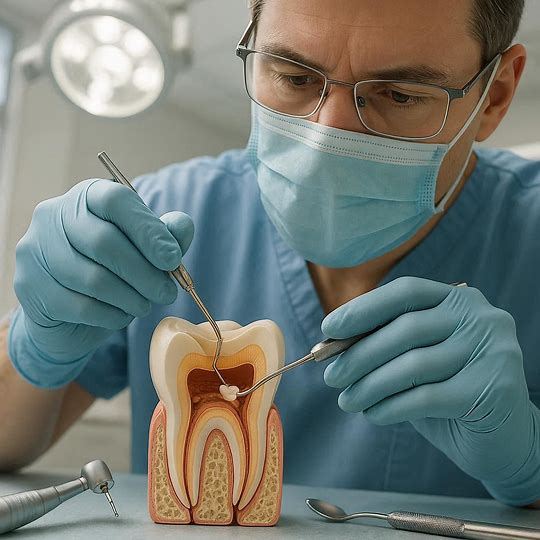
When a tooth has lost a significant amount of structure—often due to a large cavity or a previous filling breaking—it may not have enough “tooth” left to support a crown. In this case, a dentist performs a “core buildup.”
Think of it like rebuilding the foundation of a house. The dentist uses a special material (often a composite or amalgam) to rebuild the core of the tooth. Sometimes, tiny pins are placed into the remaining tooth structure to help hold the core in place. This procedure (D2950) is not a simple filling. It is a major restoration that is typically done in preparation for a crown.
It is crucial to understand that a core buildup is billed separately from the crown. You will see this code on your statement if your tooth required significant reconstruction before a crown could be placed.
D2980: Crown Repair
This is a code used when an existing crown (a cap) has a small chip or fracture, and the dentist can repair it with a composite filling material. It is a less expensive alternative to replacing the entire crown, provided the damage is minor and the crown is still structurally sound.
Decoding Your Dental Claim Form: A Practical Example
Let’s put this knowledge into practice. Imagine you visit Dr. Smith for your six-month checkup. After an exam and X-rays, Dr. Smith finds two cavities:
-
A small cavity on the chewing surface of your lower right first molar.
-
A moderate cavity between your upper left canine and first premolar, affecting both teeth.
You opt for tooth-colored fillings. Here is how those procedures might appear on your dental claim form:
| Date of Service | Code | Description | Fee | Insurance Pays | Patient Pays |
|---|---|---|---|---|---|
| 10/15/2023 | D2391 | Resin composite – one surface, posterior | $150 | $100 | $50 |
| 10/15/2023 | D2331 | Resin composite – two surfaces, anterior | $210 | $150 | $60 |
What does this tell us?
-
D2391: The dentist used a one-surface composite filling on a back tooth (the lower right molar).
-
D2331: The dentist used a two-surface composite filling on a front tooth (the upper left canine). Because it was two surfaces, the code is D2331, not D2330.
-
Cost: Notice the two-surface filling on the front tooth costs more than the one-surface filling on the back tooth. This reflects the increased complexity, time, and material used to restore two surfaces.
Now, imagine if you had chosen a silver filling for the molar. The code would likely be D2140 (amalgam, one surface), and the fee might have been slightly lower, say $130. Your insurance, if it favors amalgam, might have covered $110, leaving you with a $20 copay instead of $50. This is why understanding the codes helps you make informed financial decisions.
A Comparative Look: Composite vs. Amalgam Codes
To help visualize the differences, here is a side-by-side comparison of the most common filling codes based on material and complexity.
| Complexity | Amalgam (Silver) Code | Composite (White) Code (Posterior/Back) | Composite (White) Code (Anterior/Front) |
|---|---|---|---|
| One Surface | D2140 | D2391 | D2330 |
| Two Surfaces | D2150 | D2392 | D2331 |
| Three Surfaces | D2160 | D2393 | D2332 |
| Four+ Surfaces | D2161 | D2394 | D2335 |
This table clearly shows how the complexity of the restoration increases with the number of surfaces. While the amalgam codes are the same regardless of whether the tooth is in the front or back, the composite codes are strictly divided by the location of the tooth (anterior vs. posterior).
Common Questions Patients Ask About Filling Codes
Navigating the world of dental codes naturally brings up a lot of questions. Here are some of the most common ones we hear, answered clearly.
Why did my dentist use a “three-surface” code when the hole looked small?
This is a very common point of confusion. A “hole” or cavity on the X-ray is often just the tip of the iceberg. When a dentist starts removing decay, they often find that it has spread much further underneath the surface.
What looked like a small pit on the chewing surface (occlusal) might actually extend to the side of the tooth (mesial). The dentist must remove all the decay to ensure the filling doesn’t fail later. Therefore, the filling ends up covering more surfaces than you initially expected. The code reflects the final restoration, not the initial appearance of the cavity.
Can a dentist bill for a filling and a crown on the same tooth?
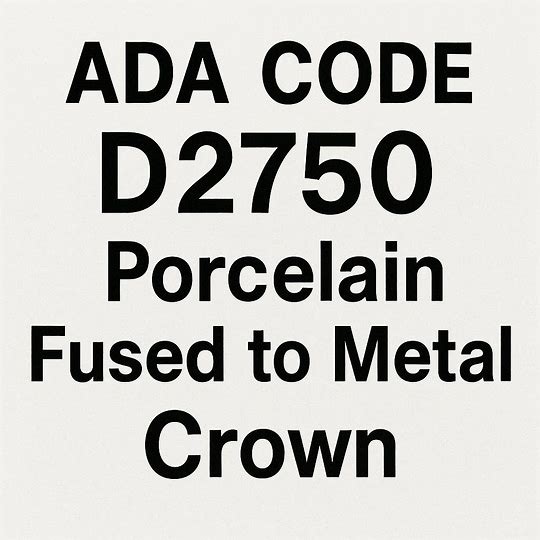
Yes, but only in specific circumstances. If a tooth has an existing filling that is failing, a dentist might remove the old filling, treat a new cavity, and place a new filling (core buildup) to serve as the foundation for a crown. In this scenario, you might see a code for the core buildup (D2950) and a separate code for the crown (e.g., D2740 for a porcelain crown).
However, you should not be billed for a standard filling (like a D2392) and a crown on the same tooth on the same day for the same surface. The crown code typically includes the work of removing decay and placing a temporary filling. If you see this, it’s a good idea to ask your dental office for a clarification.
Why was I charged for “D2950” when I just needed a filling?
If you see a code for a core buildup (D2950) instead of a simple filling code, it usually means the tooth was significantly broken down. A simple filling is for a cavity that has not destroyed most of the tooth. A core buildup is a more involved procedure to rebuild a tooth that has lost a lot of its structure, often as a step toward a crown. If your dentist performed a core buildup but did not place a crown, it might be because they are waiting to see if the tooth heals or because you decided to postpone the crown.
The Future of Dental Coding: What’s New?
The ADA updates the CDT codes every year, usually with minor revisions, additions, or deletions. In recent years, there has been a growing focus on codes for preventive care and minimally invasive procedures.
One area to watch is the continued refinement of codes for biomaterials and adhesive dentistry. As materials improve, the way dentists restore teeth changes, and the codes must evolve to reflect that.
For patients, the most important trend is a push toward transparency. The ADA and many state dental associations are encouraging dentists to provide clear, patient-friendly treatment plans that explain not just the code, but the procedure in plain English. Don’t hesitate to ask your dental office for a breakdown of the codes on your treatment plan. A good dental team will be happy to walk you through each one.
How to Use This Information for Your Next Dental Visit
Knowing about ADA dental codes for fillings isn’t just about satisfying curiosity; it’s a tool you can use to take control of your dental health and finances.
-
Ask for a Pre-Treatment Estimate: If your dentist recommends a significant filling (especially a three-surface or core buildup), ask the front desk to send a pre-treatment estimate (also called a pre-authorization) to your insurance company. This will give you a written estimate of what the insurance will pay before the work is done. The document will list the exact codes being used.
-
Review Your Treatment Plan: Your dentist should provide you with a printed or digital treatment plan. Look at the codes. Do they match the conversation you had? If they discussed a small one-surface filling but you see a three-surface code (D2393), ask for clarification.
-
Compare “UCR” Fees: Insurance companies often reimburse based on “Usual, Customary, and Reasonable” (UCR) fees in your area. If a code’s fee seems unusually high, you can ask your dental office how their fee compares to the regional average. Reputable offices will be transparent about their pricing structure.
-
Keep Your Own Records: Dental insurance can change if you switch jobs or plans. Keep a copy of your treatment records, including the codes used. If you move to a new dentist, having these codes can help your new provider understand your dental history without needing to retake X-rays immediately.
Conclusion
Understanding ADA dental codes for fillings might not seem like the most exciting topic, but it is one of the most practical ways to become an active participant in your dental care. From the simple one-surface amalgam (D2140) to the complex three-surface composite on a back tooth (D2393), each code tells a specific story about the work done to restore your smile.
By familiarizing yourself with the language of tooth surfaces (M, O, D, etc.) and the basic structure of the codes, you transform a confusing insurance statement into a clear narrative. You gain the ability to ask the right questions, verify your treatment plan, and understand the value of the care you receive.
So, the next time you are in the dentist’s chair, don’t be afraid to ask, “What code will you be using for my filling today?” You’ll be surprised how much clarity that one simple question can bring.
Frequently Asked Questions (FAQ)
1. What is the ADA code for a white filling on a molar?
The most common codes for white (resin-based composite) fillings on molars (posterior teeth) are D2391 (one surface), D2392 (two surfaces), D2393 (three surfaces), and D2394 (four or more surfaces).
2. What is the difference between D2391 and D2392?
D2391 is for a composite filling that covers only one surface of a back tooth (for example, just the chewing surface). D2392 is for a composite filling that covers two surfaces of a back tooth (for example, the chewing surface and the side of the tooth).
3. Why does my insurance cover D2140 but not D2391?
D2140 is the code for a one-surface silver (amalgam) filling. Some insurance plans consider amalgam fillings the standard of care for back teeth. If you choose a composite (tooth-colored) filling (D2391), they may only cover the cost equivalent to the amalgam filling, leaving you to pay the difference.
4. Is D2950 a filling code?
Not exactly. D2950 is a “core buildup.” It is a more extensive procedure used to rebuild a severely damaged tooth, usually as a foundation for a crown. It is not used for a simple cavity filling.
5. How can I find out if my dentist is using the correct codes?
The best way is to communicate openly with your dental office. Ask them to explain the treatment plan and the corresponding codes before the work begins. You can also cross-reference the codes with your insurance company’s benefits booklet to ensure the procedures are covered.
6. What does “MOD” mean on a dental code description?
“MOD” stands for Mesial-Occlusal-Distal. It indicates that a filling covers three surfaces of a back tooth: the front side (mesial), the chewing surface (occlusal), and the back side (distal). This would typically correspond to a three-surface filling code.
Disclaimer: This article is for informational purposes only and does not constitute medical or financial advice. Dental codes and insurance policies vary and are subject to change. Always consult with your dental provider and insurance company for information specific to your situation.

dentalecostsmile
Newsletter Updates
Enter your email address below and subscribe to our newsletter