The Complete Guide to the ADA Dental Code for Oraqix
If you work in a dental practice, you know that speed and patient comfort are two sides of the same coin. When it comes to non-invasive periodontal therapy, Oraqix has been a game-changer. It is a unique, needle-free anesthetic that allows clinicians to perform scaling and root planing without the sting of an injection.
However, when it comes to billing and insurance, things can get a little murky. What is the exact ADA dental code for Oraqix? Is it considered a separate procedure, or is it bundled with the scaling code?
In this guide, we are going to break down everything you need to know. We’ll cover the specific code, how to use it, documentation tips to avoid claim denials, and why using this specific anesthetic matters for your bottom line and patient satisfaction.
Let’s dive in and clear up the confusion surrounding this valuable clinical tool.
Understanding Oraqix: A Brief Overview
Before we get into the nitty-gritty of coding, it helps to understand what Oraqix actually is. Unlike traditional local anesthetics like lidocaine or articaine delivered via a syringe, Oraqix is a non-injectable anesthetic.
What Makes Oraqix Different?
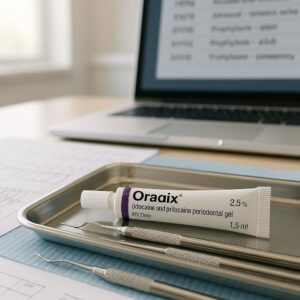
Oraqix is a combination of lidocaine and prilocaine. It comes in a cartridge that fits into a special dispenser. The product is a viscous gel that is inserted into the periodontal pocket using a blunt-tipped cannula.
Because it requires no needle, it significantly reduces the anxiety many patients feel about “getting a shot.” It works rapidly—usually within 30 seconds—and provides profound anesthesia for the soft tissue of the pocket without the numbness of the lip or cheek that patients often dislike after a traditional block.
It is approved specifically for periodontal scaling and root planing. It is not typically used for restorative procedures or extractions because it doesn’t provide pulpal anesthesia or profound hard tissue anesthesia.
The ADA Code: D4999 or Something Else?
This is the million-dollar question for dental billers. There is no single ADA code that explicitly says “Oraqix.” The American Dental Association (ADA) does not have a specific Current Dental Terminology (CDT) code solely dedicated to the application of this anesthetic gel.
So, how do you bill for it?
The most widely accepted and commonly used code for Oraqix is D4999.
D4999: Unspecified Periodontal Procedure, By Report
D4999 is a miscellaneous code used for periodontal procedures that do not have a specific CDT code. Because Oraqix is a unique delivery method for anesthesia specifically for periodontal pockets, this is the code designated for it.
However, there is a catch: D4999 requires a “by report” narrative. You cannot simply submit a claim with D4999 and expect payment. You must attach a detailed description of the procedure.
What a “By Report” Narrative Should Include:
To ensure reimbursement, your narrative should explain:
-
The Diagnosis: Confirm that the patient has active periodontitis (codes such as K05.3, K05.4, etc.).
-
The Procedure: State that you performed scaling and root planing (typically D4341 or D4342).
-
The Anesthetic: Explain that Oraqix was used as a non-injectable, needle-free anesthetic to manage pain and anxiety during the procedure.
-
The Medical Necessity: Justify why this was necessary. For example, “Patient has severe needle phobia” or “Use of conventional injectable anesthetic poses risk of paresthesia in this region due to anatomical variations.”
Alternative Coding Approaches
While D4999 is the standard, some practices have attempted to use other codes, though this is generally not recommended without careful consideration.
| Code | Description | Suitability for Oraqix |
|---|---|---|
| D4999 | Unspecified periodontal procedure, by report | Best Fit. Specifically designed for periodontal services not otherwise listed. |
| D9630 | Drugs or medicaments dispensed in the office | Incorrect. This code is for prescribing or dispensing take-home medications (antibiotics, pain meds), not in-office application of an anesthetic. |
| D9910 | Application of desensitizing medicament | Incorrect. This is for treating tooth sensitivity, not for providing anesthesia during active treatment. |
| D9210 | Local anesthesia administered non-injection | Potential Alternative (Debated). Some practices use this for anesthesia without injection. However, this code is typically associated with nitrous oxide or other anxiolysis methods. It may work, but D4999 is more specific to the periodontal nature of the service. |
Important Note: Always check with individual insurance payers. Some regional Delta Dental or Blue Cross Blue Shield plans have internal policies that prefer D9210. However, for clarity and to avoid bundling issues, D4999 with a narrative remains the gold standard recommended by the American Academy of Periodontology and Oraqix manufacturer guidelines.
Clinical Integration: How Oraqix Works with Scaling Codes
When you bill for Oraqix using D4999, it is essential to understand that you are billing for the management of anesthesia, not the treatment itself. The treatment codes remain standard.
Pairing D4999 with D4341 and D4342
The actual work—the removal of calculus and plaque—is billed using the standard periodontal scaling codes.
-
D4341: Periodontal scaling and root planing—four or more teeth per quadrant.
-
D4342: Periodontal scaling and root planing—one to three teeth per quadrant.
When you submit a claim, you will usually see something like this:
-
D4341 (or D4342): Primary procedure.
-
D4999: Adjunctive service.
Is D4999 Always Reimbursed?
Unfortunately, the answer is no.
Many insurance plans consider anesthetic management (even a non-injectable one) as a bundled part of the primary procedure. They argue that the fee for D4341 already includes a standard allowance for anesthetic.
However, Oraqix is not standard anesthetic. It is a specialized, costly material that requires specific training and a delivery system. Because it is a physical product inserted into the pocket, many clinicians successfully argue for separate reimbursement.
Scenarios Where Reimbursement is More Likely:
-
Medical Necessity: If the patient has a documented allergy to epinephrine (often found in injectable anesthetics), Oraqix is a safe alternative.
-
Needle Phobia: If a patient cannot tolerate injections due to severe anxiety or a gag reflex triggered by the syringe.
-
Anticoagulant Use: For patients on blood thinners, the trauma of an injection can increase the risk of bleeding. The atraumatic tip of the Oraqix cannula is often a safer choice.
Step-by-Step Guide to Billing D4999 for Oraqix
If you want to maximize your chances of getting paid, you cannot just send a code. You need a system. Here is a step-by-step guide to ensuring your claims are clean and defensible.
Step 1: Document the Diagnosis
Before you even pick up the Oraqix dispenser, ensure your charting is solid.
-
List the specific teeth or quadrants.
-
Note pocket depths (5mm+).
-
Document bleeding on probing.
-
Include the periodontal diagnosis (e.g., Chronic Periodontitis, Generalized, Stage II Grade B).
Step 2: Document the Rationale
In the patient’s chart, note why Oraqix was chosen over a traditional injection.
-
Example: “Patient reports severe needle phobia preventing previous treatment. Discussed needle-free anesthetic option. Patient consented to Oraqix to facilitate completion of SRP.”
Step 3: Write the Narrative for the Claim
On the insurance claim form (either paper or electronic), attach a narrative for D4999.
-
Example Narrative: “D4999 is used to report the administration of Oraqix, a needle-free, non-injectable local anesthetic (lidocaine/prilocaine) inserted directly into the periodontal pocket via a blunt cannula. This was required to manage pain and anxiety associated with scaling and root planing in a patient with documented needle aversion and active periodontitis in the specified quadrants. The anesthetic gel is a separately billable material not included in the primary SRP fee.”
Step 4: Set Accurate Fees
Your fee for D4999 should reflect the cost of the material and the time spent.
-
Oraqix cartridges are expensive.
-
The application requires additional chair time for administration and waiting for the anesthetic to take effect.
-
A typical fee range for D4999 with Oraqix is between $50 and $100 per quadrant, depending on your geographic location and practice overhead.
The Patient Experience: Why It Matters
Beyond the codes and the numbers, Oraqix represents a shift toward more compassionate care. In an era where patients are increasingly shopping for comfort and convenience, offering needle-free options can set your practice apart.
How to Present Oraqix to Patients
When discussing treatment, the way you present the anesthetic option matters.
“Mrs. Jones, we need to get this area numb so we can clean it thoroughly. I can do that the traditional way with a shot, which numbs your lip and cheek for a few hours. Or, I can use a needle-free gel that goes right into the pocket, numbs only the area we are working on, and wears off in about 15 minutes. Which would you prefer?”
This gives the patient autonomy. Most will choose the needle-free option if it is available.
Managing Expectations
It is important to be honest.
-
It’s not for everything: Explain that Oraqix is great for gum treatments but may not be enough for drilling on teeth.
-
It requires cooperation: Because it’s not a deep nerve block, the patient may feel pressure. Let them know they will remain in control and can ask for more anesthetic if needed.
-
The taste: The gel has a slightly bitter taste. Having a suction tip ready and offering a rinse beforehand helps.
Common Coding Pitfalls and How to Avoid Them
Even experienced billers can trip up when it comes to non-injectable anesthetics. Here are the most common mistakes to avoid.
1. Using D9630 (Drugs Dispensed)
This is the most frequent error. D9630 is for drugs that the patient takes home, such as antibiotics or analgesics. Applying a gel in the office is not “dispensing” in the CDT definition. Using this code is almost guaranteed to result in a denial.
2. Failing to Attach the Narrative
If you use D4999 and send it electronically without a narrative in a text field, the claim will likely be rejected. Many clearinghouses require a specific “narrative” field. If your software doesn’t have it, submit the claim on paper with a typed attachment.
3. Billing for Oraqix Without SRP
Oraqix is specifically indicated for periodontal scaling and root planing. If you bill D4999 for Oraqix used during a prophylaxis (D1110) or a debridement (D4355), the claim will be denied. The anesthetic is tied to the surgical nature of SRP.
4. Double-Dipping with Injections
If you administer a traditional block (like lidocaine with epinephrine) and Oraqix in the same quadrant, you cannot bill D4999. Insurance will see this as duplicative. Oraqix is usually intended as a replacement for, not an addition to, injectable anesthesia.
Legal and Regulatory Considerations
As a dental professional, staying compliant with state dental boards and insurance contracts is paramount.
Scope of Practice
While Oraqix is needle-free, it is still a prescription drug. In most states, only licensed dentists, dental hygienists with local anesthesia permits, or those working under direct supervision may administer it. Always check your state’s dental practice act to ensure your hygienists are permitted to administer this specific modality.
Insurance Contract Obligations
Before you implement a standard policy of billing D4999, review your contracts with insurance providers. Some PPO plans explicitly exclude payment for “unspecified procedures” or require that any anesthetic used during SRP is inclusive.
If you are in-network with a plan that does not pay D4999, you generally cannot bill the patient for the difference unless you have a signed waiver acknowledging the patient’s responsibility for non-covered services.
Financial Implications for the Practice
Let’s talk about money. Oraqix is not cheap. As of the last market analysis, the cost per cartridge is significantly higher than a standard carpule of anesthetic. If you are using this product without billing for it, you are losing money.
Calculating Your Cost
To set a sustainable fee for D4999, consider:
-
Material Cost: The per-cartridge price of Oraqix.
-
Dispensing Tip: The plastic cannula tip is often single-use.
-
Labor: The time it takes for the hygienist or dentist to apply it and wait for the onset (30 seconds to 2 minutes).
-
Waste: If you open a cartridge and don’t use it, that cost is lost.
Value Proposition
While reimbursement for D4999 can be inconsistent, the value of Oraqix is not just in the direct reimbursement. It is in the case acceptance.
Patients who fear needles often delay treatment until their periodontal disease becomes severe. By offering Oraqix, you lower the barrier to entry for treatment. You convert a “no” into a “yes.” That treatment plan for four quadrants of SRP (which generates significant revenue) is only possible if the patient agrees to the anesthesia.
A Comparative Analysis: Oraqix vs. Traditional Anesthesia for SRP
To fully appreciate the coding and clinical nuances, let’s look at how Oraqix stacks up against the traditional “shot.”
| Feature | Oraqix (D4999) | Traditional Injectable (Bundled) |
|---|---|---|
| Delivery | Needle-free, blunt cannula | Syringe with needle |
| Patient Anxiety | Low; no visible needle | Moderate to High |
| Anesthesia Type | Soft tissue infiltration only | Nerve block / infiltration |
| Duration of Numbness | ~15-20 minutes (wears off quickly) | 2-4 hours (lip/cheek numbness) |
| Billing | Separate code (D4999) | Bundled into SRP code |
| Risk of Hematoma | Very low | Low to Moderate |
| Post-Op Numbness | None (no lip or cheek numbness) | Prolonged numbness, risk of biting |
| Material Cost | High (per cartridge) | Low (per carpule) |
Enhancing Your Documentation with Technology
To ensure that your D4999 claims withstand scrutiny, modern dental software can help. Many practice management systems (like Dentrix, Eaglesoft, or Open Dental) allow you to create “procedure note templates.”
Creating a Template for Oraqix
Create a quick button or template that auto-populates your clinical notes with:
-
Reason for Use: “Needle phobia / medical necessity.”
-
Application: “Oraqix gel applied to periodontal pockets of teeth #x-x using blunt cannula.”
-
Result: “Anesthesia achieved. Patient tolerated procedure well.”
-
Billing Flag: Ensure D4999 is selected for the correct quadrant.
This consistency helps if an auditor ever reviews your records. It shows that the use of the product was intentional, documented, and medically necessary.
Addressing Insurance Denials
Despite your best efforts, you will likely receive denials for D4999. Knowing how to handle them is crucial.
The “Bundled Service” Denial
The insurance company states: “This service is considered part of the primary procedure.”
How to Appeal:
Write a concise appeal letter. Include:
-
A copy of the Oraqix manufacturer’s literature stating it is a separate product requiring a separate delivery system.
-
A note that the material is not standard local anesthesia; it is a specialized, costly device.
-
A reference to the patient’s specific need (anxiety, medical condition) that made this the only viable option for treatment.
The “Not a Covered Benefit” Denial
The insurance company states: “D4999 is not a covered benefit under this plan.”
How to Handle:
If the plan simply doesn’t cover unspecified codes, you have a few options:
-
Write it off: If you are in-network, you may have to eat the cost.
-
Bill the patient: If you are out-of-network or the patient signed a waiver for non-covered services, you can bill the patient directly.
-
Consider D9210: In rare cases, if D4999 is flatly not covered, you can attempt D9210. However, verify with the payer first.
The Future of Needle-Free Anesthesia and Coding
As dentistry evolves, so too will the CDT codes. The ADA updates the CDT manual annually. Currently, there is no dedicated code for “periodontal pocket anesthetic gel.”
However, with the rise of patient comfort technologies—such as computerized delivery systems (The Wand) and needle-free options like Oraqix—it is possible that future editions of CDT may introduce a specific code to address this.
Until then, D4999 remains your best tool.
Staying involved in your local dental society and keeping an ear to the ground for coding changes is essential. When the ADA releases new codes in October for the following year, it’s a good practice to review whether any new codes pertain to adjunctive anesthesia.
Practical Tips for Dental Hygienists
For the hygienists who are actually using Oraqix on a daily basis, your input into the coding process is invaluable. You are the one who sees the clinical results and hears the patient feedback.
Communicating with the Front Desk
Establish a protocol where the hygienist flags the chart for the billing team when Oraqix is used.
-
Note: “Oraqix used in UR. D4999 narrative attached to claim.”
Patient Consent
Since D4999 may be a non-covered service, it is wise to have a conversation about potential out-of-pocket costs before you use the product.
-
Script: “This anesthetic is a special gel that costs a bit more than the standard injection. Your insurance may or may not cover it. Would you like us to check your benefits first, or are you okay with a potential fee of about $X if insurance doesn’t pay?”
Transparency builds trust and reduces the chance of a patient being upset when they receive an unexpected bill.
Conclusion
Navigating the ADA dental code for Oraqix requires a blend of clinical knowledge, coding precision, and clear communication. The accepted standard is D4999, used alongside scaling and root planing codes (D4341/D4342), supported by a robust “by report” narrative that justifies medical necessity. While reimbursement can be inconsistent due to payer policies, the value of offering this needle-free option extends far beyond the insurance check—it enhances patient comfort, increases case acceptance for necessary periodontal therapy, and positions your practice as a leader in anxiety-free care. By documenting thoroughly and billing accurately, you protect your practice financially while providing a superior clinical experience.
Frequently Asked Questions (FAQ)
1. Is there a specific ADA code just for Oraqix?
No, there is no specific CDT code exclusively for Oraqix. The most appropriate and widely accepted code is D4999 (Unspecified Periodontal Procedure, By Report).
2. Can I bill insurance for Oraqix if I also gave a shot?
Generally, no. If you administered a traditional injectable anesthetic in the same quadrant, insurance will consider the Oraqix duplicative and deny the claim. Oraqix is typically intended to replace the injection, not supplement it.
3. What happens if my insurance denies D4999?
If the denial is due to bundling (they consider anesthesia part of the scaling), you can appeal with a narrative explaining the specialized nature and cost of the material. If it is due to the code not being a covered benefit, you may need to write off the fee (if in-network) or bill the patient (if out-of-network with prior consent).
4. Does medical insurance ever cover Oraqix?
Rarely. Since it is a dental procedure (periodontal scaling), the primary coverage is dental insurance. However, if there is a strong medical necessity (e.g., a patient with a heart condition where epinephrine is contraindicated, or a bleeding disorder), some medical policies may cover it under surgical anesthesia benefits, though this requires specific coding (CPT codes) and is complex.
5. Can a dental hygienist apply Oraqix?
It depends on the state regulations. In many states, a licensed dental hygienist with a local anesthesia permit can administer Oraqix. In others, it may require direct supervision of the dentist. Always check your state’s Dental Practice Act.
Additional Resource
For the most up-to-date information on CDT codes and billing guidelines, the American Dental Association (ADA) publishes the annual Current Dental Terminology (CDT) guide.