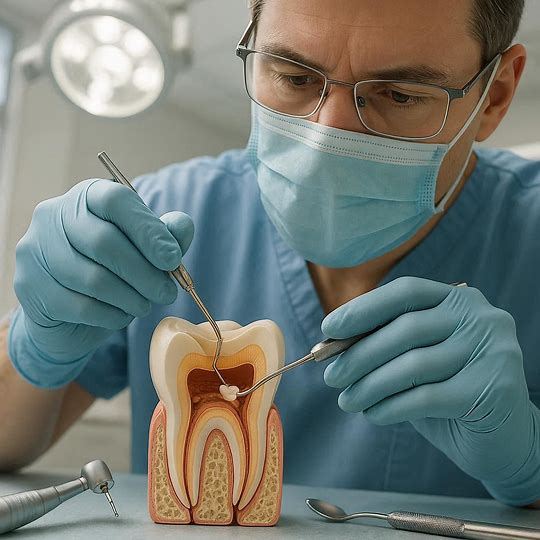
ADA Full Mouth Debridement Code (D4355)
- On
- InDENTAL CODE
Walking into a dental office can sometimes feel like stepping into a foreign country where everyone speaks a different language. Between the strange sounds of the instruments and the alphanumeric codes on your treatment plan, it is easy to feel overwhelmed. If you have recently received a treatment plan that includes the code “D4355,” you might be wondering what it means and why it is necessary.
In the world of dentistry, codes matter. They determine what your insurance will cover, they define the scope of your treatment, and they ensure that your dentist is following the standard of care. The ADA full mouth debridement code is one of the most misunderstood codes in dental practice. It is often confused with a regular cleaning, or it is mistaken for a more serious gum disease treatment.
This article is designed to clear up that confusion. We will explore everything you need to know about D4355. Whether you are a patient trying to understand your bill or a dental professional looking for a refresher, this guide will provide you with a realistic, reliable, and comprehensive overview. We will look at what the procedure involves, why a dentist might recommend it, how it differs from other common codes, and how to navigate the insurance aspects.
Let’s start by defining exactly what this procedure is.
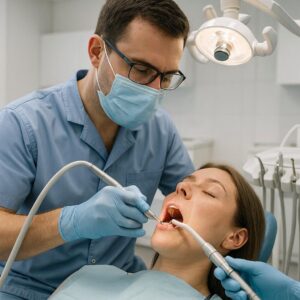
Table of Contents
ToggleWhat Is the ADA Full Mouth Debridement Code (D4355)?
The American Dental Association (ADA) maintains a standardized set of codes known as the Current Dental Terminology (CDT) code set. These codes are used universally across the United States to document dental procedures. Code D4355 is officially defined as “Full mouth debridement to enable comprehensive evaluation and diagnosis.”
This definition is crucial. The phrase “to enable comprehensive evaluation and diagnosis” tells us exactly why this procedure exists. It is not a standalone treatment in the way a standard cleaning is. Instead, it is a preliminary procedure designed to clear away significant deposits of plaque and calculus (tartar) so that the dentist can actually see what is happening in the mouth.
Imagine trying to inspect the foundation of a house that is covered in thick vines and overgrown bushes. You cannot see the cracks, the structural issues, or the areas that need repair. Full mouth debridement is like clearing away those bushes. It removes the heavy buildup that blocks a clear view of the teeth and gums.
When Is D4355 Necessary?
A dentist will recommend a full mouth debridement when a patient presents with a significant amount of plaque and calculus accumulation. This is typically seen in patients who have not had a dental visit in several years. When deposits become excessive, they cover the surfaces of the teeth and extend below the gumline, making it impossible for the dentist to perform a standard oral evaluation.
During a typical new patient exam, a dentist uses a small explorer (a metal probe) to check for cavities and a periodontal probe to measure the depth of the pockets around the teeth. If the teeth are covered in heavy calculus, these instruments cannot make proper contact with the tooth surface or the gum tissue. The calculus acts as a barrier.
In these cases, performing a standard prophylaxis (a regular cleaning) is not effective. A regular cleaning is designed for maintenance. It assumes the patient has relatively healthy gums and minimal buildup. If a dentist tried to perform a regular cleaning on a mouth with heavy calculus, it would be ineffective, painful, and would not address the underlying issue.
What Does the Procedure Involve?
Full mouth debridement is a specific process. It is important to know that this is not a “deep cleaning” (scaling and root planing) and it is not a routine cleaning.
The procedure typically involves:
-
Ultrasonic scaling: The dentist or dental hygienist uses an ultrasonic device that vibrates at a high frequency to break up large chunks of calculus. A water spray helps to wash away debris and keep the area cool.
-
Gross scaling: Hand instruments (scalers) are used to remove larger deposits that the ultrasonic device loosened.
-
Irrigation: The mouth is rinsed thoroughly to remove dislodged particles.
The goal here is not to achieve perfectly smooth root surfaces or to cure gum disease. The goal is simply to remove the bulk of the debris so that a proper examination can take place.
Once the debridement is completed, the dentist will often ask the patient to return for a second appointment. During that second visit, the dentist will perform a comprehensive oral evaluation. Now that the teeth and gums are free of excessive buildup, they can accurately chart cavities, take X-rays without obstruction, and perform a proper periodontal evaluation to determine if the patient has gingivitis or periodontitis.
Important Note: Full mouth debridement is often a “two-visit” process. The first visit removes the debris. The second visit provides the diagnosis and outlines the definitive treatment plan.
D4355 vs. Other Common Codes: A Clear Comparison
One of the biggest sources of confusion for patients is understanding how D4355 differs from D1110 (prophylaxis) and D4341/D4342 (scaling and root planing). These codes are not interchangeable. Using the wrong code can result in insurance claim denials or improper treatment.
To help clarify, let’s break down these codes side by side.
| Code | Procedure Name | Purpose | Typical Patient | Frequency |
|---|---|---|---|---|
| D1110 | Prophylaxis (Adult) | Preventive maintenance; removes soft deposits, stain, and light calculus. | Patient with healthy gums (no bone loss) or stable gingivitis. | Usually every 6 months. |
| D4355 | Full Mouth Debridement | Preliminary removal of heavy calculus and plaque to allow for a comprehensive exam. | Patient with heavy buildup preventing evaluation; often a new patient with a long history without dental care. | Once per diagnosis; not a routine maintenance code. |
| D4341 | Scaling and Root Planing (Per Quadrant) | Therapeutic treatment for active periodontal disease; smooths root surfaces to promote gum reattachment. | Patient with periodontitis (bone loss, deep pockets). | Performed as a definitive treatment; may require maintenance follow-ups. |
Why the Distinction Matters
If you are a patient, understanding these differences helps you set realistic expectations. If your dentist recommends D4355, they are essentially saying, “I cannot see what is going on yet, so we need to clear the path first.”
It is also important to note that a full mouth debridement is not a substitute for a regular cleaning. After the debridement and the comprehensive exam, the dentist will determine what you need next. If you have healthy gums, you might come back for a regular prophylaxis (D1110). If you have gum disease, you might need scaling and root planing (D4341).
Dr. Sarah Jenkins, a practicing general dentist in Austin, Texas, explains it this way:
“I use D4355 often with new patients who haven’t seen a dentist in five or ten years. I can’t ethically diagnose them without seeing what is under the buildup. The debridement allows me to be honest with them about their oral health. It prevents me from guessing or missing something critical like a cavity hidden under calculus.”
The Clinical Workflow: What to Expect Step by Step
If your dentist has recommended a full mouth debridement, knowing what to expect can ease any anxiety you might have. Here is a realistic look at how the process typically unfolds from the moment you sit in the chair to the moment you leave with a definitive treatment plan.
Step 1: The Initial Assessment
Before any instruments touch your teeth, the dentist or hygienist will likely take a few X-rays. While heavy calculus can sometimes obscure X-ray images, they will try to get a baseline. They will also visually assess the amount of buildup. If the buildup is so severe that the gums are swollen and bleeding heavily, or if the calculus is covering most of the tooth surface, they will recommend D4355.
Step 2: The Debridement Appointment
You will be scheduled for a visit dedicated solely to debridement. This appointment usually lasts between 45 minutes to an hour. The focus is on efficiency and comfort.
-
Numbing: Depending on the sensitivity of your teeth and the depth of the calculus, the hygienist may use a topical anesthetic or local anesthetic (numbing shots) to ensure you are comfortable. This is not always necessary, but it is common when calculus extends deep under the gumline.
-
Ultrasonic Scaling: The hygienist will use an ultrasonic scaler. You will hear a high-pitched sound and feel a vibration. Water will be sprayed into your mouth, which is immediately suctioned out. This device is excellent at breaking down large, stubborn pieces of calculus.
-
Hand Scaling: After the bulk is removed, the hygienist uses hand instruments to scrape off any remaining deposits. This ensures the surface is clean enough for the dentist to see.
-
Polishing (Usually Not Done): Typically, polishing with a rubber cup and prophy paste is not part of a debridement. The goal is debris removal, not cosmetic polishing. Polishing comes later during the regular cleaning phase.
Step 3: The Healing and Re-evaluation
After the debridement, your gums will likely feel sore for a day or two. This is normal. The gums may have been inflamed for years, and now that the irritants (calculus) are removed, they will begin to heal. The dentist will usually schedule a follow-up appointment for a few weeks later.
Step 4: The Comprehensive Exam
This is the most critical step. At the follow-up appointment, the dentist will perform a comprehensive evaluation. They will:
-
Re-evaluate your gums.
-
Probe the pocket depths around each tooth to check for periodontitis.
-
Re-evaluate X-rays or take new ones if needed.
-
Check for cavities.
-
Discuss a long-term treatment plan.
Only after this appointment will you know if you need a simple cleaning, a deep cleaning, or other restorative work like fillings or crowns.
Insurance and Financial Considerations
Navigating dental insurance can be frustrating. Coverage for D4355 varies widely depending on the insurance carrier and the specific plan. However, there are some general trends that patients should be aware of.
Is D4355 Covered?
Many insurance plans do cover full mouth debridement, but often with conditions. Because it is considered a diagnostic or preliminary procedure, it is often covered similarly to an exam. However, there are nuances:
-
Frequency Limitations: Unlike regular cleanings (D1110) which are often covered twice a year, D4355 is usually limited to once per lifetime per dentist, or once every three to five years. Insurance companies view it as a one-time necessity to establish a baseline.
-
Separate from Prophylaxis: If you have D4355 performed, you may still be eligible for a regular prophylaxis (D1110) later in the same year. However, some plans consider them mutually exclusive within a short timeframe. It is essential to check with your insurer.
What If Insurance Denies the Claim?
Denials are common for D4355, primarily due to confusion with other codes. If your insurance denies the claim, it is often because:
-
The code was bundled: Some insurers consider debridement part of the comprehensive exam fee.
-
Lack of documentation: The dentist must submit X-rays and a narrative explaining why a regular cleaning was not possible. If this documentation is missing, the claim is often denied.
-
Frequency caps: The patient had a debridement performed elsewhere recently.
If you receive a denial, do not panic. Ask your dental office if they have an insurance coordinator. They often handle appeals. A well-documented appeal with clinical notes and X-rays usually results in coverage if the procedure was medically necessary.
Out-of-Pocket Costs
If you do not have insurance, or if your insurance denies the claim, the cost of a full mouth debridement typically ranges from $150 to $350 depending on the geographic location and the dental practice. This is generally more expensive than a regular cleaning but less expensive than scaling and root planing (which is billed per quadrant).
Common Misconceptions About Full Mouth Debridement
There is a lot of misinformation floating around about this procedure. Let’s clear up a few common myths.
Misconception 1: “It’s just a regular cleaning.”
Reality: As we discussed earlier, this is false. A regular cleaning (prophylaxis) is a preventive procedure for healthy mouths. Full mouth debridement is a diagnostic precursor for mouths with significant buildup. If a dentist bills a regular cleaning for a patient who needed debridement, they are technically under-treating the patient and violating coding ethics.
Misconception 2: “It’s a deep cleaning.”
Reality: This is also false. Scaling and root planing (deep cleaning) is a therapeutic procedure that targets the root surfaces below the gumline to treat active infection. Debridement is superficial in comparison. It focuses on bulk removal. If you need a deep cleaning, you will know it after the debridement and the comprehensive exam.
Misconception 3: “If I get D4355, I don’t need anything else.”
Reality: Unfortunately, debridement is rarely the final step. It is the first step. In most cases where a patient needs D4355, they have underlying issues such as generalized gingivitis, periodontitis, or multiple cavities that have been hidden by the buildup. The debridement is the gateway to getting your oral health back on track, not the finish line.
Misconception 4: “It’s just a money grab by the dentist.”
Reality: Reputable dentists recommend this procedure for diagnostic clarity. Performing a comprehensive exam on a mouth covered in heavy calculus is akin to a medical doctor diagnosing a skin condition through a heavy shirt. They can’t do it accurately. Charging for a regular cleaning in this scenario would actually be fraudulent because the service provided (removing heavy buildup) is a different, more complex service than a routine maintenance cleaning.
The Importance of Accurate Coding in Dentistry
For dental professionals, understanding and correctly applying the ADA full mouth debridement code is a matter of legal and ethical responsibility. The CDT code set is designed to reflect the complexity of the service provided.
Ethical Considerations
Using D4355 incorrectly can lead to allegations of insurance fraud. For example:
-
Upcoding: Billing D4355 when a simple D1110 was performed.
-
Downcoding: Billing D1110 when a more complex D4355 was performed to avoid a denial, thereby devaluing the service.
Dentists must document the “why.” The clinical notes should clearly state why a full mouth debridement was necessary. Phrases like “heavy generalized calculus obscuring visualization of tooth structures and gingival margins” or “unable to perform comprehensive exam due to excessive supra and subgingival deposits” justify the use of D4355.
The Role of Periodontal Charting
One of the key elements in deciding between D4355 and D4341 (scaling and root planing) is the ability to perform accurate periodontal charting. You cannot get accurate pocket depth readings if calculus is bridging the teeth and covering the gums. Once the D4355 is complete and the gums have healed (usually 2-4 weeks), the dentist can perform definitive charting. If pockets are 5mm or deeper with bleeding, the patient likely requires scaling and root planing.
Patient FAQs: Addressing Your Concerns
It is natural to have questions when you see a code you do not recognize on your treatment plan. Here are some of the most frequently asked questions from patients regarding full mouth debridement.
Is the procedure painful?
Most patients experience some sensitivity. The gums are typically inflamed, so they may bleed and feel tender during the procedure. Dentists can use local anesthetic (numbing) to ensure you are comfortable. After the procedure, over-the-counter pain relievers like ibuprofen usually manage any post-operative soreness effectively.
How long does it take?
The debridement appointment itself usually lasts about 45 to 60 minutes. The subsequent comprehensive exam appointment typically lasts 30 to 45 minutes.
Can I eat after a full mouth debridement?
Yes, but it is wise to wait until the anesthesia wears off if you were numbed to avoid biting your cheek or tongue. It is also best to avoid hard, crunchy, or spicy foods for the first 24 hours to allow the gum tissue to settle down.
Why can’t I just get a deep cleaning instead?
A deep cleaning (scaling and root planing) is a specific procedure designed to treat diagnosed periodontitis. If the dentist does not know if you have periodontitis yet because the calculus is in the way, performing a deep cleaning would be like prescribing a heavy antibiotic without knowing what infection you are treating. The debridement provides the diagnosis that dictates the appropriate treatment.
Will my insurance cover the second appointment (the exam)?
Usually, yes. Most insurance plans cover two comprehensive or periodic exams per year. The exam performed after the debridement is typically covered under your preventive benefits, assuming you have not exceeded your frequency limits.
Additional Resource: Finding Reliable Information
Navigating dental codes and treatment plans can be complex. For readers who want to verify information or understand the official guidelines, the most reliable source is the American Dental Association (ADA) itself.
The ADA publishes the Current Dental Terminology (CDT) book annually. This is the definitive guide to dental coding. You can often find this resource at local libraries, or you can access it through the ADA’s official website. Additionally, many state dental boards offer patient guides to understanding dental treatment and billing.
Link to resource: American Dental Association – CDT Code Information (Link opens in a new window)
Note: Always consult with your specific dental provider and insurance carrier for information pertaining to your unique situation, as benefits and policies vary.
Conclusion
Navigating the world of dental codes does not have to be a mystery. The ADA full mouth debridement code (D4355) serves a vital role in dentistry. It is the bridge between a mouth that has been neglected and a mouth that is on the path to health. It is not a regular cleaning, nor is it a deep cleaning; it is a preparatory procedure that allows for accurate diagnosis.
By understanding this code, you empower yourself as a patient. You can ask the right questions, understand why a second appointment is necessary, and navigate your insurance benefits with confidence. Remember, the goal of D4355 is clarity. It ensures that your dentist is not guessing when it comes to your oral health, ultimately leading to better, more precise, and more effective long-term care.
Frequently Asked Questions (FAQ)
Q1: Is D4355 the same as a “deep cleaning”?
No. D4355 (full mouth debridement) removes heavy buildup to allow for an exam. A deep cleaning (scaling and root planing, codes D4341/D4342) treats active gum disease below the gumline. They are distinct procedures with different purposes.
Q2: How often can I get a full mouth debridement?
Insurance typically limits this procedure to once per lifetime per provider or once every three to five years. It is not a routine maintenance procedure like a regular cleaning (D1110).
Q3: Why didn’t my dentist just do a regular cleaning?
If you had heavy calculus buildup, a regular cleaning would not be effective. The instruments used in a regular cleaning are not designed to remove heavy, tenacious deposits. Your dentist needed to use more intensive methods (ultrasonic and heavy hand scaling) to clear the debris first.
Q4: Will my insurance pay for D4355?
Most insurance plans provide coverage for full mouth debridement if it is medically necessary and properly documented. However, coverage varies by plan. It is best to ask your dental office to submit a pre-treatment estimate to confirm your specific benefits.
Q5: Do I need to be numb for this procedure?
Not always. It depends on your comfort level and the extent of the buildup. If the calculus is deep below the gumline, the dentist will likely recommend local anesthesia to ensure a comfortable experience.
Q6: What happens if I don’t get the debridement?
If you decline the debridement, the dentist cannot perform a thorough comprehensive exam. This means they may miss cavities, gum disease, or other pathologies. Your treatment would be based on incomplete information, which could lead to worsening oral health issues down the line.
Q7: Can I go back to work after the appointment?
Yes, most patients return to normal activities immediately after the appointment. If you received numbing medication, you may want to wait for the numbness to wear off before eating or speaking in a professional capacity.

dentalecostsmile
Newsletter Updates
Enter your email address below and subscribe to our newsletter