Dental Insurance Providers and Coverage Details in USA
Let’s be honest for a moment. When was the last time you actually looked forward to a conversation about insurance? Probably never. But when it comes to your smile, understanding the ins and outs of dental coverage is one of the smartest things you can do for your health and your wallet.
In the United States, dental insurance operates a little differently than medical insurance. It’s not just about emergencies; it’s about prevention. If you have ever stared at a treatment plan at your dentist’s office, feeling a mix of confusion and sticker shock, you are not alone.
This guide is designed to be your friendly roadmap. We will walk through the maze of dental insurance providers, decode the confusing jargon, and help you figure out exactly what you are paying for. Whether you are shopping for an individual plan, evaluating what your employer offers, or just trying to understand your current coverage, we’ve got you covered.
Why Dental Insurance Matters More Than You Think
Many people wonder if dental insurance is worth the monthly premium. After all, a cleaning twice a year might not seem like a huge expense. However, the value of dental insurance lies in risk management.
Dental issues rarely announce themselves politely. A small cavity can turn into a root canal. A cracked tooth can lead to an extraction and an implant. Without insurance, these procedures can cost thousands of dollars.
Moreover, oral health is directly linked to overall health. Studies have shown connections between gum disease and heart disease, diabetes, and even complications during pregnancy. Having insurance encourages you to keep up with those biannual cleanings, which are often the first line of defense in catching larger issues early.
Understanding the Basics of Dental Coverage
Before we look at specific companies, it is crucial to understand how dental plans are structured. Most plans follow a similar pattern known as the “100-80-50” structure. But what does that actually mean?
The Three-Tier System: Preventive, Basic, and Major
Almost every dental insurance plan categorizes procedures into three classes. Understanding this is the key to knowing what your wallet will face when you sit in the dentist’s chair.
-
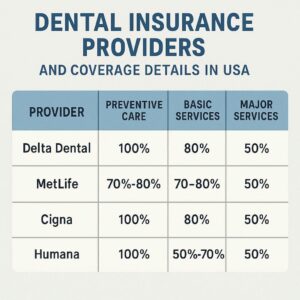
Preventive Care (Usually covered at 100%): This is the foundation. It includes routine exams, cleanings (usually two per year), fluoride treatments for children, and routine x-rays. Insurers want you to do this because it prevents expensive claims later.
-
Basic Procedures (Usually covered at 70-80%): This tier typically covers fillings (amalgam or composite), simple extractions, root canals (though sometimes these fall under major), and periodontal (gum) treatments.
-
Major Procedures (Usually covered at 50%): This is where costs can escalate. Major services include crowns, bridges, dentures, implants, and complex oral surgery. Because the plan only pays half, you are responsible for the remaining 50% plus any deductible.
Annual Maximums: The Catch
One of the most critical details to look for is the annual maximum. This is the maximum dollar amount the insurance company will pay for your care within a 12-month benefit period.
In the USA, the average annual maximum ranges from $1,000 to $2,000 per person. It has not increased much in the last 30 years, even though the cost of dental procedures has risen significantly. This means that if you need a crown ($1,200) and a root canal ($1,500) in the same year, you will likely hit your maximum quickly, leaving you to pay the rest out-of-pocket.
Deductibles, Copays, and Waiting Periods
-
Deductible: This is the amount you pay out-of-pocket before the insurance kicks in. It usually ranges from $50 to $100 per person per year, and it often does not apply to preventive care.
-
Copays: Some plans charge a fixed fee (like $25 for a cleaning), but most modern PPO plans simply apply coinsurance (the percentage split).
-
Waiting Periods: This is a frustrating but common feature. If you buy an individual plan, you may have to wait 6 to 12 months before the insurance will cover major procedures. Some plans waive waiting periods if you had prior coverage (creditable coverage).
Types of Dental Insurance Plans
Not all dental plans are created equal. When looking at providers, you will encounter several different plan types. Knowing the difference will save you from headaches later.
Dental Health Maintenance Organization (DHMO)
Think of a DHMO like a gym membership for dentistry. You pay a low monthly premium, and you choose a primary dentist from a network. You generally pay a fixed copay for services, and there are no annual maximums or deductibles.
-
Pros: Lowest cost, no waiting periods often, predictable costs.
-
Cons: You must stay in-network. If your dentist leaves the network, you have to switch. You usually need a referral to see a specialist.
Dental Preferred Provider Organization (DPPO)
This is the most common type of dental insurance in the USA. You can see any dentist, but you pay significantly less if you stay within the provider network.
-
Pros: Flexibility to see out-of-network dentists (though you pay more), larger networks, often better coverage for major work.
-
Cons: Higher premiums than DHMOs, annual maximums apply, and deductibles exist.
Dental Indemnity Plans
Often called “traditional” or “fee-for-service,” these plans offer the most freedom. You can see any dentist, and the plan reimburses you for a percentage of the cost (usually based on the “usual and customary” fees in your area).
-
Pros: Maximum freedom of choice. No network restrictions.
-
Cons: Higher premiums. You often have to pay upfront and wait for reimbursement. It usually involves more paperwork.
Discount or Referral Plans
These are technically not insurance. You pay an annual membership fee and get a discount (usually 10-50%) off the dentist’s standard fees.
-
Pros: No waiting periods, no annual limits, covers pre-existing conditions.
-
Cons: It only discounts the price; it does not pay for anything. If you have a major issue, you still pay the majority of the bill.
Top Dental Insurance Providers in the USA
Now that we have the basics down, let’s look at the major players in the market. These companies offer a range of plans across different states, though availability varies significantly by region.
1. Delta Dental
Delta Dental is the largest dental insurance provider in the United States. They operate through a network of individual state companies, so your experience may vary depending on where you live, but their reach is unmatched.
What makes them stand out:
They boast the largest network of dentists nationwide. If you want to keep your current dentist, chances are high they are in the Delta Dental PPO network. They offer a wide variety of plans, from DHMOs to high-end PPOs.
-
Best for: People who travel frequently or want the widest choice of dentists.
-
Coverage Details: Their PPO plans typically follow the standard 100/80/50 structure. They offer a “DeltaCare USA” DHMO option which is very affordable for basic care.
-
Watch out for: Because they are state-specific, premiums and benefits vary wildly between states like California and Texas.
2. Cigna
Cigna is a global health service company that offers a robust dental insurance portfolio. They are known for integrating dental coverage with health insurance, making them a popular choice for families who bundle their insurance needs.
What makes them stand out:
Cigna’s “Dental 1500” and “Dental 1000” plans are popular among individuals. They offer a “Preventive Only” plan for those who just want cleanings and x-rays. They also have a strong focus on customer service and a user-friendly mobile app to track claims.
-
Best for: Families looking to bundle health and dental insurance.
-
Coverage Details: Many Cigna PPO plans offer a “rollover” feature. If you don’t use your full annual maximum, you can roll over up to $500 or $1,000 into the next year.
-
Watch out for: Their DHMO plans (CignaConnect) have very limited networks in rural areas.
3. MetLife
MetLife is a giant in the employee benefits space. Most people access MetLife dental insurance through their employer, but they also offer individual plans. They are particularly well-regarded for their customer service and straightforward claims process.
What makes them stand out:
MetLife is known for its “Pediatric Dental” options, which are compliant with ACA (Affordable Care Act) requirements for families. They also have a vast network of dentists.
-
Best for: Federal employees and corporate employees, as they are a major provider for large groups.
-
Coverage Details: Their “TakeAlong Dental” feature is a standout. If you leave your employer, you can often take your dental coverage with you, keeping your network and benefits intact without a waiting period.
-
Watch out for: Individual plans (non-employer) can be more expensive than competitors.
4. Humana
Humana is a leading name in health insurance, and they have carved out a niche in the dental market by offering a huge variety of plans, including some very popular dental discount plans and “loyalty” plans that increase coverage over time.
What makes them stand out:
Humana is excellent for those shopping on the marketplace or for seniors. They offer dental plans specifically designed to pair with Medicare Advantage plans.
-
Best for: Seniors (over 65) and those looking for budget-friendly DHMO or discount plans.
-
Coverage Details: Their “Loyalty Plus” plans offer a unique benefit: the annual maximum increases the longer you stay with the plan. In year one, you might have $1,000; by year three, it could be $1,500 or more.
-
Watch out for: Some of their lowest-premium plans have long waiting periods (up to 12 months) for crowns and bridges.
5. Aetna
Aetna, now a part of CVS Health, offers a broad range of dental plans known for their flexibility and strong “Vital Savings” discount options. They focus heavily on integrating dental care with overall wellness.
What makes them stand out:
Aetna’s network is robust, and they are often praised for their “Dental Health Maintenance Organization” (DHMO) plans, which offer no deductibles and no annual maximums.
-
Best for: Those who want a no-maximum plan and are willing to stay within a specific network.
-
Coverage Details: Aetna often includes orthodontia (braces) for children as a standard benefit on their PPO plans, which is not always a given with other insurers.
-
Watch out for: Like Delta Dental, Aetna’s offerings are often determined by your state of residence, so it’s essential to check local network availability.
6. Guardian
Guardian is a mutual insurance company, meaning it is owned by its policyholders. They are highly rated for financial stability and are known for offering some of the strongest “rollover” benefits in the industry.
What makes them stand out:
Guardian is a favorite among dental professionals themselves because their reimbursement rates to dentists are often higher than competitors. This means dentists are more willing to accept their plans.
-
Best for: People who want to maximize unused benefits.
-
Coverage Details: Their “DentalGuard” PPO plans often include an option where unused benefits roll over to the next year, essentially allowing you to build up a safety net for major dental work.
-
Watch out for: They are more prevalent in employer-sponsored plans than in the individual marketplace.
Comparison of Major Providers
To help you visualize the differences, here is a comparative look at how these top providers stack up against each other. Note: These are general trends. Specific plans vary by state and employer.
| Provider | Network Size | Best For | Key Feature | Typical Waiting Period |
|---|---|---|---|---|
| Delta Dental | Largest (State dependent) | Widest access to dentists | Largest PPO network in the US | 6-12 months for major |
| Cigna | Large | Families & Digital Tools | Annual maximum rollover | 6 months for major |
| MetLife | Large | Employees & Portability | “TakeAlong” coverage when leaving jobs | Varies (often none for groups) |
| Humana | Medium | Seniors & Budget Shoppers | Increasing annual maximums over time | 6-12 months |
| Aetna | Large | No-Annual-Maximum DHMO | Strong Vital Savings discount plan | Often none on DHMO |
| Guardian | Medium | Rollover Benefits | Highest reimbursement rates for dentists | 6-12 months |
Coverage Details: What’s Usually Included
While each provider has its nuances, most comprehensive dental plans in the USA share a common set of coverage details. It is helpful to think of coverage in terms of frequency limitations.
Routine Preventive Care
Most plans cover this at 100% with no deductible.
-
Cleanings: Usually two per year (every 6 months).
-
Exams: Two per year, often tied to the cleaning schedule.
-
Fluoride Treatment: Usually for dependents under 14 or 18 years old.
-
Bitewing X-rays: Typically once per year.
-
Full Mouth (Panoramic) X-rays: Usually once every 3 to 5 years.
Basic Restorative Care
This is where your coinsurance comes into play. If a plan says it covers 80% of basic care, you pay 20%.
-
Fillings: Most plans cover amalgam (silver) fillings. Some cover composite (tooth-colored) fillings on front teeth only, charging you the difference for back teeth.
-
Simple Extractions: Removal of teeth that are visible.
-
Periodontics: Scaling and root planing (deep cleaning) for gum disease. This is often limited to 4 quadrants per year or every 2 years.
Major Restorative Care
These procedures are the heavy hitters. At 50% coverage, a $2,000 crown will cost you $1,000 out-of-pocket.
-
Crowns: Often limited to one per tooth every 5 to 8 years.
-
Bridges and Dentures: Full or partial. These usually have a frequency limit (e.g., once every 5 years).
-
Implants: Not all plans cover implants. Some consider them “alternative” benefits and will pay the equivalent of a bridge instead.
-
Oral Surgery: Complex extractions (wisdom teeth) often fall here.
Orthodontics (Braces)
This is usually a separate benefit category. If a plan includes orthodontics, it often has a separate lifetime maximum (e.g., $1,500 to $3,000) that is distinct from the annual maximum.
-
Children: Many employer-sponsored plans cover orthodontics for dependents up to age 18 or 19.
-
Adults: Adult orthodontics is becoming more common, but it is often limited to a specific dollar amount or requires a higher premium plan.
How to Choose the Right Dental Insurance Plan
Selecting a plan can feel overwhelming, but you can simplify the process by asking yourself three key questions.
1. What is your dental health status?
-
If you have healthy teeth: Look for a plan with a low premium that covers preventive care at 100%. You might even consider a “Preventive Only” plan or a discount plan. You don’t need a high annual maximum if you rarely need fillings.
-
If you need major work: Look for a PPO with a high annual maximum ($2,000 or more) and a short waiting period. If you can afford a higher premium, it is worth it for the higher coverage percentage on major services.
-
If you have children: Ensure the plan covers orthodontia (braces) and has a low deductible for family plans. Check if sealants for children are covered (many plans do).
2. Do you want to stay with your current dentist?
Before you fall in love with a premium price, call your dentist’s office. Ask them, “Which insurance networks are you currently in-network with?”
If your dentist is not in the network for a PPO plan you are considering, you will either have to switch dentists or pay out-of-network rates, which can be 20-30% higher.
3. What is your budget?
Calculate the total cost, not just the monthly premium.
-
Formula: (Monthly Premium x 12) + Deductible + (Estimated Out-of-Pocket for Procedures) = Total Yearly Cost.
Sometimes, a plan with a slightly higher premium but a lower coinsurance percentage for major work (e.g., 50% vs. 40%) is cheaper in the long run if you know you need a crown.
Important Notes for Readers
Disclaimer: Insurance regulations and plan details change frequently. The information provided here is for educational purposes based on general industry standards. Always verify specific coverage details, in-network status, and waiting periods directly with the insurance provider before enrolling.
Navigating Open Enrollment
In the USA, there are specific times when you can enroll in dental insurance.
-
Employer-Sponsored: Usually during “Open Enrollment” in the fall, with coverage starting January 1st. If you have a qualifying life event (marriage, birth of a child, loss of other coverage), you can enroll outside this window.
-
Health Insurance Marketplace (ACA): Dental insurance is often sold separately from medical insurance for adults. Open Enrollment typically runs from November 1 to January 15. Pediatric dental is considered an essential health benefit for children under 18.
-
Individual Private Plans: You can buy individual dental plans directly from providers like Delta Dental or Cigna at any time of the year. However, be prepared for waiting periods.
Common Mistakes to Avoid
Navigating dental insurance is tricky. Here are a few pitfalls to watch out for.
-
Confusing “Maximum” with “Coverage”: Remember, the $1,500 annual maximum is what the insurer pays, not what you are allowed to spend. If you have a $1,500 max and a $2,000 crown, you are still on the hook for the remaining cost.
-
Ignoring the “Downgrade” Clause: Some insurance companies practice “downgrading.” If your dentist uses a composite (white) filling on a back tooth, but the plan only covers amalgam (silver), they will only pay the cost of an amalgam filling, leaving you to pay the difference. Always ask if your dentist is “in-network” for the specific material used.
-
Assuming All Dentists Take Your Insurance: Just because a dentist is “in-network” for Delta Dental does not mean they are in-network for your specific Delta Dental PPO plan. Double-check with the provider database.
Additional Resources
Finding the right plan is easier when you have the right tools. Here are some resources to help you on your journey.
-
National Association of Dental Plans (NADP): This is the go-to resource for understanding industry data and finding reputable providers.
-
State Insurance Departments: Each state has a department of insurance. Their website often includes consumer guides, complaint ratios against companies, and tools to verify if an insurer is licensed to operate in your state.
-
Healthcare.gov: If you are looking for coverage through the Affordable Care Act, this is the official marketplace. It is especially useful if you need to ensure pediatric dental coverage for your children.
The Future of Dental Insurance
The dental insurance landscape is slowly evolving. We are seeing a few trends emerge that may benefit consumers in the coming years.
-
Tele-dentistry: Many providers now offer virtual consultations. While a virtual visit can’t fill a cavity, it can be a great, low-cost way to have a dentist evaluate a toothache or determine if you need to come into the office.
-
Alternative Benefit Designs: Companies like Humana and Guardian are moving away from the rigid 100/80/50 model. Newer plans offer “bundled” benefits or “fixed copay” schedules for major services, making costs more predictable.
-
Laser and 3D Imaging: While not insurance benefits per se, insurers are beginning to cover newer technologies like laser gum therapy and 3D cone beam imaging (CBCT) more routinely, recognizing their diagnostic value.
Conclusion
Choosing the right dental insurance provider and understanding the coverage details in the USA doesn’t have to be a headache. It comes down to knowing your own dental needs, understanding the basic structure of preventive, basic, and major care, and being realistic about annual maximums.
Whether you opt for the massive network of Delta Dental, the rollover benefits of Guardian, the senior-friendly plans of Humana, or the flexibility of Cigna and Aetna, the best plan is the one that aligns with your budget and your oral health goals. Remember to check waiting periods, confirm your dentist’s network status, and always read the fine print. Your smile is an investment—protect it wisely.
Frequently Asked Questions (FAQ)
1. Is dental insurance worth it if I only go for cleanings?
It depends on the premium. If a plan costs $30/month ($360/year) and covers two cleanings that would otherwise cost $150 each, you are breaking even. However, the value of insurance is the protection against unexpected costs like a cracked tooth or sudden abscess, which can run into the thousands.
2. Can I use dental insurance immediately?
For preventive care (cleanings and exams), usually yes. For basic and major services (fillings, crowns, root canals), most individual plans impose waiting periods of 6 to 12 months. Employer-sponsored group plans often waive waiting periods.
3. What happens if I don’t use my annual maximum?
In most traditional PPO plans, the benefit does not roll over. If you don’t use it by the end of the year, it disappears. However, some providers like Cigna and Guardian offer specific plans where a portion of unused benefits rolls over to the next year.
4. Does dental insurance cover braces for adults?
Many plans do not, or they offer very limited coverage. If you are an adult seeking orthodontics, you need to look specifically for a plan that includes “adult orthodontia” as a listed benefit. These plans usually have a higher premium.
5. What is the difference between in-network and out-of-network?
In-network dentists have agreed to a contracted rate with the insurance company. You pay less because the dentist accepts a discounted fee. Out-of-network dentists have no contract. The insurance will still pay a portion (based on “usual and customary” rates), but you are responsible for the remaining balance, which can be significantly higher.
6. Why do some dentists not accept DHMO plans?
DHMO plans typically pay dentists a very low monthly capitation fee per patient rather than a fee per service. Many dentists find this model unsustainable, especially for complex treatments, so they opt out of DHMO networks while staying in PPO networks.
7. Can I buy dental insurance for just my children?
Yes. Through the Health Insurance Marketplace, pediatric dental is an essential health benefit. You can purchase a standalone pediatric dental plan. Many private insurers also offer child-only plans.