The Complete Guide to the ADA Code for a Lower Retainer
If you have ever needed a dental retainer for your lower teeth, you have likely encountered a confusing mix of terminology, bills, and insurance forms. At the center of this paperwork sits a specific set of numbers and letters known as the ADA code.
For many patients, the phrase “ADA code for a lower retainer” sounds like bureaucratic jargon. But understanding this code is actually the key to understanding your treatment plan, your out-of-pocket costs, and exactly what your dentist is proposing to do.
This guide is designed to be your friendly companion through that process. We will strip away the complex language and give you a realistic, honest look at how retainers are classified, billed, and fabricated. Whether you are a patient trying to understand a bill, a student learning the ropes, or simply someone preparing for orthodontic treatment, you have come to the right place.
We will focus heavily on the lower arch—the mandibular teeth—because retainers for the bottom teeth come with their own unique challenges. Unlike upper retainers, which benefit from the palate for support, lower retainers must contend with the tongue, saliva flow, and the constant movement of the jaw.
Let’s start at the very beginning: what exactly is an ADA code, and why does it matter for your lower retainer?
What Is an ADA Code and Why Does It Matter?
The American Dental Association (ADA) maintains a standardized system called the Current Dental Terminology (CDT). Think of it as a universal language for dental procedures. Every time a dentist performs a service—whether it is a cleaning, a filling, or crafting a retainer—they assign a specific five-character alphanumeric code to that service.
The Role of CDT Codes in Dental Care
These codes serve three main purposes:
-
Communication: They ensure that your dentist, your insurance company, and any specialist you visit are all talking about the same procedure.
-
Billing: Insurance companies use these codes to determine what they will cover and how much they will reimburse.
-
Record Keeping: They create a precise history of the dental work you have received.
When it comes to a lower retainer, there is not just one single code. The correct ADA code depends entirely on how the retainer is made, what it is made of, and why it is being placed. Using the wrong code can lead to claim denials, unexpected bills, or delays in getting your retainer.
Understanding the “D” Codes
All dental codes begin with the letter “D.” For retainers, we usually look in the range of D8000 to D8999, which covers orthodontic procedures. However, some removable retainers fall under prosthetic codes. This is where things can get a little tricky, especially for the lower arch.
In this guide, we will focus on the most common codes you will encounter:
-
D8680: Orthodontic retainer
-
D8690: Orthodontic retainer adjustment
-
D5999: Fixed (bonded) lower retainer
-
D9220 / D9230: Anesthesia codes if extractions are involved
Understanding these distinctions will empower you to ask the right questions before you agree to a treatment plan.
The Main ADA Codes for Lower Retainers
To make this as clear as possible, let’s break down the specific codes that apply to the lower jaw. We will look at them in a comparative format so you can see the differences side-by-side.
Comparative Table: Lower Retainer ADA Codes
| ADA Code | Procedure Description | Common Use for Lower Arch | Typical Material | Removable or Fixed? |
|---|---|---|---|---|
| D8680 | Orthodontic Retainer | Used for removable lower retainers (Hawley or clear plastic) after braces. | Acrylic and wire / Thermoplastic | Removable |
| D5999 | Unspecified Fixed Prosthesis | Often used for bonded lingual wires (permanent retainers) on lower front teeth. | Stainless steel wire / Composite | Fixed (Cemented) |
| D8690 | Orthodontic Retainer Adjustment | Adjusting or repairing an existing removable retainer. | N/A | N/A |
| D8670 | Periodic Orthodontic Visit | Sometimes used for follow-up visits to check a fixed lower retainer fit. | N/A | N/A |
Code D8680: The Removable Lower Retainer
The D8680 code is the workhorse of post-orthodontic care. If you had braces as a teenager or adult, and now you are getting a retainer to keep your teeth straight, this is likely the code your dentist will use.
For a lower removable retainer, there are two main styles:
-
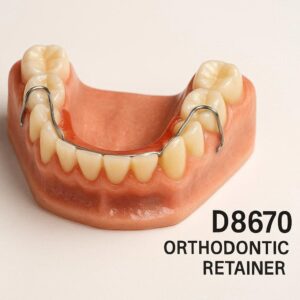
Hawley Retainer: This is the classic style. It has a metal wire that wraps around the front teeth and a hard acrylic base that rests on the inside (lingual) part of the lower gums and teeth. It is durable and can be adjusted over time.
-
Clear Plastic Retainer (Essix-type): This is a transparent, snap-on tray that fits snugly over the entire lower arch. It is less visible than the Hawley, but it is also more prone to wear and tear, especially if you grind your teeth.
When a dentist bills D8680 for a lower retainer, they are billing for the design, the lab work, and the fitting of a removable appliance meant to prevent orthodontic relapse.
Code D5999: The Fixed (Permanent) Lower Retainer
This code is a bit of a wildcard. Officially, D5999 stands for “Fixed Partial Denture” or “Unspecified Fixed Prosthesis.” However, in modern orthodontic practices, it is frequently used to bill for a fixed lower retainer—also known as a permanent or bonded lingual retainer.
This type of retainer is a thin metal wire that is glued (bonded) to the back of your lower front teeth. You cannot remove it yourself. It is a favorite among orthodontists for the lower arch because the lower front teeth (incisors) have a very high rate of shifting back to their original positions.
Important Note: Because D5999 is a general code, insurance coverage can vary wildly. Some insurance plans view it as a “prosthetic” device, while others treat it as an “orthodontic” device. Always ask your provider to verify coverage before proceeding.
Why the Lower Arch Requires Special Attention
The lower jaw is a dynamic environment. The tongue is a powerful muscle that constantly pushes against the teeth. For this reason, many orthodontists prefer fixed (D5999) retainers for the lower arch because they guarantee that the teeth will not shift, regardless of whether the patient forgets to wear their removable retainer.
However, fixed retainers require meticulous hygiene. Flossing becomes more difficult, and patients must use specialized tools like super floss or water flossers to clean around the wire. If hygiene slips, there is a risk of decalcification (white spots) or gum inflammation.
Fixed vs. Removable Lower Retainers: A Realistic Comparison
Choosing between a fixed (D5999) and a removable (D8680) retainer for your lower teeth is a significant decision. It is not just about cost; it is about your lifestyle, your discipline, and your long-term oral health.
To help you decide, let’s look at a detailed comparison.
Comparative Table: Fixed Lower Retainer vs. Removable Lower Retainer
| Feature | Fixed (Bonded) Retainer (D5999) | Removable Retainer (D8680) |
|---|---|---|
| Visibility | Invisible (bonded behind teeth) | Wire may be visible across front teeth (Hawley) or nearly invisible (Clear plastic) |
| Maintenance | High maintenance. Requires special flossing (super floss, threaders) and regular dental cleanings. | Low to moderate. Easy to clean. Must be removed for brushing/flossing. |
| Risk of Loss | No risk. You cannot lose it because it is bonded in place. | High risk. Easy to misplace, drop, or accidentally throw away. |
| Durability | Moderate. The wire can break or debond (come unglued) over time, especially if eating hard foods. | Moderate to high. Hawley retainers are very durable. Clear plastic retainers can crack. |
| Comfort | Takes time to adjust to the tongue touching the wire. May affect speech slightly. | Hawley can feel bulky. Clear plastic is usually very comfortable. |
| Lifestyle Impact | No daily removal. You eat and sleep with it in. | Must be removed for eating, drinking hot beverages, and contact sports. |
| Cost (Average) | $300 – $600 per arch (often lower if done immediately after braces) | $200 – $500 per arch |
| Long-Term Success | Excellent, provided the wire does not break. | Dependent on patient compliance. Only works if worn as directed. |
The Case for the Fixed Lower Retainer
If you are worried about forgetting to wear your retainer, the fixed option is a lifesaver. Since lower teeth are notorious for shifting quickly (sometimes within a few days of removing braces), a permanent wire offers peace of mind.
However, it is not a “set it and forget it” device. You have to be diligent about cleaning. Many patients with fixed lower retainers find that they need to visit their dental hygienist more frequently—every four months instead of six—to ensure no tartar builds up around the wire.
The Case for the Removable Lower Retainer
If you are a disciplined individual who can commit to wearing a retainer every night (and possibly during the day for the first few months), a removable retainer is a great choice. It allows for easier cleaning of your teeth and gums.
The Hawley retainer has an added benefit for the lower arch: it can be adjusted. If a tooth starts to shift slightly, the orthodontist can adjust the wire to push it back. A fixed wire, once broken, usually needs to be completely remade.
The Cost Reality: What to Expect for Your Lower Retainer
One of the most common questions patients ask is, “How much is this going to cost?” The cost of a lower retainer is rarely just the code on the paper. It is a combination of the professional fee, the laboratory fee, and any associated visits.
Average Cost Breakdown
-
Removable Lower Retainer (D8680): In the United States, the average cost ranges from $200 to $500. This usually includes the impressions (molds) of your teeth, the fabrication of the retainer by a dental lab, and the fitting appointment.
-
Fixed Lower Retainer (D5999): This typically ranges from $300 to $600. The cost is often higher because it is a more technique-sensitive procedure. The dentist must bond the wire to each individual tooth in a passive manner to ensure it doesn’t create unwanted pressure.
Factors That Influence Price
-
Geographic Location: Dental fees in New York City or Los Angeles will generally be higher than in rural areas.
-
Orthodontic Phase: If you are getting a retainer immediately after completing braces, the cost is often bundled into your total orthodontic treatment fee. If you are getting a replacement retainer years later, it is a separate fee.
-
Material: A gold-plated wire or a digitally designed and milled retainer will cost more than a standard acrylic and wire model.
-
Insurance Coverage: This is the big variable.
Navigating Dental Insurance for ADA Codes
Dental insurance treats retainers differently depending on the situation.
-
If you are under 19: Most insurance plans offer orthodontic benefits. If the retainer is part of active orthodontic treatment (braces), it is usually covered under the overall orthodontic lifetime maximum (typically $1,000 to $3,000).
-
If you are over 19: Many insurance plans do not cover orthodontics for adults. If they do, it may be a separate benefit. For a removable retainer (D8680) to be covered, it often must be deemed “medically necessary” rather than just cosmetic.
-
For Fixed Retainers (D5999): Because this code is often considered a “prosthetic” service, it may fall under your basic or major restorative coverage. Some plans cover 50% of the cost, while others deny it entirely.
Pro Tip: Before your dentist starts the work, ask the front desk to submit a “pre-authorization” to your insurance. This is a formal request for them to tell you, in writing, exactly what they will pay for the specific ADA code being used.
Step-by-Step: What Happens During the Procedure
Understanding the process can help reduce anxiety and set realistic expectations. Whether you are getting a fixed or removable lower retainer, the general flow is similar.
1. The Consultation and Examination
Your dentist or orthodontist will first examine your lower teeth. They are looking for signs of shifting, gum health, and any cavities. You cannot get a retainer if you have active gum disease or cavities that need filling. The retainer will only trap bacteria against those problem areas.
2. Taking Impressions (The Molds)
This is the step where the ADA code is assigned, and the lab work begins.
-
For a Removable Retainer (D8680): The dentist will take a traditional impression using a tray filled with gooey alginate material. Alternatively, they might use an intraoral scanner (a wand that takes a 3D digital picture of your teeth). This digital file is sent to a lab.
-
For a Fixed Retainer (D5999): The dentist will also take impressions or a digital scan. The lab will fabricate a custom wire that fits precisely to the shape of your lower front teeth.
3. Fabrication
If using a traditional lab, it takes about one to two weeks for the retainer to be made. If the dentist has an in-house milling machine or 3D printer, they can sometimes make a clear removable retainer in the same day.
4. The Fitting Appointment
-
Removable: You will try the retainer in. The dentist will check the fit, ensure the wire engages the teeth properly, and that the acrylic base does not dig into your gums. They will show you how to insert and remove it.
-
Fixed: The dentist will clean and dry your lower front teeth. They will “etch” the enamel (a harmless roughening process to help the glue stick) and then bond the wire to each tooth using composite resin (the same material used for white fillings). A curing light hardens the glue.
5. Post-Placement Instructions
This is the most critical part. You will receive detailed instructions on care, cleaning, and what to do in case of breakage.
Long-Term Care and Maintenance
Your lower retainer is an investment in your smile. Whether it is fixed or removable, it requires a routine to ensure it lasts for years.
Caring for Your Removable Lower Retainer (D8680)
-
Cleaning: Use a soft toothbrush and non-abrasive toothpaste. Avoid hot water, which can warp the plastic.
-
Soaking: Use a retainer cleaner (like Efferdent) a few times a week to kill bacteria and remove stains.
-
Storage: Always store it in its case when not in your mouth. Pets love to chew on retainers. Do not wrap it in a napkin—that is the number one way retainers get thrown away.
Caring for Your Fixed Lower Retainer (D5999)
-
Flossing: You must use a floss threader or “super floss” (which has a stiff end to thread under the wire). Thread the floss, wrap it around the tooth in a “C” shape, and go below the gumline. A water flosser (Waterpik) is an excellent investment for fixed retainers.
-
Foods to Avoid: Chewing on ice, hard candy, or using your teeth to open packages can snap the wire. If the wire breaks on one side, that tooth can start shifting immediately.
-
Regular Checkups: You need to see your dentist regularly. They will check the integrity of the bond. If the composite (glue) is chipping, they can polish it or add more before the wire comes loose.
Common Problems and Solutions
Even with the best care, issues arise. Here is how to handle the most common problems associated with lower retainers.
Problem: The Removable Retainer Feels Tight
Solution: If you have not worn your removable retainer in a few days, it may feel tight. This is because your teeth have started to shift. Wear it as much as possible. If it is painfully tight, call your dentist. Do not force it, as this can crack the retainer or damage your teeth. You may need an adjustment (D8690).
Problem: The Fixed Retainer Wire Has Come Loose
Solution: If the wire is loose but still attached on one side, do not pull it out. The wire can become a hazard. Call your dentist immediately. They will likely need to remove the entire wire and fabricate a new one. If you wait too long, the teeth that were held by the loose wire will shift.
Problem: Gum Swelling Around a Fixed Retainer
Solution: This is almost always a hygiene issue. Food and plaque are trapped under the wire. Rinse with warm salt water and focus on using your water flosser or floss threader around that specific area. If the swelling persists for more than three days, see your dentist to rule out infection.
The Importance of Retainers: A Lifelong Commitment
One of the biggest misconceptions in dentistry is that retainers are only needed for a few years after braces. The reality is that teeth naturally shift throughout your life. This process is called “mesial drift.”
For the lower arch, this shifting is particularly pronounced. The lower incisors often crowd as we age. This is why many adults who had braces as teenagers find themselves looking for a “lower retainer” in their 30s or 40s—not because they lost their original one, but because their teeth have moved.
If you are considering a lower retainer later in life, it is not just about aesthetics. Crowded lower teeth are harder to clean, increasing your risk of gum disease and decay. Investing in a retainer is an investment in the long-term health and stability of your smile.
Frequently Asked Questions (FAQ)
Q1: Is a lower retainer covered by medical insurance?
No, typically dental insurance covers retainers. However, if the retainer is required due to trauma or as part of a reconstructive surgery, there may be medical coverage. This is rare and usually requires extensive pre-authorization.
Q2: How long does a fixed lower retainer last?
With excellent care, a fixed lower retainer can last 10 to 20 years. However, the bonding (glue) usually needs to be touched up or replaced every few years. The wire itself can break if subjected to heavy forces.
Q3: Can I eat pizza or steak with a fixed lower retainer?
Yes, you can eat normally. However, you should be careful with very hard, sticky, or chewy foods. Sticky candy can pull the wire off. Always cut hard foods (like apples or corn on the cob) into small pieces rather than biting into them.
Q4: Why is my lower retainer making my teeth sore?
Soreness is normal for the first few days of wearing a new removable retainer. It indicates that the retainer is gently moving your teeth into the correct position. If the pain is sharp or lasts more than a week, contact your dentist.
Q5: Can I whiten my teeth if I have a fixed lower retainer?
Yes, but you cannot whiten the area under the bonding glue. This means if you whiten your teeth, you may end up with a dark rectangle on the tooth where the glue was. It is best to whiten your teeth before having a fixed retainer bonded, or remove the retainer, whiten, and then have a new one made.
Q6: What is the difference between a night guard and a retainer?
A retainer (D8680) is designed to keep teeth in alignment. A night guard is designed to protect teeth from grinding (bruxism). They are made of different materials. If you grind your teeth, you should not wear a standard clear plastic retainer because you will grind through it quickly. You may need a combination appliance or a separate night guard.
Conclusion
Navigating the world of dental codes and retainer options can feel overwhelming, but it does not have to be. Understanding the ADA code for a lower retainer—whether it is D8680 for a removable appliance or D5999 for a fixed wire—gives you the power to communicate effectively with your dental team and your insurance company.
We have explored the differences between fixed and removable retainers, the realistic costs involved, and the lifelong commitment required to keep your lower teeth stable. Remember, the lower arch is unique. It requires a specific approach, whether through the discipline of wearing a removable retainer or the constant presence of a bonded wire.
Your smile is a long-term investment. By understanding the codes, the care, and the commitment, you are setting yourself up for success. Always consult with your dentist to determine which lower retainer solution best fits your lifestyle, your oral hygiene habits, and your budget.
Additional Resource
For a deeper dive into maintaining oral hygiene with fixed orthodontic appliances, the American Association of Orthodontists (AAO) offers excellent patient resources.
-
Link: www.aaoinfo.org
-
What you will find: The AAO website provides patient-friendly guides on retainer care, videos on how to floss around fixed wires, and a “Find an Orthodontist” tool to locate specialists in your area. It is a trusted, non-commercial source for orthodontic information.