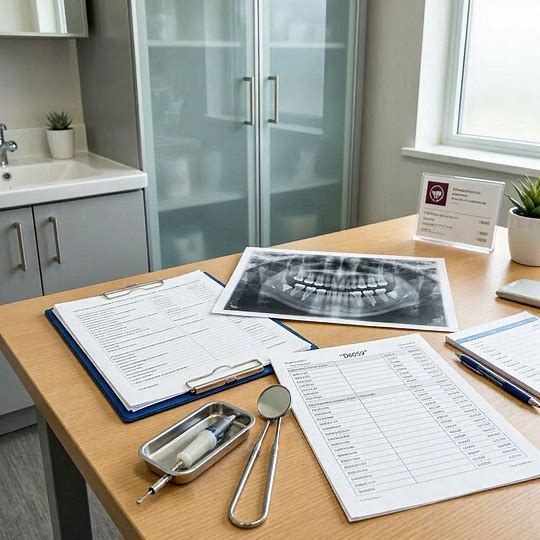
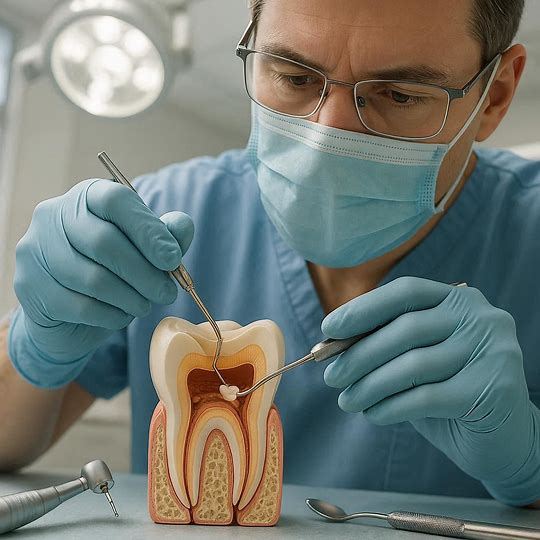
ADA Dental Code for FMX (Full Mouth X-Rays)
If you have ever sat in a dentist’s chair and heard the words “we need to take a full set of X-rays,” you might have found yourself wondering what exactly that entails. You might also have looked at your treatment plan or insurance statement later, only to see a confusing code staring back at you.
That code, often listed as D0210, is the ADA dental code for FMX.
Understanding what this code means is not just about satisfying curiosity. It is about taking control of your dental health and your finances. When you know what the code stands for, you can verify your insurance claims, understand why your dentist is recommending the procedure, and ensure you are getting the care you need without any unnecessary surprises.
In this guide, we will pull back the curtain on the D0210 code. We will explore what a Full Mouth X-ray (FMX) actually involves, why it is so critical for diagnostic dentistry, and how it differs from other common X-rays like bitewings or panoramic images.
Whether you are a patient trying to decode your Explanation of Benefits (EOB), a new dental assistant learning the ropes, or simply someone who likes to be informed before saying “yes” to a procedure, this article is for you. We will keep things simple, clear, and honest, ensuring you walk away with a solid understanding of one of the most frequently used codes in general dentistry.
Let’s dive in.
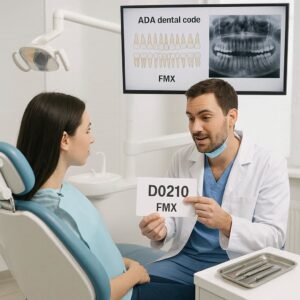
What is an FMX in Dentistry?
Before we fully decode the number, let’s talk about the service itself. FMX stands for Full Mouth X-ray (or sometimes Full Mouth Series). In the simplest terms, it is a comprehensive set of radiographic images designed to give your dentist a complete view of your entire oral structure.
Think of it as the difference between looking at a house through a keyhole versus having the architectural blueprints. A single X-ray shows a small area. An FMX shows everything.
The Components of a Full Mouth Series
When a dentist prescribes a D0210, they are not taking just one picture. Typically, a full mouth series consists of a combination of two types of intraoral images:
-
Periapical (PA) Images: These X-rays show the entire tooth, from the biting surface (crown) all the way down to the root tip and the bone that supports the tooth. Periapical images are crucial for detecting issues below the gum line, such as abscesses, cysts, or significant bone loss.
-
Bitewing (BW) Images: These are the X-rays where you bite down on a small tab or wing. They primarily show the crowns of the upper and lower teeth simultaneously. Bitewings are the gold standard for detecting cavities (dental caries) between the teeth—areas that a dentist cannot visually see during a clinical exam.
In a standard full mouth series, a dentist might take anywhere from 14 to 20 individual images. The exact number varies depending on the number of teeth you have and the specific diagnostic needs of your mouth. A patient with a full set of 32 teeth will require more images than a patient who is missing several molars.
Note: The D0210 code specifically refers to a “complete” series of images. This is distinct from a “partial” series or a “single” film, which have their own specific ADA codes.
Why is an FMX So Important?
You might be wondering why a dentist would want to take so many X-rays at once. Is it really necessary? For a new patient, or for a patient who hasn’t had X-rays in several years, the answer is often yes.
Here are the key reasons why an FMX is a cornerstone of comprehensive dental care:
-
Establishing a Baseline: When a dentist meets a new patient, they need a “map” of that patient’s mouth. The FMX provides a baseline. It shows the existing restorations (fillings, crowns), the current state of the bone, the shape of the roots, and any pre-existing conditions. Without this baseline, it is impossible to track changes over time.
-
Detecting Hidden Problems: Cavities between teeth, infections at the root tip, impacted wisdom teeth, and periodontal bone loss are often invisible to the naked eye. By the time these problems cause pain or become visible, they are often advanced. An FMX catches them early when treatment is typically simpler and less expensive.
-
Treatment Planning: If you need major work—like implants, dentures, orthodontics, or oral surgery—the dentist needs to see the whole picture. An FMX provides the detailed anatomy required to plan complex procedures safely.
Decoding the ADA Code: D0210
Now, let’s focus on the main keyword. The ADA dental code for FMX is D0210.
The American Dental Association (ADA) maintains the Current Dental Terminology (CDT) code set. This is the standard language used by dentists, insurance companies, and billing departments across the United States. Every dental procedure, from a simple cleaning to a complex root canal, has a specific code.
When you see D0210 on a treatment plan or an insurance claim, it is the official designation for:
“Intraoral – complete series of radiographic images.”
The Official Definition
According to the ADA’s CDT manual, D0210 is defined as a radiographic survey of the whole mouth. It is intended to show all the tooth-bearing areas. The description usually notes that the series includes a combination of periapical and bitewing images.
It is important to recognize that this code is highly specific. It is not a “catch-all” for any time a dentist takes several X-rays. To bill under D0210, the provider must be taking a complete set that covers the entire dentition.
Insurance Implications of D0210
Most dental insurance plans view the D0210 as a “diagnostic” procedure. Because it is considered a cornerstone of preventive care and diagnosis, most plans cover it, but with specific conditions.
-
Frequency Limitations: Insurance companies almost always have a frequency limitation on FMX. The most common restriction is one FMX every 3 to 5 years. Some plans may allow it every 5 years, while others are more lenient with a 3-year window. If you try to get a full mouth series more frequently than your plan allows, the insurance will likely deny the claim, leaving you responsible for the full fee.
-
New Patient vs. Established Patient: Insurance carriers often differentiate between a “new patient” exam and an “established patient” exam. A new patient to a practice can often justify a D0210 even if their previous FMX was taken two years ago at a different office, as the current dentist needs their own baseline.
-
Co-payments and Deductibles: Even when covered, the D0210 is typically subject to your annual deductible. If you haven’t met your deductible for the year, you may have to pay the full contracted rate until the deductible is satisfied. After that, insurance usually covers a significant percentage (often 80% to 100%) of the cost.
How D0210 Compares to Other Dental X-Ray Codes
One of the biggest sources of confusion for patients is the difference between the FMX code and other common X-ray codes. Your dentist might use one code for a routine checkup and another for a full diagnostic workup.
To help clear this up, let’s look at a comparative table.
| ADA Code | Procedure Name | What It Includes | Typical Frequency | Key Difference |
|---|---|---|---|---|
| D0210 | Intraoral – Complete Series (FMX) | 14-20 images (PA and BW) covering all teeth and bone. | Every 3-5 years. | The most comprehensive intraoral X-ray. Shows crowns, roots, and bone. |
| D0270 | Bitewing – Single Film | One image showing the crowns of posterior teeth on one side. | Varies (often part of recall visits). | Limited view. Used for cavity detection between teeth. |
| D0272 | Bitewings – Two Films | Two images covering the left and right posterior crowns. | Usually once a year. | Standard for recall exams; does not show roots. |
| D0274 | Bitewings – Four Films | Four images covering posterior crowns, sometimes including premolars. | Usually once a year. | More detailed than two films; still no roots. |
| D0330 | Panoramic Image | A single extraoral image showing the entire mouth, jaw joints, and sinuses. | Every 3-5 years. | Provides a broad overview but less detail than D0210. |
D0210 vs. D0330 (Panoramic)
A common question is, “Why do I need a full mouth series if I just had a panoramic X-ray?” While both serve diagnostic purposes, they are not interchangeable.
-
D0330 (Panoramic): This is a single, extraoral X-ray. You stand still, and a machine rotates around your head. It is excellent for seeing impacted teeth, jaw fractures, large cysts, and the overall architecture of the jaws. However, it lacks the fine detail needed to see small cavities between teeth or the precise shape of root canals.
-
D0210 (FMX): This provides that high-definition detail. Because the film or sensor is placed inside the mouth, the image is much sharper and more magnified. For diagnosing interproximal cavities (cavities between teeth) or assessing the quality of the bone around each individual root, the D0210 is superior.
Often, a dentist will use both. You might have a panoramic image to evaluate your wisdom teeth and sinuses, and then a full mouth series to check for cavities and bone loss. However, insurance usually does not cover both on the same day. They typically consider them a “duplicate” diagnostic effort.
When is an FMX (D0210) Typically Needed?
Understanding when a dentist will likely recommend a D0210 can help you anticipate your dental visits and budget accordingly.
New Patient Comprehensive Exam
This is the most common scenario for a D0210. When you visit a new dental office, the standard of care is to perform a comprehensive oral evaluation (often coded as D0150) and take a full mouth series of X-rays.
The dentist needs this baseline to:
-
Verify the health of all teeth.
-
Check the quality of previous dental work done elsewhere.
-
Identify any hidden pathology that might become a liability later.
-
Create a long-term treatment plan.
If you are switching dentists, it is very common to hear that your first appointment will include a D0210.
After a Long Absence from Dental Care
If you have not seen a dentist in several years (say, 3 to 5 years), your existing dentist will likely recommend a new D0210. Even if they have an old FMX on file from five years ago, dental conditions change. A lot can happen in a few years. New cavities can form, old fillings can break down, and bone levels can change.
Taking a new series allows the dentist to perform a “hard reset” on your dental record and ensure nothing is being missed.
As Part of Complex Treatment Planning
Sometimes, a patient may have had an FMX relatively recently (within the last three years), but they are now embarking on a complex treatment plan.
If you are about to undergo:
-
Full mouth reconstruction
-
Multiple implant placements
-
Orthodontic treatment (braces)
-
Periodontal surgery
Your dentist or specialist may require a new D0210. Complex surgeries require the most current and detailed anatomical data to ensure safety and success.
The Role of Digital X-Rays
It is worth noting that the rise of digital radiography has changed the risk profile of X-rays. Digital sensors use significantly less radiation than traditional film.
Because the radiation exposure is lower, some dentists have updated their protocols. While the ADA still recommends FMX based on patient history and clinical need rather than a strict timeline, the lowered risk makes it easier for dentists to justify taking new images when they are clinically necessary.
Important Note: If you are pregnant, it is standard practice to inform your dentist. While dental X-rays are generally considered safe with proper shielding (lead apron), many dentists prefer to postpone non-emergency X-rays until after the first trimester or until after delivery, depending on the urgency of the situation.
Understanding the Cost of D0210
The cost of a full mouth series can vary widely depending on where you live, the type of dental practice (private vs. corporate), and whether you have insurance.
Because the D0210 involves 14 to 20 images, it requires significant clinical time and equipment. It is generally more expensive than a single X-ray or a panoramic.
Average Price Ranges
-
Without Insurance (List Price): In most metropolitan areas, the fee for a D0210 ranges from $150 to $350. High-end specialty practices in expensive cities may charge more.
-
With Insurance (Negotiated Rate): If you have dental insurance, the dentist has a contracted fee. This is often lower than the list price. You might see a negotiated rate of $100 to $200.
-
With Insurance (Your Responsibility): If you have met your deductible, insurance often covers 80% to 100% of the negotiated rate. You would be responsible for the remaining co-pay or co-insurance.
Why Is There a Range?
The variation in cost is not arbitrary. It reflects several factors:
-
Geographic Location: Overhead costs (rent, staff wages) are higher in cities like New York or Los Angeles than in rural areas.
-
Technology: Practices using advanced digital sensors, 3D imaging software, or CBCT (Cone Beam CT) integration often have higher costs.
-
Interpretation: The fee includes not just the taking of the images, but the dentist’s professional interpretation and diagnosis.
D0210 and Insurance: Navigating the Fine Print
Insurance can be tricky. Even if you have a “good” plan, you might be surprised to find a claim denied. Here is how to navigate the insurance side of the ADA dental code for FMX.
Frequency Limitations are the Biggest Hurdle
As mentioned, frequency limitations are the primary reason claims get denied.
-
Check Your Plan: Your insurance card usually doesn’t list frequency limits. You need to read your Schedule of Benefits or call the customer service number on the back of your card.
-
Ask Before the Appointment: If your dentist recommends an FMX, ask your front desk team to verify your benefits. They can perform a “predetermination” or simply check your remaining frequency allowance.
-
The “3-5 Year” Rule: If your insurance covers an FMX every 5 years, and your last one was 4 years and 11 months ago, they may deny it. You would then either pay out of pocket or wait one more month.
Medical Necessity Overrides Frequency Limits
In some cases, even if you are technically outside the frequency limit, an insurance company may approve a D0210 if it is deemed “medically necessary.”
For example:
-
You have symptoms of a serious infection.
-
You are preparing for a medically necessary surgery (like tumor removal or jaw surgery).
-
You have a condition like Sjogren’s syndrome or a history of head and neck radiation that requires constant monitoring.
If this is the case, the dentist’s office can submit a narrative with the claim explaining the medical necessity to try to get an exception.
In-Network vs. Out-of-Network
If you go to an in-network dentist, the fee for D0210 is fixed by contract. You cannot be “balance billed” for the difference between the dentist’s usual fee and the insurance allowance.
If you go to an out-of-network dentist, they may charge $350, but your insurance may only allow $150 as a “reasonable and customary” fee. You would be responsible for the $200 difference in addition to your co-pay.
Pro Tip: If you are uninsured or have a high deductible, ask your dentist if they have a “new patient special” or a package price for the comprehensive exam and FMX. Many offices offer discounts for patients paying in cash or without insurance.
A Patient’s Guide to the FMX Procedure
If you have never had a full mouth series before, or if you are anxious about dental procedures, knowing what to expect can ease your mind.
Step 1: Preparation
There is very little preparation needed. You should brush your teeth beforehand, as it makes the process more comfortable for you and the hygienist. You will remove any removable dental appliances, glasses, or jewelry that might interfere with the images.
Step 2: The Process
You will be seated in the dental chair. The hygienist or dentist will place a lead apron over your chest and lap to shield you from any stray radiation.
Unlike a panoramic machine where you stand still and a machine rotates, an FMX involves placing a small sensor (or film) inside your mouth. You will bite down on a plastic holder to keep it steady.
For each shot:
-
The sensor is positioned.
-
The dental professional steps out of the room or behind a barrier.
-
A brief, silent “click” or buzz occurs.
-
They return and move the sensor to the next position.
This process repeats for all the periapical and bitewing images. The entire process usually takes between 10 and 20 minutes.
Step 3: Sensitivity
Some people have a strong gag reflex. If this is you, don’t suffer in silence. Let the hygienist know. They have techniques to help, such as:
-
Using a smaller sensor.
-
Positioning the sensor slightly differently.
-
Having you sit upright rather than reclined.
-
Using a topical numbing spray.
Step 4: After the X-rays
Once the images are taken, they appear almost instantly on a computer screen if digital X-rays are used. The dentist will typically review them with you during the same appointment, pointing out any areas of concern.
Common Questions About D0210 (FAQs)
To further clarify the use of the ADA dental code for FMX, let’s address some of the most frequently asked questions.
Is D0210 the same as a panoramic X-ray?
No. D0210 refers to a full series of intraoral images (multiple pictures inside the mouth). A panoramic X-ray is code D0330, a single extraoral image. They serve different purposes. The D0210 provides more detailed, high-resolution views of individual teeth and roots.
How often can I have a D0210?
It depends on your dental insurance and your clinical needs. Insurance plans typically limit coverage to once every 3 to 5 years. However, a dentist may recommend a new series sooner if there is a significant change in your oral health or a complex treatment need.
Is the radiation from an FMX safe?
Yes, modern digital FMX uses very low levels of radiation. The amount of radiation from a full mouth digital series is roughly equivalent to the amount of background radiation you receive naturally over a few days or a short airplane flight. Dentists also use lead aprons and thyroid collars to minimize exposure.
Why did my dentist take bitewings at my cleaning if I had an FMX last year?
Bitewings (D0272 or D0274) are “recall” X-rays. They are used to monitor for new cavities that develop between teeth. An FMX is a comprehensive baseline. While an FMX includes bitewings, if you have an FMX last year, your dentist will likely take a set of bitewings at your next 6-month cleaning to check for changes without needing to retake the whole mouth series.
What if my insurance denies my D0210?
First, do not panic. If insurance denies the claim, you are typically responsible for the cost, but you have options. Ask your dentist’s office to review the denial. Sometimes it is a coding error or an issue with frequency that can be appealed. If the denial stands, talk to your dentist about a payment plan or a discounted cash rate.
Additional Resources
For more authoritative information on dental X-rays and safety standards, consider visiting the official website of the American Dental Association (ADA) at www.ada.org. Their “Patient Resources” section provides detailed guidelines on radiographic procedures and oral health best practices.
Conclusion
Understanding the ADA dental code for FMX—D0210—empowers you to be an active participant in your dental care. This code represents more than just a billing number; it signifies a crucial diagnostic tool that helps dentists detect hidden issues, plan effective treatments, and maintain your oral health over the long term. Whether you are a new patient establishing a baseline or undergoing complex treatment, knowing when this procedure is needed and how insurance handles it can save you from unexpected bills and ensure you receive the appropriate standard of care.
Disclaimer: This article is for informational purposes only and does not constitute medical or financial advice. Dental codes, insurance policies, and fees vary by provider and location. Always consult with your dentist and insurance carrier for information specific to your situation.