ADA Code for Filling an Access Endo Hole
- On
- InDENTAL CODE
If you’ve ever found yourself staring at a patient’s chart after a root canal, wondering exactly how to bill for the final restoration of that tiny hole in the tooth, you are not alone. Navigating the American Dental Association (ADA) coding system can sometimes feel like trying to solve a puzzle where the pieces keep changing shape.
The reality is that the procedure for closing that access cavity—what we often call “filling the access endo hole”—is far more nuanced than just picking a random code from the list. It involves understanding the difference between a permanent restoration, a core build-up, and a temporary seal. Getting this code right isn’t just about paperwork; it’s about ensuring the practice gets paid correctly and, more importantly, that the patient’s long-term oral health is protected.
In this guide, we are going to walk through everything you need to know about the ADA codes associated with restoring the endodontic access opening. We’ll break down the clinical scenarios, the specific codes, and the documentation required to make your life easier.
Let’s get started.
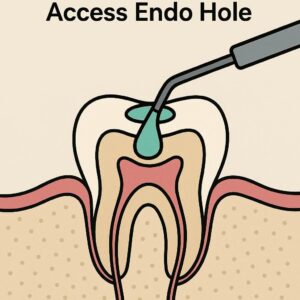
Table of Contents
ToggleUnderstanding the Endodontic Access Hole
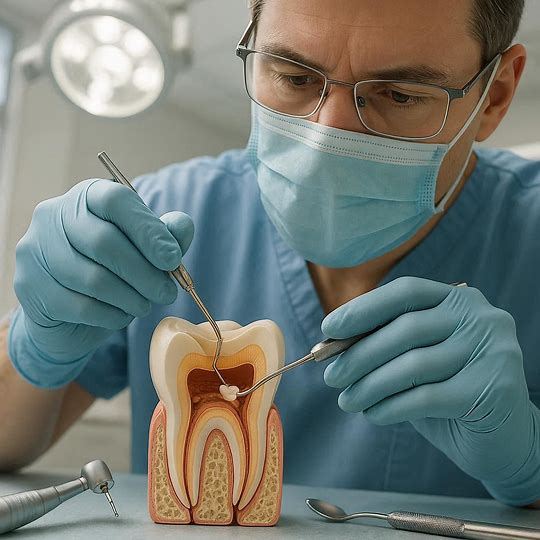
Before we dive into the codes, it’s helpful to take a step back and look at what we are actually dealing with. The “access endo hole” is the opening a dentist creates in the crown of a tooth to perform root canal therapy. Without this opening, the dentist cannot clean, shape, and fill the root canals.
After the root canal is completed, that opening needs to be sealed. Why? Because the tooth is now essentially hollow. The nerve and blood supply have been removed. The tooth becomes brittle over time. If the access hole is left open or poorly sealed, bacteria can re-enter the canal system, leading to failure of the root canal.
This is where the concept of the restoration comes in. The goal is to seal the access cavity to prevent re-infection and to restore the structural integrity of the tooth.
The Clinical Timeline Matters
One of the biggest factors in determining the correct code is timing. Are you placing the restoration on the same day as the root canal? Or are you seeing the patient back weeks later for a permanent restoration?
-
Same-day restoration: This often involves a permanent filling placed immediately after the endodontist finishes the root canal.
-
Delayed restoration: This typically involves a temporary filling placed at the end of the root canal appointment, followed by a permanent restoration at a later date.
The ADA codes are designed to differentiate between these scenarios.
The Primary ADA Codes for Restoring Access Holes
When we talk about “filling an access endo hole,” we are generally looking at three main categories of ADA codes. Each one serves a specific purpose and has specific requirements for documentation.
Let’s break them down in a way that makes sense for your day-to-day workflow.
The Temporary Seal: D2950
D2950 – Core buildup, including any pins when required
Wait—hold on. This is often the most misunderstood code in this context. Many people jump to D2950 because it sounds like “building up” the tooth. However, it’s crucial to understand that D2950 is generally not the code for simply filling the access hole unless specific conditions are met.
When to use it: You use D2950 when there is substantial loss of tooth structure. This means that after the root canal, there isn’t enough tooth left to support a crown or a permanent filling. You are essentially rebuilding the core of the tooth to provide a foundation. This usually involves adding material to replace missing cusps or walls that were lost due to decay or fracture.
Key distinction: If the tooth only has a small access opening (like a small circle on the occlusal surface) and the rest of the tooth is intact, D2950 is not appropriate.
The Permanent Filling: D2949 or D2952/D2954
This is where the “simple” filling of the access hole usually lands. But even here, we have a split based on whether the tooth will eventually get a crown.
D2949 – Restorative foundation for an indirect restoration
This code is specifically for placing a filling material in the access cavity when the tooth is planned for a crown. Think of it as the “foundation” that goes under the future crown. It is a permanent filling that seals the access hole until the final crown is cemented.
When to use it: You have completed the root canal. The tooth is treatment-planned for a crown (full coverage). You place a permanent filling (like composite) in the access hole to seal it. This code is ideal because it recognizes that the filling is part of a larger restorative plan.
D2952 – Post and core in addition to crown
D2954 – Prefabricated post and core in addition to crown
Sometimes, the access hole isn’t just a hole; it’s a cavern. If the tooth structure is so compromised that you need to place a post (usually in an anterior tooth or premolar) to retain the core, these codes come into play. However, these are not just “filling the hole”—they represent a more complex procedure involving the placement of a post into the canal space to support a large core buildup.
The Direct Restoration: D2140, D2150, D2160, D2161
This is the “filling” category. These are your standard amalgam or composite filling codes based on the number of surfaces involved.
-
D2140: Amalgam – one surface, primary or permanent
-
D2150: Amalgam – two surfaces
-
D2160: Amalgam – three surfaces
-
D2161: Amalgam – four or more surfaces
-
D2330: Resin-based composite – one surface, anterior
-
D2391: Resin-based composite – one surface, posterior
When to use these: If the tooth does not require a crown, and the only thing missing is the access opening, you simply bill for the appropriate filling code based on the size of the hole. If the access hole covers one surface (like the chewing surface only), you use a one-surface code. If it extends to involve the side of the tooth, you bill for the number of surfaces restored.
Comparative Table: Which Code Should You Use?
To help visualize the decision-making process, here is a simple comparison table. This is based on common clinical scenarios you will face.
| Clinical Scenario | Recommended ADA Code | Why This Code? |
|---|---|---|
| Small access hole, no crown needed | D2140, D2150, D2330, D2391 (based on surfaces) | The restoration is essentially a standard filling. No additional structural support is needed beyond sealing the access. |
| Large access hole, but tooth is intact enough for a crown | D2949 – Restorative foundation for indirect restoration | This code specifically acknowledges that you are placing a permanent restoration as a foundation for a future crown. It’s a precise and honest code. |
| Tooth has missing cusps, decay, or fracture; needs rebuilding before crown | D2950 – Core buildup | This is a structural build-up. It involves replacing missing tooth structure to create a solid foundation. It’s more extensive than just filling the access hole. |
| Tooth requires a post for retention | D2952 or D2954 + D2950 | If you place a post into the canal space, you are performing a post and core. The core rebuilds the tooth around the post. |
| Temporary seal between endo appointments | D2950 is not used. Use temporary material. | This is usually included in the endodontic therapy code (D3330, etc.) if done at the same visit. If billed separately, it’s often a palliative code, though best practice is to include it in the endo fee. |
Why Documentation Matters More Than the Code
Now, let’s talk about something that can save you from a denied claim or a frustrating audit: documentation.
Insurance companies and auditors don’t just look at the code. They look at the story your chart tells. If you bill D2950 (core buildup) for a simple access hole, your chart needs to justify why that tooth required a core buildup.
What to Document for a Core Buildup (D2950)
If you are billing D2950, your clinical notes should explicitly state:
-
The number of missing walls or cusps.
-
The presence of existing fractures or extensive decay.
-
That the restoration is necessary to provide a foundation for a crown.
-
Whether pins were used and why.
What to Document for a Foundation (D2949)
If you are billing D2949, your notes should clearly state:
-
The root canal has been completed.
-
The tooth is treatment-planned for a crown.
-
A permanent filling material (e.g., composite) was placed to seal the access cavity and serve as a foundation.
What to Document for a Standard Filling
If you are billing a standard filling code (like D2391), your notes should simply reflect that the tooth was restored with a direct restoration. It’s clean, simple, and honest.
“The key to clean billing is to let your clinical documentation tell the truth. If you document a missing cusp, you can bill for a core. If you document a simple access seal, bill for a simple filling. The chart should never surprise the auditor.” — Dr. Sarah Jenkins, Practice Management Consultant.
Step-by-Step Guide to Billing the Access Hole Restoration
Let’s walk through a typical scenario from start to finish. This is designed to give you a practical workflow.
Step 1: Assess the Tooth After Endodontic Therapy
Once the root canal is finished, evaluate the tooth. Ask yourself:
-
Is the tooth going to be crowned?
-
How much sound tooth structure remains?
-
Is the access opening standard, or is it extensive due to decay or fracture?
Step 2: Determine the Long-Term Plan
-
Scenario A: The tooth is scheduled for a crown. You will either use D2949 (if the tooth structure is sufficient) or D2950 (if the tooth needs rebuilding).
-
Scenario B: The tooth is not scheduled for a crown. You will use the standard filling code (D2140, D2150, D2160, or D2391) that matches the number of surfaces restored.
Step 3: Perform the Restoration
Place your restorative material. If you are using D2950, you are likely using a strong core material (like amalgam or a specialized core composite) and possibly pins. If you are using D2949 or a filling code, you are using your standard permanent filling material.
Step 4: Document with Precision
Write your note immediately. Include:
-
The code you plan to bill.
-
The clinical reasoning.
-
The surfaces involved.
-
The material used.
-
The prognosis.
Step 5: Submit the Claim
Submit the claim with the appropriate code. If you are submitting alongside the endodontic code (D3330), ensure that there is no “unbundling” issue. Most insurances expect that the temporary seal after the root canal is included in the endo fee. The permanent restoration is billed separately.
Common Mistakes and How to Avoid Them
Even experienced teams can slip up. Here are the most common pitfalls when coding for the endo access restoration and how to avoid them.
Mistake 1: Automatically Billing D2950 for Every Access Hole
This is by far the most common error. D2950 is for core buildups, not for simple access seals. If you bill D2950 for a tooth that simply had a root canal with no structural loss, you are over-coding. This is a red flag for auditors.
How to avoid it: Only use D2950 when the clinical notes support that the tooth lacked sufficient structural integrity to support a crown without rebuilding.
Mistake 2: Unbundling the Temporary Filling
Many practices try to bill a separate code (like D2950) for the temporary filling placed between root canal appointments. This is generally considered part of the endodontic procedure (D3330 or D3310) and should not be billed separately. Billing separately is often considered “unbundling” and can lead to claim denials or audits.
How to avoid it: Include the temporary seal as part of your endodontic fee. If you must bill separately, use a palliative code like D9110, but be prepared to justify why it was a separate, distinct procedure.
Mistake 3: Inconsistent Documentation
You bill a 3-surface filling, but your chart says “access opening filled.” This mismatch is problematic.
How to avoid it: Be specific. If you restored three surfaces, list which surfaces (e.g., occlusal, mesial, lingual) in your clinical note. If you performed a core buildup, specify the missing structure.
A Note on Different Materials
The material you use can sometimes influence the code, though it usually doesn’t change the category of the code. Here’s how to think about it.
-
Amalgam: Often used for cores (D2950) or standard fillings (D2140 series). It’s durable and cost-effective for hidden areas.
-
Composite: Increasingly popular for both cores and standard fillings. For cores, it bonds well to tooth structure. For standard fillings (D2330, D2391), it offers aesthetics.
-
Glass Ionomer: Often used as a temporary or intermediate restoration. If used as a permanent seal under a crown, it might still fall under D2949, but ensure your notes reflect that it is a permanent foundation.
The Role of Pins and Posts
Sometimes, the access hole isn’t just a hole; it’s a sign of a severely compromised tooth. When there isn’t enough tooth left to retain a core, we turn to pins or posts.
-
Pins (D2950): These are small, threaded metal pins placed into dentin to help retain the core material. If you use pins, your D2950 code should reflect that. The code D2950 includes pins when required.
-
Posts (D2952, D2954): These are placed into the root canal space itself. A post is a more extensive procedure. You would bill the post code (D2952 for cast post and core, or D2954 for prefabricated post and core) in addition to the core.
Important Note: Posts are generally only used when the tooth is being crowned. You would never place a post in a tooth that is not getting a crown.
Real-World Clinical Scenarios
Let’s look at three specific case studies to bring all this information together.
Case Study 1: The Simple Molar
Patient: 45-year-old male, tooth #19.
Treatment: Root canal completed today. The access was a standard occlusal opening. The tooth has no decay, no fractures, and all cusps are present. The tooth is not planned for a crown.
Action: The dentist places a composite restoration on the occlusal surface only.
Code: D2391 (Composite – one surface, posterior).
Documentation: “Access opening in tooth #19 restored with composite resin. All cusps intact. No crown planned.”
Case Study 2: The Crown-Ready Tooth
Patient: 62-year-old female, tooth #3.
Treatment: Root canal completed. The tooth has a large MOD (mesial-occlusal-distal) restoration that is failing. The tooth is treatment-planned for a crown.
Action: The dentist removes the old restoration, places a permanent composite foundation material to seal the access and fill the cavity, and prepares the tooth for a crown at a later date.
Code: D2949 (Restorative foundation for an indirect restoration).
Documentation: “Existing MOD failing. Completed endo. Placed composite foundation to seal access and prepare for future crown. Impressions for crown taken.”
Case Study 3: The Broken Cusp
Patient: 55-year-old male, tooth #30.
Treatment: Root canal completed. The distal cusp is fractured off. The remaining tooth structure is insufficient to support a crown without rebuilding.
Action: The dentist places a core buildup using a bonded core material. No post is needed.
Code: D2950 (Core buildup).
Documentation: “Tooth #30. Distal cusp fracture. After endo, placed core buildup to replace missing distal cusp and provide foundation for future crown. Two surfaces rebuilt.”
Billing and Insurance Considerations
Now, let’s address the elephant in the room: getting paid.
Insurance companies have varied policies regarding these codes. Some are straightforward; others are more complex.
Frequency Limitations
Most insurance plans have frequency limitations on codes like D2950 (core buildup). Typically, you can only bill a core buildup once per tooth per lifetime (or every 5-10 years, depending on the plan). If you bill D2950 for a simple access hole, you may “use up” that patient’s benefit, making it impossible to bill for a true core buildup later if it becomes necessary.
Bundling Issues
Some insurance plans bundle the core buildup (D2950) into the crown procedure. This means that if you bill D2950 on the same day as the crown (D2740, etc.), the insurance might deny the core or reduce the fee for the crown. This varies widely. It’s essential to know the specifics of the plans you work with.
Separate vs. Same Day
If the endodontic therapy and the permanent restoration are performed on the same day, you can bill both codes. Just be prepared for the insurance to request documentation. If they are on different days, they are clearly separate procedures.
The Importance of the “Tooth Number” and “Surface” Fields
When filling out your claim form (either paper or electronic), ensure the tooth number is correct. For fillings (D2140, etc.), you must specify the surfaces. For D2949 and D2950, specifying the tooth number is usually sufficient, though adding surfaces in the narrative can help.
The Future of Endodontic Restorative Coding
The ADA codes are updated regularly. While the current codes serve us well, there is always discussion about how to better capture the nuances of modern endodontic restoration.
With the rise of digital dentistry and same-day crowns (CEREC, etc.), the line between “foundation” and “core” sometimes blurs. If you are doing a same-day crown immediately after the root canal, the restoration of the access hole is part of the crown preparation and scanning process. In this case, you typically bill the crown code (D2740 or D2790) and potentially D2950 if a core was needed, but you would not bill D2949 separately because the foundation is integral to the crown fabrication.
Conclusion
Navigating the ADA code for filling an access endo hole doesn’t have to be a headache. It all comes down to one simple principle: let the clinical reality guide the code.
If you are simply sealing a small hole, use the appropriate filling code. If you are building up a tooth to support a crown, use the foundation code (D2949) or the core buildup code (D2950) based on the extent of the structural loss. Document your reasoning clearly, and you will find that your claims are cleaner, your audits are smoother, and your patients benefit from the appropriate level of care.
By understanding the specific scenarios, avoiding common coding mistakes, and keeping thorough clinical notes, you can confidently restore that access hole and ensure both the health of the tooth and the financial health of your practice.
Frequently Asked Questions (FAQ)
Q1: What is the most common ADA code used for simply filling an endo access hole?
The most common codes are the standard filling codes, such as D2391 (composite, one surface, posterior) or D2140 (amalgam, one surface), depending on the material and tooth location. This applies when the tooth does not require a crown or a structural buildup.
Q2: Can I bill D2950 (core buildup) for every tooth that gets a root canal?
No. D2950 is intended for teeth that have lost significant tooth structure (missing cusps, extensive decay). Billing it for a simple access opening is considered up-coding and can lead to claim denials or audits.
Q3: What is the difference between D2949 and D2950?
D2949 is a restorative foundation for an indirect restoration (crown). It is a permanent filling placed in a tooth that is structurally sound enough for a crown. D2950 is a core buildup, used when the tooth lacks enough structure to support a crown without significant rebuilding.
Q4: Should I bill the temporary filling placed after the root canal separately?
Generally, no. The temporary filling is considered part of the root canal procedure (D3330, D3310) and is included in that fee. Billing it separately is often considered unbundling.
Q5: What if I place a post in the canal before filling the access hole?
If you place a post, you will use a post and core code. For a prefabricated post, you use D2954. For a cast post and core, you use D2952. These codes include the core buildup. You do not bill D2950 separately.
Q6: How do I bill if I do a same-day crown after the root canal?
If you perform the root canal, restore the access hole as part of the crown preparation, and fabricate a same-day crown (e.g., CEREC), you typically bill the crown code (D2740) and, if applicable, a core buildup (D2950) if structural rebuilding was needed. You would not bill D2949 or a separate filling code.
Additional Resource
For the most up-to-date information on coding, we highly recommend consulting the official Current Dental Terminology (CDT) Code Book, published annually by the American Dental Association. This is the definitive guide for all ADA codes.
Additionally, the American Dental Association’s Coding Education page offers webinars, articles, and workshops designed to help dental professionals master the nuances of dental billing and documentation.

dentalecostsmile
Newsletter Updates
Enter your email address below and subscribe to our newsletter