ADA Code for Crown Build Up (And How to Use It Correctly)
If you have ever sat in the dentist’s chair and heard the phrase “core build up,” you probably wondered what it actually means. Is it just a fancy term for a filling? Or is it something completely different?
For dental professionals, the answer lives inside a specific set of numbers. These are the ADA (American Dental Association) codes. And when it comes to preparing a broken or decayed tooth for a crown, one code stands above the rest.
This guide walks you through everything you need to know about the correct ADA code for crown build up. You will learn when to use it, how it differs from similar procedures, and how to avoid common billing mistakes. No confusing jargon. No outdated information. Just a clear, honest, and practical resource.
Let us get started.
What Is a Crown Build Up? A Simple Explanation
Before we talk about codes, let us understand the procedure itself.
A crown build up (also called a core build up) is a restorative procedure. Its goal is simple: to rebuild a tooth that does not have enough healthy structure left to support a dental crown.
Think of a tooth like a wall in your house. If you want to hang a heavy picture, you need solid bricks to hold the nail. If the bricks are cracked or missing, you cannot attach the nail securely. A crown build up acts like new bricks. It fills the gaps and creates a strong foundation.
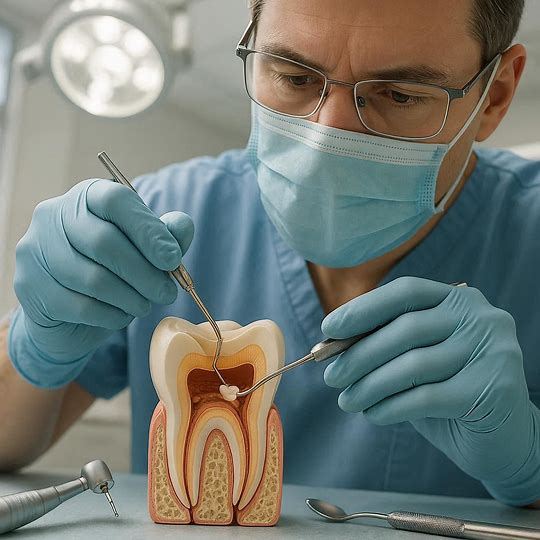
The dentist removes old fillings, decay, or weak tooth structure. Then, they place a special material (usually composite resin or amalgam) inside the tooth. This material rebuilds the missing parts. Once the build up hardens, the dentist can take an impression for the final crown.
Without this step, a crown would not stay on. It might fall off, leak, or cause new decay.
The Correct ADA Code for Crown Build Up (D2950)
Now, let us answer the main question.
The official ADA code for crown build up is D2950. The full description reads: “Core buildup, including any pins when required.”
This code is specifically for cases where a tooth needs extra support before a crown can be placed. The key point here is that the tooth lacks enough healthy structure to hold the crown on its own.
D2950 covers the entire process. This includes:
-
Removing old restorative materials (like broken fillings).
-
Removing soft or decayed tooth structure.
-
Placing a new base material to rebuild the tooth.
-
Adding pins if necessary to help hold the buildup in place.
It is important to note that D2950 does not include the crown itself. It also does not include the final impression, the temporary crown, or the crown placement. Those are separate procedures with their own codes.
When Should You Use D2950?
You should use D2950 when the tooth is so damaged that a crown cannot be placed directly over the remaining tooth structure. Here are some real-world examples.
-
A tooth has a large fracture that goes below the gum line.
-
A previous filling takes up more than half of the tooth’s visible surface.
-
The tooth has recurrent decay that destroyed the old core.
-
A root canal treated tooth has thin or fragile walls.
In all these cases, simply placing a crown over the tooth would fail. The crown would not have enough grip. D2950 solves that problem by building up the tooth from the inside.
What D2950 Does Not Cover
This is where many offices make mistakes. D2950 is not for:
-
A simple filling on a tooth that will not get a crown.
-
Replacing a missing cusp on an otherwise healthy tooth (that is a three‑surface filling).
-
Adding a liner or base under a standard filling.
-
A pin that is placed for a filling rather than a crown build up.
If the tooth already has enough structure to hold a crown, you cannot bill D2950. In that case, the crown preparation itself is enough.
D2950 vs. Other Similar Codes: A Clear Comparison
Many dental codes look alike. This creates confusion for new billers and even experienced dentists. Below is a simple comparison table to help you see the differences at a glance.
| ADA Code | Procedure Name | When to Use | Does It Include Pins? |
|---|---|---|---|
| D2950 | Core buildup for crown | Tooth lacks enough structure to hold a crown | Yes, if needed |
| D2940 | Protective restoration | Temporary restoration to seal a tooth | No |
| D2391 – D2394 | Resin fillings (anterior or posterior) | Standard fillings without a crown planned | No |
| D2952 | Post and core (cast) | Root canal treated tooth needing a metal post | Yes (post is separate) |
| D2954 | Prefabricated post and core | Root canal treated tooth with a prefab post | Yes |
| D2951 | Pin retention | Placing pins for a filling (not a crown build up) | Yes (pins only) |
As you can see, D2950 is unique. It exists only for teeth that will receive a crown. The other codes serve different clinical situations.
Core Build Up vs. Post and Core: Two Different Things
One of the most common mistakes is confusing D2950 (core build up) with post and core codes (D2952 or D2954). They are not interchangeable.
A core build up (D2950) is for teeth that still have a good amount of natural tooth above the gum line. The dentist does not need to go inside the root canal space. The material stays inside the crown part of the tooth.
A post and core is for root canal treated teeth that have lost almost all of the tooth above the gum line. In this case, there is nothing left to hold a build up. The dentist places a post down into the root canal. This post acts like a metal or fiberglass nail. Then, they build the core around the post.
Here is a simple way to remember the difference.
-
D2950: The tooth still has some walls standing. You can build up from there.
-
D2952 or D2954: The tooth has no walls left. You need a post anchored in the root.
If you use D2950 on a tooth that actually needs a post and core, you are under‑billing. Worse, you are documenting a procedure that does not match what you did clinically. That can lead to claim denials or audits.
Documentation Requirements for D2950
Insurance companies want proof. You cannot just bill D2950 and hope they pay. You need solid documentation in the patient’s chart.
Here is what your clinical notes should include for every D2950 claim.
-
A clear statement that the tooth lacks enough coronal structure to retain a crown.
-
A description of the remaining tooth structure (e.g., “only two walls remaining”).
-
The type of material used for the build up (e.g., composite resin, amalgam).
-
Whether pins were placed and how many.
-
A note that a crown is planned for the same tooth.
-
Periapical or bitewing radiographs showing the defect, if possible.
Without this information, an insurance auditor may downgrade D2950 to a simple filling code (like D2391). That means less reimbursement for your office.
A Realistic Example of Proper Documentation
“Tooth #19 has a previous large MOD amalgam with recurrent decay under the mesial margin. After removal of the old filling and decay, only two buccal walls remain. The distal wall is missing completely. The tooth lacks adequate structure to retain a crown. A core build up was performed using dual‑cure composite resin. One dentin pin was placed in the distal surface for retention. Impressions for a full crown will be taken at the next visit.”
This note is specific, measurable, and clinically honest. It justifies the use of D2950.
Insurance Coverage and Reimbursement Realities
Let us be realistic. Not every insurance plan pays for D2950. Some consider it part of the crown preparation. Others pay a reduced fee.
Most PPO plans cover D2950, but often at 50% to 80% of the office fee. Some plans limit coverage to one build up per tooth per five years. Medicaid programs vary by state. Some states do not reimburse for D2950 at all.
Before you perform a build up, check the patient’s benefits. Ask these questions.
-
Does the plan cover D2950 separately from the crown?
-
Is there a frequency limitation?
-
Does the patient need a pre‑determination?
If the plan does not cover D2950, you have two choices. You can perform the build up anyway and write off the fee. Or you can explain the situation to the patient and let them decide.
Common Billing Mistakes (And How to Avoid Them)
Even experienced offices make errors with D2950. Here are the most frequent problems and their solutions.
Mistake #1: Billing D2950 on Every Crown Case
Some dentists bill D2950 for every single crown, even when the tooth has plenty of structure. This is incorrect. It is also fraud if done intentionally.
Solution: Only bill D2950 when the tooth truly needs it. If you can place a crown directly over the existing tooth structure, do not add a build up code.
Mistake #2: Billing D2950 with a Filling on the Same Tooth
You cannot bill a standard filling (like D2391) and a core build up on the same tooth on the same day. The build up replaces the need for a filling.
Solution: Choose one code. If you did a build up, that is D2950. Do not add a separate filling code.
Mistake #3: Using D2950 Instead of a Post and Core
As we discussed earlier, a post and core requires a different code. Using D2950 for a post case will get the claim denied or downcoded.
Solution: Learn the difference. If you place a post, use D2952 (cast post and core) or D2954 (prefabricated post and core).
Mistake #4: No Radiographic Evidence
You cannot see a core build up on a standard bitewing after the crown is placed. But you can see the defect before the build up. If you have no X‑ray showing the missing structure, the insurance company may deny the claim.
Solution: Always take a pre‑operative radiograph that clearly shows the decay or fracture. Keep it in the patient’s chart.
Step‑by‑Step: How a Crown Build Up (D2950) Is Performed
For readers who are new to dentistry, here is a simple walkthrough of the clinical steps. This helps you understand why D2950 takes time and skill.
-
Anesthesia – The dentist numbs the tooth and surrounding gum.
-
Removal of decay and old restorations – Using a high‑speed handpiece, the dentist removes everything that is not healthy tooth or solid filling material.
-
Evaluation of remaining structure – The dentist checks how many walls remain. If there are fewer than three walls, a build up is usually needed.
-
Placement of pins (if necessary) – For very damaged teeth, the dentist drills small holes and places tiny metal or fiber pins. These pins help hold the build up material.
-
Application of the core material – The dentist places a special composite resin or amalgam into the prepared tooth. They shape it to recreate the missing parts.
-
Curing or setting – If using composite, a bright blue light hardens the material. If using amalgam, the dentist waits a few minutes for it to set.
-
Trimming and contouring – Once hard, the dentist shapes the build up so it will fit under the future crown.
-
Impression or scan – In most cases, the dentist takes an impression for the crown at the same visit.
The entire procedure usually takes 20 to 40 minutes, depending on how much damage the tooth has.
Does D2950 Include the Temporary Crown?
No. A temporary crown is a separate procedure. Its code is D2930 (prefabricated stainless steel crown) or D2931 (prefabricated resin crown) for temporary use, though many offices bill a temporary as part of the crown fee.
Some dentists place a temporary crown immediately after a build up. That is fine. But you cannot bill D2950 and expect it to cover the temporary. They are separate services.
Frequently Asked Questions (FAQ)
Q1: Can I bill D2950 and the crown on the same day?
Yes. You can perform a build up and take the crown impression on the same day. Many offices do this. Just make sure your documentation clearly shows both procedures.
Q2: Does D2950 include the final crown?
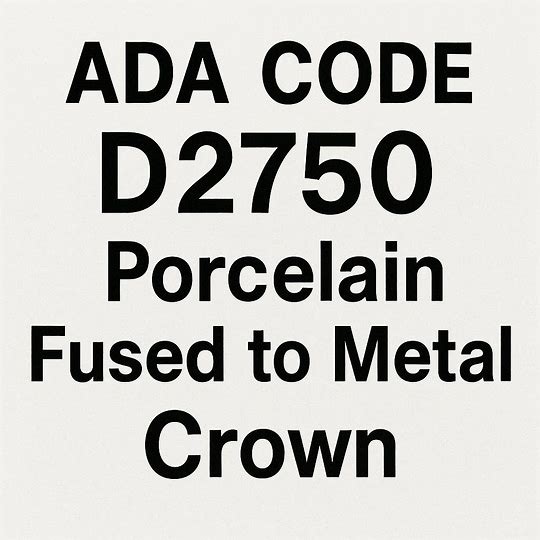
No. D2950 only covers the build up itself. The crown has its own codes (D2740 for porcelain ceramic crown, D2750 for porcelain fused to metal, etc.).
Q3: How many pins can I bill with D2950?
D2950 includes pins. You do not bill extra for pins. The code says “including any pins when required.” That means the fee for D2950 should cover one pin or multiple pins.
Q4: Is D2950 the same as a “filling buildup” for a filling?
No. A filling build up (like rebuilding a missing cusp without a crown planned) is billed as a multi‑surface filling (D2392, D2393, or D2394). D2950 is only for teeth receiving a crown.
Q5: Does medical insurance ever cover D2950?
Almost never. D2950 is a dental code for a dental procedure. Even if the tooth was damaged by an accident, medical insurance usually excludes dental work. The patient’s dental plan is responsible.
Q6: What if the insurance denies D2950 as “bundled” with the crown?
Some plans consider D2950 part of the crown preparation. If this happens, you can appeal with radiographs and a narrative explaining why the build up was necessary. But sometimes the plan contract explicitly excludes separate payment. In that case, you may need to accept the denial.
Important Notes for Readers
Note 1: ADA codes are updated every year. While D2950 has been stable for many years, always check the current CDT (Current Dental Terminology) manual for the most recent changes.
Note 2: State laws and insurance contracts vary. The information in this guide is general. Always verify requirements with each specific insurance plan.
Note 3: If you are a patient reading this, D2950 is a legitimate and necessary procedure for severely damaged teeth. It is not a “scam code.” A good build up can save a tooth that would otherwise need extraction.
A Realistic Look at Fees for D2950
What does a crown build up actually cost? Fees vary widely by location, but here is a general range.
-
In‑network PPO fee: $100 to $250
-
Out‑of‑network or fee‑for‑service: $250 to $500
-
Dental school clinic: $50 to $150
-
Medicaid (in states that cover it): $50 to $120
These fees do not include the crown itself. A crown typically adds $800 to $2,000 depending on materials and location.
How to Improve Your D2950 Claim Acceptance Rate
If you run a dental office, you want to get paid for the work you do. Here are practical tips to reduce denials.
-
Use a pre‑determination – For expensive build ups (multiple pins, complex cases), send a pre‑determination to the insurance company. They will tell you in advance if they will pay.
-
Attach a narrative – Do not just send a code. Write a short paragraph explaining why the tooth needed the build up.
-
Send X‑rays – Include pre‑operative and post‑operative radiographs. The post‑op X‑ray should show the build up in place before the crown is cemented.
-
Use a periodontal probe measurement – If the decay goes below the gum line, note the depth in millimeters. This justifies the complexity.
-
Avoid same‑day crown and build up billing with some plans – A few plans require a separate visit for the build up. Check the patient’s benefit summary.
Additional Resources
For the most current ADA codes and official guidelines, refer directly to the American Dental Association’s CDT manual. You can find updates and purchasing information here: