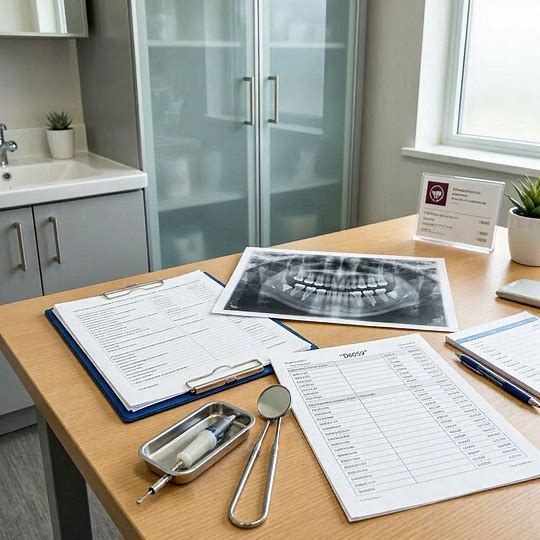
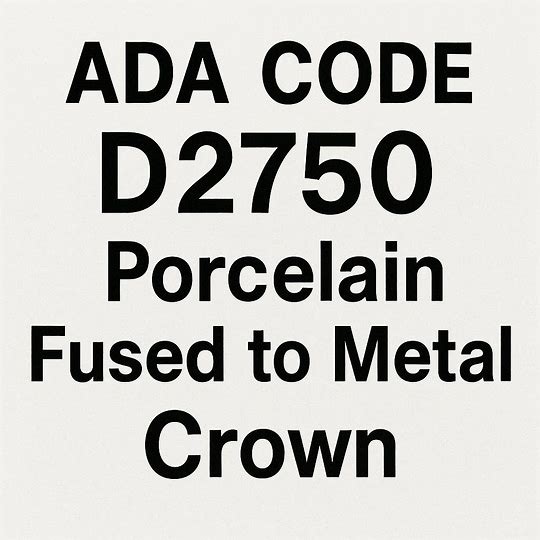
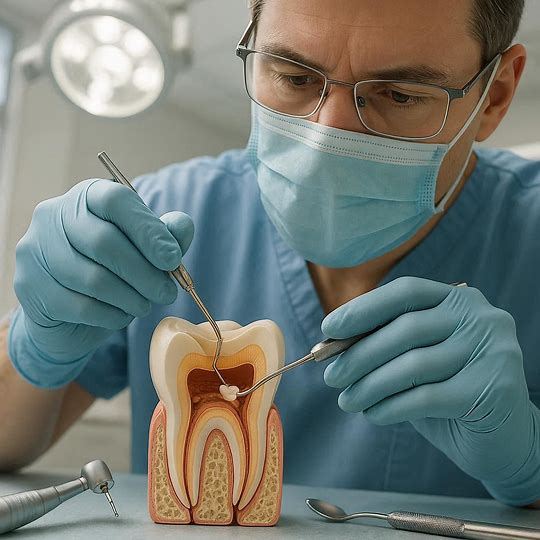
ADA Dental Code for Upper Stayplate (D5820 & D5821)
- On
- InDENTAL CODE
If you or a loved one has recently lost a few upper teeth, your dentist might have mentioned a “stayplate.” It sounds simple. But when the bill arrives, you see a confusing code like D5820 or D5821.
What do these numbers mean? Will your insurance cover them? And is a stayplate the right choice for you?
Let’s clear up the confusion.
This guide walks you through everything you need to know about the ADA dental codes for an upper stayplate. We will keep the language simple, the advice honest, and the details useful. By the end, you will feel confident talking to your dentist and your insurance company.
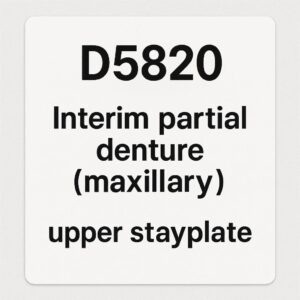
Table of Contents
ToggleWhat Exactly Is an Upper Stayplate?
Before we talk about codes, let’s understand the device itself.
An upper stayplate is a type of partial denture. But it is smaller than a traditional partial. Think of it as a temporary or transitional dental appliance.
Imagine you are missing one, two, or three upper front teeth. You do not want to walk around with a gap while waiting for a bridge or an implant. A stayplate fills that space immediately.
Key Features of a Stayplate
-
Acrylic base: Usually pink to match your gums.
-
False teeth: One or more artificial teeth attached to the base.
-
Wire clasps (sometimes): Small metal hooks that grip your remaining natural teeth.
-
Palate coverage: Covers a small part of the roof of your mouth for stability.
A stayplate is not a long-term solution for most people. It is a transitional appliance. You wear it while your gums heal after an extraction, or while you save money for a permanent restoration.
Upper vs. Lower Stayplates
An upper stayplate is more common than a lower one. Why? Your upper jaw has a larger surface area (the palate) to hold the plate in place. Lower stayplates tend to move around more because of your tongue.
| Feature | Upper Stayplate | Lower Stayplate |
|---|---|---|
| Stability | Good (palate suction) | Fair (tongue interference) |
| Comfort | Easy to adapt | Can feel bulky |
| Common Use | Front teeth replacement | Lower incisors |
| Retention | Natural suction + clasps | Clasps only |
Important note for readers: A stayplate is not the same as a flipper. Many dentists use the words interchangeably, but a flipper is usually a single-tooth emergency replacement. A stayplate can replace two or more teeth.
The Official ADA Dental Codes for Upper Stayplate
Now, the answer you came for.
The American Dental Association (ADA) publishes the Current Dental Terminology (CDT) code set. These are the standard codes used across the United States for billing and documentation.
For an upper stayplate, there are two main codes. The correct code depends on whether your dentist needs to adjust the stayplate on the same day as delivery.
Code D5820: Interim Partial Denture – Maxillary (Upper)
This is the primary code for an upper stayplate.
D5820 means: “Interim partial denture – maxillary.”
In plain English: A temporary partial denture for the upper jaw.
When is D5820 used?
-
Your dentist takes impressions for the stayplate.
-
The lab fabricates the appliance.
-
Your dentist delivers the stayplate in a separate appointment.
-
No adjustments are needed on the delivery day, or adjustments are minimal.
This code covers the entire process: impressions, lab work, materials, and delivery.
Code D5821: Interim Partial Denture – Maxillary (Adjustment Included)
D5821 means the same device, but with one key difference.
This code includes same-day adjustments during the delivery appointment.
When is D5821 used?
-
The stayplate requires significant trimming or rebasing.
-
Your dentist needs to add a soft liner for comfort.
-
Multiple adjustments are expected due to recent extractions.
Some dentists prefer D5821 because it allows for more chair time without losing money. Others use D5820 and bill adjustments separately (using code D5410 or D5411).
Comparison Table: D5820 vs. D5821
| Aspect | D5820 | D5821 |
|---|---|---|
| Device | Upper interim partial | Upper interim partial |
| Same-day adjustments | Not included | Included |
| Best for | Simple cases, healed ridges | Post-extraction cases |
| Average fee (USA) | $600 – $1,200 | $700 – $1,500 |
| Insurance coverage | Often 50-80% | Often 50-80% |
| Lab fee included | Yes | Yes |
A Common Misconception
You might see online forums mention D5822 or D5823. Those codes exist, but they are for lower interim partials or different clinical scenarios.
For a standard upper stayplate, stick with D5820 or D5821. Always confirm with your dentist’s billing office. They will know which code matches your specific treatment plan.
When Does a Dentist Recommend an Upper Stayplate?
Dentists do not recommend stayplates for every missing tooth. There are specific situations where this device shines.
1. Immediate Tooth Replacement After Extraction
You have a tooth pulled today. Tomorrow, you have a job interview or a wedding. A stayplate gives you an immediate smile.
The dentist can take impressions before the extraction. The lab builds the stayplate. On extraction day, the dentist places the stayplate right away. You never leave the office without a tooth.
2. Healing Period Before a Bridge or Implant
Dental implants need 3 to 6 months to heal (osseointegration). Bridges require healthy, prepared abutment teeth. During this waiting period, a stayplate keeps the space open and your smile intact.
3. Economic Flexibility
Not everyone has $5,000 for an implant or $3,000 for a bridge today. A stayplate costs much less. It buys you time. You can save money for the permanent solution while wearing a functional, good-looking temporary.
4. Diagnostic Tool
Sometimes, dentists use a stayplate to test your tolerance for a larger denture. If you have never worn a dental appliance, a small stayplate helps you adapt. If you struggle with a stayplate, you will likely struggle with a full denture. This knowledge helps your dentist plan better.
What Does the Procedure Look Like? (Step-by-Step)
Understanding the process helps you ask better questions and feel less anxious.
Step 1: Consultation and Examination
Your dentist examines your mouth. They check the health of your remaining teeth and gums. They take X-rays to see bone levels.
Questions to ask at this stage:
-
“Is my mouth healthy enough for a stayplate?”
-
“How long will this stayplate last?”
-
“What is the permanent solution you recommend?”
Step 2: Impressions (First Appointment)
The dentist takes an impression of your upper arch. They use a soft, gooey material called alginate or polyvinyl siloxane (PVS). It feels cold and tastes strange, but it only takes two minutes.
The lab uses this impression to create a stone model of your mouth.
Step 3: Bite Registration
The dentist asks you to bite together gently. This records how your upper and lower teeth meet. The stayplate must not interfere with your natural bite.
Step 4: Shade Selection
You choose the color of the false tooth. The dentist uses a shade guide. Hold it next to your natural teeth. Pick the closest match. It will not be perfect, but it will be close.
Step 5: Lab Fabrication (3 to 7 days)
A dental lab technician processes the stayplate. They set the artificial tooth in wax, invest it in a flask, pack acrylic, and cure it. Then they trim, polish, and finish the device.
Step 6: Delivery Appointment (D5820 or D5821)
Your dentist tries the stayplate in your mouth. They check:
-
Fit (no rocking)
-
Bite (no high spots)
-
Speech (you can say “sixty-six” clearly)
-
Comfort (no sharp edges)
If adjustments are needed, the dentist uses a bur to trim the acrylic. This is normal. No stayplate fits perfectly on the first try.
Step 7: Follow-up (One week later)
Your dentist sees you again. They check for sore spots. They ask about eating and speaking. They make final adjustments.
How Much Does an Upper Stayplate Cost? (Realistic Numbers)
Let’s talk money. Honest, realistic numbers.
The cost varies by location, dentist, and lab fees. Below are average ranges in the United States (2025-2026).
| Service | Without Insurance | With PPO Insurance |
|---|---|---|
| Exam and X-rays | $100 – $250 | Covered (may have copay) |
| Impressions and bite registration | $100 – $200 | Usually covered |
| Stayplate fabrication (D5820) | $600 – $1,200 | 50-80% coverage |
| Stayplate with adjustments (D5821) | $700 – $1,500 | 50-80% coverage |
| Adjustments after delivery (per visit) | $50 – $150 | May be covered |
| Total (approximate) | $850 – $1,800 | $200 – $700 patient portion |
Why the Wide Range?
-
Geographic location: New York City costs more than rural Kansas.
-
Lab quality: A local lab costs more but offers faster turnaround. A mail-away lab costs less but takes longer.
-
Dentist’s experience: Prosthodontists (specialists) charge more than general dentists.
-
Materials: High-impact acrylic costs more than standard acrylic.
Important note for readers: Never choose a dentist based only on price. A poorly made stayplate can damage your remaining teeth, cause gum sores, or break within weeks. Pay for quality.
Does Dental Insurance Cover an Upper Stayplate?
This is where things get tricky. Many patients assume “interim” means “not covered.” That is not always true.
Typical Coverage Rules
Most PPO dental plans cover interim partial dentures under these conditions:
-
Missing tooth clause: The tooth was extracted while you were covered by the plan (no pre-existing missing teeth).
-
Waiting period satisfied: Many plans have a 6- to 12-month waiting period for major services (dentures, bridges, implants). Stayplates often fall under “major services.”
-
Frequency limit: Most plans cover one interim partial every 5 to 10 years.
-
Downgrade provision: Some plans only pay for the cheapest option. If your dentist recommends a premium stayplate, you pay the difference.
Sample Insurance Scenario
Your plan: PPO with 80% coverage for major services after a $50 deductible. Annual maximum: $1,500.
Your stayplate (D5820): $1,000.
| Item | Amount |
|---|---|
| Fee | $1,000 |
| Deductible (annual) | – $50 |
| Subtotal | $950 |
| Insurance pays 80% | $760 |
| You pay | $240 |
This leaves $740 of your annual maximum for other work (fillings, cleanings, etc.).
What Insurance Usually Does NOT Cover
-
Replacing a lost stayplate: If you drop it down the sink, you pay for a new one.
-
Adjustments beyond 6 months: Most plans cover adjustments only for a limited time.
-
Soft liners: A soft liner is often considered optional and not covered.
Always pre-authorize. Ask your dentist’s office to send a pre-treatment estimate to your insurance company. This is not a guarantee of payment, but it gives you a realistic number.
Upper Stayplate vs. Other Tooth Replacement Options
A stayplate is one tool in a large toolbox. Let’s compare it to other common options.
| Feature | Upper Stayplate | Traditional Partial Denture | Dental Bridge | Dental Implant |
|---|---|---|---|---|
| Longevity | 6 months – 2 years | 5 – 10 years | 10 – 15 years | 20+ years |
| Cost | $600 – $1,500 | $1,500 – $3,000 | $3,000 – $5,000 | $4,000 – $6,000+ |
| Invasiveness | Non-invasive | Non-invasive | Shaves healthy teeth | Surgery required |
| Aesthetics | Good | Very good | Excellent | Excellent |
| Comfort | Fair (acrylic bulk) | Good (metal framework) | Excellent (fixed) | Excellent (fixed) |
| Healing time | None | None | None | 3-6 months |
| Insurance coverage | Often 50-80% | Often 50-80% | Often 50-80% | Rarely covered |
Which One Should You Choose?
-
Choose a stayplate if: You need a temporary fix, you are healing from extractions, or you have a tight budget for the next 6-12 months.
-
Choose a traditional partial if: You want a longer-term removable option with a metal framework for strength.
-
Choose a bridge if: You want a fixed (non-removable) option and the teeth next to the gap are healthy and strong.
-
Choose an implant if: You want the best long-term solution and you have the budget and bone density for surgery.
Pros and Cons of an Upper Stayplate (Honest Assessment)
Let’s be real. No dental device is perfect. Here is the unvarnished truth.
The Pros (Why Patients Like Them)
✅ Affordable. Compared to bridges and implants, a stayplate is budget-friendly.
✅ Fast. From impression to delivery in one week or less.
✅ Reversible. No teeth are shaved down. No surgery required.
✅ Easy to repair. If a tooth breaks or the base cracks, a lab can usually fix it in 24 hours.
✅ Good for healing. Protects extraction sites and maintains space for future implants.
The Cons (What Dentists Wish You Knew)
❌ Temporary by design. Do not expect it to last for years. Acrylic wears down and stains.
❌ Can feel bulky. Your palate is covered. Some people gag. Most adapt within a week.
❌ Food traps. Food gets under the stayplate. You must remove and rinse after meals.
❌ Speech changes. You might lisp for a few days. Practice reading out loud.
❌ Bone loss continues. Underneath the stayplate, your jawbone will still shrink over time.
❌ May loosen over time. As your gums heal and reshape, the stayplate will become loose. Relines are needed.
Quote from a practicing general dentist (anonymous for privacy):
“I love stayplates for the right patient. But I hate them when patients think they are permanent. I have seen people wear the same stayplate for 10 years. Their gums were destroyed. Bone loss was severe. A stayplate is a bridge to something better, not a destination.”
Caring for Your Upper Stayplate (Do’s and Don’ts)
You want your stayplate to last as long as possible. Follow these rules.
Daily Care Routine
Morning:
-
Rinse the stayplate under cool water.
-
Brush it with a soft toothbrush and non-abrasive denture cleaner.
-
Brush your natural teeth and gums thoroughly.
-
Insert the stayplate. Ensure it sits evenly.
After meals:
-
Remove the stayplate.
-
Rinse it and your mouth with water.
-
Reinsert.
Night:
-
Remove the stayplate.
-
Brush it again.
-
Soak it in water or a denture cleaning solution overnight.
-
Brush your natural teeth and gums before bed.
The Golden Rules
| Do | Don’t |
|---|---|
| Use a soft-bristled brush | Use toothpaste (it scratches acrylic) |
| Store in water when not in use | Let it dry out (it warps) |
| Rinse after every meal | Sleep while wearing it (risk of fungal infection) |
| See your dentist for annual relines | Try to adjust it yourself with sandpaper |
| Handle over a soft towel or sink of water | Drop it on a hard floor (it cracks easily) |
Signs Your Stayplate Needs Replacement or Reline
-
The stayplate rocks when you press on it.
-
You feel a gap between the acrylic and your gums.
-
The false teeth are worn down or discolored.
-
The acrylic has a foul smell even after cleaning.
-
You have chronic sore spots in the same location.
Common Problems and How to Solve Them
Even with a well-made stayplate, problems happen. Here is how to handle them.
Problem 1: Gagging
Why it happens: The stayplate covers the soft palate. Your brain thinks something is stuck in your throat.
Solutions:
-
Wear the stayplate for 1 hour, remove for 1 hour. Repeat. Gradually increase wear time.
-
Suck on a hard candy (sugar-free). This distracts the gag reflex.
-
Ask your dentist to shorten the back edge of the stayplate.
Problem 2: Food Under the Plate
Why it happens: No seal is perfect. Acrylic does not bond to gum tissue.
Solutions:
-
This is normal. Remove, rinse, reinsert.
-
Use a denture adhesive (Fixodent or Poligrip) to create a better seal.
-
Carry a small container of water and a napkin when dining out.
Problem 3: Sore Spots
Why it happens: A high spot on the acrylic rubs against your gum.
Solutions:
-
Do not try to sand it yourself. You will make it worse.
-
Call your dentist for an adjustment. This takes 2 minutes.
-
Use a salt water rinse (1 teaspoon salt in 1 cup warm water) to soothe sore gums.
Problem 4: The Stayplate Flips Down When You Open Wide
Why it happens: Poor retention. The clasps are loose or the palate coverage is insufficient.
Solutions:
-
This is a design flaw. Your dentist may need to add a clasp or extend the palate.
-
In some cases, a lower partial denture on the upper jaw is impossible. You may need a different solution.
Problem 5: You Lost the Stayplate
Solutions:
-
Retrace your steps. Check napkins, sink traps, and garbage cans.
-
If lost for more than 24 hours, call your dentist. A new impression is needed. Gums change shape quickly.
-
Consider buying a spare stayplate if you are prone to losing things. Yes, this is possible.
Frequently Asked Questions (FAQ)
Q1: Can I eat normally with an upper stayplate?
Yes and no. You can eat soft foods (pasta, rice, cooked vegetables, eggs). Avoid sticky foods (caramel, taffy, gum). Avoid hard foods (nuts, hard candy, ice). The stayplate can break or dislodge.
Q2: How long does an upper stayplate last?
With perfect care, 2 years maximum. Most need replacement or relining after 12 to 18 months. The gums and bone under the stayplate change over time.
Q3: Can I sleep with my upper stayplate?
No. Never sleep while wearing any removable dental appliance. Your risk of pneumonia, fungal infection (candida), and gum inflammation increases dramatically.
Q4: Is an upper stayplate the same as a flipper?
Most dentists use the terms interchangeably. Technically, a “flipper” is a single-tooth interim partial. A “stayplate” usually replaces two or more teeth. For billing purposes, both use D5820 or D5821.
Q5: My dentist said I need a “reline.” What is that?
A reline (ADA code D5750 or D5751) adds new acrylic to the inside of the stayplate. This fills the gap created by gum shrinkage. It makes the stayplate fit snugly again. Relines cost $200 to $400.
Q6: Will my insurance pay for a replacement stayplate?
Most plans pay for a new interim partial every 5 to 10 years. If yours broke after 6 months due to poor care, insurance may deny coverage. If it broke due to a manufacturing defect, the dentist should replace it for free.
Q7: Can I get an upper stayplate if I have no natural teeth on the upper jaw?
No. A stayplate requires at least one or two natural teeth for clasps and stability. If you have no upper teeth, you need a complete denture (ADA codes D5110 or D5120).
Q8: Does getting a stayplate hurt?
The impressions are uncomfortable but not painful. The delivery appointment is painless. You may have mild soreness for 2 to 3 days as your mouth adapts. This is normal.
Q9: Can I whiten my stayplate?
No. Whitening products (hydrogen peroxide, carbamide peroxide) will damage the acrylic. They make it porous and rough. If your stayplate is stained, ask your dentist about professional cleaning or replacement.
Q10: What happens if I just do nothing? Leave the gap.
That is always an option. However, teeth adjacent to the gap will tilt. The tooth above the gap (if lower missing) or below the gap (if upper missing) will super-erupt (grow longer). This makes future restoration more expensive and complicated.
Additional Resource
For the official and most up-to-date information on all ADA dental codes, including the full CDT code book, visit the American Dental Association’s official code resource page:
🔗 ADA.org/CDT (Copy and paste this link into your browser)
This resource provides:
-
The complete list of current CDT codes.
-
Code changes from year to year.
-
Official ADA definitions and guidelines.
-
Billing and claim form instructions.
Always reference the official source when disputing an insurance claim or verifying a code.
A Final Word of Honest Advice
An upper stayplate is a wonderful tool when used correctly. It gives you back your smile. It buys you time. It protects your mouth during healing.
But remember: a stayplate is not a permanent solution.
If your dentist recommends a stayplate, ask this one question: “What is my long-term plan?”
A good dentist will say: “We will use this stayplate for 6 to 12 months. During that time, we will monitor your healing. Then we will discuss a bridge, an implant, or a more permanent partial denture.”
If your dentist says: “This stayplate will last for years, just take care of it,” get a second opinion.
Your mouth changes. Bones shrink. Gums recede. Teeth shift. A stayplate made today will not fit perfectly in two years. That is not a design flaw. That is biology.
Use the stayplate for what it is: a reliable, affordable, temporary friend. Then invest in a permanent solution when the time is right.
You deserve a smile that works for decades, not just for the next wedding or job interview.
Conclusion (Three Lines Summary)
The ADA dental code for an upper stayplate is D5820 (without same-day adjustments) or D5821 (with adjustments included). These codes cover a temporary, affordable acrylic partial denture used during healing after extractions or as a bridge to a permanent restoration like an implant or bridge. Always verify coverage with your insurance, plan for a permanent solution within 12–18 months, and never sleep while wearing your stayplate.
Disclaimer: This article is for informational purposes only and does not constitute medical or dental advice. Always consult with a licensed dentist for diagnosis and treatment specific to your situation. Dental codes and insurance policies change over time. Confirm all codes with your dental provider’s billing office.

dentalecostsmile
Newsletter Updates
Enter your email address below and subscribe to our newsletter