ADA Dental Code for Whitening: A Complete, No-Nonsense Guide for Patients
If you have ever sat in a dentist’s chair and heard the front desk mention something like “D9975,” you probably nodded along while secretly having no idea what they were talking about. That is completely normal.
Dental codes can feel like a secret language. And when it comes to teeth whitening, things get even murkier. Does insurance cover it? Is there really a specific ADA code for whitening? And why does your dentist sometimes bill it one way and other times another way?
Let me clear all of that up for you.
This guide focuses on one main question: What is the ADA dental code for whitening, and how does it actually work in a real dental office?
We will go step by step. No fluff. No fake information. Just honest, practical answers.

What Is the Exact ADA Dental Code for Whitening?
The official American Dental Association (ADA) Current Dental Terminology (CDT) code for professional teeth whitening is:
D9975 – External Bleaching – Per Arch – In-Office
Let us break that down into plain English.
-
External bleaching means whitening the outside surfaces of your natural teeth. This is what most people think of when they imagine teeth whitening.
-
Per arch means the code is applied to one dental arch at a time. One arch is your upper teeth. The other arch is your lower teeth.
-
In-office means the whitening procedure is performed inside a dental clinic by a dentist or a trained dental hygienist.
So if you whiten both your upper and lower teeth in one visit, your dentist will likely bill two units of D9975. One for the upper arch. One for the lower arch.
Is There a Separate Code for Take-Home Whitening Kits?
Yes. And this is where many people get confused.
The ADA code for professionally dispensed take-home whitening trays is:
D9976 – External Bleaching – Per Arch – Take-Home
The difference is simple:
-
D9975 = whitening done in the dental chair.
-
D9976 = custom trays and gel that you take home and use yourself.
Both codes are valid. Both are recognized nationally. But they are billed differently, priced differently, and treated very differently by dental insurance companies.
Important note: A whitening strip you buy at a drugstore has no ADA code because it is not a dental procedure. Only whitening procedures prescribed, dispensed, or performed by a licensed dentist receive ADA codes.
Why Does Your Dentist Use an ADA Code for Whitening?
You might be thinking: If insurance does not pay for whitening, why bother with a code at all?
That is a fair question.
Dentists use ADA codes for three main reasons:
-
To keep accurate patient records. Every procedure you receive should be documented with the correct code. This creates a complete dental history.
-
To submit claims to dental insurance. Even if whitening is not covered, many offices still submit the claim so the insurance company can formally deny it. That denial letter then proves the patient was informed.
-
To track treatment statistics. Dental offices use codes internally to see which services are most popular, how long procedures take, and how to price them fairly.
So even if you pay 100% out of pocket for whitening, the code still serves an important purpose.
Does Dental Insurance Cover the ADA Whitening Code?
Let me give you the honest answer right now.
Almost never.
Dental insurance plans are designed to protect your oral health. Whitening is considered a cosmetic procedure. It does not prevent disease, stop pain, or restore function.
Therefore, the vast majority of PPO, HMO, and discount dental plans explicitly exclude D9975 and D9976 from coverage.
Are There Any Exceptions?
Yes. But they are rare.
A few very high-end dental plans (usually executive or concierge plans) may offer a small cosmetic benefit. This might cover:
-
Up to $100–$200 toward whitening every 24 or 36 months.
-
Only one arch per year.
-
Only in-office whitening, not take-home.
Even then, you usually need to meet your deductible first. And the reimbursement is low.
What About FSA or HSA Funds?
This is different from insurance coverage.
You can use Flexible Spending Account (FSA) or Health Savings Account (HSA) funds for ADA-coded whitening procedures. The IRS allows this because the whitening is performed or prescribed by a dentist.
Keep your itemized receipt from the dental office. It should show:
-
Your name
-
The date of service
-
The ADA code (D9975 or D9976)
-
The amount paid
That receipt is all you need to reimburse yourself or use your FSA/HSA debit card.
Real-world tip: Always call your FSA or HSA administrator first. Some have specific forms. But in general, professionally dispensed whitening is an eligible expense.
D9975 vs. D9976: A Clear Comparison
Let us put these two codes side by side so you can see exactly how they differ.
| Feature | D9975 (In-Office Whitening) | D9976 (Take-Home Whitening) |
|---|---|---|
| Where it happens | In the dental chair | At your home |
| Who performs it | Dentist or hygienist | You |
| Time per session | 60–90 minutes | 30–60 minutes per application |
| Number of visits | 1 visit (sometimes 2) | 1 dispensing visit + self-application |
| Typical cost per arch | $250–$500 | $150–$350 |
| Custom trays | Not used | Yes, custom-fitted |
| Whitening gel strength | 25–40% hydrogen peroxide | 10–22% carbamide peroxide |
| Immediate results | Very noticeable after 1 hour | Gradual over 7–14 days |
| Sensitivity risk | Moderate to high | Low to moderate |
| Insurance coverage | Almost never | Almost never |
| FSA/HSA eligible | Yes | Yes |
As you can see, neither code is “better.” They simply serve different patient needs.
Which One Should You Choose?
That depends on your lifestyle and your teeth.
-
Choose D9975 (in-office) if you want results today, do not mind a higher upfront cost, and have a high tolerance for temporary tooth sensitivity.
-
Choose D9976 (take-home) if you prefer a gentler approach, want to whiten on your own schedule, and like the idea of custom trays you can reuse for touch-ups.
Many dentists actually recommend both. They might do one in-office session to jump-start the whitening, then send you home with trays and gel for maintenance. This is sometimes called “combination whitening,” and it uses both codes on the same treatment plan.
How Much Does ADA Code D9975 Really Cost?
Prices vary significantly by location and by dental office. But after analyzing data from across the United States, here are realistic ranges.
In-Office Whitening (D9975) – Per Arch
| Region | Low end | Average | High end |
|---|---|---|---|
| Rural areas | $200 | $275 | $350 |
| Suburban areas | $250 | $350 | $450 |
| Major cities | $300 | $425 | $550 |
| Luxury/concierge practices | $400 | $550 | $800+ |
Most patients whiten both arches. So you can expect to pay roughly double the per-arch price.
Example: If your dentist charges $350 per arch for D9975, whitening both arches will cost approximately $700 out of pocket.
Take-Home Whitening (D9976) – Per Arch
| Region | Low end | Average | High end |
|---|---|---|---|
| Rural areas | $120 | $180 | $250 |
| Suburban areas | $150 | $220 | $300 |
| Major cities | $180 | $275 | $375 |
| Luxury/concierge practices | $250 | $350 | $500+ |
Again, most patients whiten both arches. A complete take-home kit for upper and lower teeth typically costs between $300 and $550.
What Is Included in the Price?
For D9975, the fee usually includes:
-
Pre-whitening examination (often brief)
-
Gum protection (barrier or liquid dam)
-
Application of whitening gel
-
Activation light (if the office uses one)
-
One follow-up if needed
For D9976, the fee usually includes:
-
Impressions or digital scans of your teeth
-
Fabrication of custom trays
-
Multiple syringes of whitening gel
-
Instructions for use
-
One follow-up visit for fit check
Always ask your dentist’s front desk for a written breakdown. A reputable office will happily provide one.
Why Your Dentist Might Not Use the Whitening Code at All
Here is something that surprises many patients.
Some dentists do not bill D9975 or D9976 for whitening. Instead, they use a different code or no code at all.
Why?
Because whitening is often sold as a retail product rather than a medical procedure in some offices. This is more common in:
-
Corporate dental chains
-
Dental spas
-
Practices that outsource whitening to third-party vendors
In those cases, you might see charges labeled as:
-
“Professional whitening system”
-
“Laser whitening package”
-
“Brightening special”
Without a proper ADA code, these charges cannot be submitted to insurance (even for denial), and they may not be eligible for FSA/HSA reimbursement.
Always ask: “Will you bill this whitening procedure using ADA code D9975 or D9976?” If the answer is no, ask why. If the answer is evasive, consider another office.
Step-by-Step: What Happens During an In-Office Whitening (D9975)
If you have never had professional whitening, the process is straightforward. Here is exactly what to expect.
Step 1 – Brief Oral Exam
The dentist or hygienist checks your teeth and gums. They want to make sure you do not have untreated cavities, gum disease, or exposed roots. Whitening on unhealthy teeth can cause severe pain.
Step 2 – Shade Taking
They record your current tooth shade using a shade guide. This is important so you can see the before-and-after difference.
Step 3 – Gum Protection
A barrier is applied to your gums. This is usually a liquid rubber dam or a soft resin. It protects sensitive gum tissue from the whitening gel.
Step 4 – Gel Application
The whitening gel (typically 25–40% hydrogen peroxide) is painted onto your teeth. The gel is thick and stays in place.
Step 5 – Activation (Optional)
Some offices use a special light or laser. Research shows lights provide a small boost, but most of the whitening comes from the gel itself. Do not pay a huge premium for a light.
Step 6 – Waiting Period
The gel sits on your teeth for 15–20 minutes. The hygienist may remove it and apply fresh gel for another round. Most in-office whitening involves two or three 15-minute cycles.
Step 7 – Rinse and Reveal
The gel is rinsed off. The gum barrier is removed. You look in the mirror.
Step 8 – Shade Check
The dentist records your new shade. Most patients see a change of 4 to 8 shades on the guide.
Step 9 – Sensitivity Discussion
You are told what to expect over the next 24–48 hours. Mild to moderate sensitivity is normal. It will fade.
The entire appointment usually takes 60 to 90 minutes.
Step-by-Step: What Happens with Take-Home Whitening (D9976)
This code covers the professional dispensing of a take-home system. Here is the process.
Step 1 – Impressions or Scans
The dentist takes an impression of your teeth using putty or an intraoral scanner. This creates a precise mold.
Step 2 – Tray Fabrication
The impressions are sent to a lab or printed in-house. Custom trays are made to fit your teeth exactly. This usually takes a few days to a week.
Step 3 – Dispensing Appointment
You return to the office. The dentist checks the fit of the trays. They should snap on snugly but not hurt.
Step 4 – Gel and Instructions
You receive syringes of whitening gel (usually 10–22% carbamide peroxide). The dentist explains exactly how much gel to use, how long to wear the trays, and how often.
Step 5 – At-Home Use
You whiten at home. Typical instructions: wear trays for 30–60 minutes per day for 7–14 days. Some low-concentration gels are worn overnight.
Step 6 – Follow-Up
You return to the office after completing the initial whitening phase. The dentist checks your results and your gum health. They may give you extra gel for touch-ups.
Unlike in-office whitening, D9976 involves two or three office visits. But the actual whitening time happens on your own schedule.
Can You Use the ADA Whitening Code for a Single Tooth?
This is a very common question, especially from people who have one dark tooth from an old injury or a root canal.
The short answer: No, not with D9975 or D9976.
Those codes are for external bleaching of natural, vital teeth. A single dark tooth usually requires internal bleaching.
Internal bleaching has its own ADA code:
D3221 – Pulpal Debridement (Internal Bleaching)
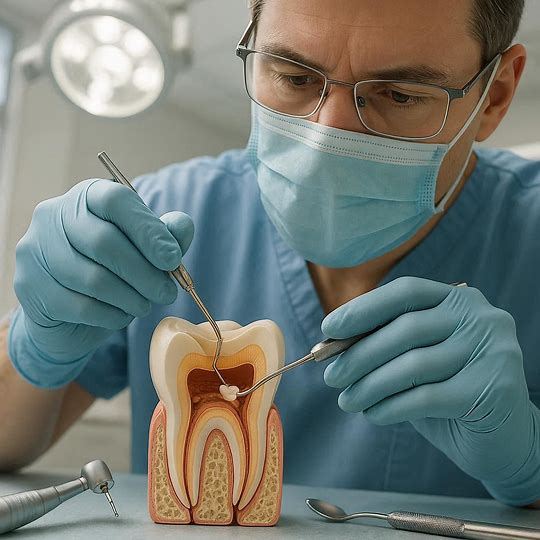
This is a completely different procedure. The dentist drills a small hole in the back of the tooth, removes the old root canal filling material, places a bleaching agent inside the tooth, and seals it temporarily. After a few days or weeks, the tooth lightens from the inside out.
If you have one dark front tooth, ask your dentist about D3221, not D9975.
What the ADA Dental Codes Do NOT Cover
This is just as important as knowing what they do cover.
The ADA whitening codes do not apply to:
-
Over-the-counter whitening strips or pens
-
Whitening toothpaste
-
Charcoal powder or baking soda remedies
-
Natural whitening methods (strawberries, oil pulling, etc.)
-
Whitening rinses
-
LED home kits not dispensed by a dentist
If you buy any of these products yourself, no ADA code exists. They are consumer goods, not dental procedures.
That also means you cannot use FSA/HSA funds for drugstore whitening products unless your dentist provides a specific letter of medical necessity. And even then, it is rarely approved.
Real Patient Scenarios (With Codes and Costs)
Let us walk through some realistic examples so you can see how this works in real life.
Scenario 1 – Sarah, Wedding in 3 Days
Sarah wants noticeably whiter teeth before her wedding. She has no dental sensitivity issues and wants results immediately.
-
Procedure: In-office whitening, both arches
-
ADA code: D9975 x 2
-
Cost: $350 per arch = $700 total
-
Insurance coverage: $0
-
FSA used: Yes, $700
-
Result: 7 shades lighter after one 90-minute visit
Scenario 2 – Mark, Sensitive Teeth, No Rush
Mark has naturally sensitive teeth. He wants to whiten but is afraid of pain. He prefers to go slowly.
-
Procedure: Custom take-home whitening
-
ADA code: D9976 x 2
-
Cost: $225 per arch = $450 total
-
Insurance coverage: $0
-
FSA used: Yes, $450
-
Result: 5 shades lighter after 10 days of gentle use
Scenario 3 – Jessica, Already Has Trays
Jessica had custom trays made two years ago. They still fit perfectly. She just needs fresh gel.
-
Procedure: Replacement whitening gel only (no new trays)
-
ADA code: Some offices use D9976 with a reduced fee. Others have an internal code.
-
Cost: $50–$100 for 4–6 syringes
-
Note: Always ask for “refill gel only.” Do not pay the full D9976 fee again.
Scenario 4 – David, Insurance Exception
David has a rare PPO plan through his executive employer. The plan includes a $150 cosmetic benefit every 24 months.
-
Procedure: In-office whitening, lower arch only (upper is already white)
-
ADA code: D9975 x 1
-
Cost: $300
-
Insurance payment: $75 (50% of a $150 benefit after deductible)
-
Patient owes: $225
-
Result: Partial coverage, but still mostly out of pocket
As you can see, even in the best-case scenario, insurance pays very little for cosmetic whitening.
How to Talk to Your Dentist About Whitening Codes
You do not need to be an expert. You just need to ask three simple questions.
Question 1: “What ADA code will you use for my whitening?”
Question 2: “Will you submit this to my insurance so I have a denial letter for my FSA?”
Question 3: “Can you give me a written treatment plan with the codes and fees before we start?”
Any professional dental office will answer these questions immediately. If they hesitate or seem confused, that is a red flag.
Pro tip: Ask these questions before you make the appointment. A quick phone call can save you from unexpected bills or FSA rejection later.
Does Whitening Work on All Teeth? (Honest Answer)
No. And your dentist should tell you this upfront.
Teeth whitening (whether D9975 or D9976) works best on:
-
Natural teeth
-
Yellow-toned stains
-
Age-related darkening
-
Surface stains from coffee, tea, or red wine
Whitening does not work well on:
-
Crowns, veneers, or bridges
-
Bonding material
-
Fillings (they will stay the same color while your tooth whitens around them)
-
Gray or blue stains (often from tetracycline antibiotics)
-
Teeth with severe fluorosis
If you have restorations on your front teeth, whitening can actually make them look worse. Your natural teeth become lighter, but your crown stays the same. Now the crown stands out.
In those cases, your dentist might recommend:
-
Replacement of restorations after whitening
-
Veneers instead of whitening
-
Internal bleaching (D3221) for single dark teeth
Do not let anyone sell you whitening without discussing your existing dental work first.
How Long Do Whitening Results Last?
This depends entirely on your habits. Let us be realistic.
| Habit | Expected result longevity |
|---|---|
| No coffee, tea, wine, or tobacco | 12–24 months |
| 1 cup of coffee per day | 6–12 months |
| 2–3 cups of coffee or tea daily | 4–8 months |
| Daily red wine or smoking | 2–4 months |
| Touch-up whitening every 3–6 months | Indefinitely (maintenance) |
Most people fall into the 4- to 8-month range. That is perfectly normal.
To extend your results:
-
Use a straw for dark beverages
-
Rinse your mouth with water after coffee or tea
-
Brush 30 minutes after eating (not immediately)
-
Do one overnight whitening touch-up every 2–3 months
Your dentist can sell you small refill syringes of gel for your existing custom trays. This is much cheaper than starting over.
Is Professional Whitening Worth the Cost?
This is a personal decision. But let me give you an honest comparison.
Professional Whitening (D9975 or D9976)
-
Cost: $300–$800
-
Results: 4–8 shades lighter
-
Safety: Supervised by dentist. Gum protection. Custom fit.
-
Sensitivity: Managed. Dentist can adjust gel strength.
-
Longevity: Months to years with touch-ups
Drugstore Whitening Strips
-
Cost: $20–$60
-
Results: 1–3 shades lighter
-
Safety: One-size-fits-all. Gel can contact gums.
-
Sensitivity: Common. No professional guidance.
-
Longevity: Weeks to a few months
Home Remedies (Baking soda, charcoal, etc.)
-
Cost: Very low
-
Results: Minimal to zero. Often abrasive.
-
Safety: Can damage enamel or gums.
-
Longevity: Not applicable
Professional whitening costs more upfront. But it is safer, more effective, and longer-lasting. If you can afford it, the value is clear.
That said, drugstore strips are not worthless. They work for mild staining on a budget. Just know what you are buying.
Common Myths About ADA Whitening Codes
Let us bust some myths that circulate online.
Myth 1: “D9975 is for laser whitening only.”
False. D9975 covers all in-office external bleaching, whether a light is used or not. The code does not specify the activation method.
Myth 2: “You can bill D9975 to medical insurance for sleep apnea.”
False. This makes no clinical sense. Medical insurance never covers cosmetic tooth whitening for any reason.
Myth 3: “Some dental plans cover D9976 as preventive care.”
False. Preventive care includes cleanings, exams, and fluoride. Whitening is never classified as preventive.
Myth 4: “Dentists make up their own codes for whitening.”
False. Dentists must use official CDT codes for insurance and records. Some offices use internal tracking numbers for retail whitening packages, but those are not ADA codes.
Myth 5: “You need a new D9976 code every time you buy gel.”
False. The D9976 code applies to the initial dispensing of custom trays and gel. Refill gel alone is often billed with a smaller internal code or a reduced D9976 fee.
Do not believe everything you read on dental forums. When in doubt, ask your own dentist.
Frequently Asked Questions (FAQ)
1. What is the exact ADA dental code for whitening?
The two official codes are D9975 (in-office whitening per arch) and D9976 (take-home whitening per arch).
2. Does insurance cover D9975?
Almost never. Whitening is considered cosmetic by nearly all dental insurance plans.
3. Can I use my HSA for ADA code D9976?
Yes. Professional whitening dispensed by a dentist is typically HSA/FSA eligible. Keep your itemized receipt.
4. How many shades will D9975 whiten my teeth?
Most patients see a change of 4 to 8 shades on a standard dental shade guide after one in-office visit.
5. Is D9975 painful?
You may feel temporary sensitivity during or after whitening. This is normal and usually fades within 48 hours.
6. Can I whiten just one tooth with D9975?
No. External whitening codes apply to entire arches. A single dark tooth may require internal bleaching (D3221).
7. How long do custom whitening trays from D9976 last?
With proper care, custom trays last 2 to 5 years. Store them dry and away from heat.
8. What is the difference between D9975 and D9976?
D9975 is performed entirely in the dental office. D9976 involves custom trays and gel you use at home.
9. Do all dentists use ADA codes for whitening?
Most do. Some corporate or spa-style offices may not. Always ask before scheduling.
10. Can I get D9975 if I have gum disease?
No. Whitening should only be performed on healthy teeth and gums. Treat gum disease first.
Additional Resource
For the most current list of ADA CDT codes and official code descriptions, visit the American Dental Association’s Code Maintenance Committee page:
This is the official source. Always trust the ADA website over third-party dental code directories.
Important Notes for Readers
-
Codes change. ADA updates CDT codes every two years. D9975 and D9976 have been stable for many years, but always verify with your dental office.
-
Prices vary widely. The fees listed in this article are national averages. Your actual cost may be higher or lower depending on your city and specific dental practice.
-
Get it in writing. Before any whitening procedure, ask for a printed treatment plan with the ADA code, fee per arch, and total out-of-pocket cost.
-
Do not whiten too often. Whitening more than once every 6 to 12 months can increase sensitivity and risk gum irritation. More is not better.
-
See your dentist first. Do not whiten over untreated cavities or gum recession. You will regret it. A simple exam can save you from serious pain.
Conclusion
The ADA dental code for whitening is D9975 for in-office procedures and D9976 for take-home trays. Neither is covered by standard dental insurance, but both are eligible for FSA and HSA spending. Professional whitening is safe, effective, and long-lasting when performed correctly. Always ask your dentist for the exact code, a written estimate, and an honest discussion about whether whitening is right for your specific teeth.