Dental Implants In Forest Hills
Losing a tooth changes more than just your smile. It affects how you chew your favorite bagel from the local deli on Metropolitan Avenue. It changes how you pronounce certain words when chatting with neighbors near MacDonald Park. Most importantly, it can slowly wear down your confidence. You might start covering your mouth when you laugh or avoiding group photos at summer concerts in Forest Hills Stadium.
You are not alone in this. Many residents of Queens face the same dilemma. The good news is that modern dentistry offers a solution that feels, functions, and looks exactly like a natural tooth. We are talking about dental implants.
If you are searching for reliable information on dental implants in Forest Hills, you have likely encountered a maze of conflicting advice, price ranges, and technical jargon. This guide cuts through the noise. We will walk through every stage of the process, from the initial consultation on Austin Street to the final restoration. We will explore the technology used by local specialists, the true cost breakdown, and what makes the experience unique for patients in the 11375 zip code.
This is not a sales pitch. It is a comprehensive, realistic resource designed to answer every question you have before you even sit in the dentist’s chair.
Understanding the Local Landscape of Dental Implants in Forest Hills
Forest Hills is a unique neighborhood. It blends the historic charm of Tudor homes with the bustling energy of a commercial hub. The dental practices here reflect that same blend of tradition and innovation. When you seek dental implants in Forest Hills, you tap into a community of highly trained prosthodontists and oral surgeons who often serve not just Queens, but patients from Manhattan and Long Island seeking high-value care.
Why do so many people specifically look for this procedure here? The area boasts a concentration of specialists who utilize advanced imaging technology right in their private practices. You do not need to travel into Midtown for a 3D cone beam CT scan. Many offices along Queens Boulevard and Yellowstone Boulevard have this equipment on-site. This convenience matters when you are looking at a multi-month treatment timeline.
Moreover, the patient demographic in Forest Hills is diverse. Dentists here have extensive experience treating a wide range of bone densities and medical histories. Whether you are a long-time resident or a new arrival in one of the luxury condos near the LIRR station, you will find a level of personalized care that caters to the specific needs of this vibrant community.
What Exactly Is a Dental Implant?
Let’s strip away the complex medical dictionary. A dental implant is a small, strong post made of titanium or zirconia. Think of it as an artificial tooth root. A skilled surgeon places this post into your jawbone in the exact spot where your natural tooth root used to be.
Over a period of weeks or months, something remarkable happens. The bone in your jaw fuses directly to the surface of the implant. This process, called osseointegration, creates an anchor that is as solid as bedrock. Once this bond is complete, your dentist attaches a connector piece called an abutment. Finally, a custom-made crown—designed to match the shade and shape of your surrounding teeth—sits on top.
The result is a standalone tooth replacement. Unlike a bridge, it does not rely on grinding down the teeth next to it. Unlike a denture, it does not slip or press on the gums. It stands alone, strong and secure.
The Anatomy of an Implant: A Simple Breakdown
To truly understand the value of the investment, it helps to visualize the three distinct parts that make up the whole system.
The Implant Fixture
This is the part you never see. It is a screw-like cylinder, typically made of medical-grade titanium. Why titanium? Because the human body does not reject it. In fact, bone cells love to grow onto its surface. This is the foundation hidden deep beneath the gum line.
The Abutment
This small connector is the unsung hero of the restoration. Once the implant is fully integrated with the bone, the dentist exposes the top of the implant and secures the abutment. It acts as a bridge between the buried implant and the visible crown. It pokes just slightly above the gum tissue.
The Prosthesis (The Crown)
This is the part you see in the mirror. It is the “tooth.” Most practices in Forest Hills utilize high-grade porcelain or zirconia for this piece. These materials reflect light just like natural enamel. A well-made crown is indistinguishable from the real teeth on either side of it. You can bite into a crisp apple from the farmer’s market on Yellowstone confidently.
Why Forest Hills Residents Choose Implants Over Other Options
When a tooth goes missing, the space does more than just look empty. The neighboring teeth begin to drift. The tooth above or below the gap starts to grow longer because it has nothing to bite against. The bone where the root used to be begins to dissolve, or resorb. This bone loss can alter the shape of your jaw and face over time.
Here is how dental implants stack up against the traditional alternatives available in most Forest Hills dental offices.
| Feature | Dental Implants | Fixed Bridge | Removable Partial Denture |
|---|---|---|---|
| Impact on Adjacent Teeth | None. Neighboring teeth remain untouched and healthy. | Requires shaving down two perfectly healthy teeth to serve as anchors. | Metal clasps can strain and wear down adjacent anchor teeth. |
| Bone Preservation | Stops bone loss. Stimulates jawbone like a natural root. | Bone under the fake tooth continues to shrink over time. | Accelerates bone loss due to pressure on the gum surface. |
| Longevity | 25 years to Lifetime with proper hygiene. | 7-10 years average before replacement due to decay under bridge. | 5-7 years before jaw changes require a remake or reline. |
| Stability | Feels exactly like a natural, strong tooth. No movement. | Solid, but food can get trapped underneath the fake tooth. | May shift or click while eating or speaking. |
| Hygiene | Brush and floss normally. | Requires threading floss under the bridge (special tools needed). | Must remove nightly for cleaning and soaking. |
Important Note for Local Patients: Many insurance plans offered to NYC employees or union members cover a portion of a bridge but not an implant. However, consider the long-term cost. A bridge that needs replacement every 10 years, plus the risk of decay on the anchor teeth, often ends up costing more money and heartache than a single implant placed once.
Types of Dental Implants Available in Forest Hills
Not all implant cases are the same. The best Forest Hills dentists tailor the treatment to your specific anatomy and timeline. Here are the primary categories you will discuss during a consultation.
Single Tooth Implant
This is the most common scenario. You have one missing tooth, but the teeth on either side are healthy. One implant post supports one custom crown. The procedure is straightforward and highly predictable. Many offices near Station Square offer this as a same-day extraction and implant placement procedure if conditions are ideal.
Implant-Supported Bridge
If you are missing three or four teeth in a row, using an individual implant for every single space can be costly and sometimes unnecessary. An implant-supported bridge uses two implants to support a span of three or four connected teeth. This provides the stability of implants without the expense of placing a post for every single missing tooth root. It is a perfect middle ground for many Queens residents.
Full Arch Restoration (All-on-4® Concept)
This is a life-changing solution for patients who have lost all or most of their teeth in one arch. You might hear this called “Teeth in a Day.” Instead of placing 8 or 10 implants, the surgeon strategically places 4 to 6 implants in the jaw. These few implants are then used to anchor a full arch of new, permanent teeth.
The beauty of this for Forest Hills patients is the efficiency. You can walk into an office on Austin Street in the morning with failing dentures and walk out in the evening with a fixed, non-removable set of teeth. The temporary bridge looks great while your jaw heals, and a final, stronger set is made a few months later.
Mini Implants
These are narrower in diameter than standard implants. They are primarily used to stabilize a loose lower denture. If you have a denture that rocks and shifts while you enjoy dinner at a restaurant on Metropolitan Avenue, mini implants can clip that denture securely into place. They are less invasive and often cost less than standard implants, but they are not usually recommended for single tooth replacement in high-bite-force areas.
The Step-by-Step Journey: From Consultation to Crown
Understanding the timeline removes the fear of the unknown. Here is exactly what you can expect when you commit to dental implants in Forest Hills.
Phase 1: The Comprehensive Exam and Planning
Your journey begins not with a drill, but with a conversation and a camera. Specifically, a Cone Beam Computed Tomography (CBCT) scanner. This is a standard piece of equipment in top-tier Forest Hills implant centers.
- What it does: It creates a 3D model of your skull, jawbone, nerves, and sinuses.
- Why it matters here: Forest Hills has a variety of building ages and soil types, but the dental anatomy is unique to you. The 3D scan allows the dentist to measure the exact height and width of your bone. It ensures they can place the implant without hitting the inferior alveolar nerve (which runs through the lower jaw) or perforating the sinus cavity (in the upper jaw).
During this visit, the dentist will also review your medical history. They need to know about conditions like diabetes or medications like bisphosphonates, which can affect healing.
Phase 2: The Surgical Placement
Most implant placements are performed under local anesthesia right in the dental office. You will feel pressure and vibration, but you should feel no sharp pain. For anxious patients, many Forest Hills practices offer sedation options ranging from nitrous oxide (laughing gas) to oral conscious sedation.
- The Process: A small incision is made in the gum to expose the bone. A precisely sized hole is drilled, and the titanium implant is threaded into place. A small cover screw is placed on top, and the gum is stitched closed over it.
Phase 3: Osseointegration (The Waiting Period)
This is the most crucial phase and the one that requires the most patience. The implant is now under the gum, and the bone is growing onto its surface. This takes time.
- Lower Jaw: Typically 3 to 4 months.
- Upper Jaw: Typically 4 to 6 months (bone is softer here).
During this time, you will wear a temporary tooth or a healing cap. Many Forest Hills patients find this waiting period is well-spent exploring the nearby green spaces of Flushing Meadows Corona Park. You are healing while the implant becomes part of your body.
Phase 4: The Uncovering and Abutment
Once the implant has fused solidly, you return for a brief, minor procedure. The dentist makes a tiny nick in the gum to expose the top of the implant. The cover screw is replaced with the abutment. This step is much quicker and easier than the initial placement. The gum is allowed to heal around the abutment for a couple of weeks, creating a natural-looking cuff of tissue.
Phase 5: The Crown Delivery
Finally, the moment you’ve been waiting for. The dentist takes an impression (often a digital scan with a small wand) of the abutment and the surrounding teeth. A local dental lab—many of which serve the Forest Hills and greater Queens area—fabricates your custom crown. About two weeks later, you return for the final fitting. The dentist checks the bite, the color, and the contact with the adjacent teeth. They then torque the crown down onto the abutment or cement it into place.
You walk out of the office with a fully functional, indistinguishable tooth.
Advanced Technology Used in Forest Hills Practices
The reason dental implants in Forest Hills have such a high success rate (over 95%) is largely due to the adoption of digital workflows. When you visit a modern office here, you are not just getting a screw; you are getting precision engineering.
3D Cone Beam Imaging
As mentioned, this is non-negotiable for safe implant placement. It eliminates guesswork. The software allows the dentist to perform a “virtual surgery” on the computer screen before touching the patient. They can see the exact angle and depth required for optimal support and aesthetics.
Intraoral Scanning
Gone are the days of goopy, messy impression material that triggers a gag reflex. Many Forest Hills dentists now use digital scanners. A small, pen-like camera takes thousands of images per second, stitching together a perfect 3D model of your mouth. This data is emailed to the lab instantly. This technology not only improves comfort but also results in a crown that fits better with less adjustment needed at delivery.
Piezosurgery Units
This is a newer technology used by surgeons in the area. It uses ultrasonic vibrations to cut bone while sparing soft tissue like nerves and gums. It is a gentler alternative to traditional drills and can reduce post-operative swelling and pain—a welcome benefit for anyone planning to attend an event at the West Side Tennis Club the following week.
Bone Grafting and Sinus Lifts: Preparing the Foundation
What happens if the 3D scan reveals you don’t have enough bone for an implant? This is extremely common, especially if the tooth has been missing for a long time. The bone “melts away” without the tooth root to stimulate it.
This is not a dead end. It simply means adding a preparatory step to the timeline.
Socket Preservation Graft
If you just had a tooth extracted today, ask your Forest Hills dentist about a socket graft. This involves placing bone particles into the empty socket immediately after the extraction. It preserves the width and height of the ridge for a future implant. Think of it as saving the real estate for later development.
Ridge Augmentation
If the bone loss has already occurred and the ridge is too thin, the surgeon can add bone grafting material to the side of the jaw. This material acts as a scaffold for your own body to grow new bone into. It adds about 4 to 6 months to the overall treatment timeline.
Sinus Lift
This applies specifically to the upper back teeth (molars and premolars). The maxillary sinus is an air-filled space located just above the roots of these teeth. When those teeth are lost, the sinus often expands downward, leaving very little bone thickness between the gum and the sinus cavity.
- The Procedure: The surgeon gently lifts the sinus membrane and packs bone graft material into the space. This creates a new, solid floor of bone for the implant.
- Local Note: Many Forest Hills specialists are highly proficient in this procedure, often performing it with minimally invasive techniques that reduce recovery time.
| Procedure | Why It’s Needed | Added Healing Time |
|---|---|---|
| Socket Graft | To preserve the hole after extraction. | 3-4 months (often done same time as implant) |
| Ridge Augmentation | To widen a thin jawbone. | 4-6 months |
| Sinus Lift | To add height to upper jaw bone under sinus. | 6-9 months |
The Financial Aspect: Cost of Dental Implants in Forest Hills
Let’s address the elephant in the room. Cost is the primary barrier for most people. Searching for “affordable dental implants in Forest Hills” is common, but it is vital to understand what you are paying for.
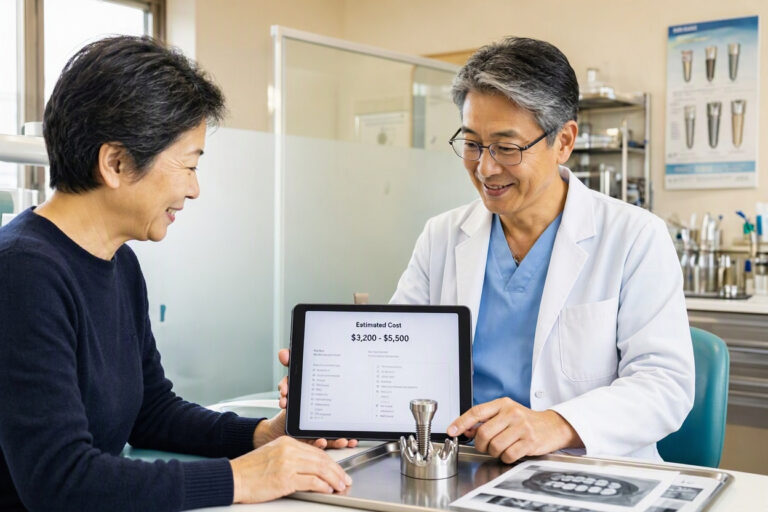
A single implant in the Forest Hills/Queens area typically ranges from $3,500 to $6,500 for the complete procedure (implant, abutment, and crown). This price is generally comparable to, or slightly less than, Manhattan prices but higher than some suburban areas due to the high cost of operating a practice in NYC.
Where Does the Money Go?
- Surgical Fee: The skill of the surgeon or periodontist placing the implant.
- Implant Fixture: The cost of the actual titanium post (brand name vs. generic matters).
- Abutment and Crown: The custom-made tooth. The lab fee for a high-quality, aesthetic crown is significant.
- Diagnostic Imaging: The 3D Cone Beam scan fee.
- Anesthesia/Sedation: If required.
Comparing Value vs. Cost
It can be tempting to respond to a mailer advertising “Implants for $999.” Please read the fine print on those offers very carefully. Often, that price covers only the implant fixture placement. It excludes the abutment, the crown, the necessary x-rays, and the consultation. By the time the case is finished, the total is comparable to or higher than the standard fee at a reputable Forest Hills office.
Here is a realistic breakdown of what you might see itemized on a treatment plan.
| Service Component | Estimated Cost (Range) | Notes |
|---|---|---|
| Consultation & 3D CBCT Scan | $250 – $600 | Often applied toward surgery cost if you proceed. |
| Implant Placement Surgery | $1,800 – $3,000 | Depends on specialist (Periodontist vs. General Dentist). |
| Abutment (Connector) | $400 – $800 | The custom post that holds the crown. |
| Implant Crown | $1,500 – $2,500 | The visible tooth. Lab quality varies significantly. |
| Bone Grafting (if needed) | $400 – $1,200 | Per site. A sinus lift is additional and higher cost. |
Navigating Insurance and Payment Options
Most dental insurance plans classify implants as a “Major” procedure. They often cover them at 50% of the “Usual and Customary Rate” (UCR) after a deductible is met. However, there is almost always an annual maximum benefit cap (usually $1,500 to $2,500). That means insurance may pay $1,000 toward your implant, leaving the rest as your responsibility. Do not let this discourage you. That $1,000 is still significant help.
Strategies for Forest Hills Residents
- Flexible Spending Accounts (FSA) / Health Savings Accounts (HSA): This is the smartest way to pay for implants. If your employer offers this benefit, you can use pre-tax dollars to cover the portion insurance doesn’t pay. This effectively gives you a 20-30% discount on the procedure.
- In-House Membership Plans: Many private practices in Forest Hills offer a membership plan. For an annual fee, you get free cleanings and a discount (often 15-20%) on all other treatments, including implants.
- Third-Party Financing: Companies like CareCredit or LendingClub offer zero-interest or low-interest payment plans specifically for healthcare. Many local dentists partner with them. This allows you to spread the cost over 12, 18, or 24 months.
- Dental Schools: Just a subway ride away in Manhattan, NYU College of Dentistry offers implant services at reduced rates. The trade-off is longer appointment times and supervision by students/instructors rather than a private practice. This is a viable option for those on a strict budget.
Quote from a Local Financial Coordinator: “We always tell our Forest Hills patients to check if their medical insurance might cover any portion of the surgery. If the tooth loss was due to an accident or a medical condition affecting the jaw, medical insurance may sometimes cover the bone graft or even the implant surgery itself.”
Potential Risks and How Forest Hills Specialists Mitigate Them
Any surgical procedure carries risk. Honesty about these risks is essential for informed consent.
Infection
The mouth is full of bacteria. A strict sterile protocol during surgery and a course of antibiotics (when prescribed) minimize this risk. Patients with uncontrolled diabetes or smokers face a higher risk of post-op infection.
Nerve Damage
This is the most feared complication, but it is also the most preventable with modern technology. The inferior alveolar nerve runs through the lower jaw and provides sensation to the lip and chin. If an implant is placed too deep and touches or damages this nerve, it can cause temporary or permanent numbness.
Prevention in Forest Hills: The use of 3D CBCT scans is the gold standard for nerve avoidance. The software shows the exact distance from the planned implant tip to the nerve canal. Surgeons in the area typically maintain a “safety zone” of at least 1.5mm to 2mm of bone between the implant and the nerve.
Sinus Perforation
In the upper jaw, the implant can protrude into the sinus cavity if not careful. This can lead to sinus infections or the implant failing to integrate.
Prevention: Again, the 3D scan and, if necessary, a Sinus Lift procedure create a safe buffer of bone.
Implant Failure (Failure to Integrate)
Sometimes the bone simply does not fuse to the implant. This happens in about 2-5% of cases.
- Common Causes: Smoking (nicotine restricts blood flow), uncontrolled diabetes, poor oral hygiene during healing, or overloading the implant too soon.
- Resolution: The implant is removed, the site is cleaned, and it is allowed to heal. A new implant can usually be placed after 3-4 months.
The Role of the Dentist: Who Should Place Your Implant?
In Forest Hills, you have choices. You might see a General Dentist, a Periodontist, or an Oral Surgeon. Which one is right for you?
The Periodontist
This is a specialist in the gums and the bone that supports teeth. For most standard single-tooth implants, a Periodontist is the ideal choice. They are masters of soft tissue management. They ensure the gum around the implant looks natural and stays healthy. If you want an implant that looks like it “grew there” with a perfect pink gumline, a Periodontist is the specialist to see.
The Oral Surgeon
This specialist focuses on complex extractions, jaw surgery, and facial trauma. If your case involves impacted teeth, significant bone grafting from the hip or tibia, or full-mouth reconstruction (All-on-4), an Oral Surgeon often leads the surgical phase.
The General Dentist (with Advanced Training)
Many general dentists in the Forest Hills area have pursued extensive continuing education in implantology. They can capably handle straightforward cases from start to finish. This can offer a seamless experience where one doctor manages the entire process.
The Team Approach
The most common and often best model in Forest Hills is a team approach. A restorative dentist (General or Prosthodontist) designs the final tooth and guides the case. They refer the surgical placement to a trusted Periodontist or Oral Surgeon in the same neighborhood, sometimes even in the same building. You get the best of both worlds: a surgeon who places the implant perfectly and a restorative dentist who designs a beautiful crown that fits your bite.
Aftercare: Protecting Your Investment in Queens
You have invested time and money into a new smile. Protecting it is straightforward, but it is not optional.
The First 72 Hours
- Ice: Apply an ice pack to the cheek for 20 minutes on, 20 minutes off. This reduces swelling. You might look a bit puffy for a day or two, which is normal.
- Diet: Stick to soft, cool foods. Think yogurt, smoothies, and lukewarm soup from a local Forest Hills diner. Avoid hot liquids as they can increase bleeding.
- Oral Hygiene: Do NOT brush the surgical site. Rinse gently with warm salt water (1/2 tsp salt in 8 oz water) 2-3 times a day to keep the area clean.
Long-Term Maintenance
An implant cannot get a cavity. That is a huge advantage over natural teeth. However, it can get gum disease.
- Peri-implantitis: This is an infection of the gum and bone around the implant. It is the number one cause of late-term implant failure. It is caused by plaque and tartar buildup just like regular gum disease.
- Your Home Care Routine:
- Soft Bristle Brush: Use a power toothbrush or soft manual brush twice daily.
- Water Flosser: This is a game-changer for implant patients. It uses a stream of water to flush out bacteria from the cuff of gum where it meets the abutment.
- Floss: Use unwaxed tape or implant-specific floss to clean around the crown.
- Professional Care: Visit your Forest Hills hygienist every 6 months (or every 3-4 months if you have a history of gum issues). They have special plastic or graphite scalers that clean the implant surface without scratching the titanium. Scratching the implant with metal tools creates rough spots where bacteria love to hide.
Zirconia vs. Titanium: The Material Debate
Most implants placed today are titanium alloy. It has a 50-year track record of success. However, there is growing interest in Zirconia Implants.
| Feature | Titanium Implants | Zirconia Implants (Ceramic) |
|---|---|---|
| Material | Metal Alloy | Ceramic (White) |
| Track Record | 50+ years, millions placed. Gold Standard. | ~15 years. Excellent, but shorter history. |
| Aesthetics | Silver/Gray. Can sometimes show through thin gums. | White. Excellent for front teeth with thin gum tissue. |
| Strength | Extremely strong and slightly flexible. | Very strong but more brittle than titanium. |
| Allergy Concern | Extremely rare allergy to titanium. | Hypoallergenic. Ideal for metal sensitivities. |
| Connection Type | Two-Piece (Implant + Abutment). | Often One-Piece (Implant and abutment are a single unit). |
For patients in Forest Hills who express concerns about having metal in their body or who have very thin gum tissue in the front of the smile, a Zirconia implant might be recommended. However, due to the long-term data and the ability to hide a titanium implant well below the gum line in most cases, titanium remains the preferred choice for the majority of local specialists.
The All-on-4 Experience in Forest Hills: A Deeper Dive
The All-on-4 concept has transformed the lives of denture wearers across Queens. Let’s look closer at what this specific journey entails for someone in Forest Hills.
The Initial “Wow” Factor
Imagine walking into an office with loose, ill-fitting dentures that have eroded the bone in your face over decades. You have a sunken look around the mouth. You choose this procedure. The surgery takes a few hours. You rest in a recovery room. Then, you are handed a mirror. You see a full set of fixed, white teeth.
The Reality Check
While the day-of transformation is dramatic, the “Teeth in a Day” phrase refers to a temporary set of teeth. These are made of durable acrylic and are fixed to the implants so they do not move. However, they are not meant for heavy chewing yet.
- The Diet: For the first 4-6 months, you are on a “no-chew” or “soft-chew” diet. This allows the 4 implants to fuse to the bone without being stressed by the force of a steak or a hard roll. Think scrambled eggs, fish, pasta, and protein shakes.
- The Final Bridge: Once healing is confirmed, the dentist takes new impressions for a final, high-strength bridge. This bridge is typically made of a titanium bar wrapped in acrylic, or a solid piece of Zirconia. This is the set you can truly eat anything with.
Why Forest Hills?
The convenience of having this entire process done locally cannot be overstated. You have 5-7 appointments over 6 months. The ability to pop over to the dentist on your lunch break or after a morning stroll in the Gardens makes the logistical burden of this life-changing treatment manageable.
Emergency Care for Dental Implants
Implants are durable, but the porcelain crown on top is glass-like and can chip or break just like a real tooth. Additionally, an implant can feel “loose.”
Scenario 1: The Crown Feels Loose or Falls Off
Do not panic. In 90% of cases, the implant fixture in the bone is perfectly fine. The screw that holds the crown to the abutment simply loosened, or the cement washed out.
- Action: Save the crown. Call your Forest Hills dentist. They can often re-cement or re-torque the crown in a 15-minute appointment. Do not try to superglue it back yourself.
Scenario 2: The Implant Fixture Itself Feels Loose
This is more serious. If you can wiggle the metal post or abutment under the gum, the implant has likely failed to integrate.
- Action: Call your dentist immediately. Do not chew on that side. The implant likely needs to be removed.
Scenario 3: Pain and Swelling Months/Years Later
This suggests infection (Peri-implantitis).
- Action: You need an x-ray and a periodontal evaluation. Early intervention can save the implant. Laser therapy and deep cleaning around the implant thread can sometimes halt the bone loss.
Choosing the Right Practice Near You
With so many options along Queens Boulevard and Austin Street, how do you filter the noise?
Look for Credentials Specific to Implants
- AAID Credentials: The American Academy of Implant Dentistry offers rigorous credentialing. Look for a Diplomate or Associate Fellow status.
- Board Certified Periodontist: This indicates the surgeon has passed extensive exams in their specialty.
Read Local Reviews
Pay attention to reviews that mention specifics about implant care. “Friendly staff” is nice. “Walked me through the 3D scan and showed me exactly where my nerve was” is better. “My implant feels just like my real tooth” is the best endorsement.
Ask About the Lab
A high-quality dental implant is only as good as the lab making the crown. Ask: “Do you use a local lab or a discount overseas lab?” Most top-tier Forest Hills practices use high-end labs in Queens, Long Island, or Manhattan. This ensures the ceramist can match the unique colors and characteristics of your existing teeth.
The Connection Between Oral Health and Overall Wellness
This is a critical point for Forest Hills residents who are health-conscious. The benefits of replacing a missing tooth with an implant extend far beyond the mouth.
Nutrition and Diet
When you are missing molars, you stop eating certain foods. You avoid raw vegetables. You skip nuts. You choose softer, often more processed foods because they are easier to chew. This can lead to nutritional deficiencies over time. Dental implants restore 100% of your chewing efficiency. You can enjoy a salad from a local organic market or a piece of fruit without a second thought.
Bone Health and Facial Structure
As mentioned earlier, the jawbone resorbs without teeth. This is why people who have worn dentures for 20 years often have a “collapsed” look in the lower third of their face. The distance from the nose to the chin gets shorter. Wrinkles deepen around the mouth. Implants preserve the bone volume. They maintain the structural integrity of the face. In a way, they are a long-term investment in a youthful appearance.
Cognitive Health Connection
Emerging research suggests a link between tooth loss and cognitive decline. While the exact mechanism is still being studied, some theories point to reduced chewing ability affecting blood flow to the brain, or chronic inflammation from gum disease affecting neural health. While implants are not a cure or preventative for Alzheimer’s, maintaining a full, healthy dentition is part of a proactive approach to aging well.
Frequently Asked Questions About Dental Implants in Forest Hills
How painful is the implant procedure?
The procedure itself is performed under local anesthesia, so you feel pressure but no sharp pain. Post-operative discomfort is usually managed with over-the-counter ibuprofen or Tylenol. Most patients report less pain than having a tooth extracted.
Am I too old for dental implants?
Age is rarely a factor. Health is the determining factor. We have successfully placed implants on patients in their 80s and 90s in Forest Hills. As long as you are healthy enough for a routine dental extraction, you are likely a candidate.
Can I get an MRI if I have dental implants?
Yes. Dental implants are made of non-magnetic titanium or zirconia. They will not heat up or move in an MRI machine. They may cause a small “artifact” or distortion on the image right around the jaw, but the radiologist is aware of this and can work around it.
How long does a dental implant last?
If you clean it well and see your dentist regularly, it should last a lifetime. The crown on top may wear down after 15-20 years and need replacement, but the implant post in the bone can remain healthy indefinitely.
Can smokers get dental implants in Forest Hills?
Yes, but with a higher risk of failure. Nicotine constricts blood vessels, slowing healing and integration. Most specialists strongly recommend quitting smoking 2 weeks before surgery and 2 months after. Some may decline to treat heavy smokers for All-on-4 cases due to the high risk of complication.
Do I need to see a specialist, or can my regular Forest Hills dentist do it?
Many general dentists place implants competently. However, for complex cases involving sinus lifts or bone grafts, a referral to an Oral Surgeon or Periodontist is the standard of care. Ask your dentist about their specific training and number of cases they perform per year.
Additional Resources
For unbiased, science-backed information on dental implants, we recommend visiting the website of the American Academy of Implant Dentistry (AAID).
Link: https://www.aaid.com/
This resource provides patient education materials that can help you formulate better questions for your consultation in Forest Hills.
Conclusion
Dental implants represent the pinnacle of modern restorative dentistry, offering Forest Hills residents a permanent solution that preserves jawbone health and restores full function. The journey requires patience and a partnership with a skilled local professional who utilizes advanced 3D imaging for precise, safe outcomes. Ultimately, the investment yields not just a tooth, but the freedom to smile, eat, and speak with unwavering confidence for decades to come.
FAQ: Dental Implants in Forest Hills
Q: What is the actual difference between a Forest Hills implant specialist and a general dentist?
A: A specialist (Periodontist or Oral Surgeon) has an additional 3-4 years of hospital-based surgical training focused exclusively on the supporting structures of the teeth and jaw. While many general dentists are excellent at placing straightforward implants, a specialist is better equipped to handle complications, manage significant bone loss, and perform advanced grafting procedures.
Q: How do I manage the gap while I wait 4 months for the implant to heal?
A: You will not be walking around with a visible black hole if the tooth is in the smile zone. Your Forest Hills dentist will provide a temporary tooth. This can be a removable “flipper” (like a retainer with a tooth) or a fixed temporary bridge bonded to the back of the adjacent teeth. It is for aesthetics only; you should not bite or chew with it.
Q: Can a failed root canal tooth be replaced with an implant the same day?
A: Often, yes. This is called “Immediate Implant Placement.” The failing tooth is extracted, and the implant is placed into the socket immediately. However, this requires a specific bone condition—no active infection and intact socket walls. Your 3D scan will determine if this is possible for you.
Q: Does dental insurance in New York State cover implants?
A: Most PPO plans offer a 50% co-insurance for “Major Restorative” care, up to a yearly maximum (usually $1,500 – $2,000). While they rarely pay for the entire implant, they contribute. Some union plans (DC37, 1199SEIU) have specific implant riders. You should bring your insurance card to the consultation for a precise benefit check.
Q: I have osteoporosis and take medication. Can I still get implants in Forest Hills?
A: This requires careful management. Patients taking oral bisphosphonates (like Fosamax) for osteoporosis generally heal well and can receive implants. Patients on intravenous bisphosphonates or Prolia for cancer treatment have a higher risk of a serious complication called MRONJ (jaw bone death). You must disclose this medication history during your first visit. A conservative, specialist-led approach is essential.