Adhesive for Dental Implants: The Complete Guide to Fit, Function, and Safety
If you have recently entered the world of dental implants, you might be asking a very practical question: Do I need an adhesive for my dental implants?
It is a fair question. For decades, people with traditional dentures relied on pastes, powders, and strips to keep their teeth from slipping. So, it feels natural to wonder if the same logic applies to implants.
Here is the honest truth: In most cases, you should not use standard dental adhesives on implant-supported restorations.
That statement probably raises more questions. Why not? What should you use instead? And what happens if you already bought that tube of super-hold paste?
Do not worry. This guide walks you through everything you need to know. We will cover why implants are different, when adhesives are actually helpful, and how to keep your smile secure without damaging your investment.
Let us get started.
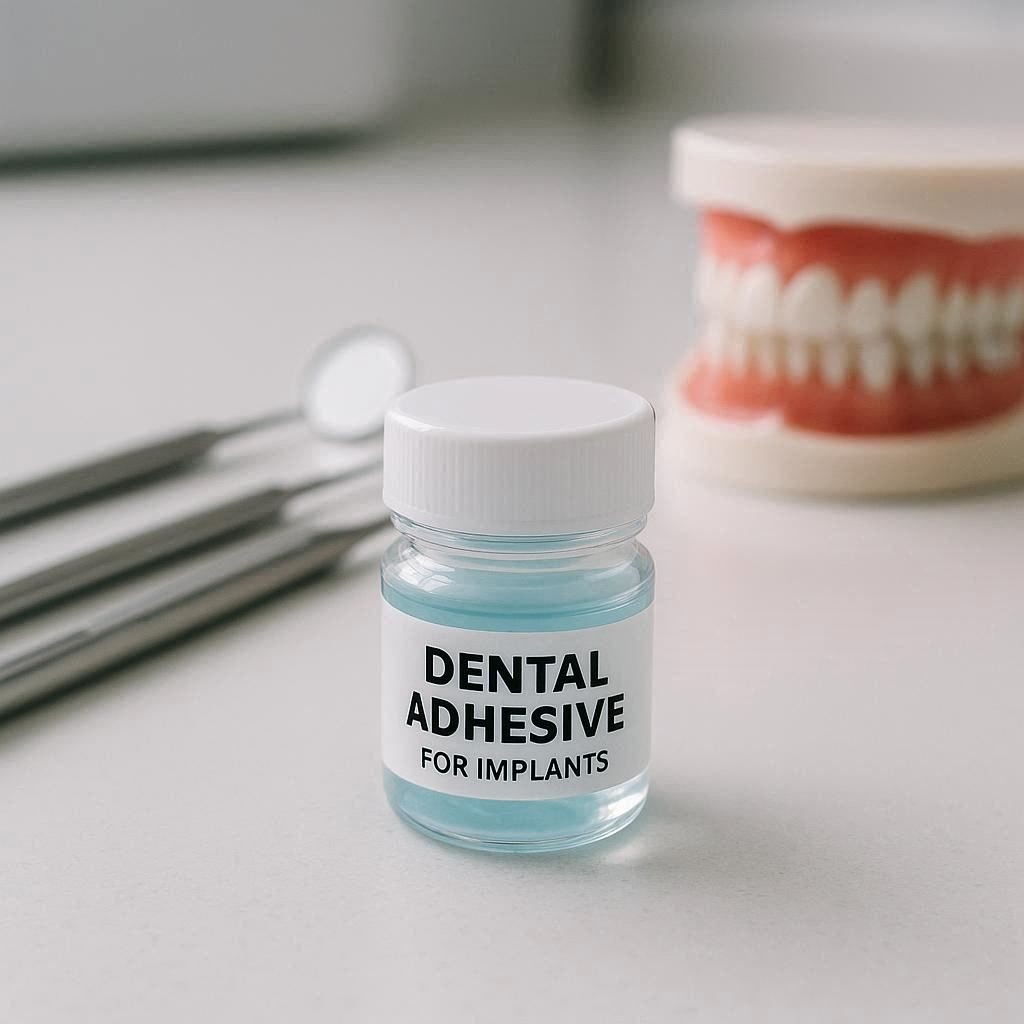
Why Standard Adhesives Are Not Meant for Implants
Before we talk about solutions, we need to understand the problem. Standard dental adhesives—the ones you find in any pharmacy—are designed for traditional dentures. Traditional dentures sit directly on your gums. They have no anchors. They rely entirely on suction and glue.
Dental implants are different. They are titanium posts surgically placed into your jawbone. Over time, your bone fuses with the implant. That creates a stable foundation.
Your implant restoration (whether a crown, bridge, or overdenture) attaches directly to that implant. It clicks, screws, or snaps into place. There should be no movement.
The Risks of Using Standard Glue on Implants
Using a regular adhesive on an implant-supported device can cause several problems.
| Problem | What Happens |
|---|---|
| Peri-implantitis | Adhesive particles get trapped under the gum line. This causes inflammation and bone loss around the implant. |
| Mechanical Failure | Glue hardens in the attachment mechanism. Your denture may not click into place correctly. |
| Hygiene Issues | Adhesive residue traps bacteria. You cannot clean the area properly. |
| Unnecessary Cost | You spend money on a product you do not need. Worse, you might need repair work later. |
Important Note for Readers: If your implant-supported denture feels loose enough that you need glue, do not ignore that sign. Something is wrong. Glue is a bandage, not a fix. See your prosthodontist or implant dentist as soon as possible.
The One Exception: When a Dentist Recommends an Adhesive
Are there any situations where an adhesive for dental implants makes sense? Yes, but with very specific conditions.
Your dentist might suggest a special, non-toxic, washable adhesive in these scenarios:
- Immediate Load Implants (Temporary Phase)
Some patients receive temporary dentures on the same day as implant surgery. During the healing phase (osseointegration), the temporary denture might have minor movement. A dentist-supervised adhesive can add stability for a few weeks. - Low-Profile Attachments
Some bar-retained dentures or locator attachments have a very low profile. In rare cases, a very small amount of medical-grade adhesive on specific spots can improve suction. - Patient Preference for Extra Security
A small number of patients feel anxious about their denture ever moving. Even if the fit is perfect, they want a safety net. For these patients, a dentist may prescribe a specific product.
Crucial point: In all three cases, the adhesive is not a daily, long-term solution. It is a short-term tool under professional supervision.
Types of Adhesives a Dentist Might Approve
If your dentist does give the green light, they will recommend one of these categories.
- Zinc-free adhesives: Zinc in regular denture adhesives can cause neurological problems if used excessively over years. Zinc-free options are safer for any oral use.
- Water-soluble pastes: These wash away completely. They do not leave permanent residue.
- Medical-grade silicone strips: Some professionals use ultra-thin silicone strips that create suction without sticky paste.
Again, do not buy any of these on your own. Ask your dentist for a specific brand and application method.
The Right Way to Secure Your Implant Restoration
Instead of looking for an adhesive, let us focus on how implant-supported teeth are supposed to stay in place. The technology is clever and surprisingly simple.
How Implant Overdentures Work
An implant overdenture is a removable denture that snaps onto implants. It uses special attachments.
Here is a quick breakdown of the most common attachment systems.
| Attachment Type | How It Works | Pros | Cons |
|---|---|---|---|
| Locator Attachments | A plastic male part in the denture snaps onto a metal female part on the implant. | Easy to clean. Low profile. Patient can replace plastic inserts at home. | Plastic inserts wear out every 6–18 months. |
| Bar Attachments | A metal bar connects two or more implants. The denture clips onto the bar. | Very stable. Excellent for patients with strong bite force. | Harder to clean. More expensive upfront. |
| Ball Attachments | A ball-shaped anchor on the implant. The denture has a rubber O-ring that snaps over the ball. | Simple design. Proven reliability. | O-rings wear out faster than other systems. |
| Screw-Retained | The denture is screwed directly into the implants. It does not snap on and off. | Most stable option. No movement at all. | You cannot remove it at home. Requires dentist for cleaning. |
If your denture uses locator attachments or ball attachments, the plastic inserts or O-rings are the parts that wear down. When they wear out, the denture feels loose. Replacing these small parts costs very little and restores 100% of the stability.
Pro tip: Ask your dentist to show you how to replace the plastic inserts in your locator attachments. They usually sell replacement kits for under $30. This is much cheaper and safer than buying adhesives.
Fixed Implant Bridges and Crowns
If you have a fixed bridge or a single crown on an implant, you should never need adhesive. These restorations are cemented or screwed onto the implant abutment.
- Cement-retained crowns: Your dentist uses permanent dental cement. This is not the same as over-the-counter adhesive. It bonds at a molecular level.
- Screw-retained crowns: A tiny screw holds the crown in place. Your dentist can tighten or replace the screw if needed.
If a fixed crown feels loose, do not try to glue it back yourself. Swallowed or inhaled crown components are a real emergency room risk.
Common Signs Your Implant Restoration Needs Adjustment (Not Glue)
Listen to what your mouth is telling you. These symptoms mean you need a dental appointment, not a trip to the pharmacy.
- Clicking or popping sounds when you chew.
- Food packing under the denture or around the crown.
- The denture rotates slightly when you press on one side.
- You feel the implant abutment with your tongue (it should be covered).
- Redness or sore spots on your gums after every meal.
- The denture falls out while eating sticky foods like bread or candy.
Each of these signs points to a specific mechanical issue. The plastic insert might be cracked. The O-ring might be stretched. The screw might be loose. The abutment might need retorquing.
These are fast, inexpensive fixes for a dentist. They are not problems you solve with glue.
A Step-by-Step Guide to Cleaning Implant Dentures Without Adhesive
One reason people think they need adhesive is that they struggle with keeping their denture clean. A clean denture fits better. Here is a simple routine.
Daily Cleaning (5 minutes)
- Remove your denture over a soft towel or a sink filled with water. This prevents breakage if you drop it.
- Rinse the denture with warm (not hot) water. Hot water warps the plastic.
- Use a soft denture brush with non-abrasive cleaner. Avoid regular toothpaste. It scratches the surface.
- Clean the attachments gently. Use the small brush that came with your denture. Get into the nooks where the plastic inserts sit.
- Brush your gums and implant abutments with a super-soft toothbrush. Use a low-abrasion gel.
- Rinse everything thoroughly.
- Place the denture back and press firmly until you hear or feel the click.
Weekly Deep Clean (15 minutes)
- Soak the denture in an effervescent denture cleaner (like Polident for partials or implants). Follow the label instructions.
- Use an ultrasonic cleaner if you have one. These devices use sound waves to remove microscopic debris.
- Inspect the plastic inserts or O-rings. Look for cracks, flattening, or discoloration.
What to Avoid
| Product | Why to Avoid It |
|---|---|
| Bleach | Weakens the plastic attachments and changes the color of your denture. |
| Vinegar | Too acidic. Damages metal components over time. |
| Abrasive powders | Scratches the surface. Bacteria love scratches. |
| Regular toothpaste | Most contain silica or baking soda. Too harsh for denture acrylic. |
The Cost of Ignoring a Loose Implant Denture
Let us talk numbers. Many people avoid the dentist because they worry about cost. They reach for a $7 tube of adhesive instead. That decision can backfire in a big way.
| Scenario | DIY Adhesive Approach | Proper Dental Approach |
|---|---|---|
| Worn plastic insert | Use glue for 6 months. Adhesive builds up. Bacteria grow. Gums become inflamed. | Replace the insert ($15–$30). |
| Loose screw | Glue seeps into the screw channel. Hardens. Screw cannot be removed without drilling. | Tighten or replace screw ($50–$150). |
| Cracked denture base | Glue fills the crack temporarily. Food and bacteria enter the crack. Bad breath develops. Denture breaks completely. | Denture repair or reline ($200–$500). |
| Implant bone loss | Adhesive particles cause chronic inflammation. Bone recedes around implant. Implant fails. | Implant removal and bone graft ($2,000–$5,000+). |
The adhesive seems cheaper today. But it can lead to losing the entire implant tomorrow.
Reader Note: Dental insurance often covers the cost of replacement inserts, O-rings, and denture adjustments. Call your provider and ask about “denture reline” or “implant attachment replacement.” You might be surprised by the coverage.
Real Patient Questions About Adhesives for Implants
These are actual questions from dental forums and implant patient groups. The answers come from clinical guidelines.
“Can I use a little bit of Fixodent on my implant denture just for a special event?”
Technically, you can. But you should not. Even a small amount of standard denture adhesive can seep into the attachment mechanism. Once it hardens, it changes the fit permanently. You will need a professional cleaning to remove it.
Instead, ask your dentist for a temporary “reline” before your event. A soft reline material costs about $50 and lasts for weeks.
“What about denture adhesive pads or strips?”
These are worse than pastes. The strips are thicker. They change the vertical dimension of your bite. You might develop jaw pain or headaches. The strips also trap moisture and bacteria against your gums.
“My dentist gave me a special adhesive after my implant surgery. Is that normal?”
Yes, but only in very specific surgical situations. For example, if you received a temporary denture immediately after implant placement, your dentist might apply a surgical adhesive to hold the denture perfectly still for the first 7–10 days. That is a medical application, not a consumer one.
“I have a single implant crown. It feels slightly loose. Can I glue it myself?”
No. Stop. Do not do this.
If a crown on an implant feels loose, the abutment screw is likely backing out. Gluing the crown will seal the screw inside. Then the screw can never be tightened. The only fix is to destroy the crown to access the screw. That means paying for a new crown ($1,000–$2,500).
Call your dentist immediately. They will either retighten the screw (fast and cheap) or replace the screw (still cheap). Do not delay.
Alternative Solutions for a More Secure Fit (Without Adhesive)
Let us shift the conversation. Instead of asking which adhesive should I buy?, ask why does my restoration feel loose?
Here are the legitimate, dentist-approved solutions for each cause of looseness.
For Overdentures with Locator Attachments
- Replace the nylon inserts. This takes 2 minutes. The inserts come in different colors (different retention levels). Your dentist can help you choose the right color.
- Replace the metal housing. Rarely, the metal part in the denture wears out. Your dentist can replace it in-office.
- Add a new implant. If you have two implants and still feel movement, a third implant changes everything. More implants = more stability.
For Bar-Retained Dentures
- Change the clips. The metal or plastic clips that snap onto the bar wear out. New clips restore the original grip.
- Adjust the bar. Over time, the bar can bend microscopically. Your dentist can adjust or replace it.
For Fixed Bridges or Crowns
- Retorque the screw. Your dentist uses a torque wrench (like a mechanic uses for engine bolts) to tighten the screw to the exact specification.
- Replace the screw. Screws are designed to be replaced after a certain number of torque cycles. They are inexpensive.
- Replace the cement. For cement-retained crowns, old cement breaks down. Removing the crown and recementing it solves the problem.
For All Patients
- Consider a hard reline. Your gums change shape over years. A hard reline reshapes the inside of your denture to match your current gum contour. This eliminates rocking and movement.
- Check your bite. Sometimes a high spot on a tooth causes the denture to rock. A simple adjustment with a dental bur fixes it.
How to Find a Dentist Who Understands Implant Attachments
Not every dentist has advanced training in implant prosthetics. You need someone who understands the attachment systems at a mechanical level.
Look for these credentials:
- Prosthodontist: A specialist in restoration and replacement of teeth. Three additional years of training beyond dental school.
- Fellow of the International Congress of Oral Implantologists (ICOI): Indicates advanced implant experience.
- Diplomate of the American Board of Oral Implantology (ABOI): The highest level of implant certification.
You can also ask these questions during a consultation:
- “How many overdenture patients do you see each month?”
- “Do you stock replacement inserts for locator attachments?”
- “If my denture feels loose, what is your standard protocol?”
A dentist who answers these questions easily and confidently is the right partner for your long-term implant care.
The Psychological Side: Why Patients Want Adhesives
Let us be honest for a moment. The desire for an adhesive for dental implants is rarely about the physical fit. It is about anxiety.
You spent thousands of dollars on implants. You went through surgery. You healed for months. And now, your denture still feels different from natural teeth.
That anxiety is normal. It is also understandable.
But reaching for adhesive reinforces the anxiety. It tells your brain “I do not trust my implants.” Every time you apply the glue, you confirm that fear.
The healthier path is to address the root cause. If your denture is mechanically perfect but you still feel anxious, consider these steps:
- Talk to your dentist about retention levels. Some patients do better with the firmest insert (often black or orange coded). Ask for the highest retention available.
- Practice chewing at home. Start with soft foods. Work your way up to harder textures. Confidence comes from experience.
- Join a support group. Online forums for implant patients are full of people who felt the same way six months ago. They will tell you the anxiety fades.
A quote worth remembering: “Trust the engineering, not the glue.” — Anonymous implant dentist
Long-Term Care Schedule for Implant Restorations
Prevention is always better than repair. Follow this schedule to keep your restoration stable without ever needing adhesives.
| Frequency | Action | Estimated Cost |
|---|---|---|
| Daily | Clean denture and attachments at home. | $0 |
| Every 6 months | Professional cleaning of implants and denture. Dentist checks attachments. | $100–$300 (often covered by insurance) |
| Every 12 months | X-rays to check bone levels around implants. | $50–$150 (covered by most insurance) |
| Every 6–18 months | Replace plastic inserts or O-rings (as needed). | $15–$60 per set |
| Every 3–5 years | Hard reline of the denture base. | $200–$500 |
| Every 5–10 years | Replace the entire overdenture (the denture itself wears out). | $1,000–$3,000 |
Compare that schedule to the cost of buying denture adhesive every month ($7–$15 per tube). Over five years, you would spend $420–$900 on glue. That money is better spent on professional maintenance.
Summary of Key Takeaways
Let us pull together the most important points from this guide.
- Standard adhesives are not designed for implants. They cause more problems than they solve.
- A loose implant restoration is a mechanical issue. It needs adjustment or replacement parts, not glue.
- Replacing worn plastic inserts or O-rings is cheap, fast, and restores 100% stability.
- Fixed crowns and bridges should never feel loose. If they do, see a dentist immediately.
- In very rare cases, a dentist might prescribe a specific adhesive for short-term use during healing.
- Good oral hygiene and regular checkups eliminate the need for adhesives entirely.
- Anxiety about movement is normal. Address it with your dentist and through practice, not with glue.
Conclusion
You do not need an adhesive for dental implants when your restoration is properly designed, fitted, and maintained. The engineering of modern implant attachments—whether locators, bars, balls, or screws—is remarkably reliable. These systems provide stability that traditional denture wearers could only dream of a generation ago.
If you feel the urge to buy glue, pause. Call your dentist. Ask about replacement inserts, a hard reline, or a simple adjustment. That phone call will save you money, protect your implants, and give you genuine peace of mind.
Frequently Asked Questions (FAQ)
1. Can I use regular denture adhesive on my implant overdenture?
No. Regular adhesives can damage the attachment mechanism, trap bacteria, and lead to bone loss around your implants.
2. What should I do if my implant denture feels loose?
Schedule an appointment with your implant dentist. The plastic inserts or O-rings likely need replacement. This is a fast, inexpensive fix.
3. Is there any adhesive made specifically for dental implants?
No commercial adhesive is marketed specifically for long-term use on implant overdentures. Some medical-grade products exist for short-term surgical applications, but they require a dentist’s supervision.
4. How often do implant denture attachments need replacement?
It depends on the system. Locator inserts typically last 6–18 months. Ball attachment O-rings last 6–12 months. Bar clips last 1–3 years.
5. Can I replace the attachments myself?
For locator attachments, many dentists teach patients how to replace the nylon inserts at home. For other systems, a dentist should handle the replacement.
6. Why does my implant crown feel loose?
The most common cause is a loose abutment screw. Do not glue the crown. See your dentist to have the screw tightened or replaced.
7. Will dental insurance cover attachment replacement?
Most dental insurance plans cover implant maintenance, including attachment replacement. Check your specific policy for details.
8. How long do dental implants last?
With proper care and regular dental visits, the implant itself can last 20+ years or a lifetime. The removable denture or crown on top may need replacement every 5–15 years.
9. Can food get stuck under my implant denture?
Yes. That is normal. But if food packs under the denture every time you eat, the fit may be off. Your dentist can adjust it.
10. Is it normal for an implant denture to move slightly when chewing?
Very minimal movement (less than 1mm) is normal for overdentures. Fixed restorations should not move at all. If movement bothers you, ask about upgrading to a fixed option.
Additional Resource
For a visual guide to the different types of implant attachments and how they work, visit the American College of Prosthodontists patient education page: