best material for dental implant crowns
You have decided to replace a missing tooth with a dental implant. That is a great choice for your long-term oral health. But now you face another important decision. What material will cover that implant? We are talking about the crown, the only part you actually see.
Choosing the best material for dental implant crowns can feel confusing. You hear terms like zirconia, porcelain-fused-to-metal, and lithium disilicate. Each option has its own strengths and weaknesses.
This guide walks you through everything you need to know. We focus on real-world performance, not marketing hype. You will learn which material lasts the longest, which looks the most natural, and which fits your budget. Let us get started.
Why the Crown Material Matters More Than You Think
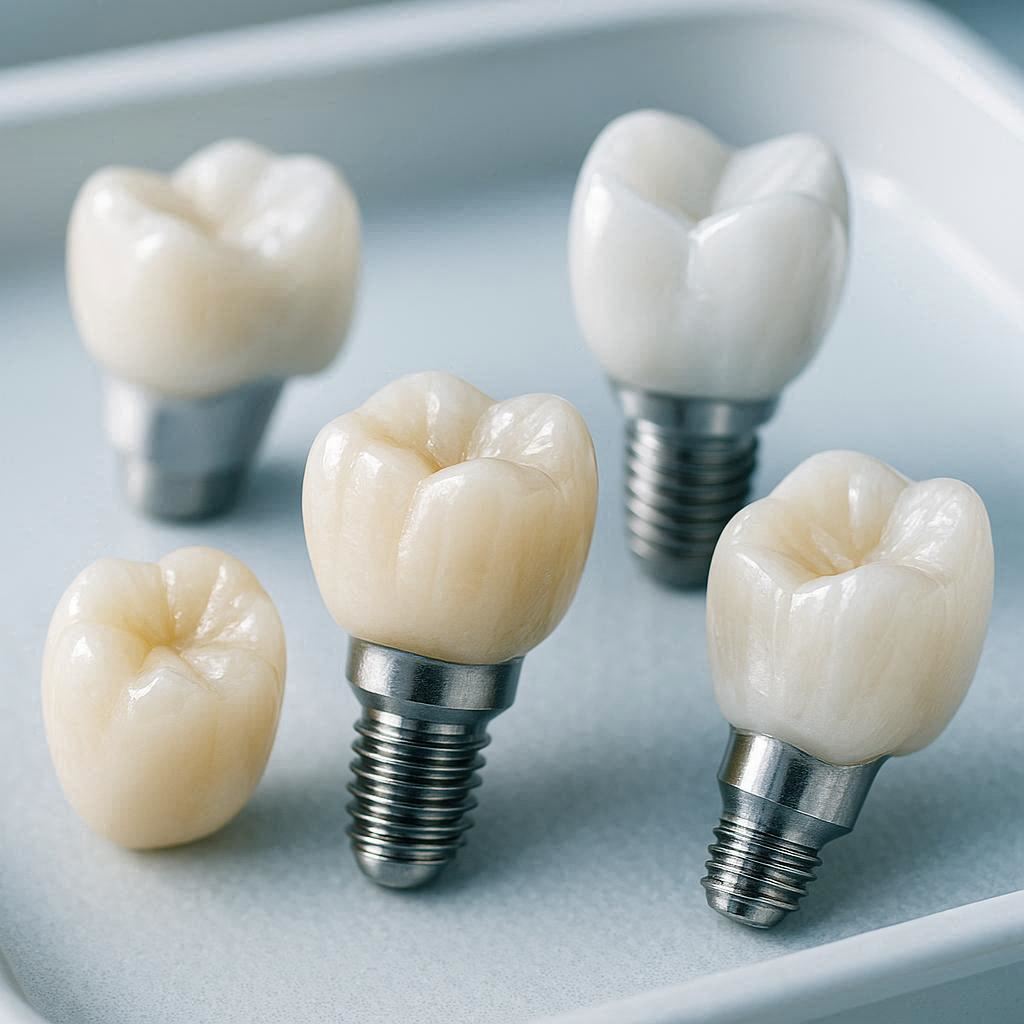
The dental implant itself is usually made of titanium. It fuses with your jawbone. That part is hidden. But the crown sits above the gum line. It does three critical jobs.
First, it restores your ability to chew food properly. Second, it protects the implant underneath from excessive force. Third, it creates a natural appearance.
If you pick the wrong material, you might experience problems. Your crown could break. It could wear down the opposing teeth. It might look gray or unnatural at the gum line. Or it could cause an allergic reaction in rare cases.
That is why understanding the best material for dental implant crowns is not just a technical detail. It directly affects your comfort, confidence, and long-term dental health.
A Quick Look at Your Main Options
Before we go deep, here is a simple overview of the four most common materials used today.
| Material | Durability | Appearance | Cost | Best For |
|---|---|---|---|---|
| Zirconia (monolithic) | Excellent | Very good | High | Molars, bruxism patients |
| Porcelain-fused-to-metal (PFM) | Good | Fair to good | Low to medium | Budget-conscious, posterior teeth |
| Lithium disilicate (E-max) | Very good | Excellent | High | Front teeth, aesthetic zones |
| Gold alloy | Excellent | Poor | High | Patients with heavy bite, longevity |
Important note: No single material works perfectly for every person. Your dentist should consider your bite force, gum health, allergies, and aesthetic expectations before making a recommendation.
Now, let us explore each material in detail.
Zirconia: The Modern Favorite
Zirconia has become extremely popular over the last ten years. It is a white ceramic material that is incredibly strong. Many dentists now consider it the best material for dental implant crowns, especially for back teeth.
What Makes Zirconia Special
Zirconia crowns are milled from a single block of material. That means no layers. No metal core. Just one solid piece of high-strength ceramic. This design eliminates weak points.
The material is biocompatible. Your gum tissue usually accepts it very well. You will not see a dark line at the gum margin because there is no metal. And zirconia is highly resistant to chipping and cracking.
Two Types of Zirconia You Should Know
Full-strength zirconia: This is opaque and very tough. Dentists use it for molars and patients who grind their teeth.
High-translucency zirconia: This looks more like natural enamel. It allows light to pass through. However, it is slightly weaker. Best for front teeth or premolars.
Real-World Performance
Zirconia crowns rarely break under normal chewing forces. Studies show success rates above 95% after five years. The material also resists staining very well. You will not see coffee or tea marks over time.
However, there is one drawback. Zirconia is so hard that it can wear down the opposing natural teeth. If you have natural teeth on the opposite jaw, your dentist might recommend a softer material.
Who Should Choose Zirconia
- People who grind or clench their teeth
- Patients needing a crown on a lower molar
- Anyone with metal sensitivities or allergies
- Those who want a metal-free restoration
“In my practice, I recommend monolithic zirconia for over 80% of implant crowns on back teeth. The combination of strength and aesthetics is unmatched for most patients.” — Dr. Sarah Jenkins, prosthodontist.
Porcelain-Fused-to-Metal: The Old Reliable
Porcelain-fused-to-metal, or PFM, has been around for decades. It consists of a metal shell covered with layers of ceramic. For many years, it was the standard choice.
How PFM Crowns Work
The metal substructure provides strength. The outer porcelain gives a tooth-like appearance. Dentists cement these crowns onto the implant abutment.
PFM crowns are very durable. They rarely break. They also cost less than zirconia or lithium disilicate.
The Downsides You Cannot Ignore
The metal core creates a visible dark line at the gum margin. As gums recede slightly with age, that line becomes more obvious. This is the main reason PFM has lost popularity.
Also, the porcelain layer can chip off the metal base. This does not happen often, but when it does, the repair is difficult. You might need a whole new crown.
Some patients experience allergic reactions to the metal alloys. Nickel and beryllium are sometimes used in cheaper PFM crowns. Make sure to ask your dentist about the exact alloy composition.
Where PFM Still Makes Sense
PFM is still a reasonable choice for upper or lower molars. In these areas, no one sees the dark gum line. The strength and lower cost are attractive. Many insurance plans cover PFM crowns fully.
But for front teeth or premolars, most dentists will recommend a metal-free option.
Lithium Disilicate: The Beauty Expert
Lithium disilicate is sold under brand names like E-max. This material offers the best aesthetics of any dental crown material. It looks almost identical to natural tooth enamel.
Why Aesthetic Experts Love It
Light passes through lithium disilicate the same way it passes through a real tooth. The material also comes in many shades. Your dentist can match it perfectly to your adjacent teeth.
The strength is impressive too. Not as high as zirconia, but much higher than traditional porcelain. It can handle normal chewing forces without problems.
The Fragility Factor
Here is the honest truth. Lithium disilicate is not ideal for patients with heavy bites or bruxism. It can fracture under extreme pressure. If you grind your teeth at night, your dentist will likely steer you away from this material.
Also, lithium disilicate requires a bonding process that is more technique-sensitive. Not every dentist feels comfortable placing these crowns.
Who Benefits Most
- Front tooth replacements
- Patients who prioritize natural appearance
- People with normal bite force
- Those who want a metal-free option but prefer better aesthetics than zirconia
Gold Alloy: The Old School Champion
Gold crowns are rarely discussed today, but they deserve attention. A gold alloy crown contains gold, platinum, palladium, and other noble metals. It offers unique advantages.
The Pros You Might Not Expect
Gold is very gentle on opposing teeth. Unlike zirconia or porcelain, gold will not wear down your natural teeth. It actually polishes the opposing enamel.
Gold crowns rarely break or chip. They can last 20, 30, or even 50 years. The material is also extremely biocompatible. Gum tissue loves gold. Inflammation is rare.
The Obvious Downside
Gold looks like gold. It does not match natural teeth. For many people, that is a dealbreaker. However, some patients choose gold for molars where appearance is less important.
Cost is another factor. Noble metal alloys are expensive. A gold crown often costs more than zirconia.
A Niche but Valid Choice
If you have a heavy bite, grind your teeth, and do not care about metal showing, gold is arguably the best material for dental implant crowns. It is also a good option for people with chronic gum inflammation or multiple metal allergies.
Comparing Crown Materials Head to Head
Let us put all four materials side by side for a clearer comparison.
Durability and Longevity
- Gold: 20+ years (excellent)
- Zirconia: 15+ years (excellent)
- PFM: 10-15 years (good)
- Lithium disilicate: 10-15 years (good, but less for bruxers)
Aesthetics (1 to 10 scale)
- Lithium disilicate: 9.5
- Zirconia (high translucency): 8.5
- PFM: 6
- Gold: 1
Cost (relative, from lowest to highest)
- PFM
- Zirconia
- Lithium disilicate
- Gold alloy
Tissue Compatibility
- Gold: Excellent
- Zirconia: Excellent
- Lithium disilicate: Very good
- PFM: Good (depends on metal alloy)
Factors That Should Influence Your Decision
Your dentist can guide you, but you should understand your own needs too. Here are five questions to ask yourself.
1. Where is the crown located?
Front teeth demand high aesthetics. Lithium disilicate or high-translucency zirconia work best. Back teeth need strength. Full-strength zirconia or PFM are better choices.
2. Do you grind your teeth?
Bruxism destroys regular crowns. If you grind, choose zirconia or gold. Avoid lithium disilicate and PFM. You might also need a night guard.
3. Do you have metal allergies?
Some people react to nickel, chromium, or cobalt. These metals appear in cheaper PFM crowns. If you have sensitive skin or a known metal allergy, choose zirconia or lithium disilicate.
4. What is your budget?
PFM crowns are the most affordable. Zirconia and lithium disilicate cost more. Gold costs the most. However, remember that cheaper upfront can mean more replacements later.
5. How important is the gum line appearance?
If your gum line shows when you smile, avoid PFM. The dark metal line will eventually become visible. Zirconia or lithium disilicate keep the gum area natural looking.
The Role of the Abutment
We have focused on the crown, but the abutment also matters. The abutment connects the implant to the crown.
Different Abutment Materials
- Titanium abutments: Very strong, but can show a dark shadow through thin gums.
- Zirconia abutments: White and tooth-colored. Best for thin or receding gums.
- Gold-plated abutments: Rarely used today.
If you choose a zirconia crown, ask your dentist to use a zirconia abutment as well. This creates a completely metal-free restoration. No dark lines, no shadowing.
For PFM crowns, a titanium abutment works fine. The metal crown covers it completely.
Important note: Some dentists try to save money by using a stock abutment instead of a custom one. Always insist on a custom-milled abutment. It fits better, lasts longer, and protects your implant.
Step-by-Step: How Your Implant Crown Gets Made
Understanding the process helps you ask better questions at the dentist’s office.
Step 1: Implant integration. You wait 3 to 6 months after implant placement. The bone must fuse with the implant.
Step 2: Abutment placement. Your dentist attaches the abutment to the implant. Sometimes they do this at the same appointment as the crown impression.
Step 3: Digital or physical impression. The dentist scans your mouth or takes a putty impression. They send this to a dental lab.
Step 4: Crown fabrication. A technician designs your crown. For zirconia, a milling machine carves it from a solid block. For PFM, they cast the metal core then layer on porcelain.
Step 5: Try-in and adjustment. You return to the office. The dentist places the crown temporarily. You check the color, shape, and bite.
Step 6: Permanent cementation. Once everything looks perfect, the dentist bonds the crown permanently to the abutment.
The entire process from impression to final cementation usually takes 2 to 4 weeks.
Common Myths About Implant Crown Materials
Let us clear up some misinformation you might find online.
Myth 1: Zirconia is unbreakable.
False. Zirconia is extremely strong, but it can fracture under excessive force. Patients with severe bruxism have broken zirconia crowns.
Myth 2: PFM crowns are obsolete.
False. PFM is still a valid choice for many patients. It is affordable, durable, and widely available. It just looks worse than modern materials.
Myth 3: Lithium disilicate is only for front teeth.
False. You can use lithium disilicate on premolars and even some molars. The key is normal bite force. If you chew gently, it works fine.
Myth 4: All zirconia is the same.
False. There are over 30 different types of zirconia. High-strength versions look opaque. High-aesthetic versions are weaker. Your dentist must choose the right type for your situation.
Long-Term Care for Your Implant Crown
Once you have chosen the best material for dental implant crowns, you need to maintain it. Proper care extends the life significantly.
Daily Hygiene
Brush twice a day. Floss once a day. Use a soft or medium toothbrush. Hard bristles can scratch glazed surfaces.
Special implant floss or interdental brushes help clean around the abutment. Regular floss might not reach the area under the crown.
Regular Checkups
Visit your dentist every six months. They will check the crown for chips, cracks, or loosening. They will also examine the gum tissue around the implant.
Professional cleanings remove plaque that accumulates at the crown-implant margin.
What to Avoid
Do not chew ice, hard candy, or pen caps. Do not use your teeth as tools. Do not bite your fingernails. These habits can damage even the strongest crown.
If you grind your teeth, wear a night guard. This is non-negotiable for bruxers. A custom guard costs a few hundred dollars but protects a crown that cost thousands.
Signs of Trouble
Call your dentist if you notice:
- The crown feels loose
- You see a crack or chip
- The gum around the implant is red or bleeding
- You feel pain when biting
- The crown changes color
Cost Breakdown and Insurance
Let us talk numbers. Prices vary by location and dentist, but here are typical ranges in the United States.
| Crown Material | Crown Only (lab fee) | Total with Placement | Insurance Coverage |
|---|---|---|---|
| PFM | $300 – $600 | $1,200 – $1,800 | Often 50% |
| Zirconia | $500 – $800 | $1,500 – $2,500 | Usually 50% |
| Lithium disilicate | $600 – $1,000 | $1,800 – $3,000 | Often 50% |
| Gold alloy | $700 – $1,200 | $2,000 – $3,500 | Sometimes 50% |
Most dental insurance plans cover 50% of the crown cost if it is medically necessary. However, many plans have an annual maximum of $1,000 to $1,500. You might pay the rest out of pocket.
Ask your dentist’s office to submit a pre-treatment estimate. This shows exactly what your insurance will pay before you commit.
What the Research Says
Scientific studies help us separate fact from opinion.
A 2021 systematic review in the Journal of Prosthodontics compared zirconia and PFM implant crowns. After five years, zirconia showed a 96.2% survival rate. PFM showed 94.8%. The difference was not statistically significant. Both are reliable.
Another study looked at lithium disilicate implant crowns. The three-year survival rate was 98.1%. However, the study excluded patients with bruxism. For normal chewers, lithium disilicate performs very well.
For gold alloys, long-term studies show 95% survival at 20 years. That is impressive. But most patients today reject the appearance.
The research confirms what experienced dentists know. Multiple materials work well. The best choice depends on your specific situation.
Decision Tree: Finding Your Ideal Crown Material
Use this simple decision guide.
Start here: Is the crown for a front tooth or a back tooth?
- Front tooth: Go to Question A.
- Back tooth: Go to Question B.
Question A (front tooth): Do you grind your teeth?
- Yes → High-translucency zirconia
- No → Lithium disilicate or high-translucency zirconia
Question B (back tooth): Do you grind your teeth?
- Yes → Full-strength zirconia or gold
- No → Zirconia or PFM
Secondary questions for any location:
- Metal allergy? → Choose zirconia or lithium disilicate
- Tight budget? → PFM is acceptable for back teeth
- Thin or receding gums? → Avoid PFM. Choose zirconia with zirconia abutment
Questions to Ask Your Dentist
Before you agree to a crown material, ask these specific questions.
- “How many zirconia crowns have you placed in the last year?”
- “Do you use a dental lab that specializes in implant crowns?”
- “Will you use a custom abutment or a stock abutment?”
- “What is your warranty on the crown material and workmanship?”
- “If the crown chips or breaks within two years, will you replace it at no cost?”
- “Can you show me before-and-after photos of similar cases?”
A confident, experienced dentist will answer these questions without hesitation. Be wary of anyone who dismisses your questions or pushes one material without explaining the alternatives.
When to Replace an Existing Implant Crown
Even the best material for dental implant crowns does not last forever. Here are signs that replacement is necessary.
- The crown has a visible crack or fracture line
- The porcelain has chipped off a PFM crown
- The crown feels mobile or spins on the abutment
- Food traps constantly under the crown
- The gum line shows a dark metal margin that bothers you
- The crown color no longer matches adjacent teeth (natural teeth darken with age)
Replacing an implant crown is easier than placing the first one. The implant and abutment usually stay in place. Your dentist removes the old crown, takes a new impression, and orders a new crown. The process takes two to three weeks.
Final Verdict: Which Material Wins?
After reviewing all the evidence, here is our honest conclusion.
For most patients with a normal bite and average budget, zirconia offers the best balance of strength, aesthetics, and longevity. It works for front teeth and back teeth. It is metal-free. It resists staining. It rarely breaks.
If aesthetics are your absolute top priority and you do not grind your teeth, lithium disilicate is unbeatable. Nothing looks more natural.
If you have a very tight budget and need a back tooth crown, PFM is still a reasonable choice. Just accept that the gum line might show metal in five to ten years.
If you have severe bruxism or want a crown that outlives you, gold is the smart choice. It is ugly but indestructible.
There is no single best material for every person. The best material for dental implant crowns is the one that matches your unique bite, your aesthetic goals, and your financial situation.
Talk openly with your dentist. Share your concerns. Ask to see examples. And choose a material that gives you confidence to eat, smile, and live without worrying about your teeth.
Conclusion
Choosing the right crown material for your dental implant affects how long it lasts and how good it looks. Zirconia offers the best all-around performance for most people. Lithium disilicate leads in natural appearance. PFM remains a budget-friendly option for back teeth. Gold is ideal for heavy grinders who don’t mind metal. Discuss your specific needs with your dentist to make the best choice.
Frequently Asked Questions (FAQ)
1. What is the most durable material for dental implant crowns?
Gold alloy and full-strength zirconia are the most durable. Both withstand heavy chewing forces and resist fracture better than other materials.
2. Can I be allergic to a dental implant crown?
Yes, but it is rare. Allergies usually happen with PFM crowns containing nickel or cobalt. Zirconia and lithium disilicate are hypoallergenic.
3. How long does a zirconia implant crown last?
With proper care, a zirconia crown can last 15 years or longer. Many patients keep them for 20+ years.
4. Is porcelain-fused-to-metal completely outdated?
No. PFM is still used frequently, especially for back teeth and in situations where cost is a major factor. It just does not look as good as newer materials.
5. Which crown material looks most like a real tooth?
Lithium disilicate (E-max) looks the most natural. High-translucency zirconia is a close second.
6. Can I whiten my implant crown?
No. Crown materials do not respond to bleaching. If you want a lighter shade, you need a new crown. Whiten your natural teeth before getting the crown made.
7. Do insurance plans cover the best material for dental implant crowns?
Most plans cover 50% of the cost of a crown regardless of material, up to their annual maximum. However, some plans exclude gold crowns or charge a higher copay.
8. What happens if my implant crown breaks?
Your dentist can usually replace just the crown. The implant and abutment stay in place. You will pay for a new crown and the dentist’s time.
9. Is same-day crown technology available for implants?
Sometimes, but it is rare. Most implant crowns require a dental lab. Same-day crowns work better for natural teeth, not implants.
10. Can I switch materials when replacing an old implant crown?
Yes. You can replace a PFM crown with zirconia or lithium disilicate. Your dentist will remove the old crown and make a new one in the new material.
Additional Resource
For more detailed clinical data on implant crown survival rates and material properties, visit the National Library of Medicine’s dental prosthesis database. Search for “implant crown materials systematic review” to access peer-reviewed studies.
Link: https://pubmed.ncbi.nlm.nih.gov/ (Search: dental implant crown materials comparison)