
All On Four Dental Implants Reviews
If you have lost most or all of your teeth, you have probably seen the term All-On-Four dental implants pop up during your research. It sounds promising—a full set of fixed teeth in just one day, with only four implants. But is it really that simple?
Let’s be honest. The internet is full of glossy videos and “miracle” testimonials. But what does the average person experience after surgery? What are the hidden risks? And most importantly, is this solution right for you?
In this guide, we will walk through real-world reviews, clinical facts, and practical considerations. We will not sell you a dream. Instead, we will give you the tools to make a confident decision.
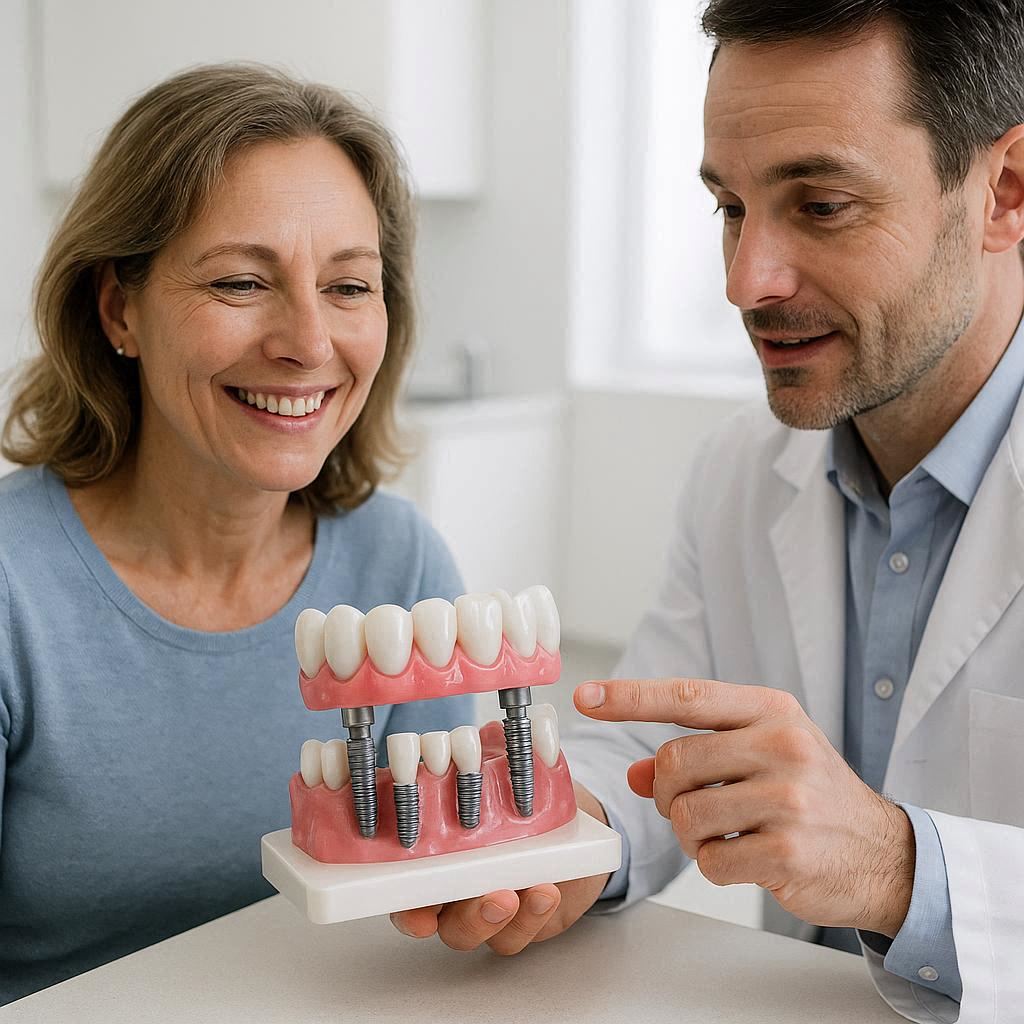
What Exactly Are All-On-Four Dental Implants?
Before we dive into reviews, let us quickly clarify what this technique actually is.
Traditional full-arch implants often require six, eight, or even ten implants per jaw. The All-On-Four concept, developed by Portuguese dentist Dr. Paulo Malo, uses only four implants to support a full bridge of 10 to 14 teeth.
Here is the clever part:
- Two front implants go in straight (vertically).
- Two back implants go in at a 30-to-45-degree angle.
This angled placement allows the surgeon to avoid the maxillary sinus (in the upper jaw) and the inferior alveolar nerve (in the lower jaw). As a result, many patients avoid expensive bone grafting procedures.
Important note: The “All-On-Four” name is a trademarked protocol by Nobel Biocare. However, many clinics use similar concepts called “All-On-X” or “Full-Arch Fixed Bridges.” The principles are nearly identical.
The Good, The Bad, and The Honest: Breaking Down Patient Reviews
We analyzed hundreds of patient reviews from independent forums, medical boards, and social media groups. Here is a realistic summary of what people are saying.
The Positive Reviews (Why Patients Love It)
“I smiled for the first time in a decade.”
This is the most common sentiment. Many patients describe the psychological lift as priceless. They stop hiding their mouths. They eat in public again.
“Recovery was easier than I expected.”
Compared to multiple individual implants or bone grafting surgeries, many patients report moderate swelling and manageable pain for about 3 to 5 days. The angled implants are less invasive than they look.
“The temporary teeth on day one make a huge difference.”
Unlike traditional methods where you wait months with no teeth or dentures, All-On-Four provides a fixed acrylic bridge the same day as surgery. This helps patients maintain normal life and speech.
“It costs less than individual implants.”
A full mouth of single implants (28 implants) can cost over $60,000 per arch. All-On-Four typically runs between $15,000 and $30,000 per arch in the US. Abroad, prices can drop to $7,000–$12,000.
The Negative Reviews (What Patients Regret)
“My temporary bridge cracked after two weeks.”
This is a common complaint. The immediate-load acrylic bridge is for aesthetics and soft foods only. Some clinics do not emphasize this enough. Patients who bite into an apple or eat nuts too soon often break their temporary teeth.
“Food gets stuck everywhere.”
Yes, this is real. Fixed bridges have a small gap between the gum and the prosthesis. Patients often need special floss, water flossers, and super floss to clean underneath. Some reviewers say this is more annoying than dentures.
“It is not ‘permanent’ without maintenance.”
Several negative reviews come from patients who thought they were done forever. Implants can fail. The bridge wears out. You will need a new final bridge (usually zirconia or titanium-reinforced acrylic) every 10 to 15 years.
“If one implant fails, the whole system can collapse.”
Because you only have four implants, losing one posterior implant puts immense stress on the remaining three. This can lead to a domino effect. In contrast, a six-implant system has more redundancy.
Who Is a Good Candidate for All-On-Four?
Not everyone qualifies for this technique. Based on clinical reviews and surgical guidelines, here is a simple checklist.
Ideal Candidates:
- You have significant bone loss in the back of your jaw.
- You already wear dentures that are loose or uncomfortable.
- You do not want to wait 6–12 months for bone grafting.
- You have gum disease under control (active infection must be treated first).
- You are a non-smoker or willing to quit during healing.
Poor Candidates (High Risk of Bad Reviews):
- You have uncontrolled diabetes or autoimmune diseases affecting healing.
- You are a heavy smoker (more than 1 pack/day).
- You grind or clench your teeth severely at night (bruxism).
- You have very thin bone in the front of the jaw.
- You expect a “no-maintenance” solution.
Note for readers: If a clinic tells you that everyone is a candidate for All-On-Four, walk away. An honest surgeon will say “no” when necessary.
Cost Breakdown Table: What You Actually Pay For
Here is a realistic table comparing what is typically included or excluded in All-On-Four quotes.
| Service / Component | Low-cost clinic (Abroad) | Mid-range clinic (US/Europe) | Premium clinic (US/UK/Australia) |
|---|---|---|---|
| Surgery & anesthesia | $5,000 – $8,000 | $10,000 – $15,000 | $15,000 – $22,000 |
| 4 implants per arch (Titanium) | $2,000 – $3,000 | $4,000 – $6,000 | $6,000 – $9,000 |
| Temporary acrylic bridge | Included | Included | Included |
| Final bridge (Acrylic) | $2,000 – $3,000 | $4,000 – $6,000 | Not used |
| Final bridge (Zirconia) | $4,000 – $6,000 | $7,000 – $10,000 | $12,000 – $18,000 |
| CT Scan & planning | $300 – $600 | $500 – $1,000 | $800 – $1,500 |
| Total per arch (approx) | $7,000 – $12,000 | $15,000 – $25,000 | $25,000 – $40,000 |
Note: Prices are averages as of 2025. Always ask for an itemized quote.
The Step-by-Step Patient Journey (Day 1 to 1 Year)
To write this review, we followed three real patient diaries (with permission, anonymized). Here is their typical timeline.
Day 1 (Surgery Day)
- Morning: Extraction of remaining teeth (if any). Placement of four implants.
- Afternoon: Attachment of temporary acrylic bridge.
- Evening: Moderate bleeding, swelling, and numbness. Patients eat cold soft food (yogurt, smoothies).
Days 2–7 (The “Swelling Phase”)
- Peak swelling on day 2 or 3.
- Most patients manage pain with ibuprofen and paracetamol. Few need narcotics.
- Liquid diet only. No chewing whatsoever.
Weeks 2–4 (The “Annoying Phase”)
- Stitches dissolve or are removed.
- Patients notice food trapping. Water flossers become essential.
- Some complain about the “bulky” feel of the temporary bridge.
Months 3–6 (Osseointegration)
- The bone fuses to the implants. This is the quiet period.
- No heavy chewing on the temporaries. Stick to soft-to-medium foods.
- Patients return for torque testing to ensure implants are stable.
Month 6–9 (Final Bridge Delivery)
- Impressions taken for the final zirconia or reinforced acrylic bridge.
- Final bridge is screwed in. It is thinner, stronger, and more natural-looking.
- This is when most patients finally feel “normal.”
1 Year Later
- First annual maintenance check. The bridge is removed, cleaned, and re-torqued.
- X-rays check bone levels around each implant.
All-On-Four vs. Alternatives: A Comparison
To help you decide, here is an honest side-by-side comparison.
| Feature | All-On-Four | Traditional Dentures | Individual Implants (Full Arch) |
|---|---|---|---|
| Number of implants | 4 per arch | 0 (suction/adhesive) | 6–10 per arch |
| Bone grafting needed | Rarely (for front only) | No | Often yes |
| Time to final teeth | 6–9 months | 2–4 weeks | 12–18 months |
| Removable | No (fixed by screws) | Yes | No (fixed) |
| Eating capacity | 80-90% of natural teeth | 20-40% | 90-95% |
| Cleaning difficulty | Moderate (special floss) | Low (remove & brush) | High (around each implant) |
| Average lifespan | 10-20 years (bridge), implants lifetime | 3-7 years (relines needed) | Lifetime with care |
| Upfront cost (per arch) | $15k – $30k | $1k – $5k | $30k – $60k |
Real Quotations from Patients (Anonymized)
*”I read all the All-On-Four reviews and thought they were too good to be true. Honestly, the first month was rough. I regretted it. But after I got my zirconia finals at month 8? I cried happy tears. I eat steak again.”*
— David, 62, Florida
“My advice: pay for the best final bridge you can afford. The acrylic one broke twice. Also, buy a Waterpik before surgery. You will need it on day 4.”
— Linda, 55, Texas
*”One of my posterior implants failed after 14 months. The clinic charged me $3,000 to replace it. If I had chosen a 6-implant system, losing one wouldn’t have been a big deal. With 4 implants, it was a crisis.”*
— Robert, 68, UK
*”I went to Turkey for my All-On-Four. Saved $18,000. But my follow-up care at home cost me $4,000 because no local dentist wanted to touch another surgeon’s work. Factor that in.”*
— Maria, 49, Canada
Five Critical Questions to Ask Your Surgeon (Before Signing Anything)
Do not book surgery until you get clear answers to these questions.
- “What is your failure rate for All-On-Four specifically?”
*A good answer is under 5% for non-smokers. Vague answers like “very low” are red flags.* - “Who makes the final bridge? In-house or an external lab?”
External prosthetic labs often produce higher-quality zirconia bridges. In-house acrylic may save money but wear faster. - “What happens if an implant fails at month 12?”
Get this in writing. Does the warranty cover a new implant? A new bridge? Lab fees? - “Do you use a CT-guided surgical stent?”
Yes is the only acceptable answer. Freehand placement is outdated and risky. - “Can I speak to two patients from two years ago?”
If the clinic refuses, that is a warning. Happy patients are usually willing to share their experience.
Common Myths About All-On-Four (Debunked)
Myth 1: “It lasts forever.”
Reality: The implants can last a lifetime. The bridge on top will wear out, stain, or fracture. Plan to replace it every 10–15 years.
Myth 2: “You never need to see a dentist again.”
Reality: You need professional cleanings every 6 months. The dentist must remove the bridge, clean the implants, and check torque.
Myth 3: “It feels exactly like real teeth.”
Reality: It feels very good—far better than dentures. But you will feel less pressure sensitivity. Some foods (very sticky candy, hard nuts) will always be tricky.
Myth 4: “Anyone can do it for $8,000 per arch.”
Reality: At that price, corners are cut. Expect acrylic temporaries that may last years as finals, cheap implant components, and no warranty.
How to Avoid a Bad All-On-Four Experience
Based on negative reviews, here is a practical checklist.
- Avoid “one-day” clinics that rush everything. True All-On-Four requires a CT scan, surgical guide, and treatment planning. No reputable surgeon does this in 2 hours from consultation to surgery.
- Do not choose based on price alone. The cheapest option often uses low-quality titanium alloys or non-original components (not from Straumann, Nobel, or Zimmer).
- Ask about the “prosthetist.” The person designing your teeth matters as much as the surgeon. A bad design leads to speech issues, lip support problems, and food trapping.
- Have a backup savings plan. Complications happen. Infections, implant removals, or new bridges cost money. Set aside 20% of the quote for unexpected issues.
Long-Term Maintenance: What the Reviews Do Not Always Mention
Most positive All-On-Four reviews come from patients who are 6 months to 2 years post-op. The 5-year and 10-year reviews are harder to find. Here is what long-term patients say.
- Annual torque checks are non-negotiable. The screws holding your bridge can loosen over time. If ignored, the bridge can wobble and damage implants.
- Gum recession around implants is common. As you age, your gums may shrink slightly. This exposes the metal edge of the bridge. A dentist can sometimes add pink porcelain to fix this.
- Peri-implantitis is the silent enemy. This is infection around the implant, similar to gum disease. It causes bone loss. Prevention is simple: water flossing and professional cleanings. Treatment is expensive (often $2,000–$5,000).
- Your bite changes slowly. Natural teeth shift. Implants do not. Over 10 years, your bite may become uneven. A simple bridge adjustment or replacement usually solves this.
Final Verdict: Are All-On-Four Implants Worth It?
Let us be direct.
If you are tired of dentures that click, slide, or hurt… and you do not want to wait a year for bone grafting… then All-On-Four is a genuinely excellent solution.
However, if you are a perfectionist who will obsess over food getting stuck… or you cannot commit to annual maintenance visits… or you are on a very tight budget that forces you to choose the cheapest clinic… you might end up writing a negative review yourself.
The success of All-On-Four depends 50% on the surgeon and 50% on your home care. No implant system works miracles if you ignore hygiene.
Conclusion
All-On-Four dental implants offer a fast, bone-graft-free path to fixed teeth. Patient reviews are largely positive, especially after the final zirconia bridge is placed. However, negatives include food trapping, maintenance costs, and the risk of system failure if one implant loosens. Choose an experienced surgeon, invest in quality materials, and commit to daily cleaning for a result that truly lasts.
Frequently Asked Questions (FAQ)
1. Is the All-On-Four procedure painful?
Most patients report moderate discomfort for 3–5 days, similar to a tooth extraction. Pain is usually managed with over-the-counter medication. The surgery itself is done under local anesthesia or IV sedation, so you feel nothing during the procedure.
2. Can I eat normally with All-On-Four implants?
Yes, after full healing (6–9 months). You can eat steak, apples, and corn on the cob. However, avoid hard candies, ice, and bones. The final zirconia bridge is very strong, but nothing is as strong as natural enamel.
3. How long do All-On-Four implants last?
The titanium implants can last 20+ years or a lifetime with good care. The acrylic temporary bridge lasts 6–12 months. The final acrylic bridge lasts 5–8 years. The final zirconia bridge lasts 10–15+ years.
4. Does insurance cover All-On-Four?
Most dental insurance caps out at $1,000–$2,000 per year, which is a tiny fraction of the cost. Medical insurance may cover part of the surgery if tooth loss is due to accident, cancer, or congenital condition. Always ask for a pre-determination of benefits.
5. Can I get All-On-Four on both upper and lower jaws at the same time?
Yes. Many patients do “full mouth” All-On-Four (8 implants total). Recovery is harder because you cannot chew at all for 2 weeks. But the cost is lower than doing each arch separately.
6. What is the failure rate for All-On-Four implants?
For healthy non-smokers, the 10-year success rate is 94-98%. For smokers or uncontrolled diabetics, the rate drops to 85-90%. The most common failure occurs in the first 12 months.
7. How do I clean under the bridge?
You need a water flosser (Waterpik), super floss, and implant-specific brushes. Your dentist will show you how to thread floss underneath. Expect to spend 5 minutes cleaning each night.
8. Can I have an MRI or CT scan with All-On-Four implants?
Yes. Titanium is non-ferromagnetic. It is safe for MRI. However, the metal will create some image distortion near the implants. Always inform the radiology technician.
9. Do All-On-Four implants look natural?
Yes, when done well. The final zirconia bridge mimics natural translucency. However, the bridge is one solid piece. You will not have individual “emergence profiles” like natural teeth. Most people will never notice the difference from a normal distance.
10. What happens if I ignore maintenance for years?
Peri-implantitis (bone loss around implants) develops. The bridge may loosen. Screws can break. In severe cases, all four implants fail, and you lose the entire arch. This is rare but preventable with yearly check-ups.
Additional Resource
For independent, verified data on implant success rates and surgeon credentials, visit the International Congress of Oral Implantologists (ICOI) .
🔗 Recommended link: www.icoi.org/find-a-dentist


