Dental Implants Bradenton Florida: A Complete, Honest Guide to Restoring Your Smile
If you are missing one or more teeth, you have probably already noticed how it affects your daily life. Eating becomes a challenge. Smiling freely feels awkward. Over time, your other teeth may even start shifting out of place.
That is where dental implants come in.
In Bradenton, Florida, dental implants have become one of the most popular and reliable ways to replace missing teeth. Unlike dentures or bridges, implants offer a permanent solution that looks, feels, and functions like natural teeth.
But let us be honest: the world of dental implants can feel overwhelming. There are different types, various price ranges, and many clinics to choose from.
This guide is here to help. We will walk you through everything you need to know about dental implants in Bradenton, Florida. No confusing jargon. No unrealistic promises. Just clear, practical, and trustworthy information.
What Exactly Are Dental Implants? A Simple Explanation
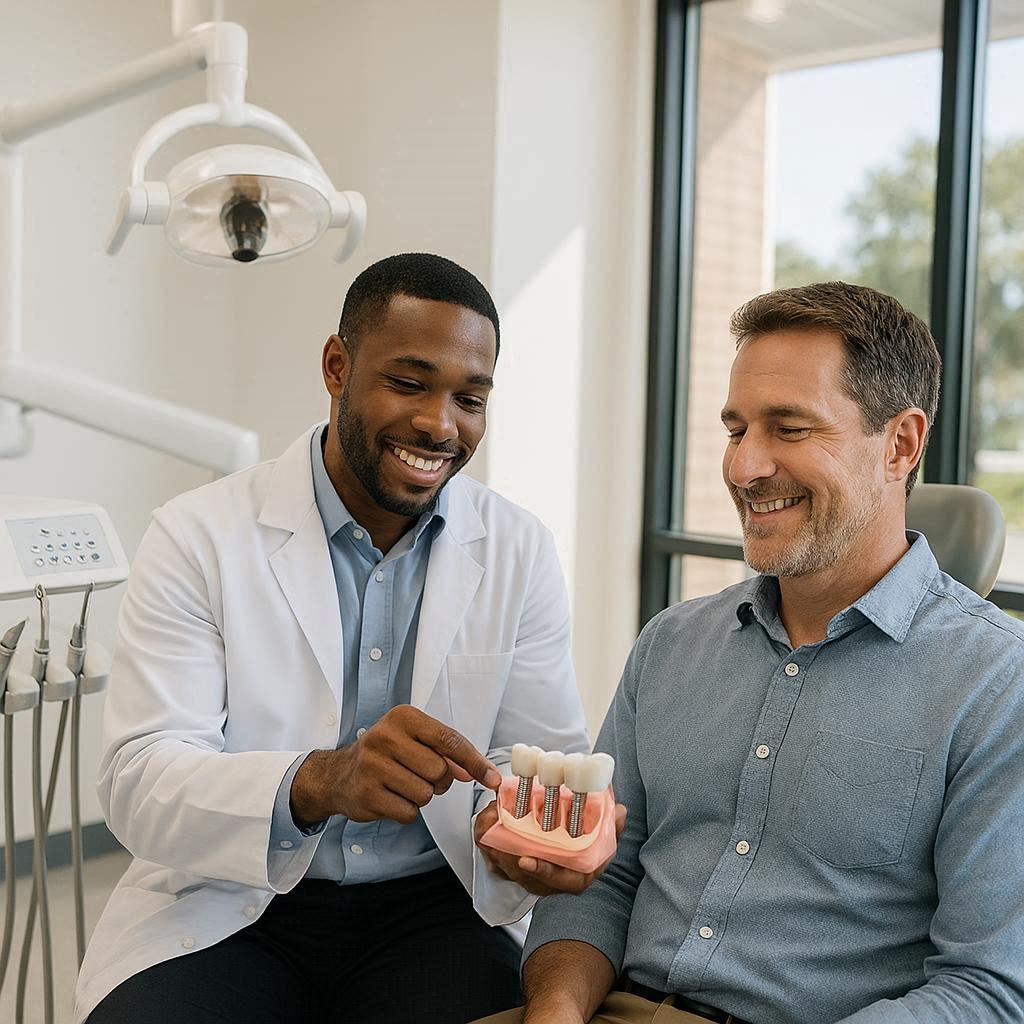
Think of a dental implant as an artificial tooth root. It is a small, screw-shaped post made of titanium. A dentist surgically places this post into your jawbone. Over time, the bone grows around the implant, locking it firmly in place.
Once the implant is secure, the dentist attaches a custom-made artificial tooth (called a crown) on top. The result is a tooth that looks and works just like a real one.
The Three Main Parts of a Dental Implant
- The Implant Post – The titanium screw that goes into your jawbone.
- The Abutment – A small connector piece that sits on top of the implant.
- The Crown – The visible, tooth-colored part that you see when you smile.
Important note: Not every missing tooth case is the same. Some people need a single implant. Others may need multiple implants to support a bridge or denture. Your dentist will recommend the best option based on your situation.
Why Choose Dental Implants Over Other Options?
You have choices when it comes to replacing missing teeth. Traditional bridges and dentures are still available. But implants offer several unique advantages.
| Feature | Dental Implants | Traditional Bridge | Dentures |
|---|---|---|---|
| Looks like natural teeth | Yes | Usually | Sometimes |
| Prevents bone loss | Yes | No | No |
| Affects nearby healthy teeth | No | Yes (shaving down) | No |
| Removable | No | No | Yes |
| Long-term cost | Lower over time | Medium | Higher (replacements) |
| Eating comfort | Excellent | Good | Fair |
Real Benefits You Will Notice Immediately
- Confidence while eating: Bite into an apple or steak without worry.
- No slipping: Implants stay fixed. No clicking sounds or embarrassing moments.
- Easy cleaning: Brush and floss normally. No special soaks or adhesives.
- Face shape protection: Implants stimulate your jawbone, preventing the sunken look that often follows tooth loss.
A 2021 study from the Journal of Oral Implantology found that dental implants have a success rate of over 95% when properly cared for.
Are You a Good Candidate for Dental Implants in Bradenton?
Most healthy adults can get dental implants. However, your dentist will check a few important factors first.
You May Be a Good Candidate If:
- You have one or more missing teeth.
- Your jawbone is strong enough (or can be built up).
- Your gums are healthy (no active gum disease).
- You do not smoke heavily (smoking slows healing).
- You are committed to good oral hygiene.
What If You Have Bone Loss?
Do not worry. Many Bradenton residents who have worn dentures for years have lost some jawbone density. That does not automatically disqualify you.
Your dentist may recommend a bone graft before placing implants. This procedure adds bone material to weak areas. After a few months of healing, you can proceed with implants.
What About Age?
Age alone is not a problem. Healthy seniors in their 70s, 80s, and even 90s have successfully received dental implants. The real questions are overall health and bone quality.
The Step-by-Step Process: What to Expect from Start to Finish
Understanding the timeline helps reduce anxiety. Here is a realistic look at how dental implant treatment works in Bradenton.
Step 1: Initial Consultation (Day 1)
You will meet with a dentist or oral surgeon. They will:
- Examine your mouth
- Take X-rays or a 3D CT scan
- Review your medical history
- Discuss your goals and budget
A helpful tip: Bring a list of all medications you take. Some blood thinners and other drugs can affect surgery.
Step 2: Treatment Planning (1 to 2 weeks later)
Your dental team creates a personalized plan. They will explain:
- How many implants you need
- Whether you need bone grafting
- The total cost and payment options
- The estimated timeline
Step 3: Tooth Extraction (if needed)
If you still have a damaged tooth where the implant will go, the dentist will remove it first. Healing usually takes 4 to 8 weeks before placing the implant.
Step 4: Bone Grafting (if needed)
This adds about 3 to 6 months to your overall timeline. The graft needs time to fuse with your natural bone.
Step 5: Implant Placement Surgery
This is the main procedure. Here is what happens:
- The dentist numbs the area with local anesthesia.
- They make a small cut in your gum.
- They drill a precise hole into the jawbone.
- They insert the titanium implant post.
- They close the gum over the implant.
The surgery itself usually takes 1 to 2 hours for a single implant. Multiple implants take longer.
Most patients report feeling pressure but not pain during the procedure.
Step 6: Osseointegration (Healing Period)
This is the most critical phase. Your jawbone grows around the implant, locking it in place. This process, called osseointegration, takes 3 to 6 months.
During this time, you will wear a temporary bridge or denture if needed.
Step 7: Abutment Placement
Once the implant is fully fused with your bone, the dentist reopens the gum and attaches the abutment. This small piece connects the implant to the crown.
Healing from this minor procedure takes about 2 weeks.
Step 8: Crown Placement
Your dentist takes impressions of your mouth. A dental lab creates your custom crown. When it is ready, the dentist attaches it to the abutment.
At this point, your new tooth is complete.
Complete Timeline Summary
| Phase | Duration |
|---|---|
| Consultation & planning | 1–2 weeks |
| Extraction healing (if needed) | 4–8 weeks |
| Bone grafting (if needed) | 3–6 months |
| Implant surgery | 1 day |
| Osseointegration | 3–6 months |
| Abutment & crown | 2–4 weeks |
Total typical range: 4 to 9 months for most cases without bone grafting.
Types of Dental Implants Available in Bradenton
Not all implants are the same. Your dentist may recommend one of these common types.
1. Single Tooth Implant
Replaces one missing tooth. Ideal for people who are missing just one tooth and have healthy adjacent teeth.
2. Implant-Supported Bridge
Replaces two or more missing teeth in a row. Uses two implants to support a bridge of three or four artificial teeth.
3. All-on-4 or All-on-6
Replaces a full arch of teeth (upper or lower). Uses four or six strategically placed implants to support a fixed denture. This is popular among people who have lost most or all of their natural teeth.
4. Mini Dental Implants
Smaller diameter implants. Sometimes used for stabilizing lower dentures. They are less invasive but also less durable for heavy chewing.
Quick Comparison
| Type | Number of Implants | Best For | Typical Cost Range |
|---|---|---|---|
| Single implant | 1 | One missing tooth | $3,000–$5,000 |
| Implant bridge | 2 | 2–4 missing teeth | $5,000–$9,000 |
| All-on-4 | 4 | Full arch | $15,000–$25,000 |
| Mini implants | 2–4 | Denture stabilization | $2,000–$4,000 |
How Much Do Dental Implants Cost in Bradenton, Florida?
Let us talk about money. This is often the biggest concern for patients.
The total cost of dental implants in Bradenton varies based on several factors:
- Number of implants
- Need for bone grafting or extractions
- Type of crown material (porcelain, zirconia, etc.)
- Dentist’s experience and clinic location
- Your insurance coverage
Estimated Price Ranges in Bradenton (2025–2026)
| Procedure | Low Estimate | High Estimate |
|---|---|---|
| Single implant (all included) | $3,200 | $5,500 |
| Implant-supported bridge (3 teeth) | $6,000 | $10,000 |
| All-on-4 per arch | $15,000 | $28,000 |
| Bone graft (per site) | $500 | $2,500 |
| Sinus lift (upper jaw) | $1,500 | $3,000 |
| CT scan | $250 | $500 |
Important note: These are out-of-pocket estimates before insurance. Always request a written treatment plan with a complete breakdown.
Why Do Prices Vary So Much?
- Material quality: Premium German or Swiss implants cost more than generic brands.
- Dentist’s training: Oral surgeons and periodontists often charge more than general dentists.
- Lab fees: High-quality custom crowns cost more.
- Location: Clinics in higher-rent areas may charge slightly more.
Does Insurance Cover Dental Implants in Bradenton?
Traditional dental insurance often excludes implants or covers only a small portion. However, things are slowly changing.
- Some PPO plans cover 10% to 50% of the crown portion.
- Medical insurance may cover implants if tooth loss resulted from an accident or injury.
- Medicare generally does not cover routine dental implants.
Always call your insurance provider before your consultation. Ask specifically: “What is my coverage for implant placement, abutment, and crown?”
Financing Options in Bradenton
Many local dental offices offer:
- CareCredit – A healthcare credit card with promotional financing
- In-house payment plans – Monthly installments
- LendingClub or Proceed Finance – Medical/dental loans
Do not be shy about asking for financing. Most clinics want to help you afford treatment.
How to Choose the Best Dental Implant Provider in Bradenton
You have many choices. General dentists, oral surgeons, periodontists, and prosthodontists all place implants. But not all have the same level of training.
Questions to Ask Before Booking
- How many implant procedures do you perform each year? (Look for 50+ per year)
- What happens if the implant fails? (Reputable clinics offer some warranty)
- Do you use 3D CT imaging? (Essential for safe placement)
- Who makes your crowns? (Local labs vs. overseas)
- What is included in the quoted price? (Surgery, abutment, crown, follow-ups?)
Red Flags to Watch For
- Prices that seem too good to be true (under $2,000 for a full implant)
- No CT scan before surgery
- Dentist who cannot show before-and-after photos
- Pressure to decide immediately
- No written treatment plan
Types of Providers in Bradenton
| Provider Type | Best For | Typical Cost |
|---|---|---|
| General dentist with implant training | Simple, single implants | Lower |
| Oral surgeon | Complex cases, bone grafts | Higher |
| Periodontist | Gum disease + implants | Medium–High |
| Prosthodontist | Full-mouth reconstruction | Highest |
A realistic perspective: A general dentist with advanced implant training can safely handle most routine cases. For complicated situations (severe bone loss, sinus issues, medical complexities), see a specialist.
Preparing for Your Dental Implant Procedure
A little preparation goes a long way toward a smooth experience.
One Month Before Surgery
- Stop smoking or at least cut back significantly.
- Tell your dentist about all medications and supplements.
- Complete any required dental work (fillings, cleanings, gum treatment).
- Arrange time off work. Most people need 1 to 3 days of rest.
One Week Before Surgery
- Fill any prescriptions for antibiotics or pain medication.
- Buy soft foods: yogurt, soup, smoothie ingredients, mashed potatoes.
- Arrange for someone to drive you home if you receive IV sedation.
The Day of Surgery
- Eat a light meal if using only local anesthesia.
- Do not eat for 6–8 hours if receiving IV sedation.
- Wear comfortable, loose clothing.
- Brush your teeth gently before arriving.
Recovery and Aftercare: What Is Normal and What Is Not
Healing takes time. Knowing what to expect prevents unnecessary worry.
First 24 Hours (Normal)
- Some bleeding (light oozing is fine)
- Swelling of the cheek or gum
- Mild to moderate discomfort
- Bruising around the jaw
Days 2 to 7
- Swelling peaks around day 2 or 3, then improves.
- Stick to soft foods.
- Do not spit, use a straw, or smoke.
- Rinse gently with warm salt water after 24 hours.
Weeks 2 to 4
- Most swelling and discomfort disappear.
- You can return to normal eating, but avoid chewing directly on the implant site.
- Continue gentle brushing around the area.
Signs You Should Call Your Dentist
- Fever over 101°F (38.3°C)
- Heavy bleeding that does not stop with pressure
- Pain that worsens after day 3 instead of improving
- Pus or foul taste (possible infection)
- Implant feels loose (extremely rare early on)
Long-Term Care for Your Implants
Implants cannot get cavities, but they are not invincible. The surrounding gum tissue is vulnerable to infection (peri-implantitis).
Do this every day:
- Brush twice daily with a soft toothbrush.
- Floss around the implant carefully.
- Use a water flosser for hard-to-reach areas.
- Avoid chewing ice, hard candy, or pens.
Visit your dentist every 6 to 12 months for professional cleanings and implant checkups.
With proper care, dental implants often last 20 years to a lifetime. The crown may need replacement after 10 to 15 years due to normal wear.
Common Fears and Questions About Dental Implants
Let us address the worries that real patients bring up.
“Does implant surgery hurt?”
During the procedure, you will not feel pain due to anesthesia. Afterward, most people compare the discomfort to a tooth extraction. Over-the-counter pain relievers usually manage it well.
“What if my body rejects the implant?”
Titanium is biocompatible. True allergic reactions are extremely rare (less than 0.1%). Failure usually happens because of infection, poor bone quality, or smoking — not rejection.
“Can I get implants if I have diabetes?”
Yes, but your blood sugar must be well-controlled. Uncontrolled diabetes slows healing and increases infection risk. Many diabetic patients successfully get implants with proper management.
“Do implants look fake?”
Modern crowns are made of high-quality porcelain or zirconia. They reflect light like natural teeth. Most people will never know you have an implant unless you tell them.
“How long do I have to wait between extraction and implant?”
It depends. Some dentists place implants immediately after extraction (immediate placement). Others wait 4 to 8 weeks for the gum to heal. Your dentist will decide based on infection risk and bone quality.
Realistic Success Rates and Risks
Honesty matters. Most implant procedures go smoothly, but complications can happen.
Success Rates by Location
| Jaw Location | Success Rate |
|---|---|
| Lower front | 98%+ |
| Lower back | 95–97% |
| Upper front | 95–97% |
| Upper back | 90–95% |
Possible Complications (Rare but Real)
- Infection – Treated with antibiotics or minor surgery
- Nerve injury – Temporary numbness of lip or chin (usually resolves)
- Sinus problems – Upper implants can protrude into sinus cavity
- Implant failure – The bone does not fuse (more common in smokers)
The single biggest factor within your control: Do not smoke. Smokers have failure rates 2 to 3 times higher than nonsmokers.
Dental Implants vs. Other Options: A Detailed Comparison
If you are unsure which path is right for you, this breakdown will help.
Dental Implant vs. Fixed Bridge
| Factor | Implant | Bridge |
|---|---|---|
| Affects adjacent teeth | No | Yes (shaved down) |
| Bone preservation | Yes | No |
| Cost upfront | Higher | Lower |
| 10-year cost | Lower | Higher (may need replacement) |
| Procedure time | 4–9 months | 2–3 weeks |
Verdict: If your adjacent teeth are healthy and untouched, an implant is usually better. If those teeth already have large fillings or crowns, a bridge may be reasonable.
Dental Implant vs. Removable Partial Denture
| Factor | Implant | Partial Denture |
|---|---|---|
| Stability | Fixed | Moves slightly |
| Comfort | Excellent | Fair |
| Cleaning | Normal brushing | Must remove and soak |
| Bone loss | Prevents it | Accelerates it |
| Cost over 20 years | Lower | Higher (replacements) |
Verdict: Implants are almost always superior if you can afford the upfront cost.
What Bradenton Residents Should Know About Local Care
Living in Bradenton gives you access to excellent dental care. But there are a few local factors to keep in mind.
Seasonal Considerations
Snowbirds and seasonal residents often need treatment in a compressed timeframe. If you are only in Bradenton for a few months, discuss expedited options with your dentist. Some offer “teeth in a day” for select cases, but that is not realistic for everyone.
Finding Affordable Care in Manatee County
- Dental schools – The University of Florida College of Dentistry (Gainesville) offers reduced-cost implants, but it is a 3-hour drive.
- Community health centers – Manatee County Rural Health Services may offer sliding scale fees for extractions and dentures, though implant availability is limited.
- Dental tourism – Some Bradenton residents travel to Costa Rica or Mexico for lower-cost implants. Be aware: follow-up care becomes complicated if problems arise.
A word of caution: Do not choose an implant provider based on price alone. Failed implants cost more to fix than the original procedure.
Frequently Asked Questions (FAQ)
1. How long do dental implants last in Bradenton, Florida?
With good oral hygiene and regular dental visits, implants often last 20 years to a lifetime. The crown on top may need replacement after 10 to 15 years.
2. Does insurance cover dental implants in Bradenton?
Most dental insurance plans offer limited coverage. Some cover 10% to 50% of the crown. Medical insurance may apply if tooth loss resulted from an injury.
3. Can I get all my teeth replaced with implants in one day?
True “teeth in a day” procedures exist but are not for everyone. Most patients need several months of healing. Be skeptical of clinics promising immediate full-mouth implants without a thorough exam.
4. Are dental implants safe for seniors?
Yes. Age is not a barrier. As long as you are healthy enough for minor oral surgery, implants are safe and effective for older adults.
5. What is the cheapest dental implant option in Bradenton?
Mini implants for denture stabilization are the least expensive, typically $2,000 to $4,000 for a full set. However, they are less durable for heavy chewing.
6. How do I clean dental implants?
Brush and floss normally. Use a soft toothbrush and implant-specific floss or a water flosser. Avoid metal scrapers during cleaning.
7. Can I have an MRI with dental implants?
Yes. Titanium implants are not magnetic. They are safe for MRI and CT scans.
8. What happens if an implant fails?
Your dentist will remove the failed implant. After healing (usually 3–6 months), you can try again with a larger implant or bone graft.
9. Do gum disease patients qualify for implants?
Only after gum disease is treated and controlled. Active infection must be resolved before placement.
10. How many implants do I need for all upper teeth?
The All-on-4 technique uses four implants per arch. Some patients get six for extra stability (All-on-6).
Additional Resources
For more trustworthy information about dental implants, visit the American Academy of Implant Dentistry (AAID) at www.aaid.com. Their patient education section includes videos, a dentist locator, and detailed FAQs.
Conclusion
Dental implants in Bradenton, Florida, offer a durable, natural-looking solution for missing teeth. They protect your jawbone, restore your ability to eat comfortably, and give you back a confident smile. While the process takes several months and requires an upfront investment, the long-term benefits far outweigh the alternatives for most people. Start with a consultation from a qualified local provider, ask the right questions, and take the first step toward a complete smile.